Leminda millecra
A cold-water rarity of the Western Cape, this frilled nudibranch turns up in kelp reefs at 13 to 19C, mostly as a rare, sharp-eyed find.
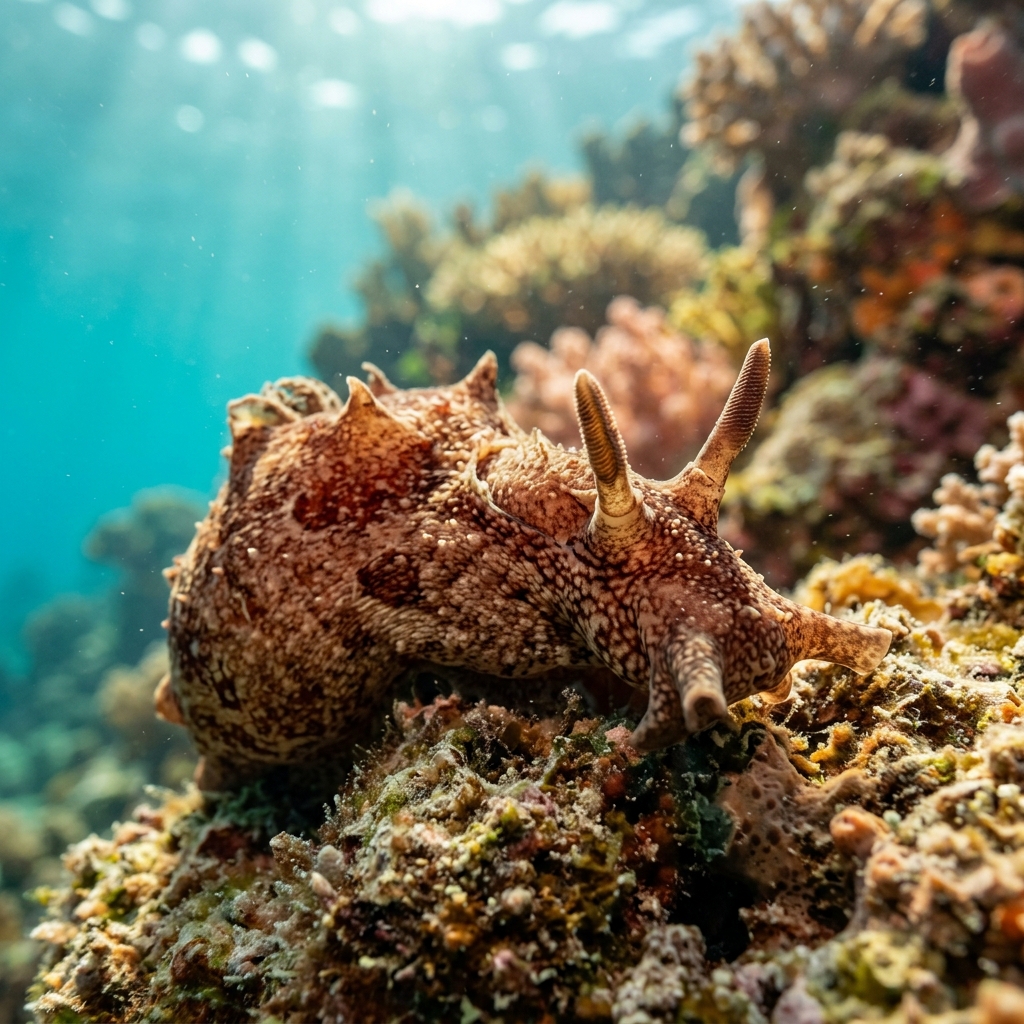
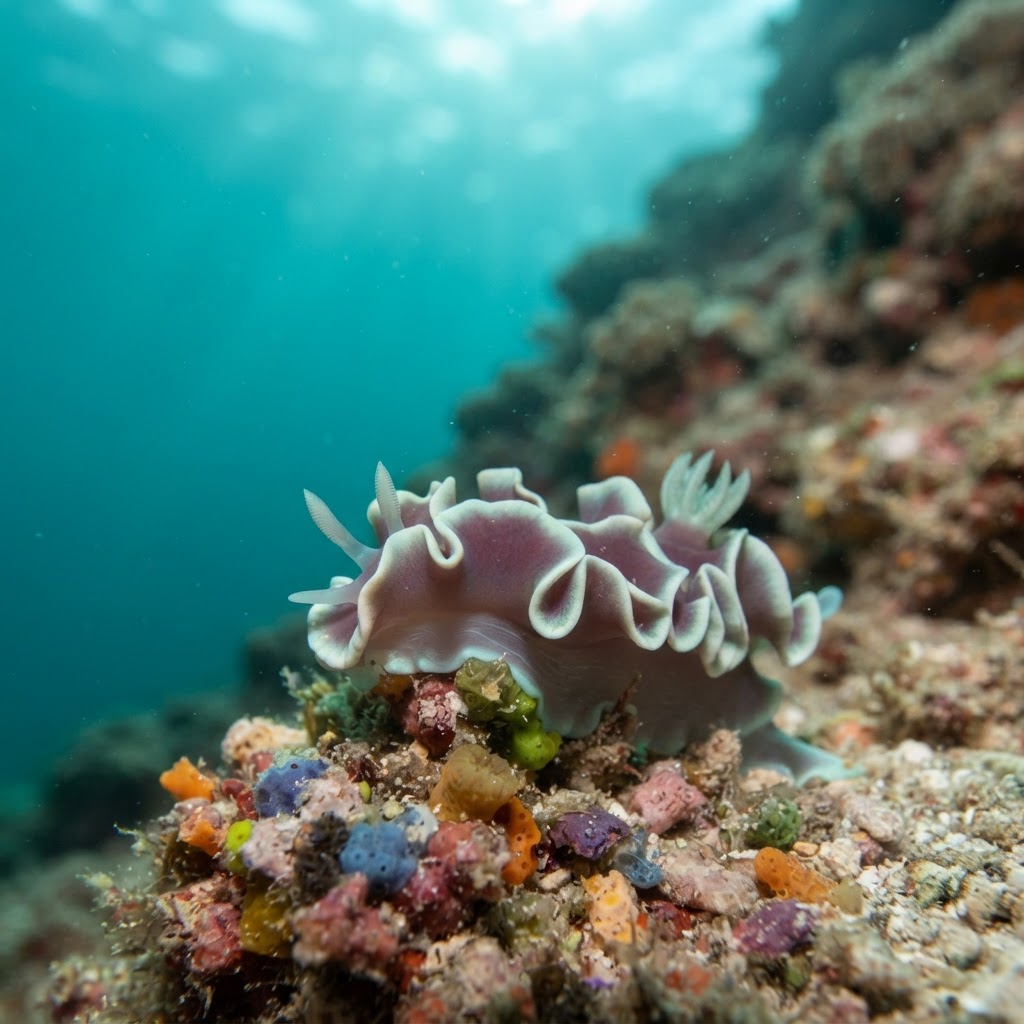
Small, soft-bodied sea slug with a mantle edge that carries a dense fringe of frilly, finger-like papillae running almost the full length of its body. Colour tends toward orange, brown or rusty red, giving it a shaggy, textured outline quite different from the smooth-backed dorids divers usually spot. Look for it tucked against rock or under ledges in cold, kelp-fringed water rather than out in the open.
Divers find it sitting still or moving slowly across rocky reef and kelp holdfasts, usually tucked into cover rather than sitting exposed on open rock. It shows no reaction to divers beyond the usual slow-motion retreat typical of nudibranchs, so a careful, unhurried look with a torch is the best way to pick out its frilled outline against the reef. Most reports describe it as rare to uncommon at a given site, so finding one takes a bit of patient scanning rather than a lucky glance.
Like other dorid nudibranchs, it likely feeds on and takes on chemical cues from specific reef invertebrates, which is part of why it turns up in such patchy, site-specific numbers rather than evenly across the coast.
There is no clear seasonal pattern in the sightings, so treat it as a year-round possibility on Western Cape dives. It sits comfortably in the region's cool water, logged between 13.4 and 19.4C, which covers most of the local diving calendar.
This one is essentially a Western Cape speciality: every logged sighting in the data comes from South Africa, concentrated in Western Cape dive sites. If you are diving the cold-water reefs and kelp forests around Cape Town and along the Cape coast, this is where to keep an eye out for it.
Mapping where Frilled Nudibranch is logged…
Sightings are concentrated in South Africa's Western Cape, on cold-water reef and kelp forest dive sites. It has not been reported outside this region in current diver logs.
There is no strong seasonal signal, so it is considered a year-round find on Western Cape dives, within its observed 13.4 to 19.4C water temperature range.
Look for a small sea slug with a mantle edge fringed by dense, finger-like papillae, giving it a shaggy, ruffled outline in orange or brown tones. It is usually found low on rocky reef or among kelp holdfasts rather than exposed in open water.
Most Western Cape sites report it as rare, with a handful logging it as uncommon or very common, so sightings depend heavily on the specific site and a bit of luck.
No. It poses no danger to divers and can be observed and photographed at close range without any need for caution.
Site and sighting data is aggregated from diver logs, iNaturalist and GBIF. For taxonomy and conservation status:
Light-spotted Aegires
3,168 sites