Diaphorodoris luteocincta
Small yellow-fringed nudibranch found on cold-water reefs from Bohuslän to Northern Ireland, most often spotted in chilly 8.5 to 14.5C water.
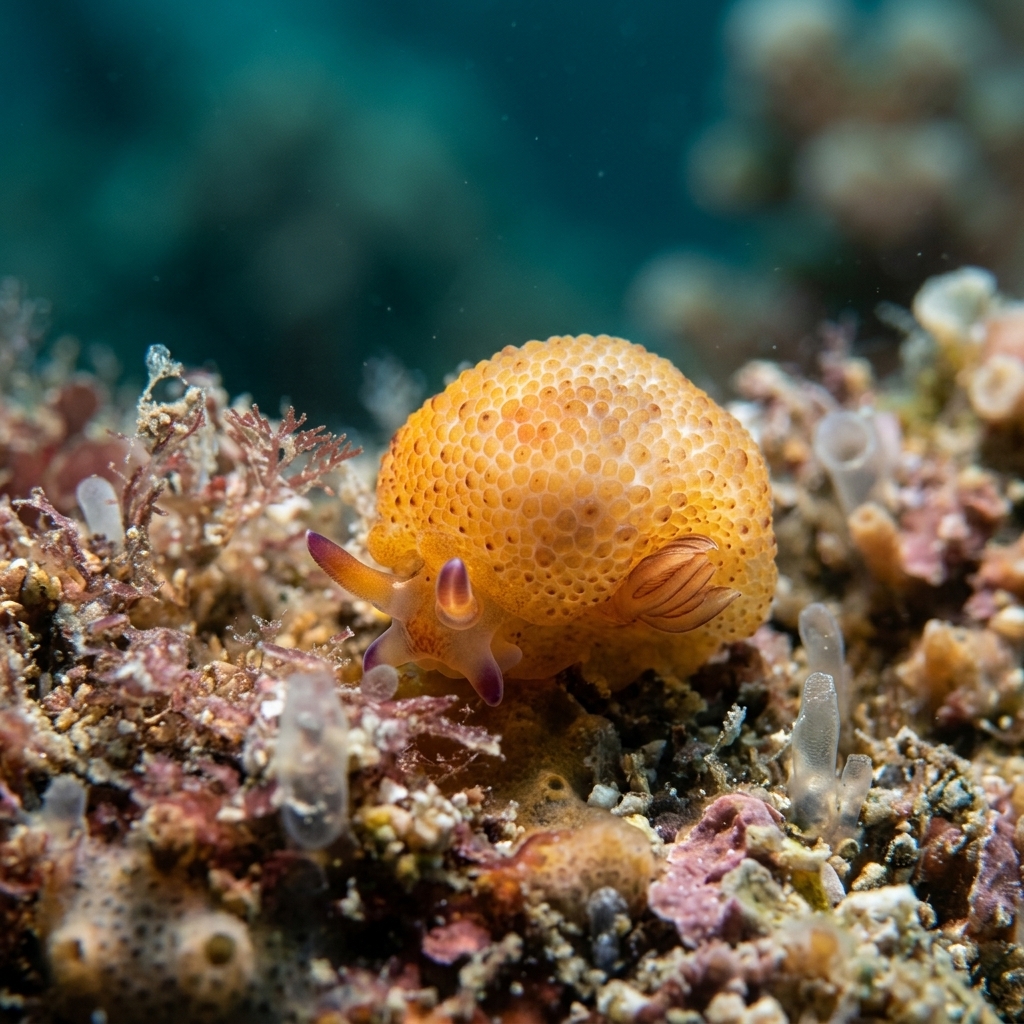
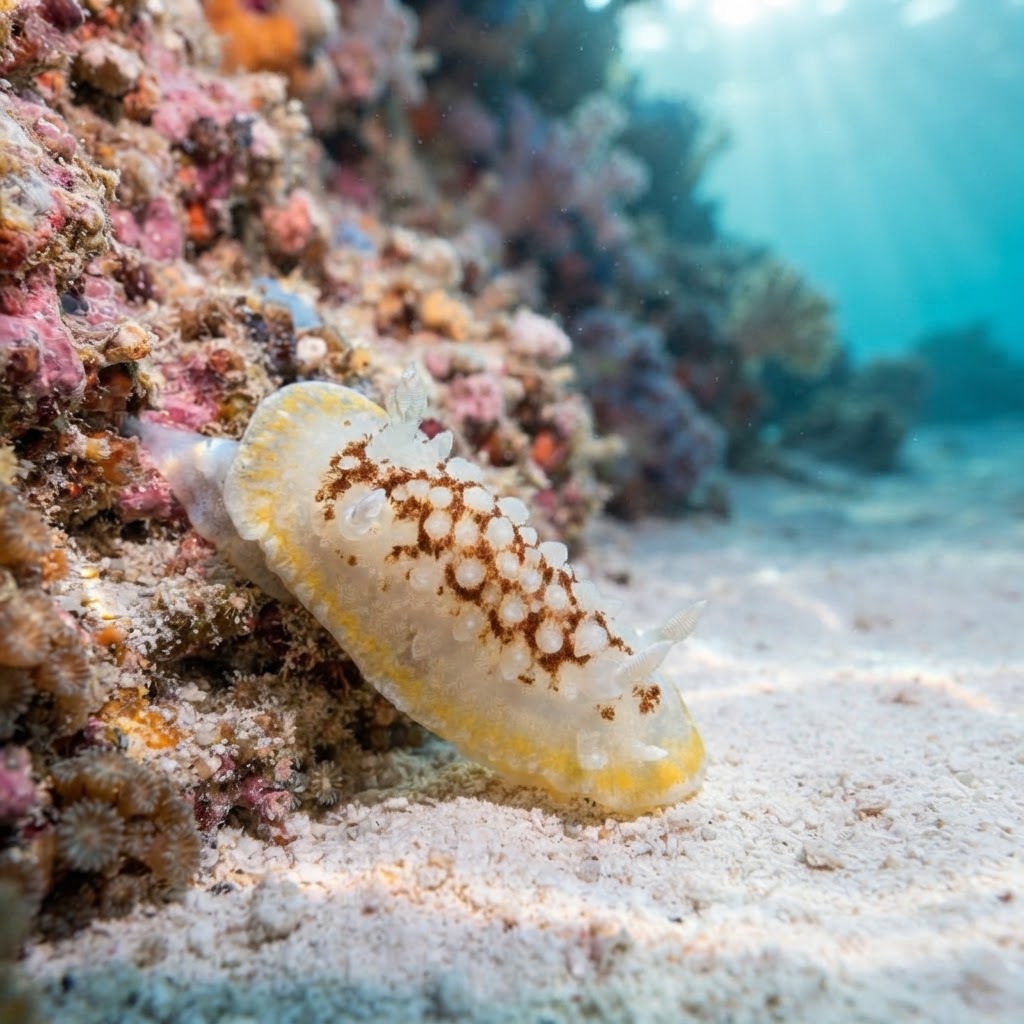
Look for a small, pale, translucent-white body edged with a bright yellow band running around the mantle margin, giving it the fried-egg look that earns the common name. The body is soft, low and oval, with a rosette of gills near the rear and a pair of short rhinophores (sensory tentacles) up front. It stays only a centimetre or two long, so most divers spot it by scanning bare rock and encrusting growth closely rather than by size or movement.
Divers find it sitting still on rock, encrusting sponge or algae-covered surfaces, moving slowly across the substrate as it grazes. It shows no reaction to divers beyond retracting its rhinophores if disturbed, and is usually picked out during a slow macro-focused search rather than noticed in open water. Most logs describe it as uncommon at a given site, so patient scanning of likely surfaces pays off more than a quick swim-by.
Like other dorid nudibranchs, it likely feeds on encrusting bryozoans, which explains why sightings cluster around rocky surfaces with that kind of growth rather than open sand or coral.
Sightings show no clear seasonal pattern in the data, and given its narrow cold-water niche of 8.5 to 14.5C it likely stays active on these reefs year-round wherever that temperature band holds. Treat it as a species to look for on any dive rather than one tied to a particular month.
This one is a cold-water specialist, most reliably logged in the United Kingdom, particularly England, Northern Ireland and Wales, with strong populations also recorded in Norway's Østlandet region and Sweden's Bohuslän coast. Brittany in France and Galway & Connemara in Ireland round out the picture, so it is worth checking rocky, temperate sites across the whole northeast Atlantic rather than any single hotspot.
Mapping where Fried Egg Nudibranch is logged…
It turns up most reliably around the United Kingdom, especially England, Northern Ireland and Wales, and along Norway's Østlandet coast and Sweden's Bohuslän region. Brittany in France and Galway & Connemara in Ireland are other solid spots to check.
There is no strong seasonal signal in current sighting data, so it appears to be present year-round on the cold-water reefs it favours. Any month should give you a chance if you are diving the right sites.
Look for a small, pale translucent body ringed with a distinct yellow band around the mantle edge, sitting still on rock or encrusting growth. It rarely exceeds a couple of centimetres, so a slow, close search of the substrate is the best way to spot one.
They stay small, typically only a centimetre or two in length, which is part of why they are logged as uncommon even where they occur. Divers usually need to slow down and scan rock and sponge surfaces closely to find one.
As with related dorid nudibranchs, they likely graze on encrusting bryozoans found on rock and algae surfaces. This feeding habit is probably why sightings cluster on encrusted rocky substrate rather than open sand.
Site and sighting data is aggregated from diver logs, iNaturalist and GBIF. For taxonomy and conservation status:
Light-spotted Aegires
3,168 sites