Godiva quadricolor
A small, spiky orange-and-white nudibranch logged across Western Cape dive sites in cool 13-19C water, year-round if you look closely.
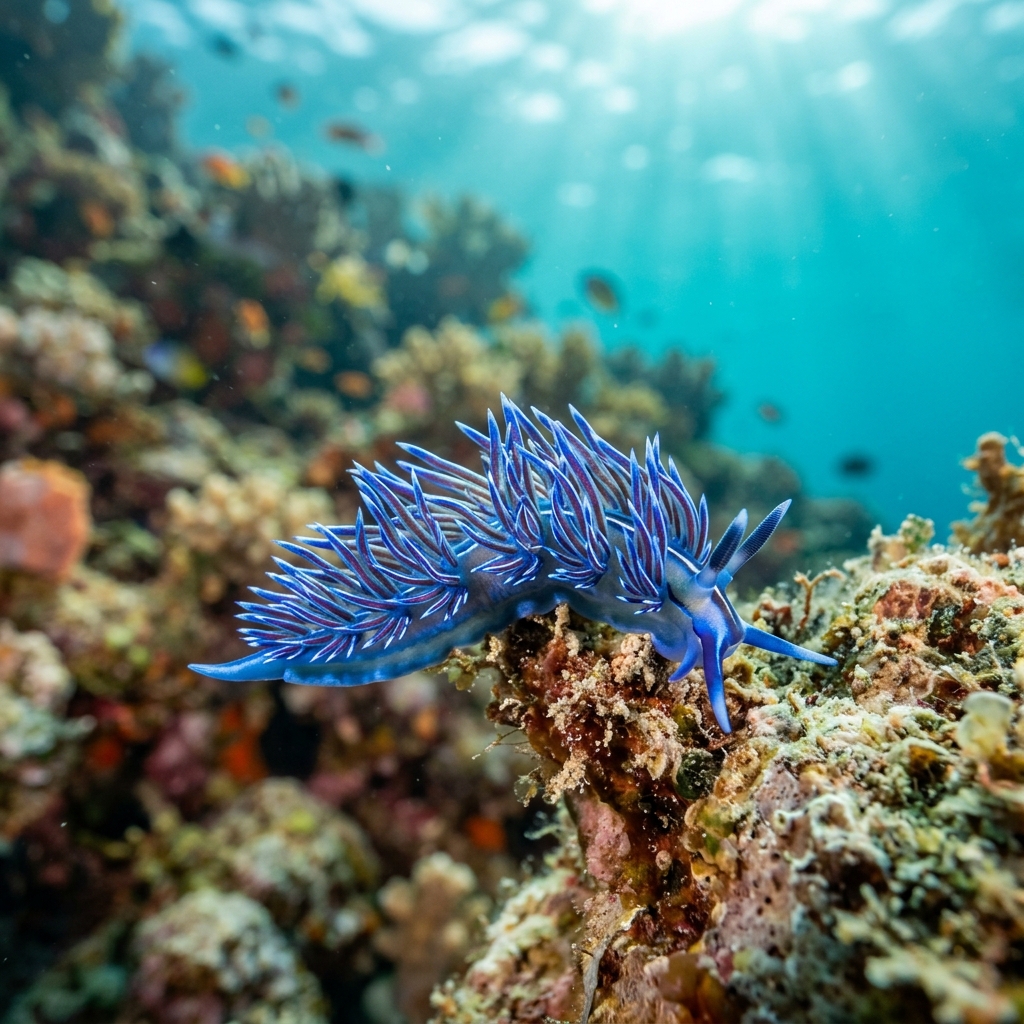
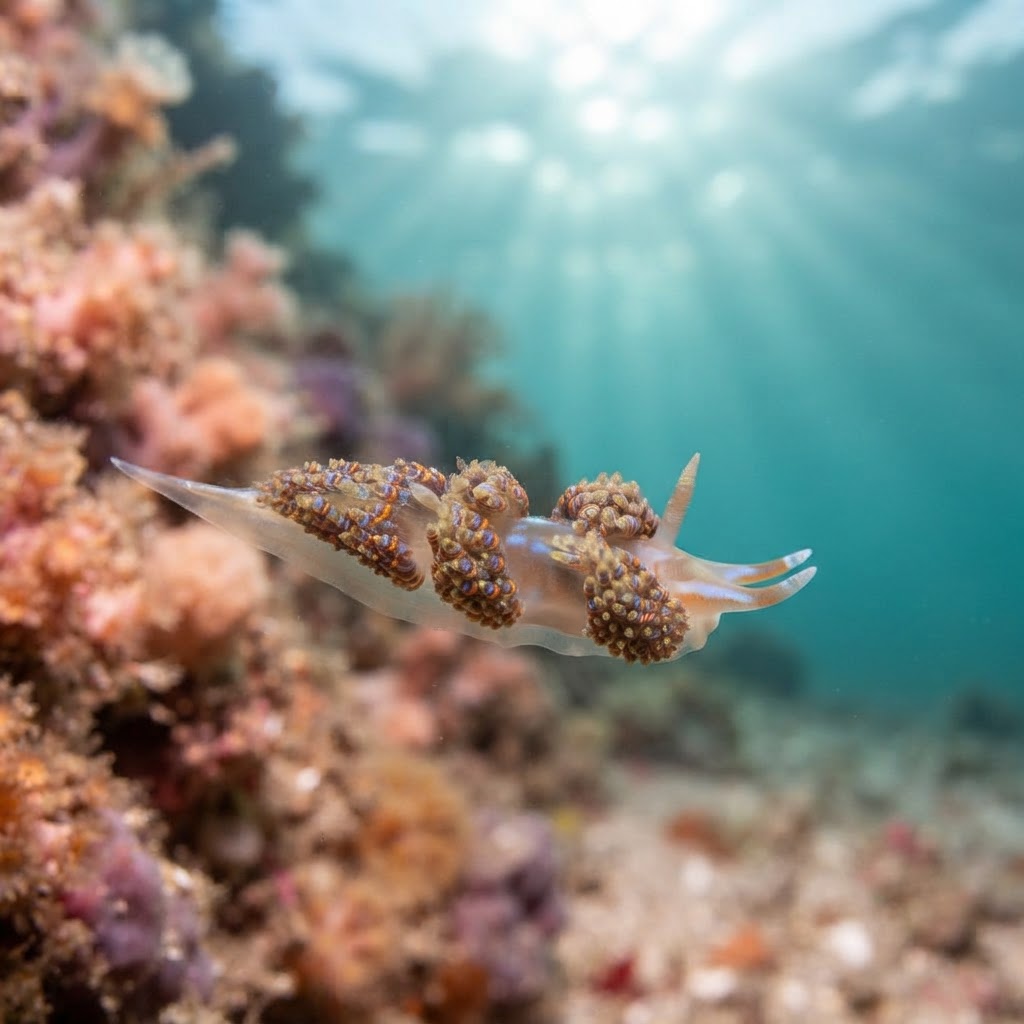
A tiny slug, around 2 cm, with a slender body covered in finger-like projections (cerata) that give it a bristly, almost fuzzy silhouette. Colouring runs through translucent white, orange and blue-tipped cerata, which is where the common name comes from. Look closely on rock and rubble rather than open sand, since its size and mottled colouring make it easy to swim straight past.
Divers typically find it grazing slowly over rock and rubble, tucked in among other small invertebrates rather than out in the open. It shows no reaction to divers beyond its usual unhurried crawl, so a slow, close look with a torch is the best way to spot one before swimming past it. Most logs describe it as an uncommon find, so patient reef scanning pays off more than a quick pass over the same ground.
Like other aeolid nudibranchs, it can recycle stinging cells from the hydroids it eats and store them in those cerata for its own defence, effectively borrowing a weapon from its prey.
Sightings show no detected season, and with a temperature niche of 13.4 to 19.4C, this cool-water specialist seems to be present across the Western Cape's diving calendar rather than tied to a warm-water window.
Every logged sighting comes from South Africa, specifically the Western Cape, making it the only reliable region for this species. Divers working the cooler Cape reefs stand the best chance, though it turns up as an uncommon find rather than a guaranteed one at most sites.
Mapping where Four-colour Nudibranch is logged…
Every recorded sighting is from South Africa's Western Cape, making it the only region divers currently log this species in. It shows up as an uncommon find across a spread of Cape sites rather than concentrated in just one spot.
There is no clear seasonal pattern in the sightings, and it favours cool water between roughly 13 and 19C, so it appears to be findable across the Western Cape diving calendar rather than in one narrow window.
Look for a small, bristly-looking slug about 2 cm long, its body lined with cerata in shades of translucent white, orange and blue. It sits low on rock and rubble, so a slow scan with a torch works better than swimming past at speed.
They stay small, typically around 2 cm long, which makes them one of the easier nudibranchs to overlook on a reef.
No, they pose no danger to divers. They are tiny, slow-moving grazers with no threat to humans whatsoever.
It likely feeds on hydroids and can store their stinging cells in its own cerata, turning a borrowed weapon into its own defence against predators.
Site and sighting data is aggregated from diver logs, iNaturalist and GBIF. For taxonomy and conservation status:
Light-spotted Aegires
3,168 sites