Doriopsilla carneola
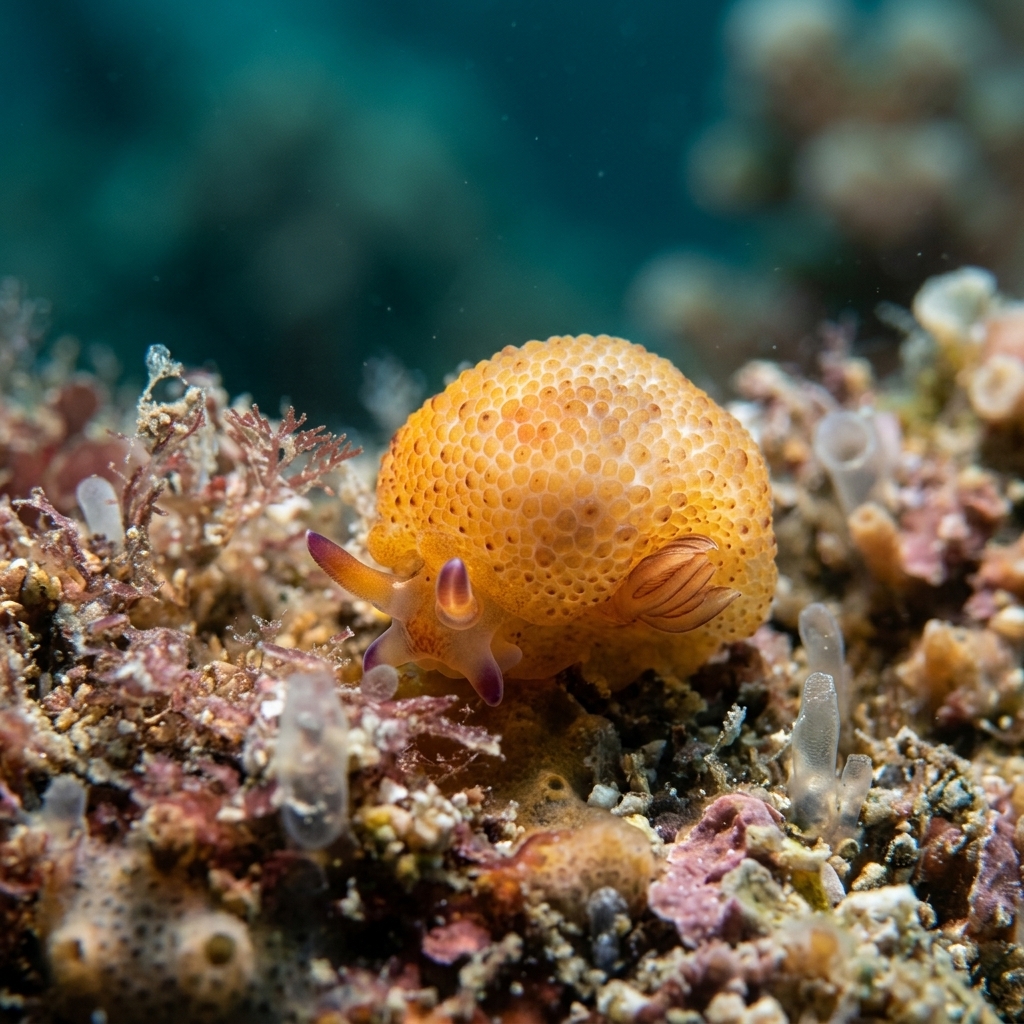
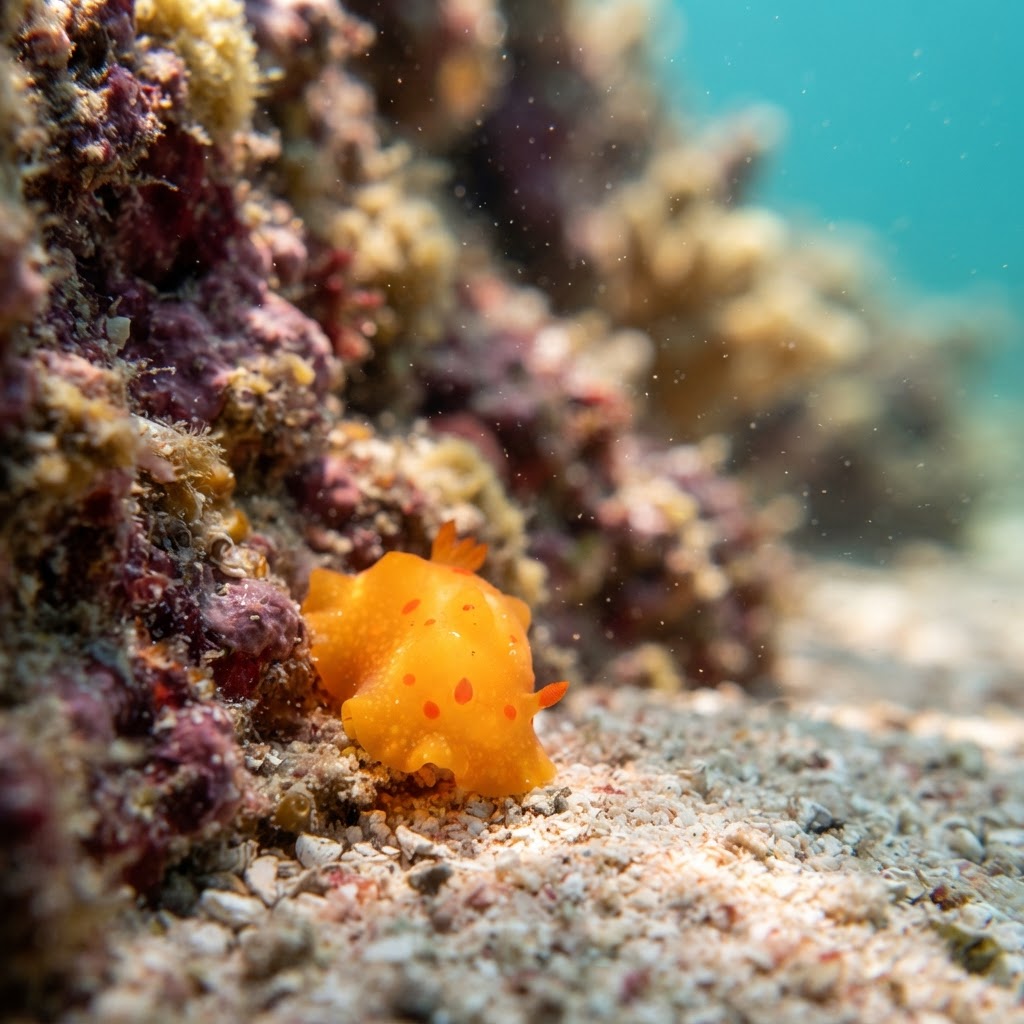
A pale, cream-coloured 1cm nudibranch turning up on temperate reefs in Victoria, Australia, year-round in cool 13.5-19.5C water.
A tiny slug barely a centimetre long, with a soft, translucent cream to pale yellow body that looks almost waxy or fleshy underwater, which is where the name comes from. It has a smooth, rounded back without the tall, showy gill plumes of many nudibranchs, giving it a low, slug-like profile that is easy to swim straight past. Look closely at reef rubble and sponge-covered rock in cooler water; there is no bold pattern to key on, just the pale, uniform body and small size.
Divers find it sitting still or slowly grazing over sponge-encrusted rock and rubble, doing what dorid nudibranchs do best: barely moving. It shows no reaction to divers and there is nothing to spook, so a slow, close look with a torch or magnifying lens is the way to actually spot one. Most sightings come from divers doing deliberate macro or muck-style searches rather than casual reef swims, since its plain colouring makes it easy to overlook.
Like other dorid nudibranchs, it almost certainly feeds on sponges, using its diet to build the chemical defences that let soft-bodied slugs like this survive without a shell.
Sightings are spread across the year with no clear seasonal spike, which fits its comfort range of roughly 13.5 to 19.5C, water temperatures that hold for much of the year on southern Australian temperate reefs. Plan the dive around Victoria's typical cool-water conditions rather than a specific month.
This one is very much an Australian temperate-water species, with the strongest run of sightings across Victoria, particularly its cooler reef and rubble sites. Tasmania and South Australia also turn up logged sightings, so divers working the southern Australian coast in general have a reasonable shot at it.
Mapping where Fleshy Doriopsilla is logged…
It is most reliably logged in Victoria, Australia, with additional sightings from Tasmania and South Australia. It is a southern Australian temperate-water species rather than one found on tropical reefs.
There is no strong seasonal pattern in sightings, so it is considered a year-round find. It suits water in the 13.5 to 19.5C range, which is typical of southern Australian dive conditions for much of the year.
Look for a small, pale cream to yellowish nudibranch about a centimetre long with a smooth, soft-looking body and no bold pattern. It sits low on rubble or sponge-covered rock and is easy to miss without a close, slow search.
They are tiny, typically around 1cm in length, so they are a macro-photography and close-search find rather than something spotted from a distance.
No, they pose no danger to divers. Like most nudibranchs they are harmless to touch, though it is best practice to leave them undisturbed on the reef.
As a dorid nudibranch it almost certainly grazes on sponges, a diet shared by close relatives in the Dendrodorididae family. This sponge diet likely supplies the chemical compounds that make its soft body unpalatable to predators.
Site and sighting data is aggregated from diver logs, iNaturalist and GBIF. For taxonomy and conservation status:
Blue Dragon
3,163 sites