Flabellina gabinierei
A small purple-tipped nudibranch turning up on rocky reefs in Andalusia and the French Riviera, year-round in cooler Mediterranean water.
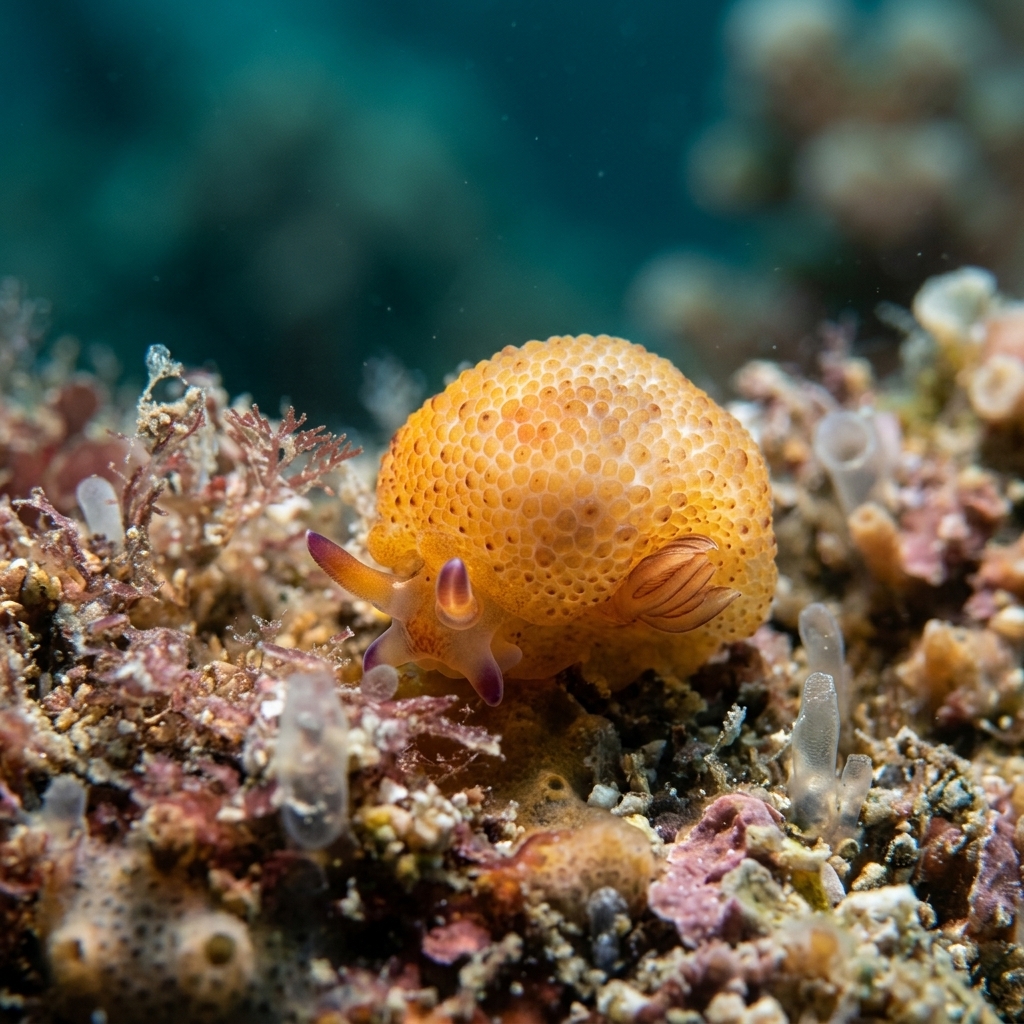
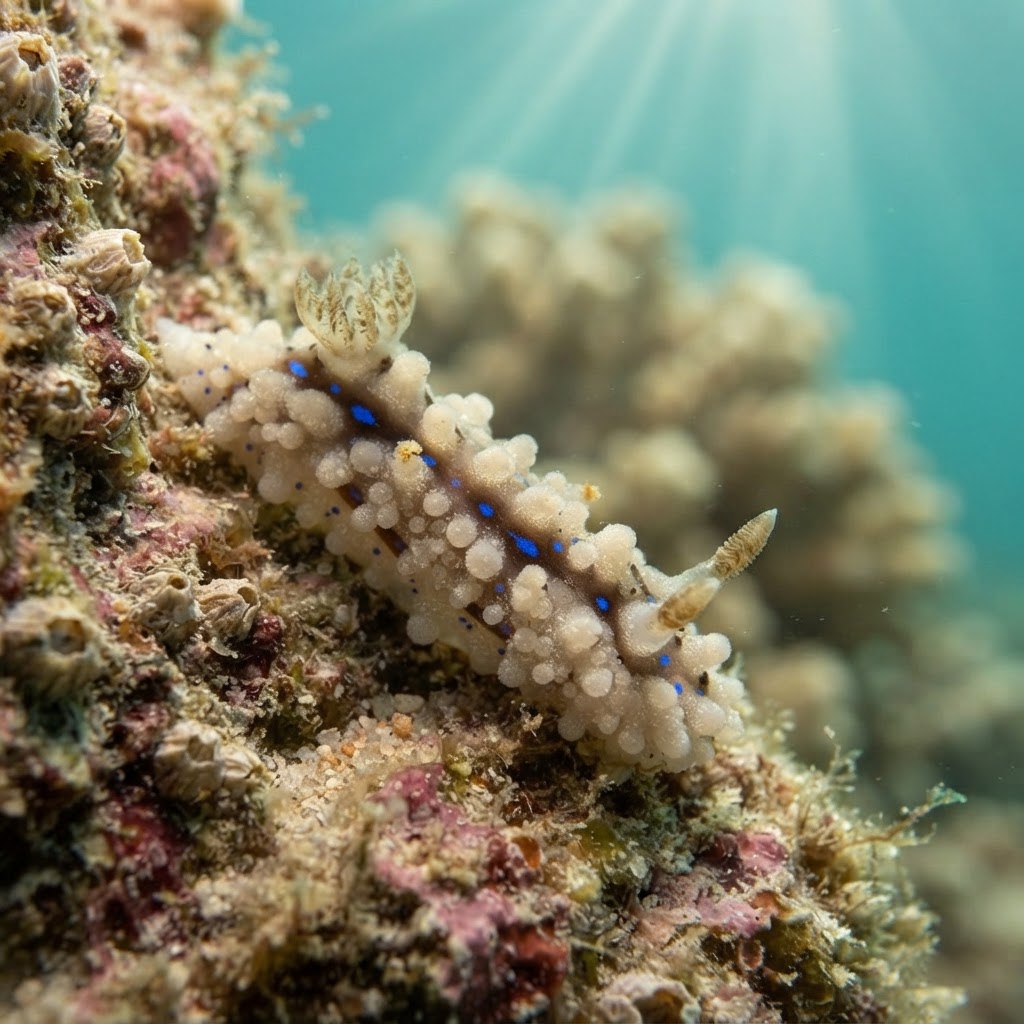
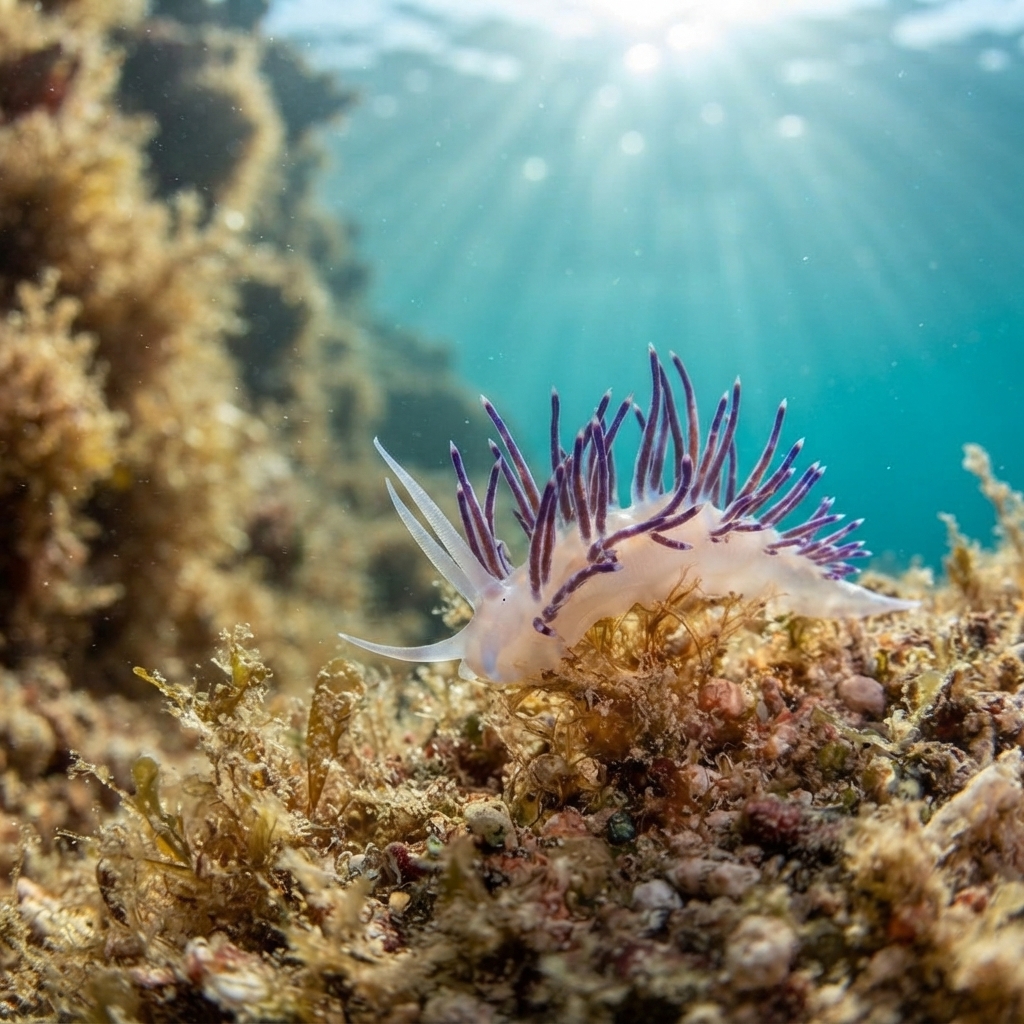
A slender, translucent white to pale pink nudibranch with rows of finger-like projections (cerata) along its back tipped in violet or purple. It sits low on rock and algae, rarely more than a couple of centimetres long, and the colour concentrates right at the cerata tips rather than washing across the whole body. Two long, smooth rhinophores (sensory tentacles) on the head lack the ringed texture seen in some look-alikes, which is the detail worth checking with a torch or macro lens.
Look for it moving slowly over encrusting algae and rocky surfaces, often tucked into crevices where the light is low. It shows no reaction to divers beyond retracting slightly if directly disturbed, and most sightings come from divers scanning close to the substrate rather than mid-water. Like other flabellinid nudibranchs it likely feeds on hydroids, grazing them down cerata by cerata.
The violet colour in the cerata tips isn't pigment from the animal itself but is thought to come from its hydroid prey, a common trick among aeolid nudibranchs that store compounds from what they eat.
There's no clear seasonal pattern in the sightings, so treat it as a year-round find rather than a seasonal target. Recorded water temperatures range from about 14.7 to 20.7 C, matching the cooler end of the Mediterranean diving season through into early autumn.
This one is most reliably logged in Spain, especially Andalusia, and along the French Riviera and Provence coast, with a further pocket of sightings in Catalonia. Divers searching rocky Mediterranean reefs in these regions have the best odds, since almost all recorded sightings come from these three areas.
Mapping where Ghost Aeolid is logged…
It's most consistently found on rocky Mediterranean reefs in Andalusia, Spain, and along the French Riviera and Provence, with additional sightings in Catalonia. These three regions account for nearly all recorded observations.
There's no strong seasonal signal in the data, so it can turn up any time of year. It's been recorded in water from around 14.7 to 20.7 C, which spans much of the diveable Mediterranean season.
Check for a translucent white to pale body with rows of cerata tipped in violet or purple, smooth (unringed) rhinophores, and a small size of just a centimetre or two. It's usually spotted resting on rock or algae rather than swimming.
Exact size figures aren't well documented for this species, but like most Flabellina nudibranchs it stays small, typically a couple of centimetres or less, so a close look is needed to spot the cerata detail.
No, it poses no threat to divers. It's a small, slow-moving nudibranch with no sting or bite that could affect a person.
The purple tint at the tips of its cerata is believed to come from pigments in the hydroids it feeds on, not from the animal's own biology. This borrowed colouring is common among aeolid nudibranchs.
Site and sighting data is aggregated from diver logs, iNaturalist and GBIF. For taxonomy and conservation status:
Light-spotted Aegires
3,168 sites