Fiocuthona concinna
A small cold-water nudibranch turning up on almost every dive log in Zeeland, Netherlands, in water from 7 to 13 C.
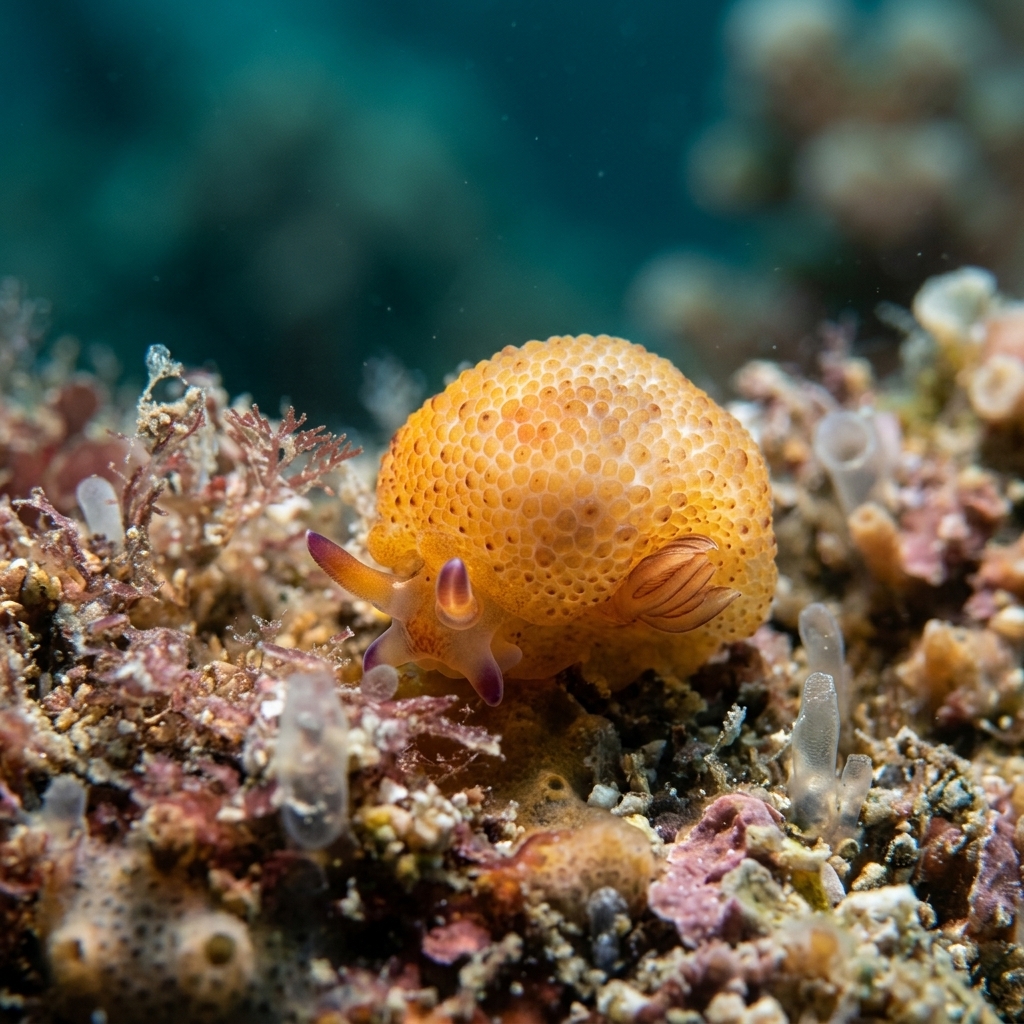
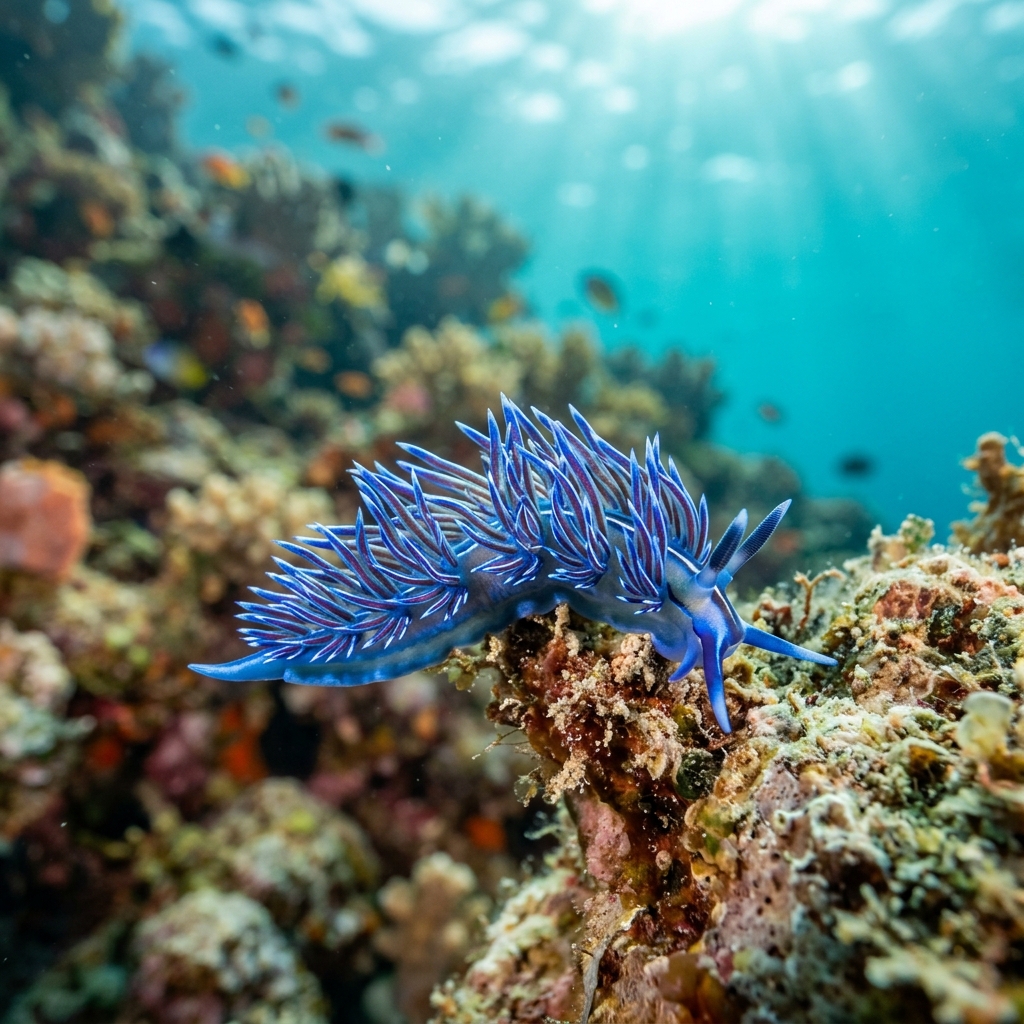
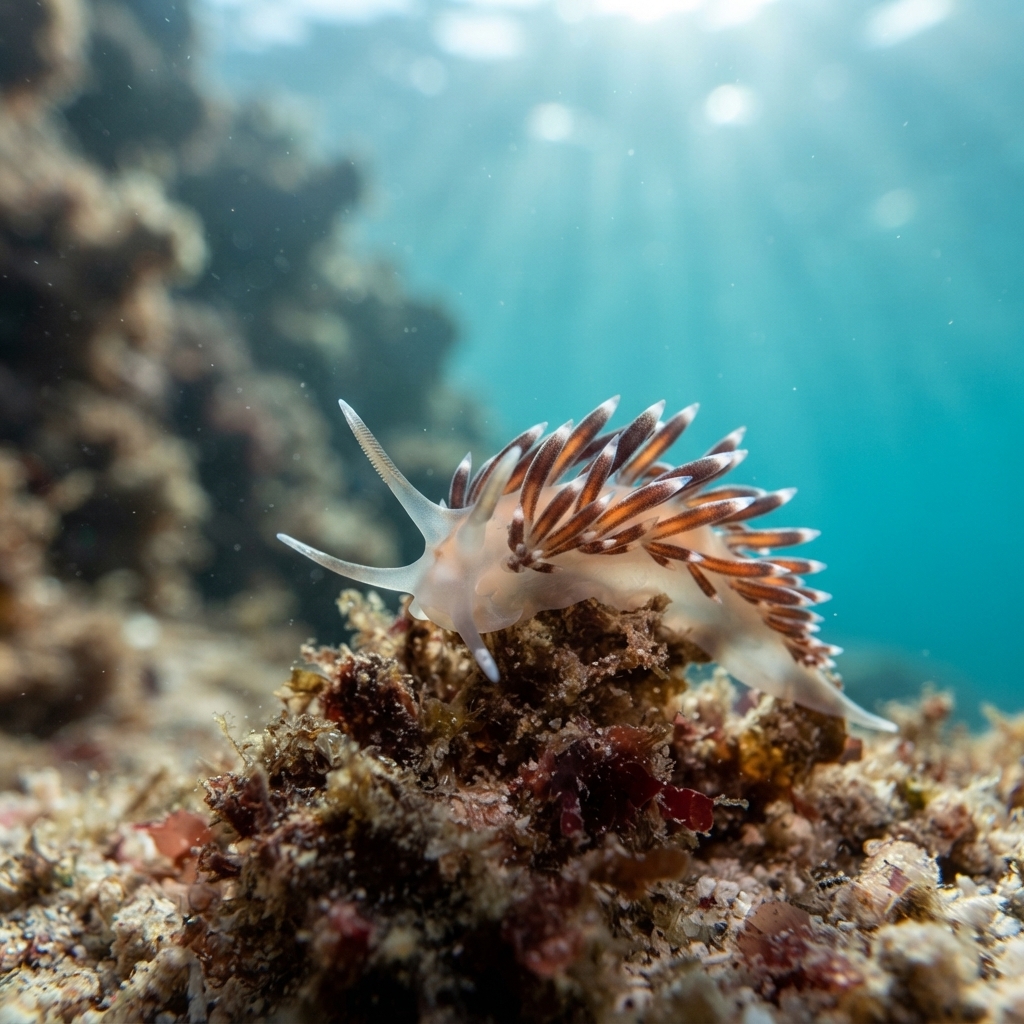
A small aeolid nudibranch (the group with finger-like appendages called cerata covering the back) with slender orange to reddish cerata arranged in tufted clusters along the length of its body. The head bears two rhinophores (sensory tentacles) that stand up above a pale translucent body, giving it a slightly bristly silhouette against dark rubble or algae. It stays small and easy to miss unless you are already scanning close-up on a slow drift or muck-style dive.
Divers typically find it moving slowly over rubble, algae, or hard substrate while grazing, rather than swimming or reacting to a torch. It is not shy so much as easy to overlook, most sightings come from divers deliberately scanning slow, close-in macro dives rather than mid-water passes. Logged frequency skews toward uncommon to rare at most sites, with only a handful of locations reporting it as very common, so patience and a careful eye on the substrate pay off more than searching open water.
Like other aeolid nudibranchs, its cerata likely double as a defence and a digestive extension, storing stinging cells from the hydroids it feeds on and repurposing them against predators.
There is not enough seasonal data to call out a specific window, and the observed temperature range of 7.4 to 13.4 C spans the cold end of the diving season in these regions, so treat it as a year-round find rather than a summer-only one.
This one is most reliably logged in Zeeland in the Netherlands, which accounts for by far the largest share of sightings, followed by Northern Ireland in the United Kingdom and Jutland in Denmark. Smaller but real populations turn up in Nova Scotia, Canada, and in Wales, so it is a species tied to cold, temperate coastlines on both sides of the North Atlantic rather than tropical reefs.
Mapping where Neat Aeolid is logged…
It is most consistently logged in Zeeland in the Netherlands, with strong records also in Northern Ireland, Jutland in Denmark, and Nova Scotia in Canada. These are all cold, temperate coastal sites rather than tropical reefs.
There is not enough monthly data to pin down a season, and its observed temperature range of 7.4 to 13.4 C covers most of the diving year in these regions, so it is best treated as a year-round sighting.
Look for a small, pale-bodied nudibranch with slender orange to reddish cerata clustered along its back and two upright rhinophores on the head. It moves slowly over rubble or algae and is easy to miss without a close, deliberate search.
No, it poses no risk to divers. It is a small, slow-moving grazer that has no interest in interacting with anything larger than a hydroid.
Exact size figures are not well documented, but like most members of its family it stays small, typically only a centimetre or two long, making it a macro-dive target rather than something spotted from a distance.
As an aeolid nudibranch, it feeds on hydroids and is thought to store their stinging cells in its cerata, turning its food into a personal defence system rather than just a meal.
Site and sighting data is aggregated from diver logs, iNaturalist and GBIF. For taxonomy and conservation status:
Light-spotted Aegires
3,168 sites