Felimare bilineata
Spot the Double-lined Sea Slug along Spain's Costa Blanca and Portugal's Algarve. Best sightings Apr, Dec in cool 15-22 °C Atlantic and Mediterranean waters.
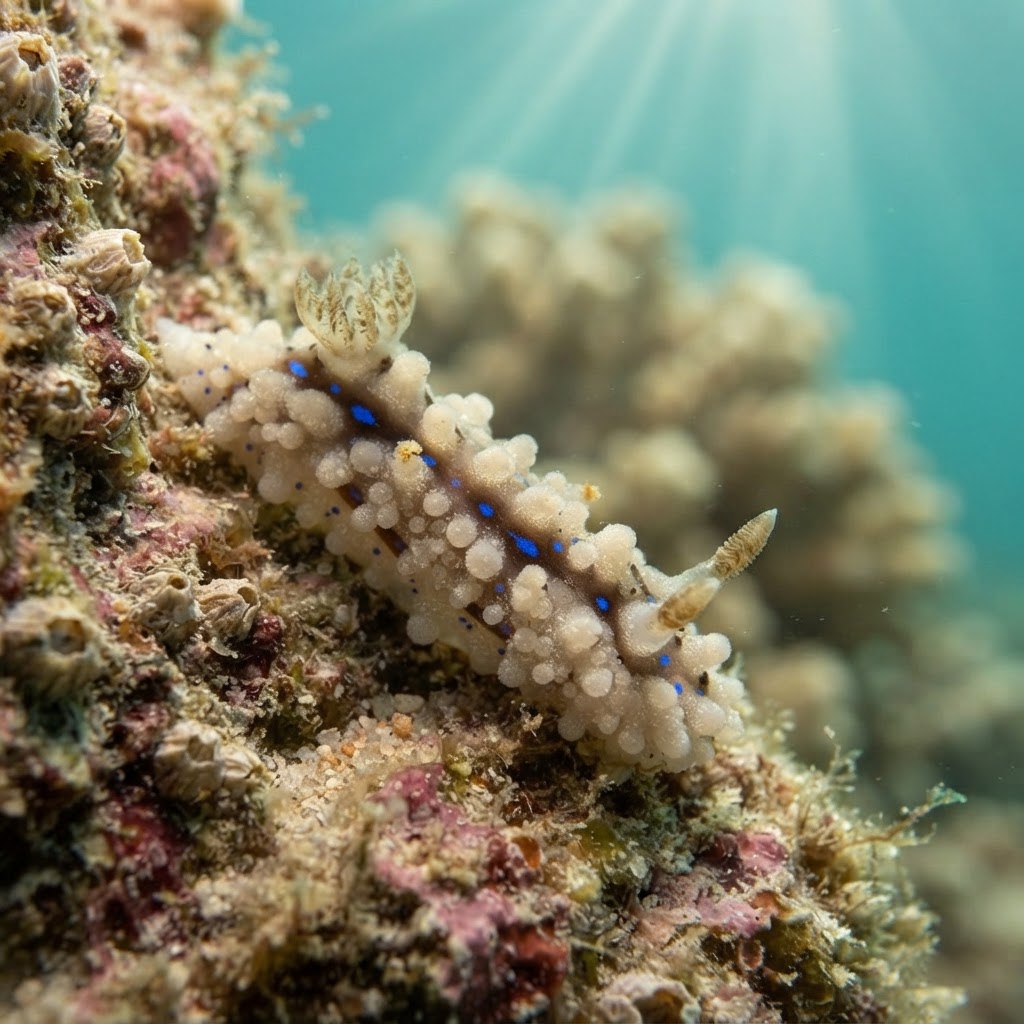
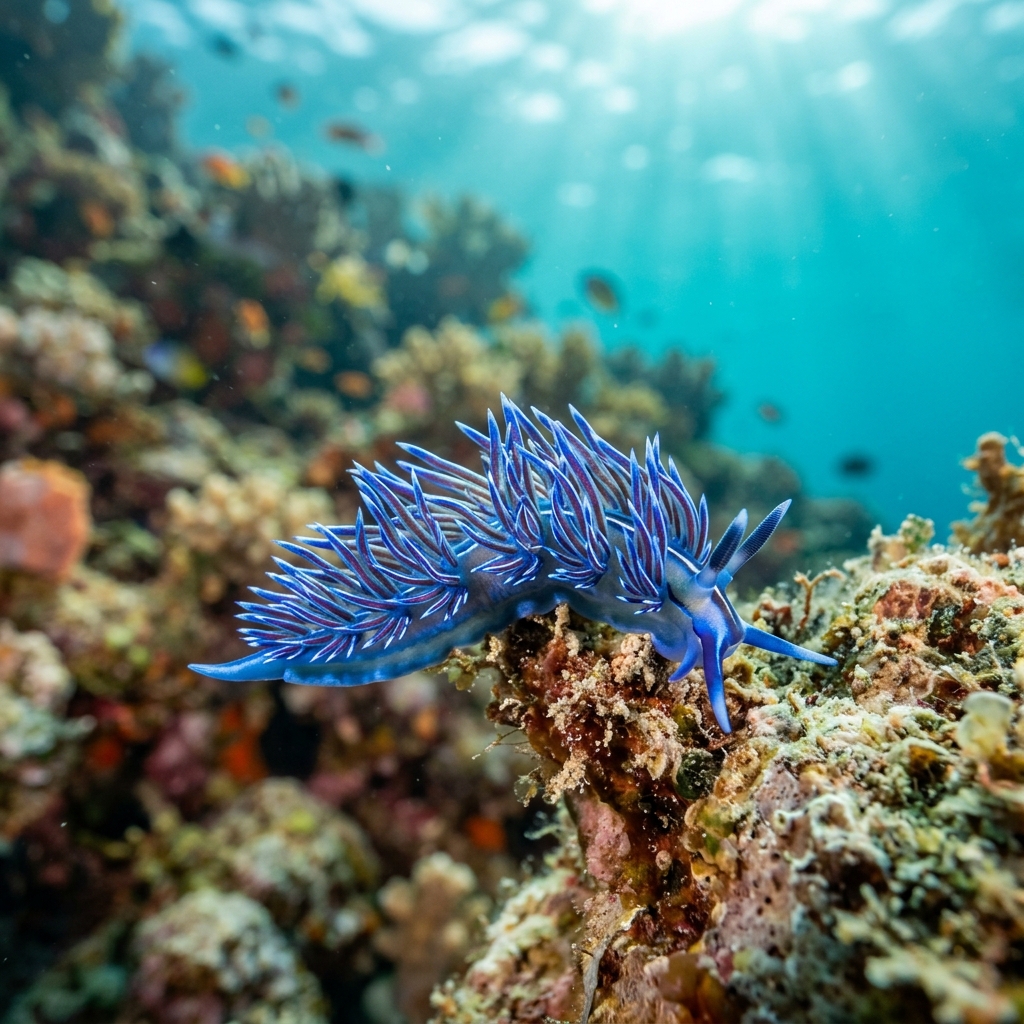
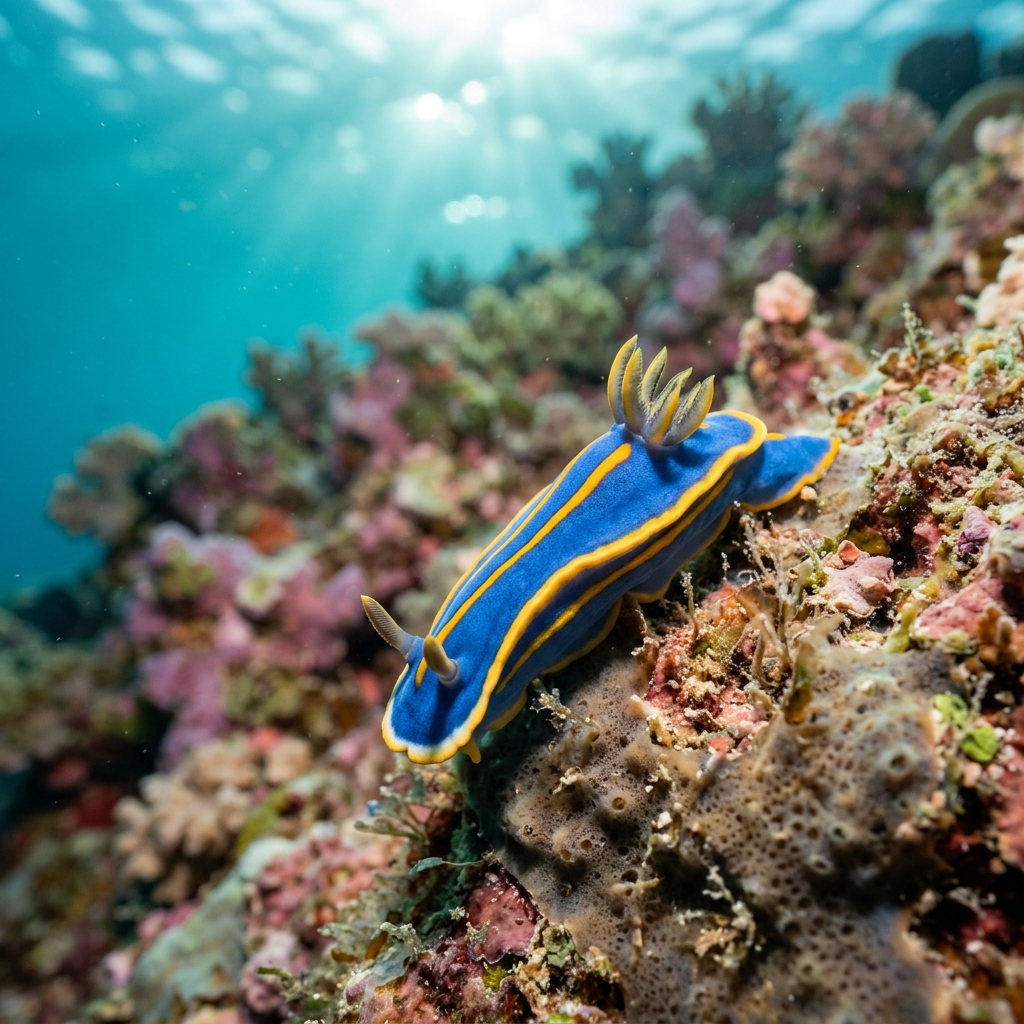
Two bold, parallel lines running the length of the body give this nudibranch its name and make it one of the easier chromodorids to pin down underwater. The base colour is typically deep blue to purple, with the paired lines standing out in bright yellow or white along the mantle edge. It is a small, flattened slug; most encounters involve an animal roughly the size of a fingernail moving slowly across encrusting rock. The cerata (gill plumes at the rear) are pale with coloured tips, and worth checking as they are the first thing to retract when a diver moves too close.
You will almost always find this slug moving slowly across hard substrate, particularly encrusting sponges and bryozoans that make up its diet. It shows little interest in divers at first, continuing to feed, but will curl slightly and pull in its gill plumes if you approach quickly or disturb the water with your hands. Encounters tend to happen on shallower rocky reef sections where light and encrusting growth are both present.
Like other chromodorids, this slug sequesters distasteful or toxic compounds from the sponges it eats and advertises this through its vivid colouration, a defence strategy known as aposematism. Its bright lines essentially signal to potential predators that it is not worth eating.
Sightings concentrate from April through December across Iberian sites, peaking through the warmer half of the year. The species is observed in water temperatures roughly between 15 and 22 °C, which suits the cool-to-temperate Atlantic and Mediterranean conditions of the region.
Almost all logged sightings come from the Iberian Peninsula, with Spain and Portugal accounting for every recorded dive site. Within Spain, Costa Blanca and Andalusia lead the count, while Portugal's Algarve and the Lisbon Coast are the strongest Portuguese areas. If you are planning a trip specifically to find this slug, rocky reefs along the Spanish Mediterranean coast and the Portuguese Atlantic shore are your best starting points.
Mapping where Double-lined Sea Slug is logged…
This species is logged almost exclusively along the Iberian Peninsula. Spain's Costa Blanca and Andalusia are the most productive areas, followed closely by Portugal's Algarve and the Lisbon Coast. Rocky reef dives in shallow to mid-range depths are your best bet in both countries.
Sightings cluster between April and December based on diver records from Iberian sites. The slug tolerates the cooler Atlantic and Mediterranean water temperatures in this window, roughly 15 to 22 °C. Winter months produce far fewer logged encounters.
Look for two parallel lines, typically yellow or white, running along the edges of a deep blue or purple body. The animal is small, usually no larger than a thumbnail, and moves slowly over encrusting reef surfaces. The paired lines along the mantle are the key feature that sets it apart from other local nudibranchs.
No. This nudibranch poses no threat to divers whatsoever. You can observe it closely without any risk, though avoid touching it to protect the animal and to avoid disturbing its mucus coating, which plays a role in its chemical defences.
The vivid lines are a warning signal to predators, a strategy called aposematism. The slug absorbs toxic or foul-tasting compounds from the sponges it feeds on and advertises this through its colouration. Most fish learn to leave it alone after a single unpleasant experience.
Site and sighting data is aggregated from diver logs, iNaturalist and GBIF. For taxonomy and conservation status:
Light-spotted Aegires
3,168 sites