Fiona pinnata
A pinhead-sized nudibranch logged rare in North Island, New Zealand, comfortable in cool 11-19C water year-round.
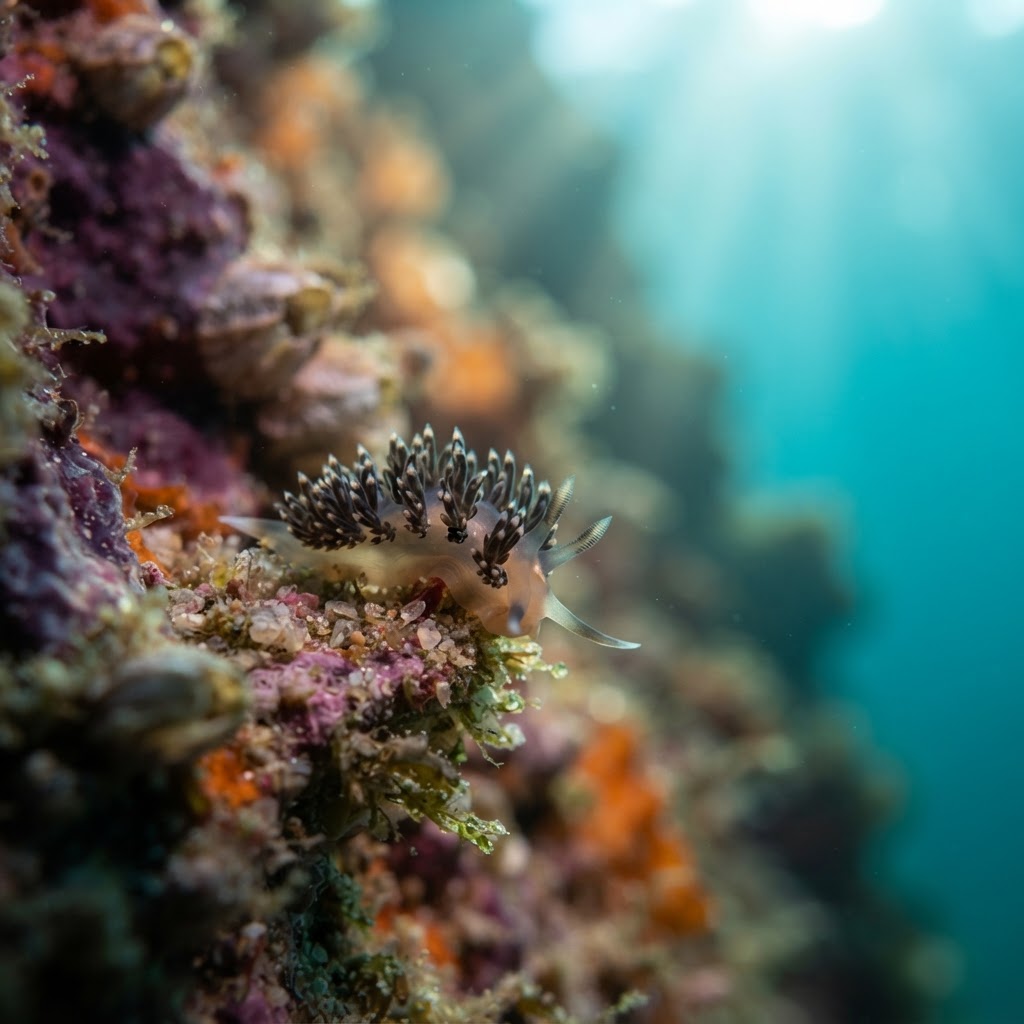
At just 1 cm long, this is a slug you have to hunt for rather than spot from a distance. The body is slender and translucent to pale, covered in fine finger-like projections called cerata that give it a feathery, almost fuzzy outline rather than the smooth back of many nudibranchs. There is no bold colour pattern to key on here; look instead for the shape and texture against a plain rock or drifting debris, since it often turns up on floating material like kelp holdfasts or even jellyfish rather than sitting flat on reef.
Divers who find this one are usually searching slowly over rock, kelp holdfasts, or drifting debris rather than swimming past open reef, since that is the kind of substrate it associates with. It shows no reaction to divers beyond simply being there; at 1 cm it relies on being overlooked rather than fleeing. Most logged sightings are one-off finds rather than repeat encounters at a known cleaning station or den.
This species has an unusual habit among nudibranchs of sometimes living on drifting jellyfish and other pelagic animals, feeding on them, rather than staying tied to the seafloor like most of its relatives.
There is not enough logged data to pin down a season, so treat it as a year-round possibility rather than a seasonal target. Its recorded temperature range of roughly 11 to 19C fits cool-temperate conditions found through most of the year around North Island, New Zealand.
Sightings so far trace back to North Island, New Zealand, which is currently the only place divers have logged it. Treat any encounter here as a real find rather than a routine one, given how rarely it turns up even at the site where it has been recorded.
Mapping where Feather Aeolid is logged…
The only confirmed diver sightings so far are from North Island, New Zealand. It has not been logged elsewhere yet, so New Zealand is currently the place to look.
There is not enough data to identify a clear season, so it appears to be a year-round possibility rather than a seasonal event. Its recorded temperature range of about 11 to 19C spans much of the year in the areas it has been found.
Look for a translucent to pale body only about 1 cm long, covered in fine feathery cerata rather than a smooth back or bold colour pattern. It is often found on kelp holdfasts, drifting debris, or even attached to jellyfish rather than sitting on open reef.
They stay tiny, reaching around 1 cm in length, so you need to search closely rather than expect to spot one from a distance.
Unlike most nudibranchs that stay on the seafloor, this species sometimes rides and feeds on drifting jellyfish and other pelagic hosts, a pretty unusual lifestyle for a slug this size.
Site and sighting data is aggregated from diver logs, iNaturalist and GBIF. For taxonomy and conservation status:
Blue Dragon
3,163 sites