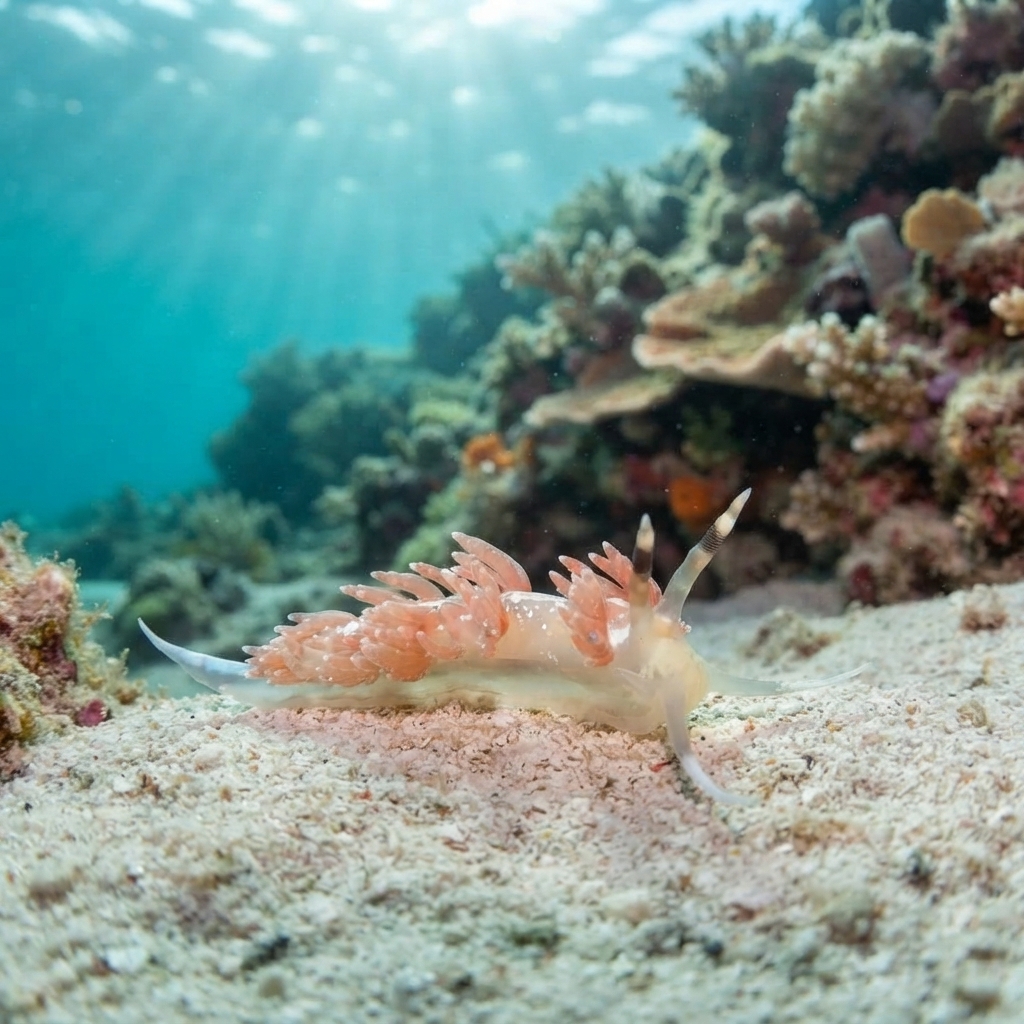
Favorinus vitreus
A rare glassy nudibranch turning up mostly around São Vicente, Cape Verde, in warm 19-29C water year-round.
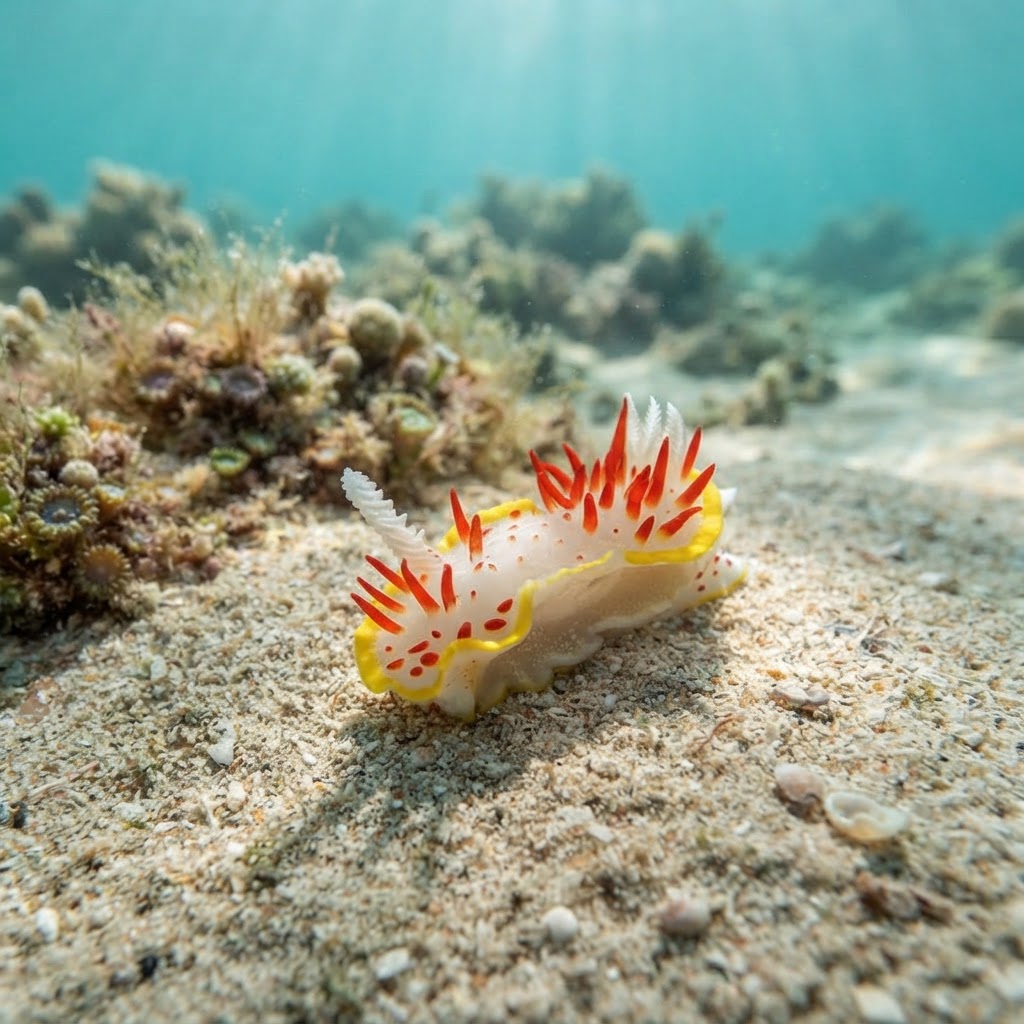
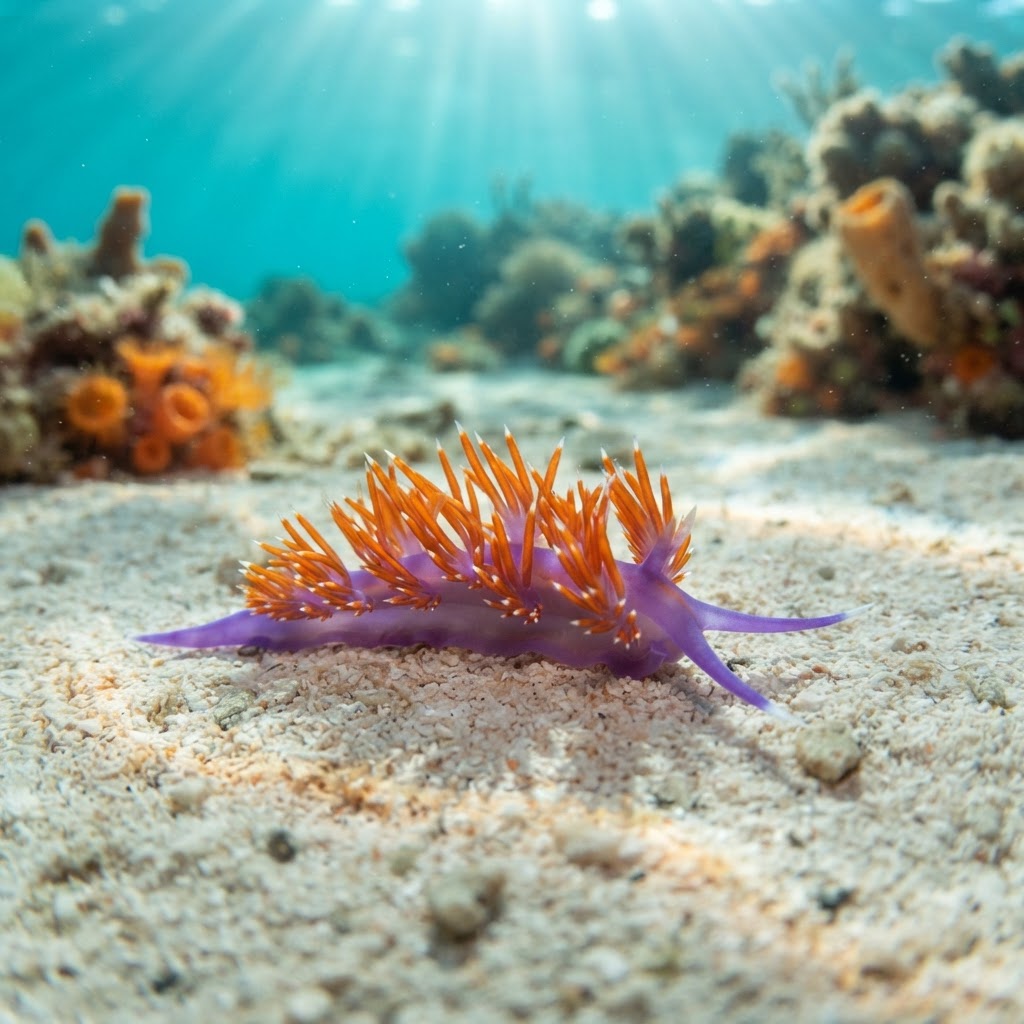
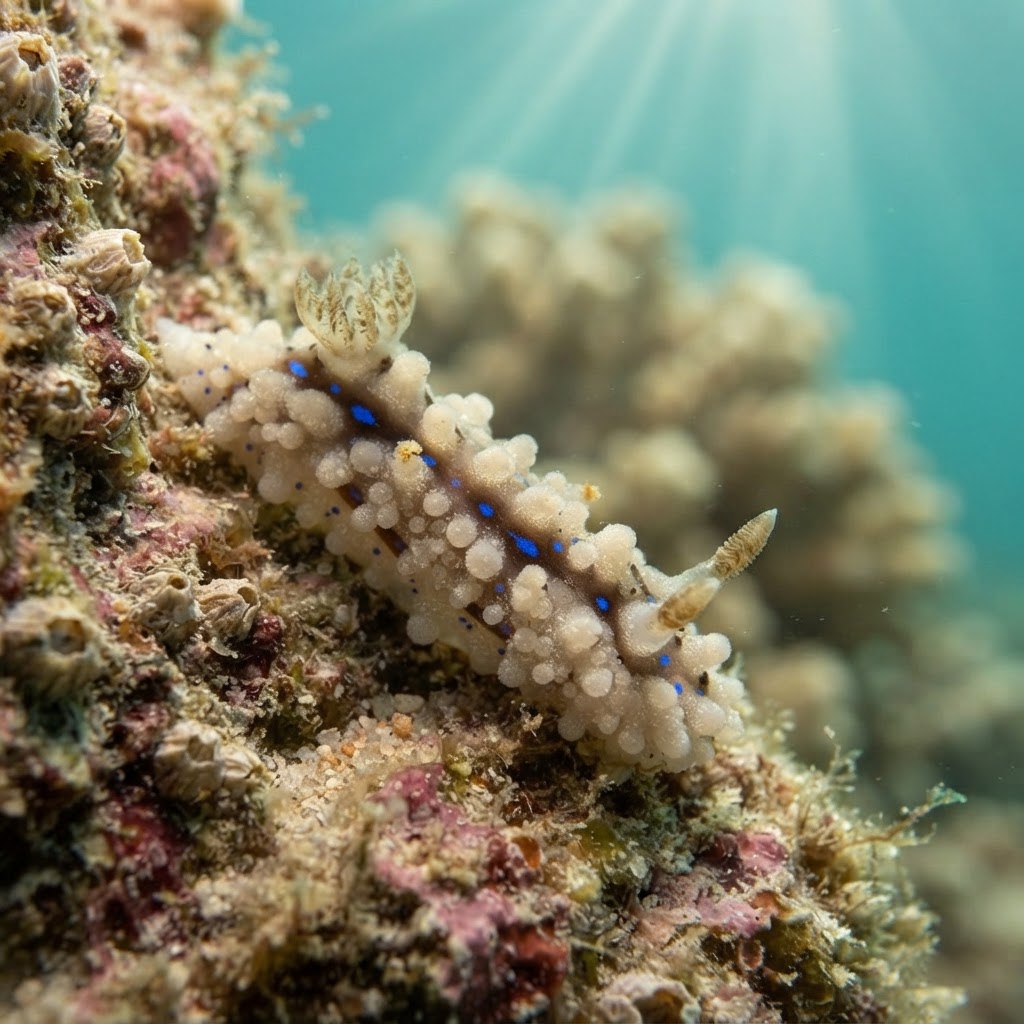
A tiny, glass-clear to pale bodied nudibranch with slender finger-like projections (cerata) along its back, often tipped in orange or reddish pigment that shows through the translucent tissue. It has two rhinophores (sensory tentacles) on the head that curve slightly backward, and the whole animal rarely draws attention until you are looking closely at rubble or algae. Size is not well documented for this species, so go by the see-through body and the coloured cerata tips as your main clue.
Divers find it moving slowly over rubble, sponges, or algal turf, usually while grazing rather than swimming or fleeing. It shows no reaction to divers beyond simply continuing to feed, so a slow, close approach with a torch or macro lens is the way to actually spot one. Because it is logged as rare at nearly every site, expect to spend real time scanning fine substrate rather than expecting an easy find.
Species in the genus Favorinus are known for feeding on the eggs of other sea slugs, including eggs laid by other nudibranchs, which is an unusual dietary specialisation compared to most sea slugs that graze on sponges or hydroids.
Sightings show no clear seasonal pattern, and the observed temperature range of 19.4 to 28.7C spans most of the year on these reefs, so it is best treated as a year-round possibility rather than a seasonal target.
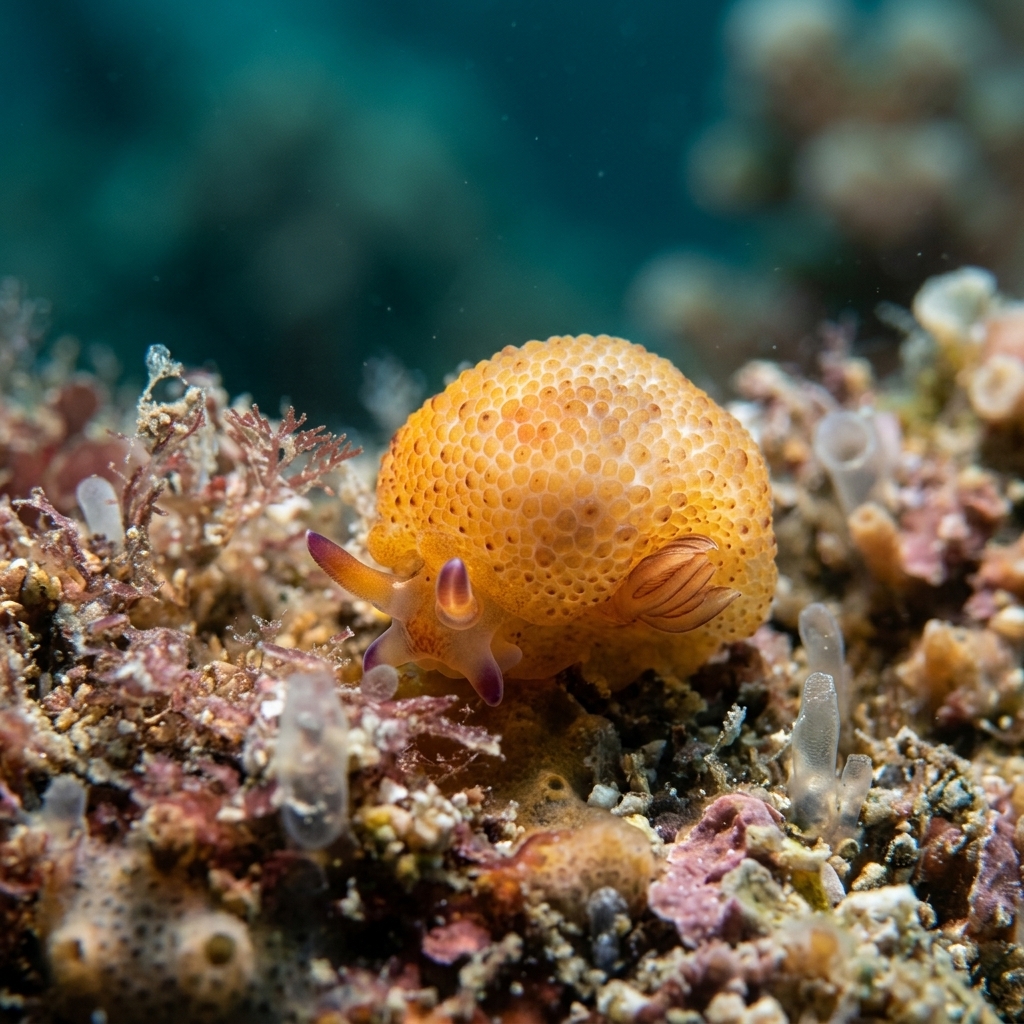
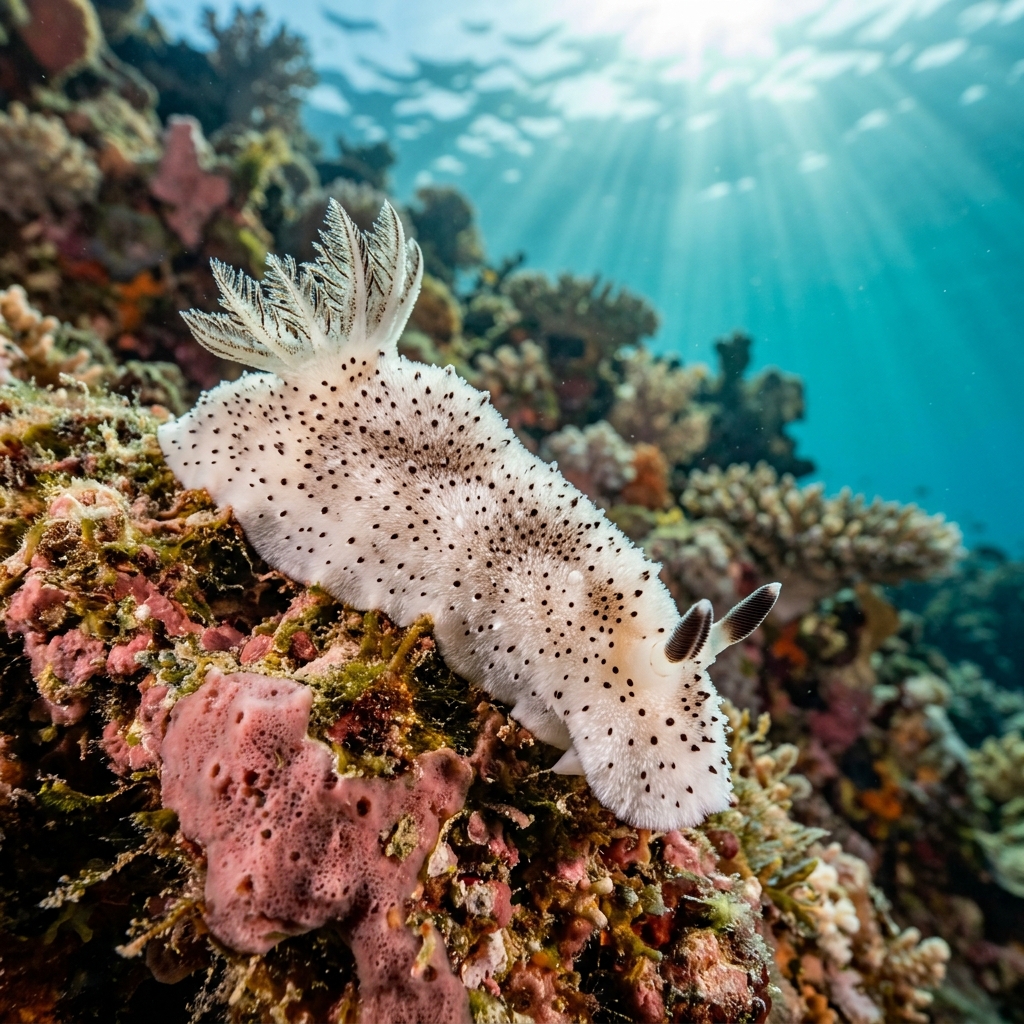
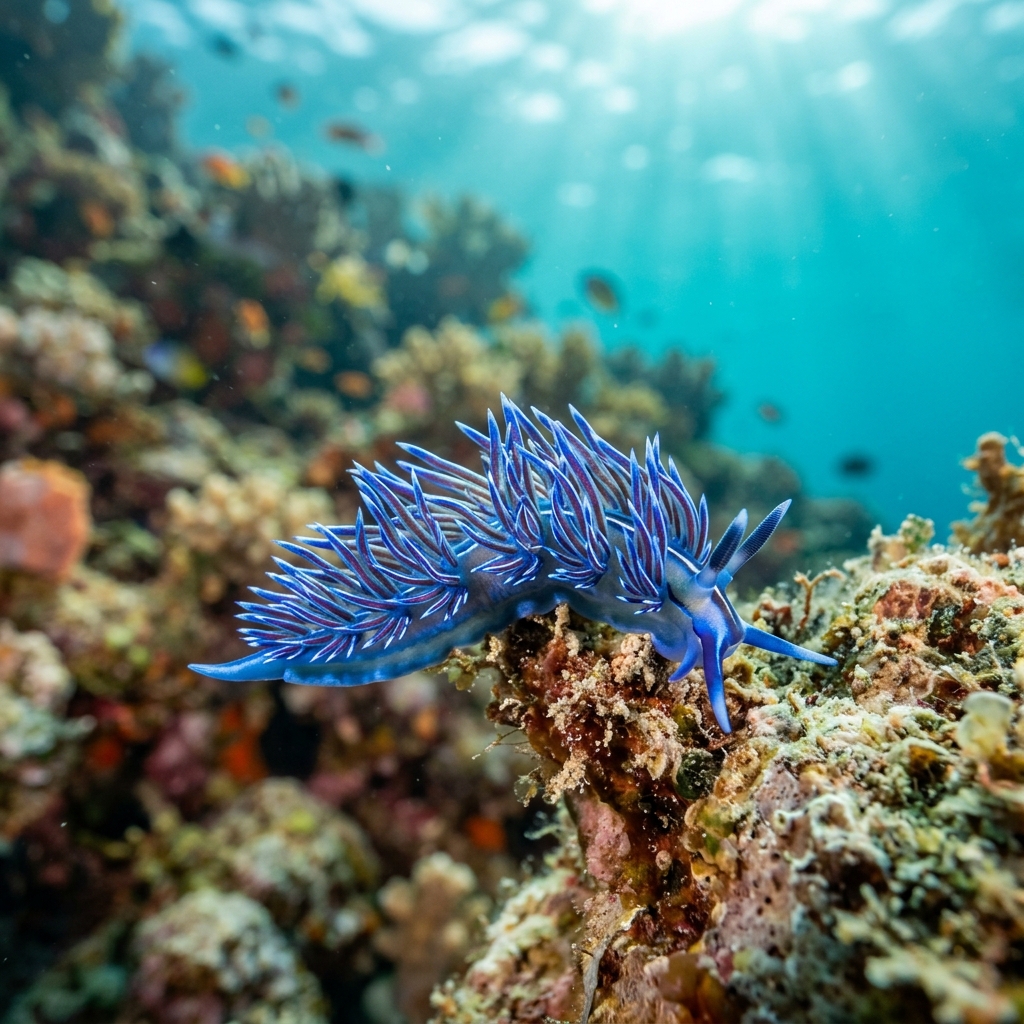
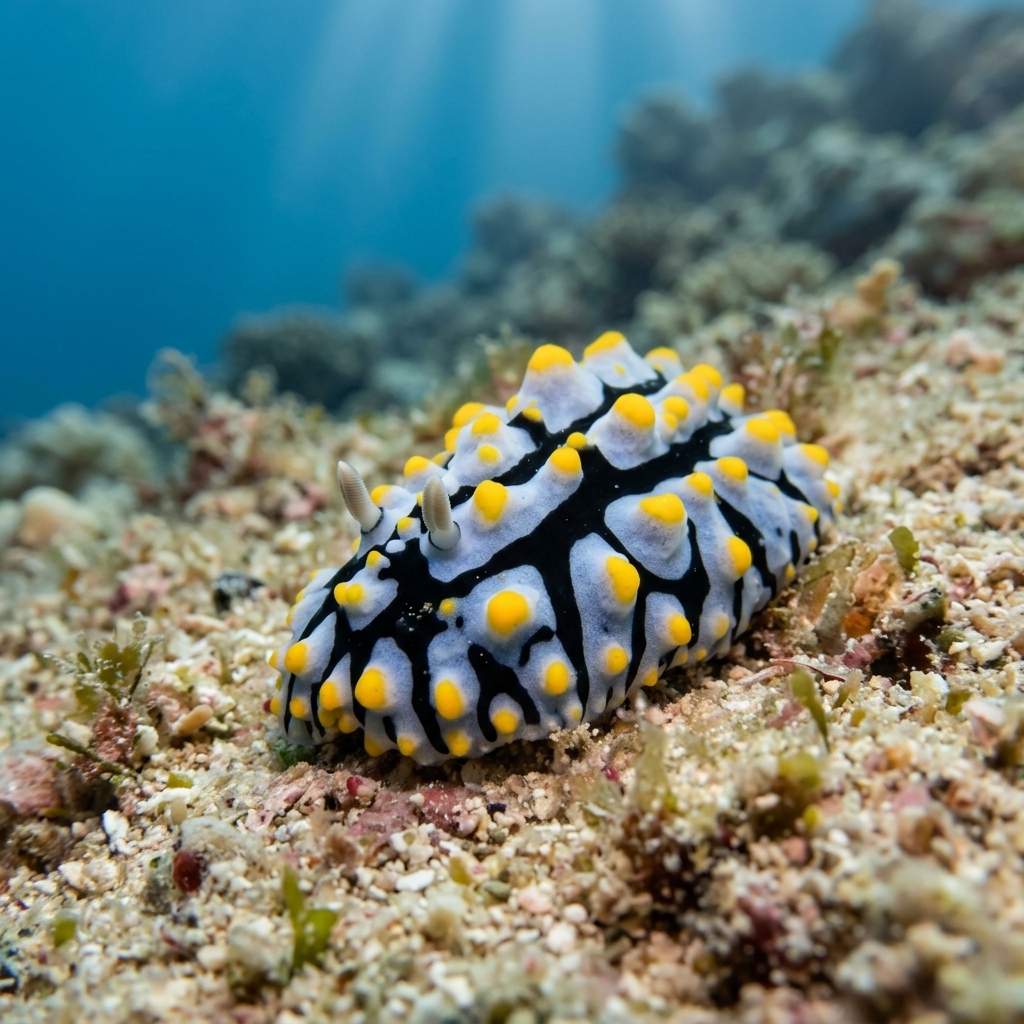
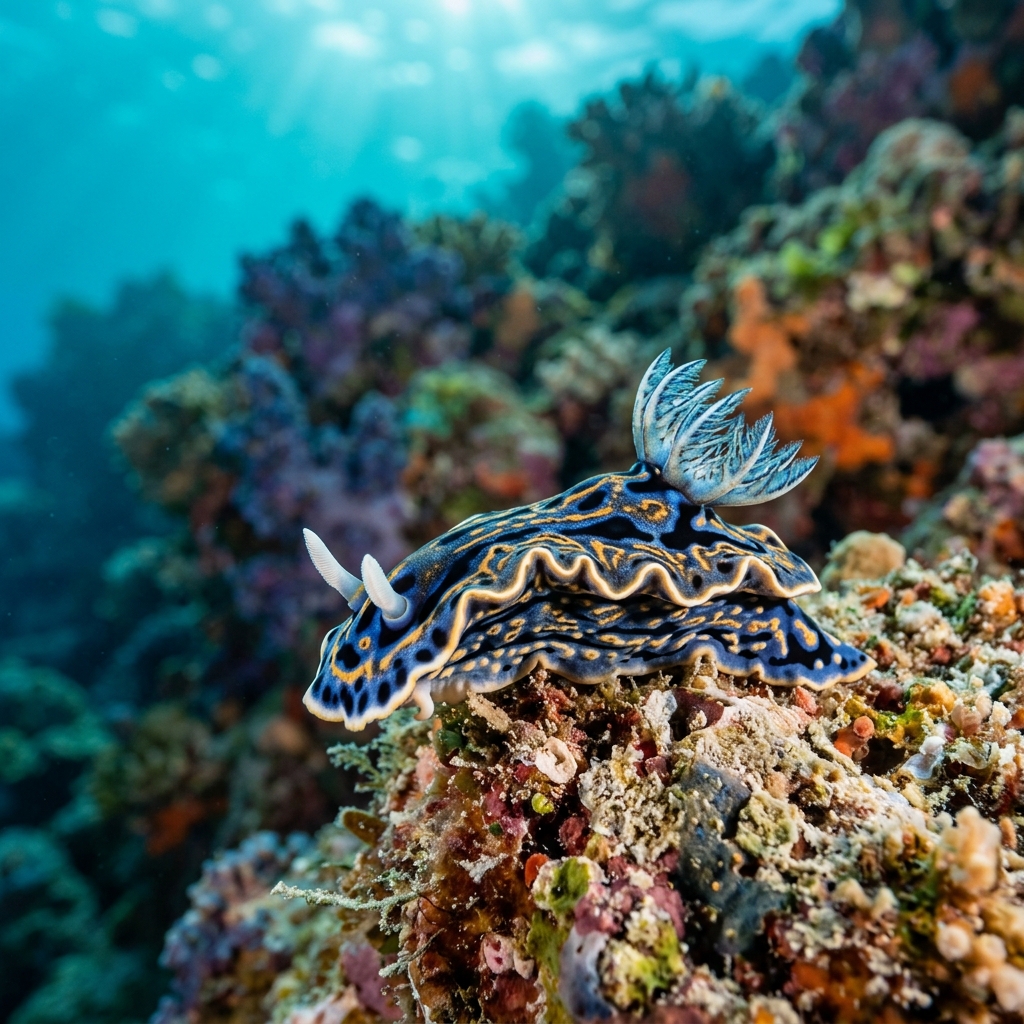
Reef neighbours a diver could mistake it for. Use the identification notes above to tell them apart.
Almost all logged sightings come from São Vicente in Cape Verde, making it the most reliable place to search for this species, with a couple of additional records from Guadeloupe in Grande-Terre and Îles des Saintes. Outside these spots it has barely been reported, so Cape Verde is really the destination if you are chasing this one specifically.
Mapping where Favorinus vitreus is logged…
The most consistent sightings are around São Vicente in Cape Verde, with a small number of additional records from Guadeloupe. Outside these locations it is only sparsely reported.
There is no detected season for this species. It has been logged across a wide temperature range of roughly 19 to 29C, so any time of year is worth checking at the known sites.
Look for a small, glassy or translucent nudibranch with slender cerata tipped in orange or red running down its back. It moves slowly over rubble or algae and lacks the bold solid colour patterns of many reef nudibranchs.
Exact size data is not well documented for this species. Like most Favorinus nudibranchs, expect a small animal best found by scanning closely rather than spotting from a distance.
Favorinus nudibranchs are known egg predators, feeding on the egg masses of other sea slugs rather than the sponges or hydroids most nudibranchs rely on. This makes them an interesting find for divers already searching for other nudibranch species nearby.
No. It poses no danger to divers and is best observed with a calm, close approach so as not to disturb it while feeding.
Site and sighting data is aggregated from diver logs, iNaturalist and GBIF. For taxonomy and conservation status:
Blue Dragon
3,163 sites