Adalaria proxima
Tiny 1cm nudibranch found in cold water down to 7C, most reliably logged in Jutland, Denmark on a rare-to-uncommon basis.
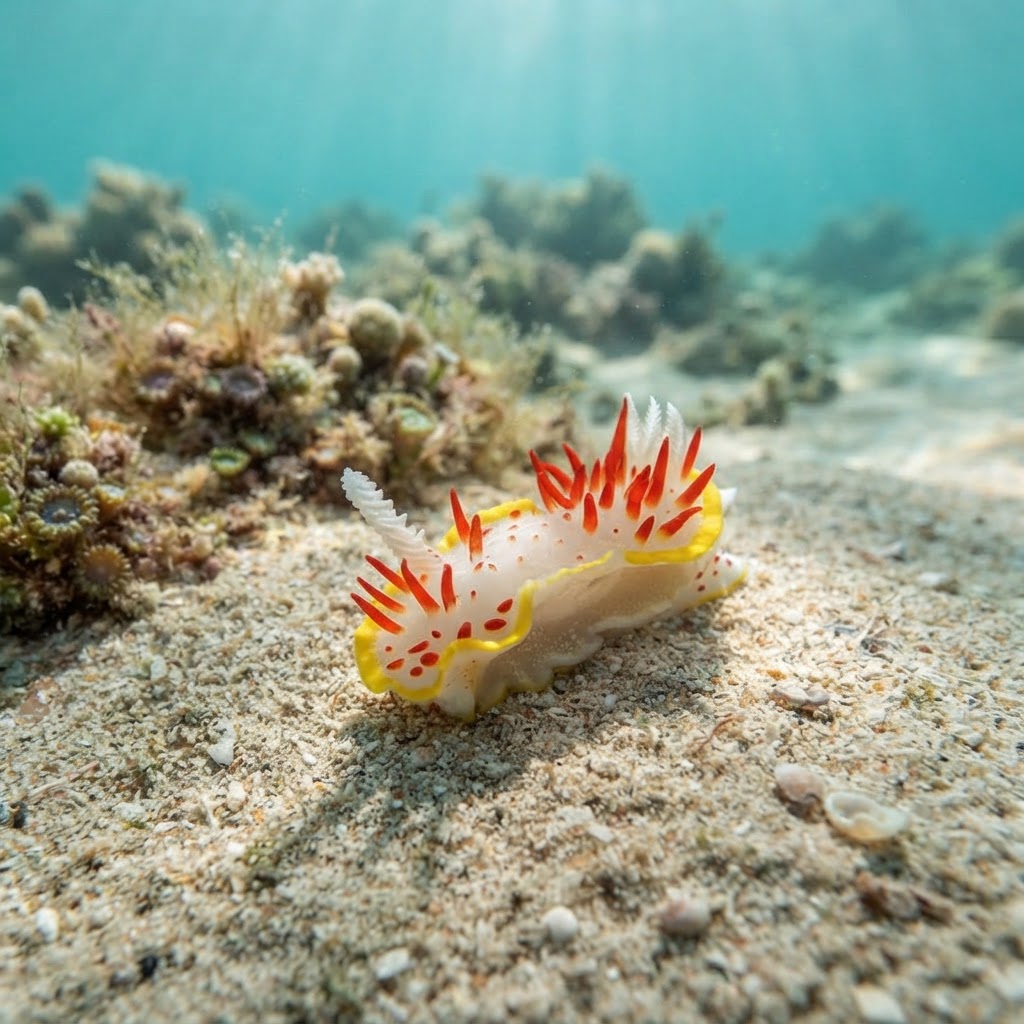
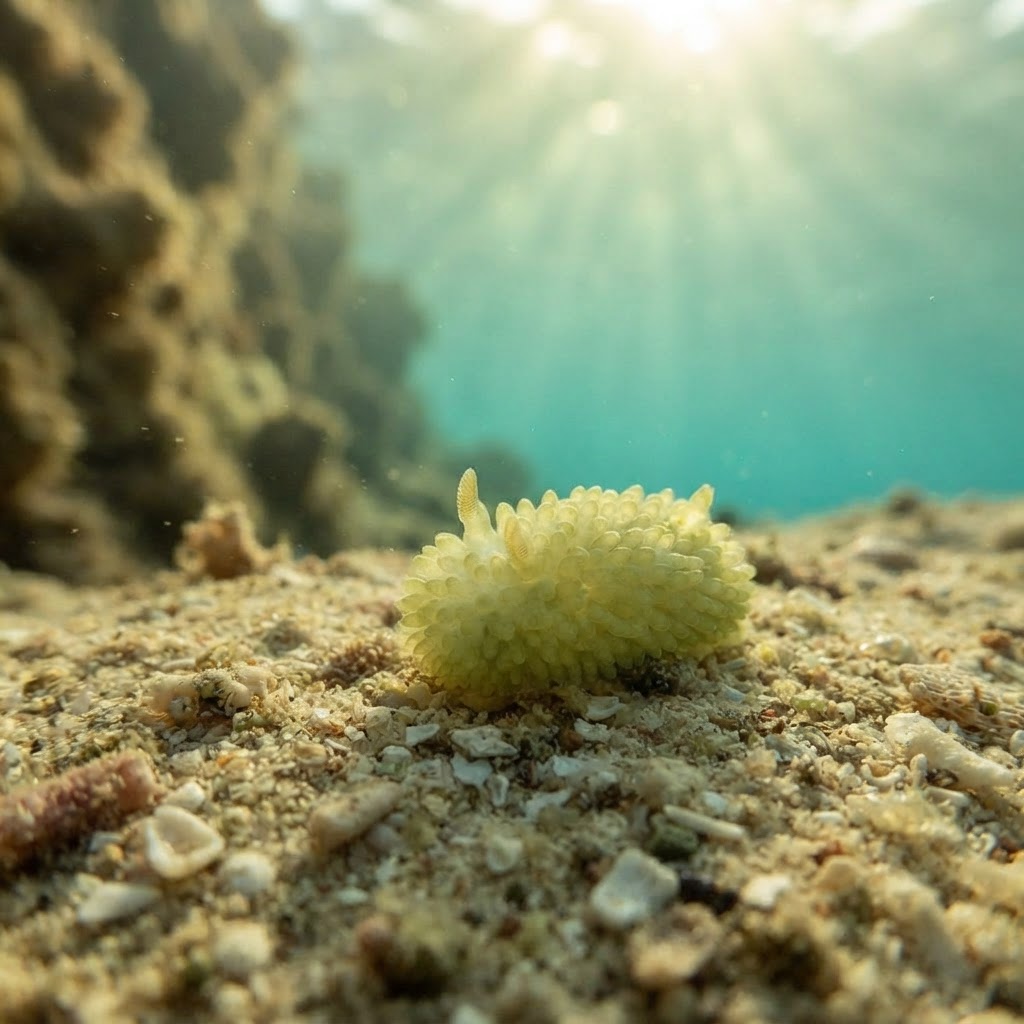
Barely a centimetre long, so you need a slow, close look at rocky or weedy substrate to pick it out at all. Body is pale, whitish to cream, covered in small rounded warts (tubercles) typical of onchidoridid nudibranchs, giving it a rough, granular look rather than smooth. Two rhinophores (small sensory tentacles) sit forward on the head and a cluster of feathery gills sits toward the rear, both retractable if disturbed.
Found grazing slowly over rocky reef and weed-covered surfaces, where it feeds on encrusting organisms rather than moving with any urgency. It shows no reaction to divers beyond retracting its gills and rhinophores if bumped or disturbed, then carrying on once left alone. Most sightings come from divers searching low and close along the substrate rather than spotting it in open water.
Like other onchidoridids, its diet is thought to centre on encrusting bryozoans, which likely explains its patchy, rocky-reef distribution rather than sandy or open ground.
No clear seasonal pattern shows up in the sightings, so treat it as a year-round find within its cold-water range of 7 to 13C. Cold Danish and Canadian waters sit in that range for much of the year, which likely explains the lack of a sharp season.
Reef neighbours a diver could mistake it for. Use the identification notes above to tell them apart.
Most consistently logged in Jutland, Denmark, which accounts for the large majority of recorded sightings, with a smaller presence in British Columbia, Canada. Treat Denmark as the reliable region for this species and Canada as a secondary chance.
Mapping where False Doris is logged…
Jutland in Denmark is by far the most reliable region for this species, with a smaller number of sightings logged in British Columbia, Canada. Outside these two areas it has not been well documented by divers.
There is no detected seasonal pattern, so it is considered a year-round species within its cold-water niche of 7 to 13C. Sightings appear spread across the year rather than clustered in a specific month.
Look for a pale, warty-bodied nudibranch barely a centimetre long on rocky or weedy substrate. It has two forward rhinophores and a cluster of feathery gills toward the rear, both of which retract if the animal is disturbed.
It only reaches about 1cm in length, making it one of the smaller nudibranchs divers log, so a careful, close search of the substrate is needed to find one.
No, it poses no danger to divers. It has no sting or venom of concern and simply retracts its gills and rhinophores if touched or disturbed.
It is thought to feed on encrusting bryozoans on rocky reef surfaces, in keeping with other members of the onchidorididae family, which likely shapes where it turns up on a dive.
Site and sighting data is aggregated from diver logs, iNaturalist and GBIF. For taxonomy and conservation status:
Blue Dragon
3,163 sites