Facelinopsis marioni
A small aeolid nudibranch turning up uncommonly along the French Riviera and Andalusia in cool 15-21°C water, year-round.
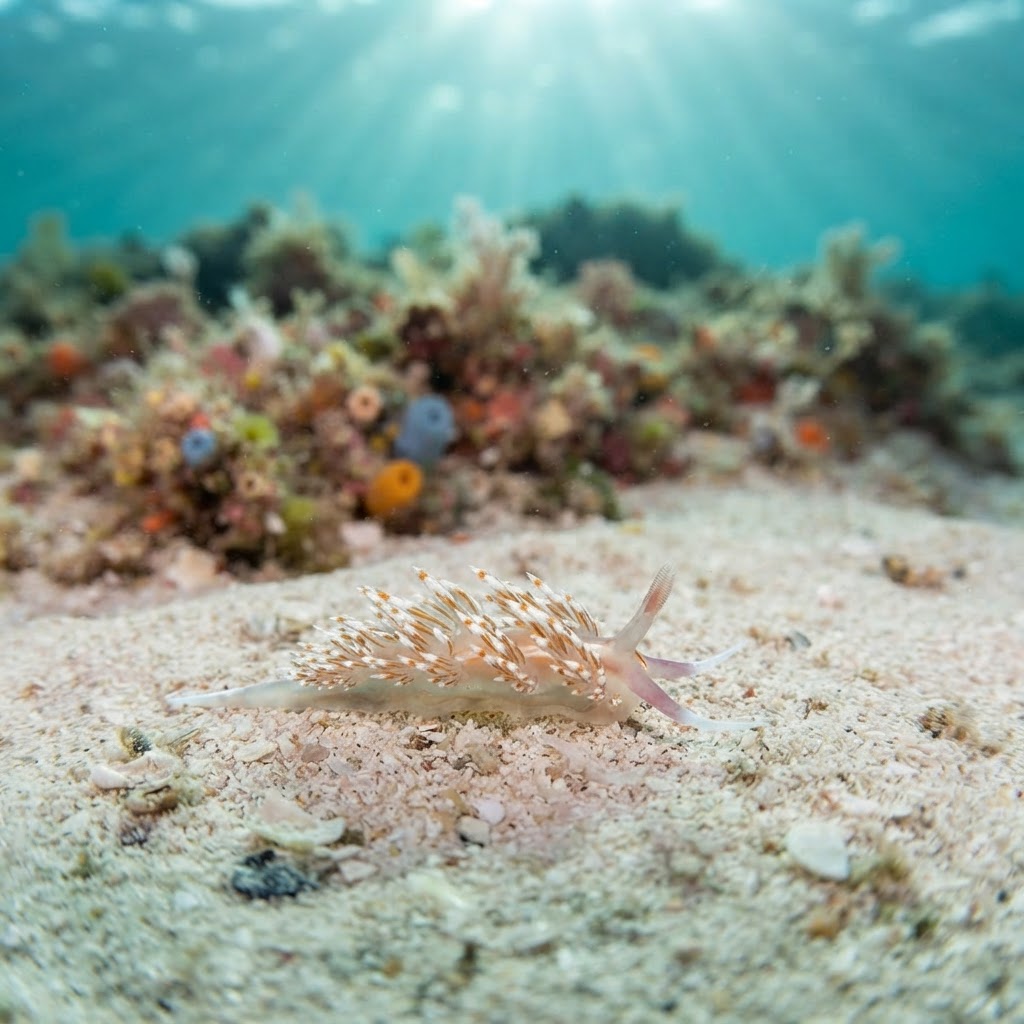
Look for a small, slender-bodied aeolid nudibranch (a group of nudibranchs with finger-like projections called cerata covering the back), its cerata giving it a bristly, almost furred silhouette rather than a smooth dorid shape. Colouring tends toward pale or translucent tones with the cerata often tipped in a contrasting shade, which is the main thing to key on against a rocky or algae-covered background. Size is on the small side, so divers usually spot it while working slowly over encrusted rock rather than mid-water.
Divers typically find this one parked on rocky or encrusted substrate, moving slowly as it grazes rather than swimming or drifting. It shows no reaction to divers beyond the usual nudibranch indifference, so a steady light and a patient look along the reef surface is the way to actually spot it. Most sightings come from slow macro-style dives rather than drift or wide-angle dives.
Like other aeolid nudibranchs, it likely feeds on hydroids and can store stinging cells from that prey in its cerata for its own defence, which is part of why the cerata are worth a close look rather than a passing glance.
No clear seasonal peak shows up in the sighting data, and the observed temperature range of roughly 15 to 21°C spans much of the Mediterranean diving calendar, so treat it as a year-round find rather than a seasonal specialty.
Most reliably logged along the French Riviera and Provence, which accounts for the bulk of sightings, with a secondary and still solid population in Andalusia, Spain. Divers doing macro-focused dives on rocky Mediterranean reefs in either region stand a reasonable chance of finding it if they search slowly along encrusted surfaces.
Mapping where Marion's Facelinopsis is logged…
It's most often found along the French Riviera and Provence in France, with a good number of sightings also logged in Andalusia, Spain. Both are rocky Mediterranean reef settings where slow, close-focus searching pays off.
Sighting data shows no strong seasonal pattern, and it's been recorded across a wide temperature band from about 15 to 21°C, so it's reasonable to look for it year-round in the Mediterranean.
Look for a small aeolid nudibranch with a slender body covered in finger-like cerata, giving it a bristly outline rather than a smooth dorid shape. It tends toward pale, understated colouring, so it's easy to miss against rocky, encrusted substrate unless you're looking closely.
Exact size data isn't available, but like most facelinid nudibranchs it stays small, generally in the centimetre-scale range that rewards a close macro look rather than a scan from a distance.
No, it poses no danger to divers. It's a small, stationary grazer that can simply be observed and photographed without any need for caution.
As an aeolid nudibranch, it most likely grazes on hydroids, and species in this group are known to repurpose stinging cells from that prey and store them in their own cerata for defence.
Site and sighting data is aggregated from diver logs, iNaturalist and GBIF. For taxonomy and conservation status:
Light-spotted Aegires
3,168 sites