Facelina annulicornis
A cool-water nudibranch logged from the Lisbon Coast to Welsh shores, usually turning up as an uncommon find in 10 to 18°C water.
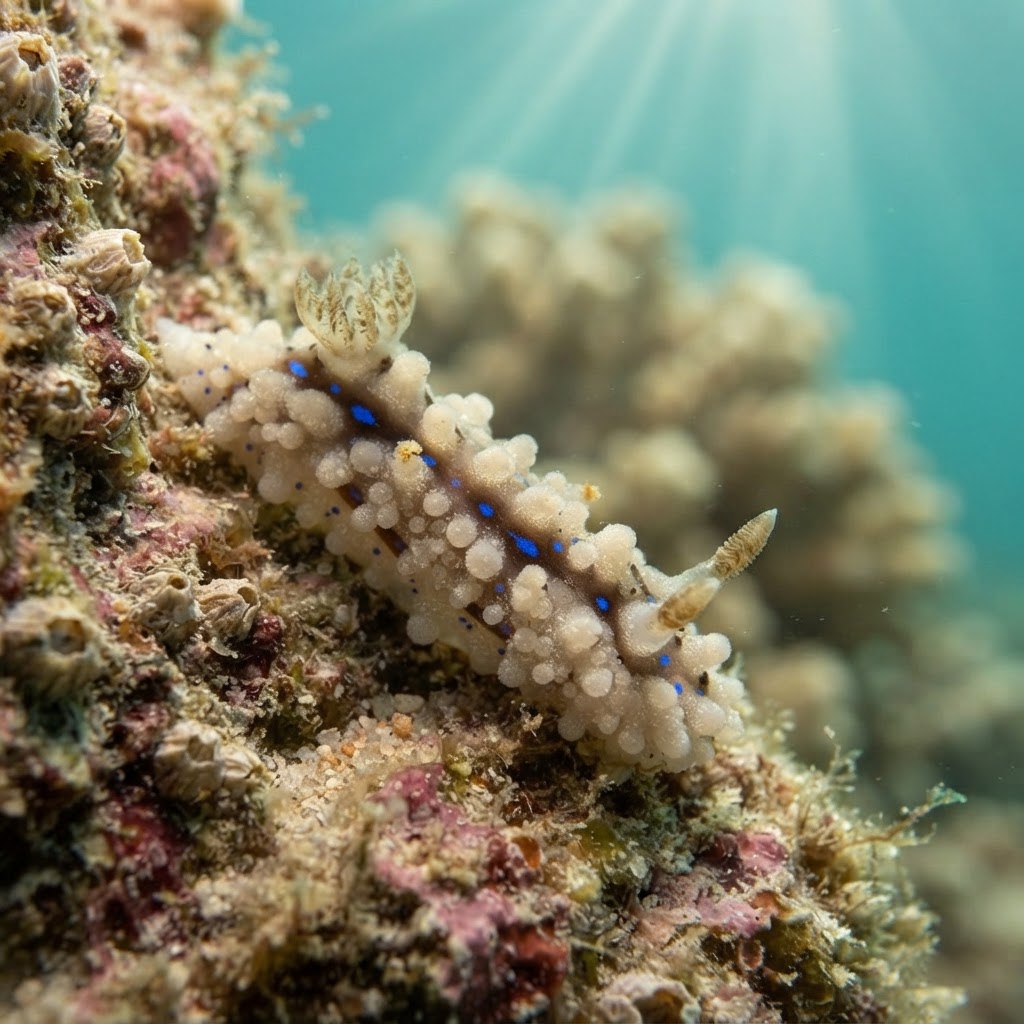
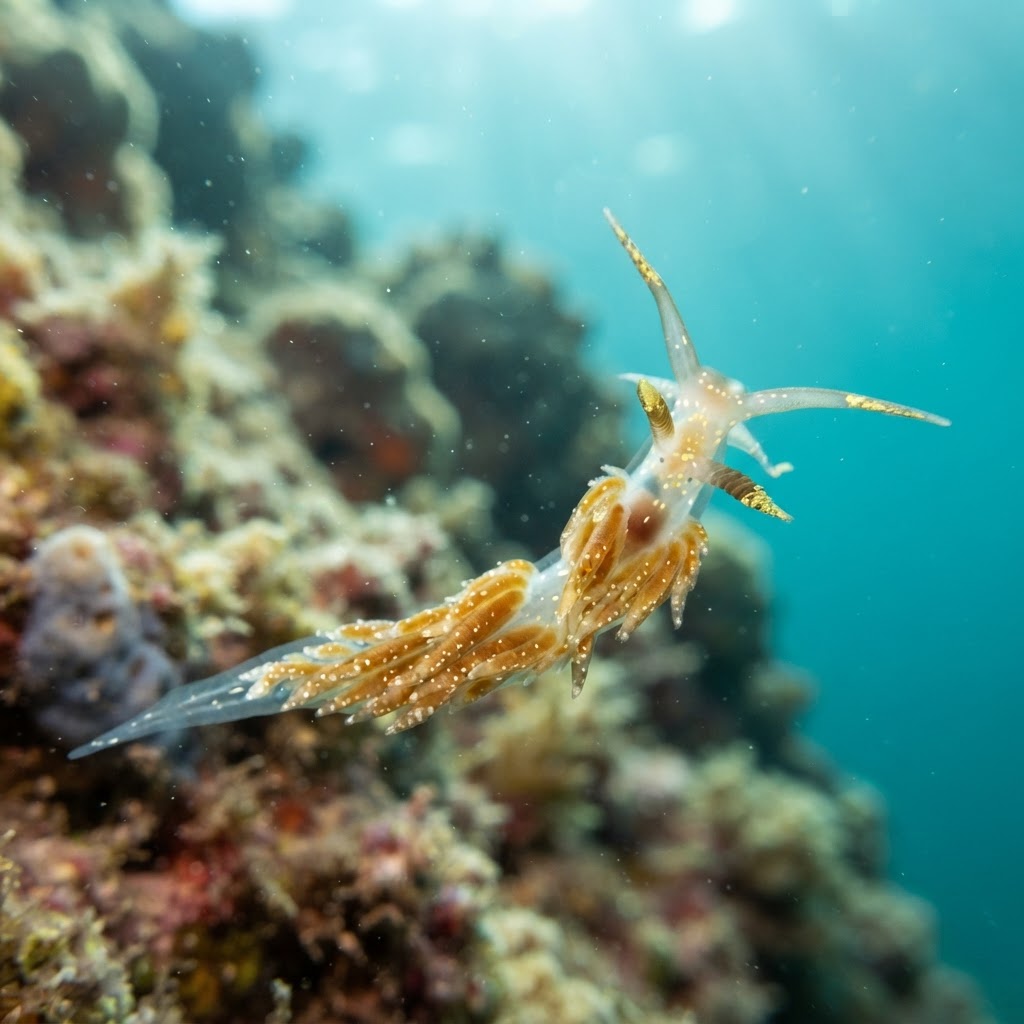
A small, slender sea slug with a translucent body through which internal organs often show as a faint central line. The back is covered in rows of finger-like projections called cerata (tentacle-like breathing and digestive structures), typically tipped in shades of orange or brown with pale rings near the base, which is where the annulicornis part of its name comes from. Rhinophores (the paired sensory stalks on the head) are ringed, giving them a banded look against the clear body.
Divers log this nudibranch slowly grazing over rocky reef and algae-covered surfaces, where it hunts hydroids (small colonial relatives of jellyfish) tucked into cracks and encrusting growth. It shows no reaction to divers beyond its usual unhurried crawl, so patient macro photographers get plenty of time with it once spotted. Most sightings come from close, careful searching along low-light crevices and under ledges rather than open swimming water.
Like other aeolid nudibranchs, it likely stores stinging cells from the hydroids it eats inside the tips of its own cerata, turning its food source into a passive defence.
There is not enough seasonal data to call a peak season, so treat sightings as possible year-round. Its observed temperature niche of 10.3 to 18.1°C fits the cooler water typical of the UK, Ireland, and Atlantic Portugal for much of the year, which likely explains the lack of a sharp seasonal spike.
This one turns up most reliably around the Lisbon Coast in Portugal, and across the United Kingdom in Wales, England, and Northern Ireland, with a smaller but real presence on the French Riviera and in Galway & Connemara, Ireland. The UK sites cumulatively carry the strongest tally, making Wales and England solid bets for a dedicated search.
Mapping where Ring-horned Facelina is logged…
It is most commonly logged along the Lisbon Coast in Portugal and across UK diving regions including Wales, England, and Northern Ireland. Smaller numbers come from the French Riviera and Ireland's Galway & Connemara coast.
There is no clear seasonal pattern in current sightings, so it appears to be a year-round find. It is recorded in water between 10.3 and 18.1°C, matching cooler temperate conditions rather than a specific season.
Look for a small, translucent-bodied nudibranch with rows of cerata tipped in orange or brown and ringed rhinophores on the head. It moves slowly over rock and algae, often near crevices where hydroids grow.
Exact size data is not confirmed for this species, but like most Facelina nudibranchs it is a small macro subject, generally only a few centimetres long, so a careful eye or a macro lens helps spot one.
No, it poses no danger to divers. It is a small, slow-moving nudibranch that can be observed and photographed safely at close range.
It feeds on hydroids, small stinging relatives of jellyfish found on rock and reef surfaces. It likely repurposes the hydroids' stinging cells for its own defence, storing them in the tips of its cerata.
Site and sighting data is aggregated from diver logs, iNaturalist and GBIF. For taxonomy and conservation status:
Light-spotted Aegires
3,168 sites