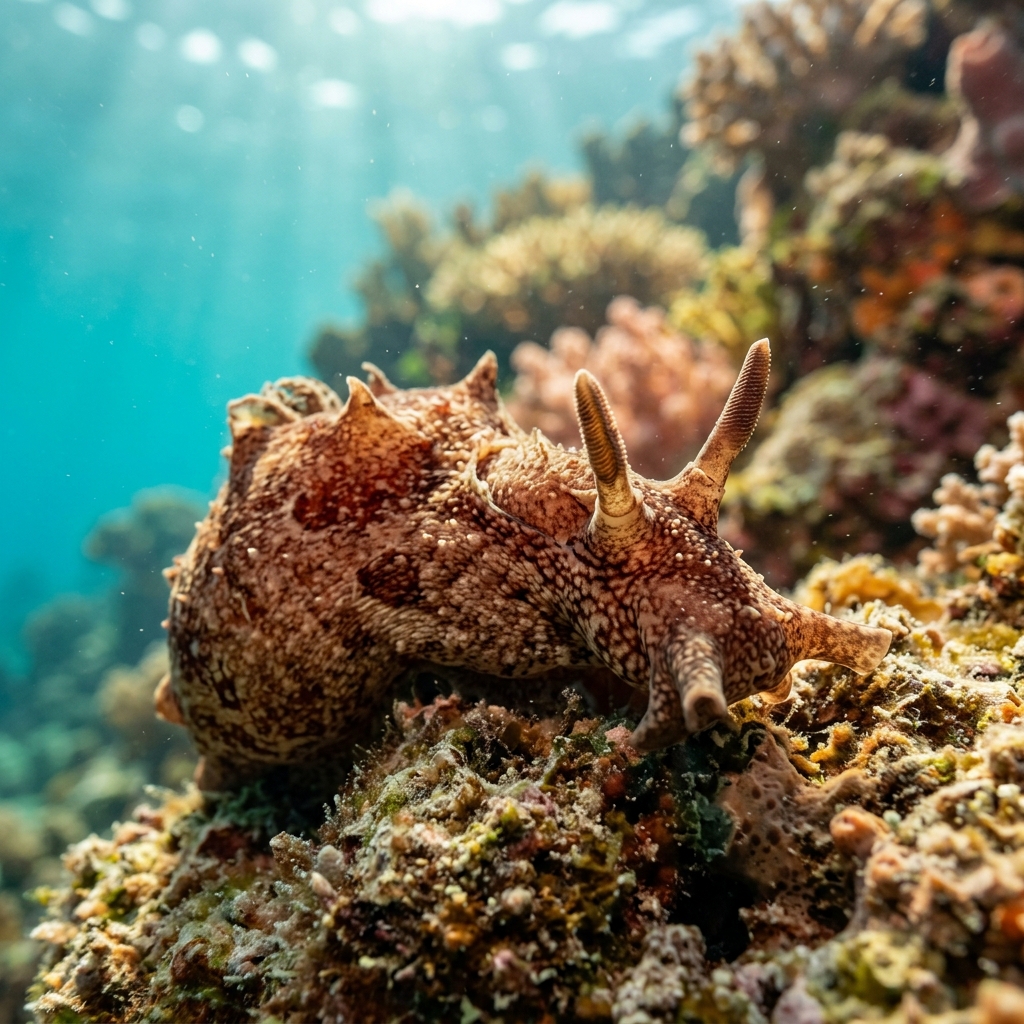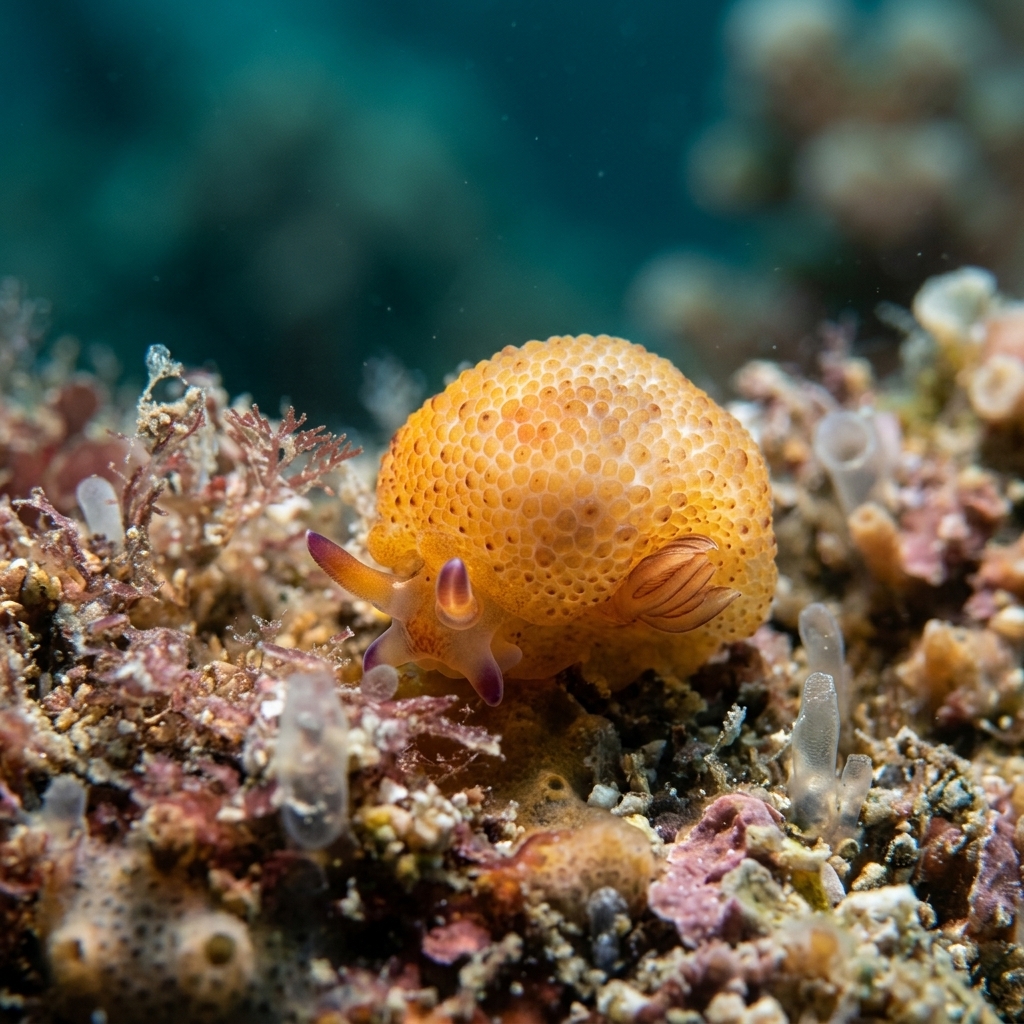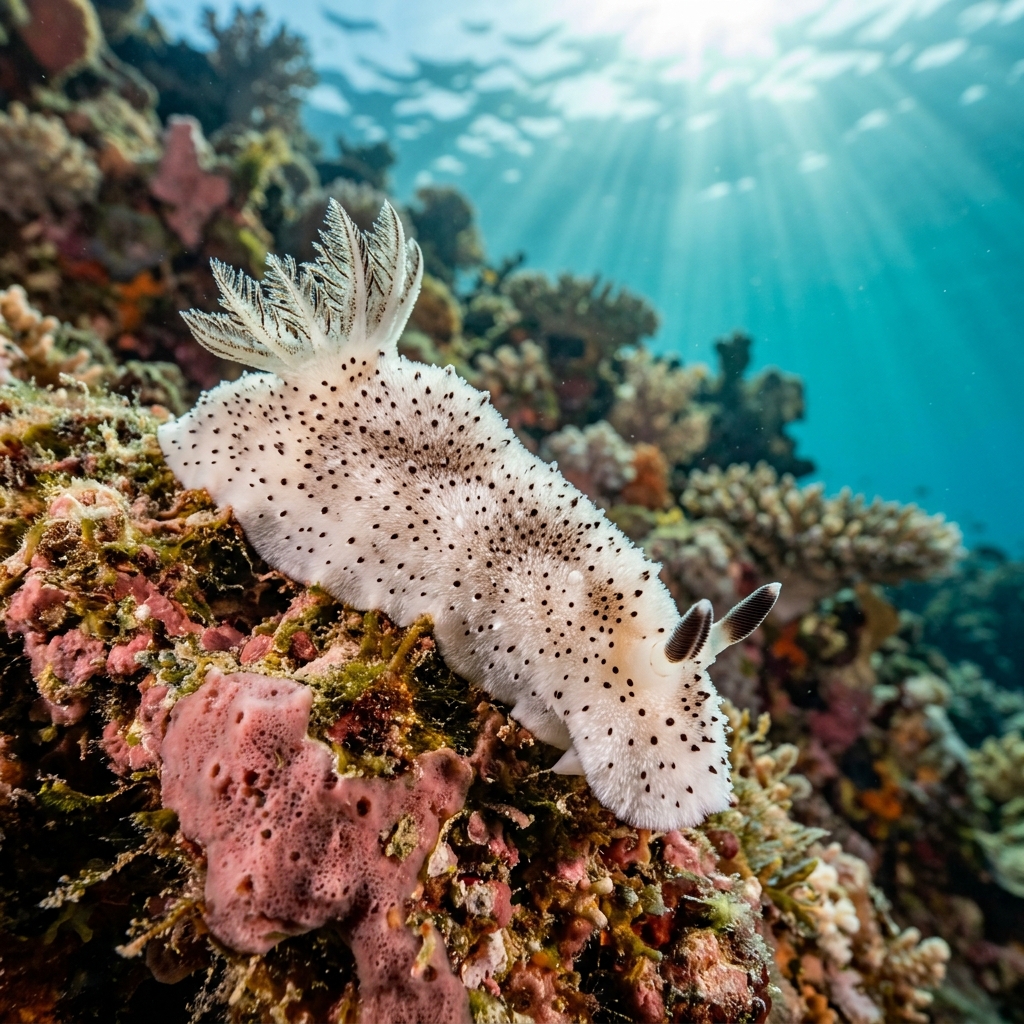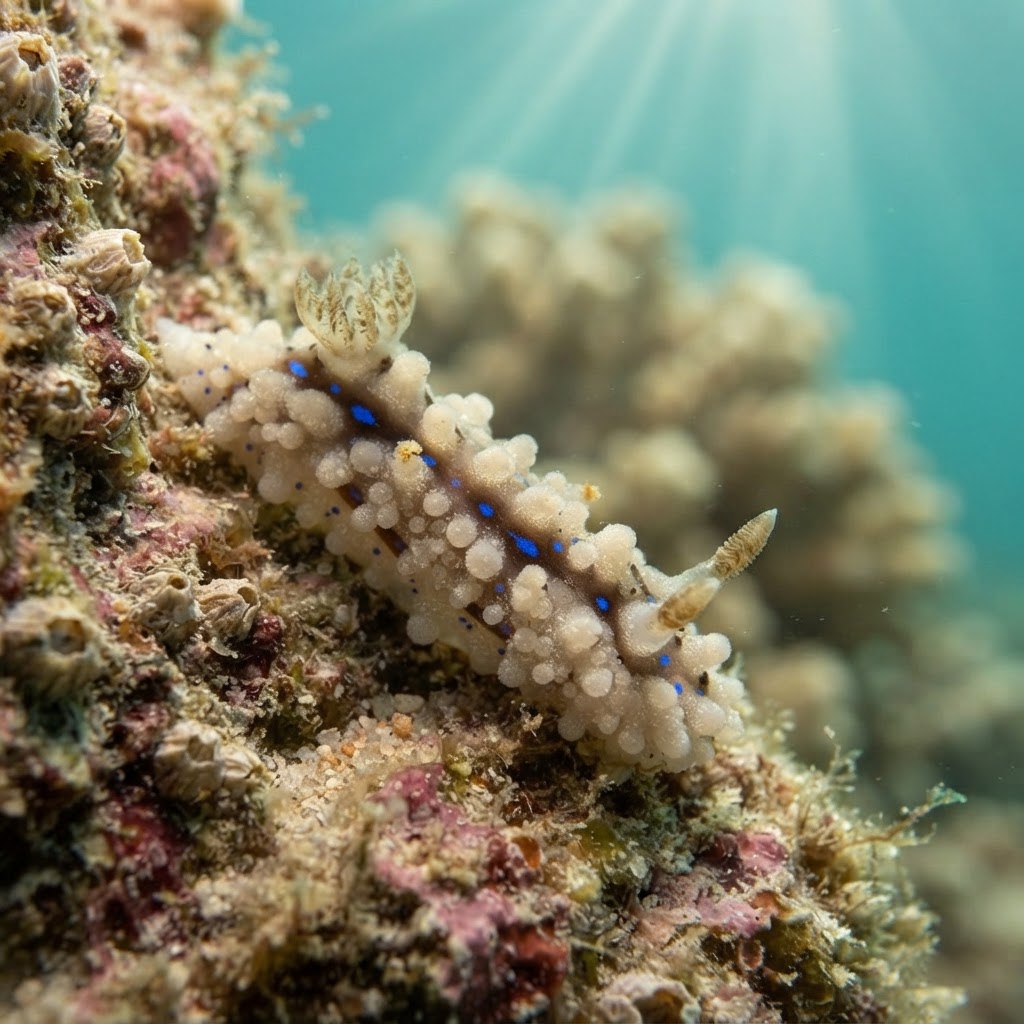
Edmundsella dushia
Spot this slender nudibranch on Florida reefs and Guadeloupe's Grande-Terre year-round in warm 19-29C water.
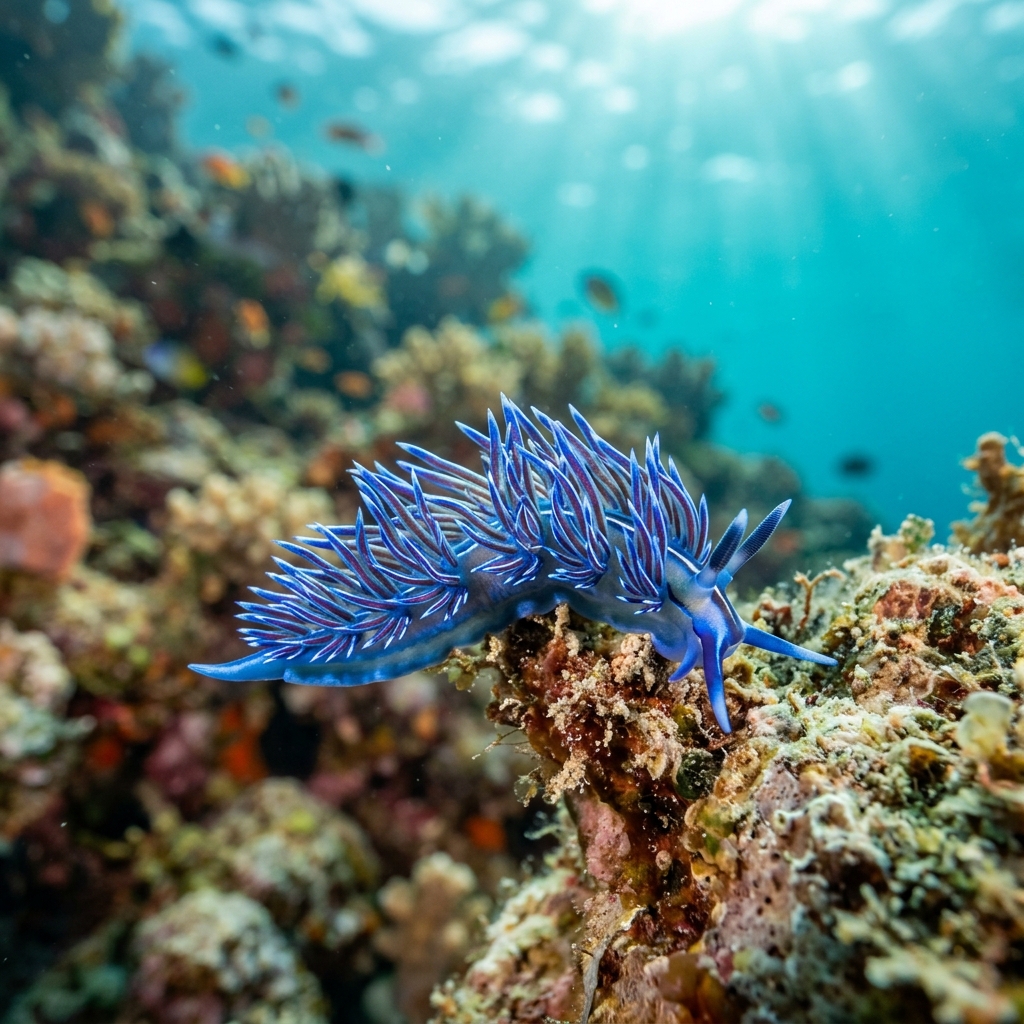
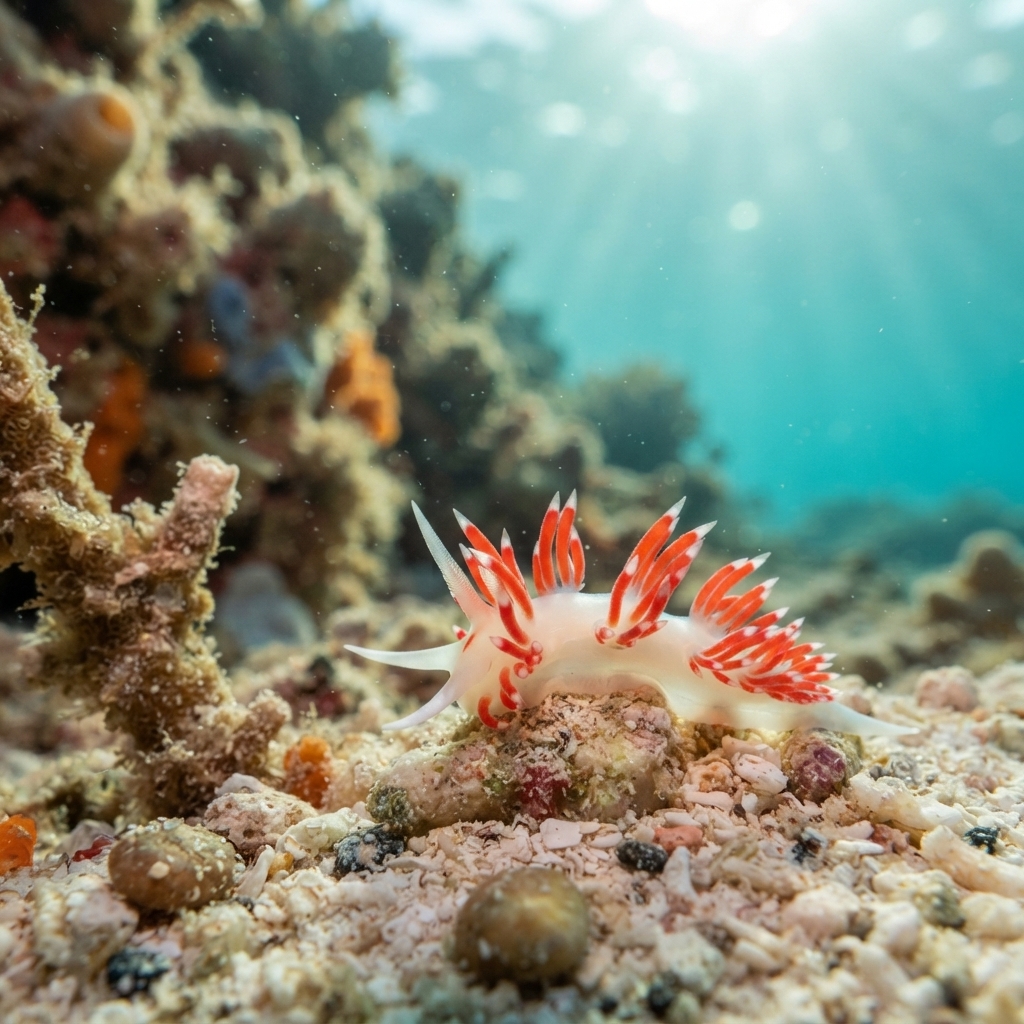
A slim-bodied nudibranch carrying rows of finger-like projections (cerata) along its back, typically translucent to pale with colour concentrated toward the tips of each ceras. The head bears two rhinophores (sensory tentacles) that give it a slightly antenna-like silhouette when it's moving across the substrate. Size stays small enough that most divers need to get close to the reef floor or rubble to pick one out.
Found creeping slowly over reef rubble and low-relief substrate, often tucked close to the bottom where its small size and pale colouring make it easy to swim past. It shows no reaction to divers beyond continuing its slow grazing pace, so a careful, close look with a torch or macro lens is usually what turns up a sighting. Most logs describe it as uncommon to common rather than a guaranteed find, so patient scanning of the substrate pays off.
Like other flabellinid nudibranchs, it likely feeds on hydroids and can store stinging cells from its prey in the tips of its cerata as a form of defence.
Sightings show no clear seasonal pattern, and with a comfortable range of roughly 19 to 29C it's turning up on dives across the year rather than in a narrow window.
Most reliably logged on reefs off Florida in the United States, with a further reliable pocket around Grande-Terre in Guadeloupe and smaller numbers at Tent Reef in Saba. Divers searching warm Caribbean and southeastern US rubble and reef patches have the best odds of a sighting.
Mapping where Dushia Flabellina is logged…
It's most consistently logged on Florida reefs in the United States, with additional reliable sightings around Grande-Terre in Guadeloupe and Tent Reef in Saba.
There's no detected seasonal pattern, so sightings happen year-round. Its comfortable range of about 19 to 29C means it's active on warm reefs throughout the year.
Look for a small, slender nudibranch with rows of colour-tipped cerata along its back and two visible rhinophores on its head. It moves slowly over rubble and low-relief reef, so a close, patient look is usually needed to spot it.
Exact size data isn't confirmed, but like most flabellinid nudibranchs it stays small, generally a couple of centimetres or less, so divers need to search close to the substrate.
No, this nudibranch poses no danger to divers. It's a small, slow-moving mollusk that can be observed and photographed safely at close range.
Site and sighting data is aggregated from diver logs, iNaturalist and GBIF. For taxonomy and conservation status:
Light-spotted Aegires
3,168 sites