Diaulula punctuolata
A cold-water nudibranch logged mostly around Puerto Madryn, Argentina in 9.7-15.7C water year-round. Here's how to spot it.
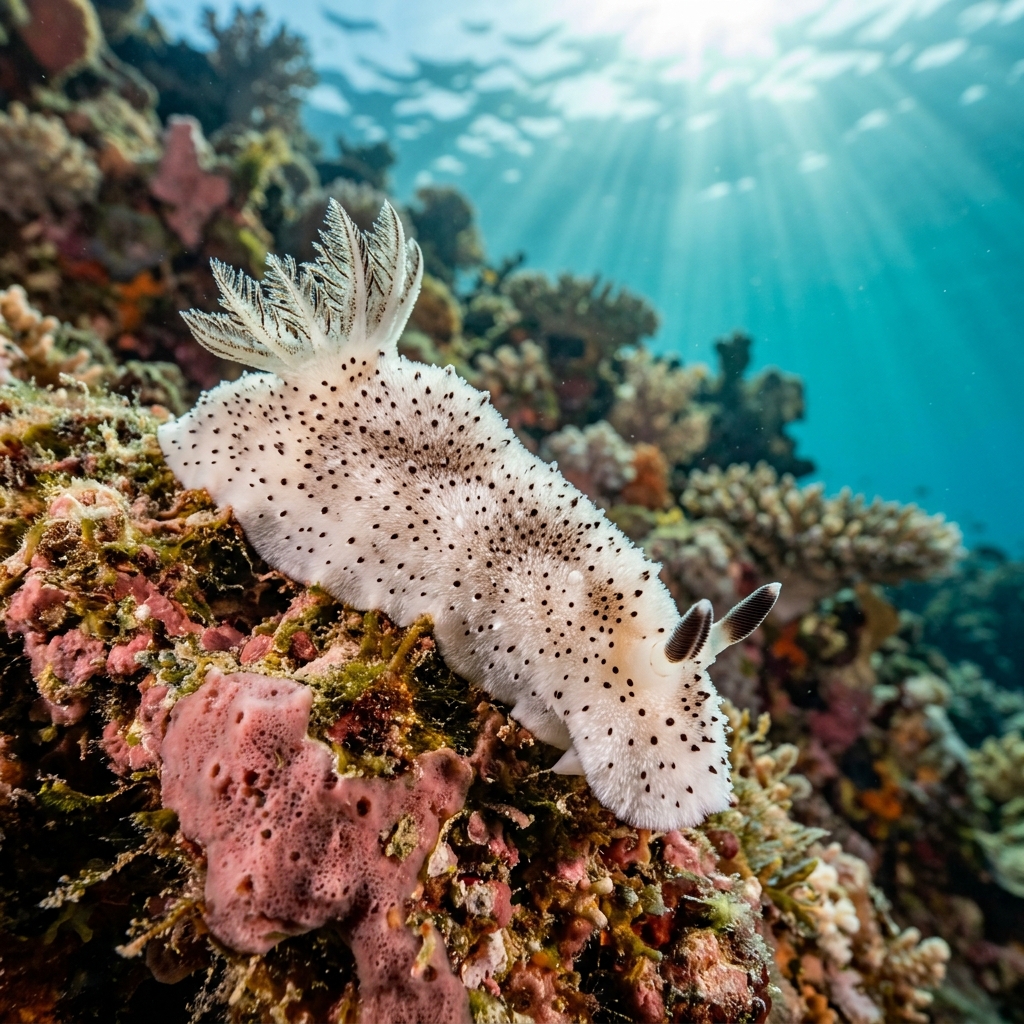
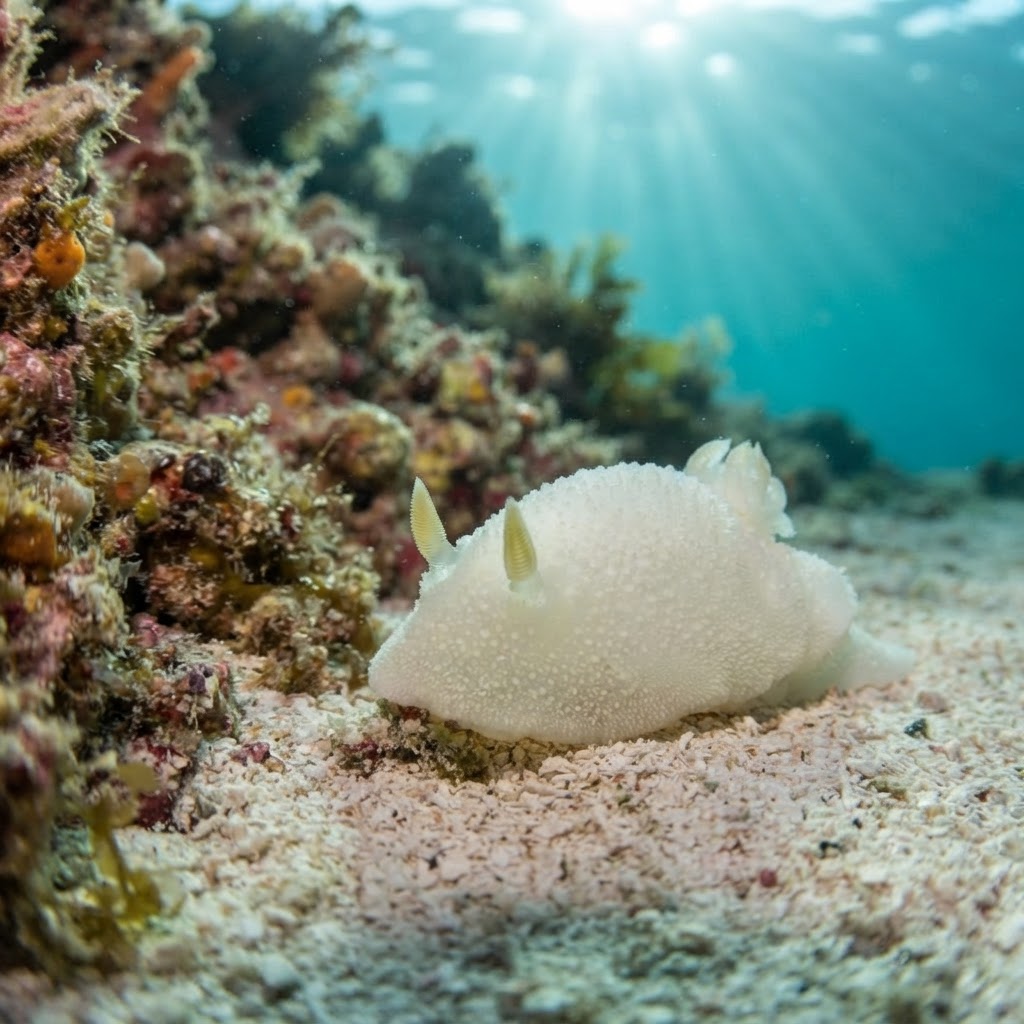
Look for a broad, flattened oval body about 7 cm long, coloured pale cream to grey with scattered dark dots across the mantle that give it its name. The surface has a slightly bristled, velvety texture rather than being smooth, and two small rhinophores (sensory tentacles) sit up front near a fringe of feathery gills toward the rear. Its low, slug-like profile and slow crawl over rock make it easy to overlook against a mottled, algae-covered bottom.
Divers typically find it moving slowly across rocky or algae-covered bottom, grazing rather than swimming, and it shows little to no reaction to a diver's presence. It's logged as uncommon at most sites where it turns up, so spotting one usually comes down to close, patient scanning of the substrate rather than an obvious open-water encounter.
Like other dorid nudibranchs, it likely feeds on sponges using a specialised radula, slowly rasping away at its food source rather than actively hunting, which is part of why it's so often found sitting still on rock.
Sightings don't show a concentrated season, so treat it as a year-round find in its cold-water range. It's logged in water between roughly 9.7 and 15.7C, which lines up with Patagonia's cool coastal conditions for most of the year rather than a narrow warm-season window.
This one is very much an Argentine speciality: nearly all logged sightings come from Puerto Madryn, with a smaller but reliable cluster further south around Camarones. Outside Argentina it has not been recorded in the data at all, so if you want a real shot at finding it, plan your dive around Patagonia's cold-water coast.
Mapping where Dotted Bristle Sea Slug is logged…
It is most reliably found around Puerto Madryn in Argentina, with additional sightings further south near Camarones. Outside these Patagonian sites, it isn't well documented in diver records.
There's no strong seasonal pattern in sightings, so it's considered a year-round find in its cold-water range. It's typically seen in water between about 9.7 and 15.7C.
Look for a flattened, oval-bodied nudibranch around 7 cm long, pale cream to grey with scattered dark dots across the mantle and a slightly bristled texture. It moves slowly over rocky or algae-covered bottom rather than swimming in open water.
They typically reach around 7 cm in length, a modest size that makes them easy to miss against textured, mottled rock.
No, they pose no danger to divers. Like most nudibranchs they are slow-moving and harmless, and simply need to be left undisturbed if you want a good look.
It's logged as uncommon at most sites where divers find it, with only a couple of sites reporting it as common. Finding one usually takes a slow, close scan of rocky substrate rather than a chance open-water sighting.
Site and sighting data is aggregated from diver logs, iNaturalist and GBIF. For taxonomy and conservation status:
Blue Dragon
3,163 sites