Diaphorodoris papillata
A tiny yellow-spotted nudibranch logged across Catalonia, the French Riviera and the Algarve in 14.7 to 20.7 C water, year-round.
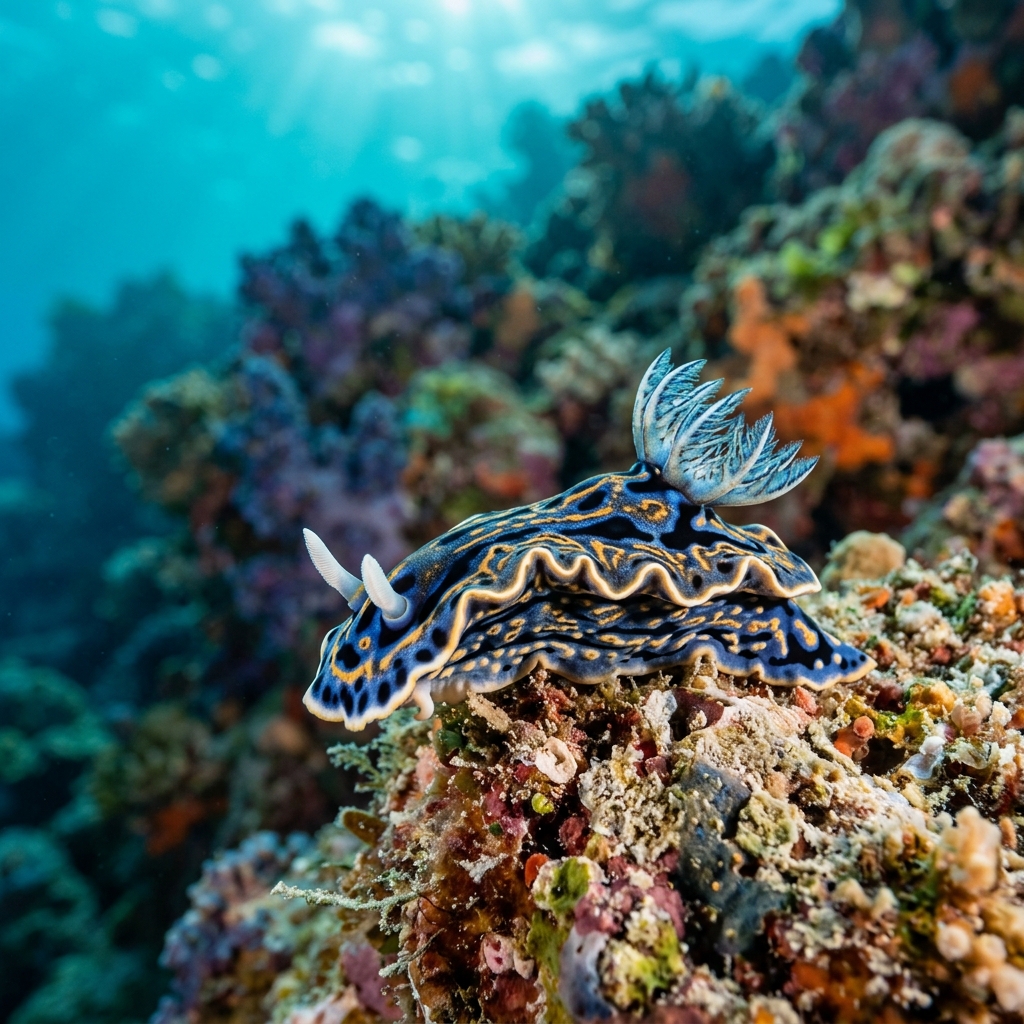
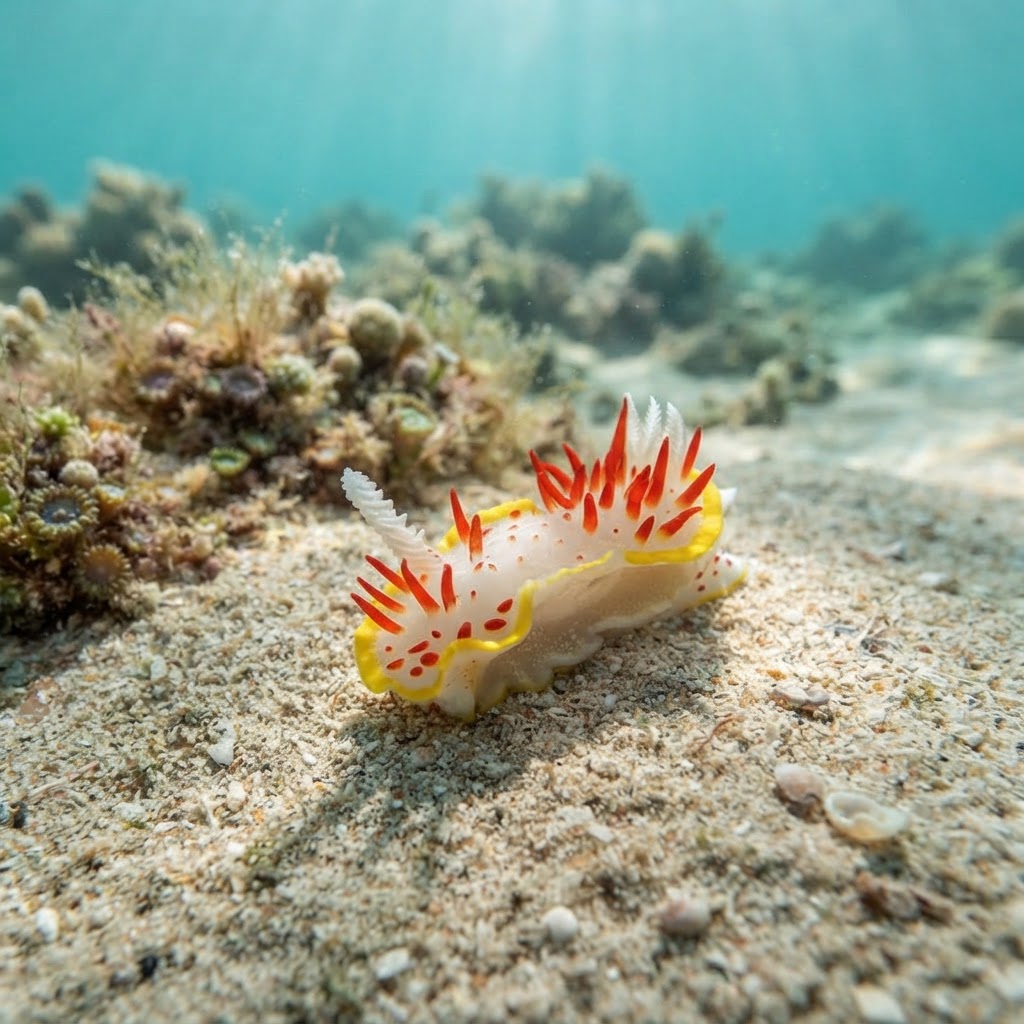
A small, pale grey-to-white nudibranch with a translucent body dotted in yellow-tipped tubercles (the small raised bumps across its back). Look for the two rhinophores (sensory tentacles) at the front and a small cluster of gills toward the rear, both often edged in the same yellow as the body spots. It moves slowly across rock and algae, easy to miss against mixed rubble unless you're scanning close.
Divers find it grazing slowly over rock, rubble and algae-covered surfaces, usually while hunting the small encrusting organisms it feeds on. It shows no reaction to divers beyond its normal crawl, so a slow, close look with a torch or magnifier is the way to actually spot one. It's logged as uncommon at most sites where it turns up, so treat any sighting as a real find rather than something to expect on every dive.
Like other dorid nudibranchs, it likely feeds on encrusting bryozoans, using its diet to help build the yellow pigmentation seen in its tubercles.
No clear seasonal pattern shows in the data, so treat it as a year-round find within its 14.7 to 20.7 C comfort range. Divers in the Mediterranean and nearby Atlantic coasts can look for it on any dive when conditions sit in that temperature band.
Most reliably logged in Spain and France, with Catalonia, the Balearic Islands, Valencia and Andalusia in Spain and the French Riviera & Provence and Occitanie in France carrying the bulk of sightings. Portugal's Algarve and Lisbon Coast also produce steady records, with a handful of sightings from Israel.
Mapping where Diaphorodoris papillata is logged…
It's most often logged in Spain and France, particularly Catalonia, the Balearic Islands and the French Riviera & Provence, with further records from Portugal's Algarve and Lisbon Coast.
There's no strong season in the sighting data, so it's treated as a year-round find in waters between roughly 14.7 and 20.7 C.
Look for a small, pale, translucent-bodied nudibranch with yellow-tipped tubercles across its back and matching colour on the rhinophores and gill cluster. It moves slowly over rock and algae, so a close, patient look is needed to pick it out.
Exact size data isn't confirmed, but like most species in its family it stays small, typically only a centimetre or two long, making it an easy species to overlook on a reef scan.
No. It poses no threat to divers and has no known defensive mechanism that affects people; it's simply a small, slow-moving grazer.
Most sites where it's been recorded describe it as uncommon rather than common, so spotting one usually takes a deliberate, close-up search of rock and algae rather than a casual glance.
Site and sighting data is aggregated from diver logs, iNaturalist and GBIF. For taxonomy and conservation status:
Blue Dragon
3,163 sites