Chromodoris dianae
A white-bodied nudibranch with orange-edged mantle, most reliably logged around Luzon and Visayas in the Philippines year-round.
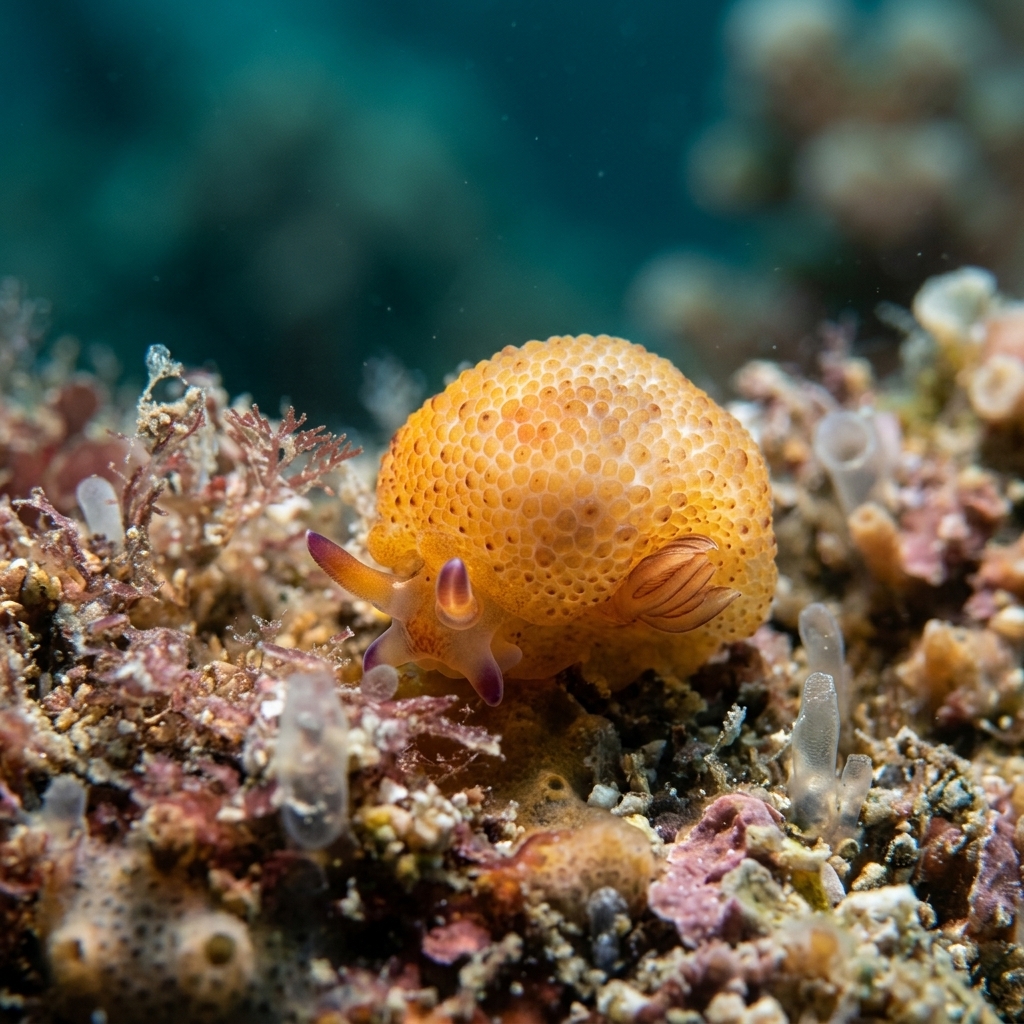
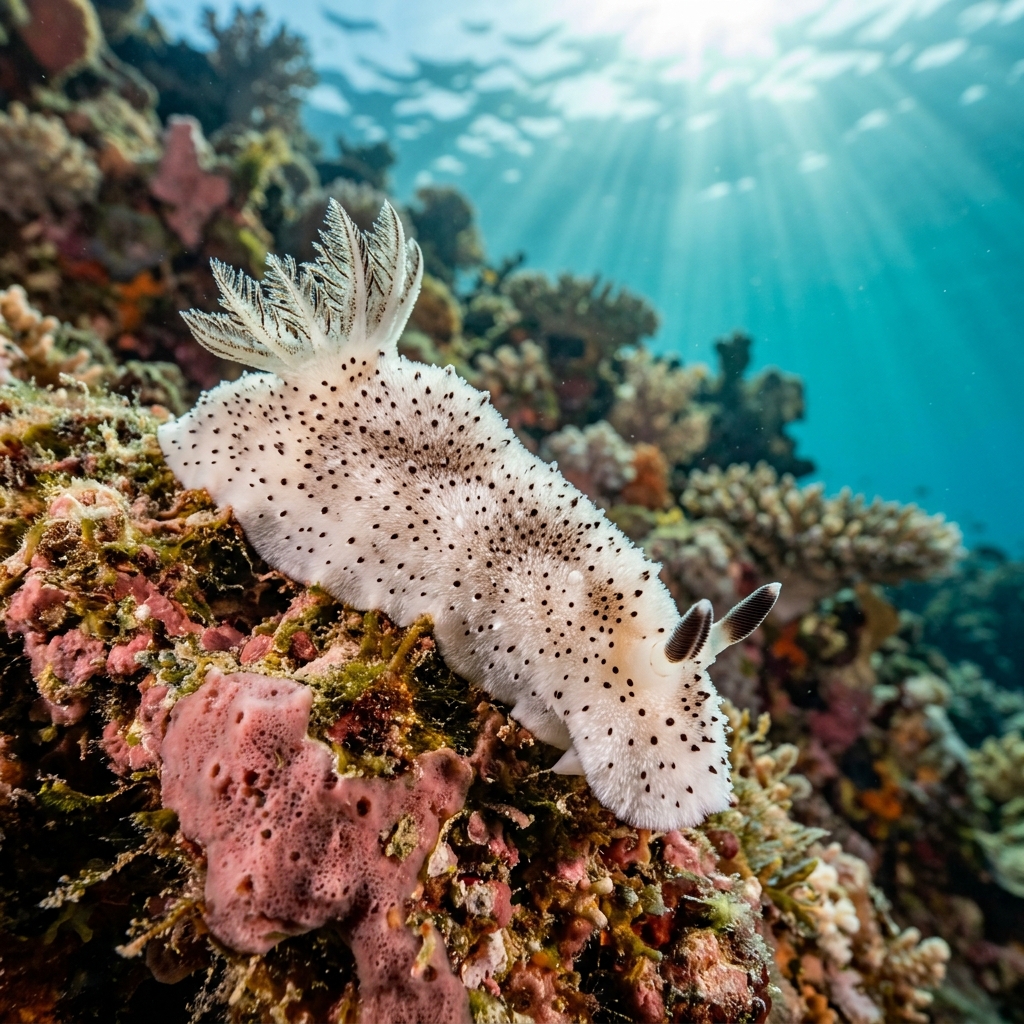
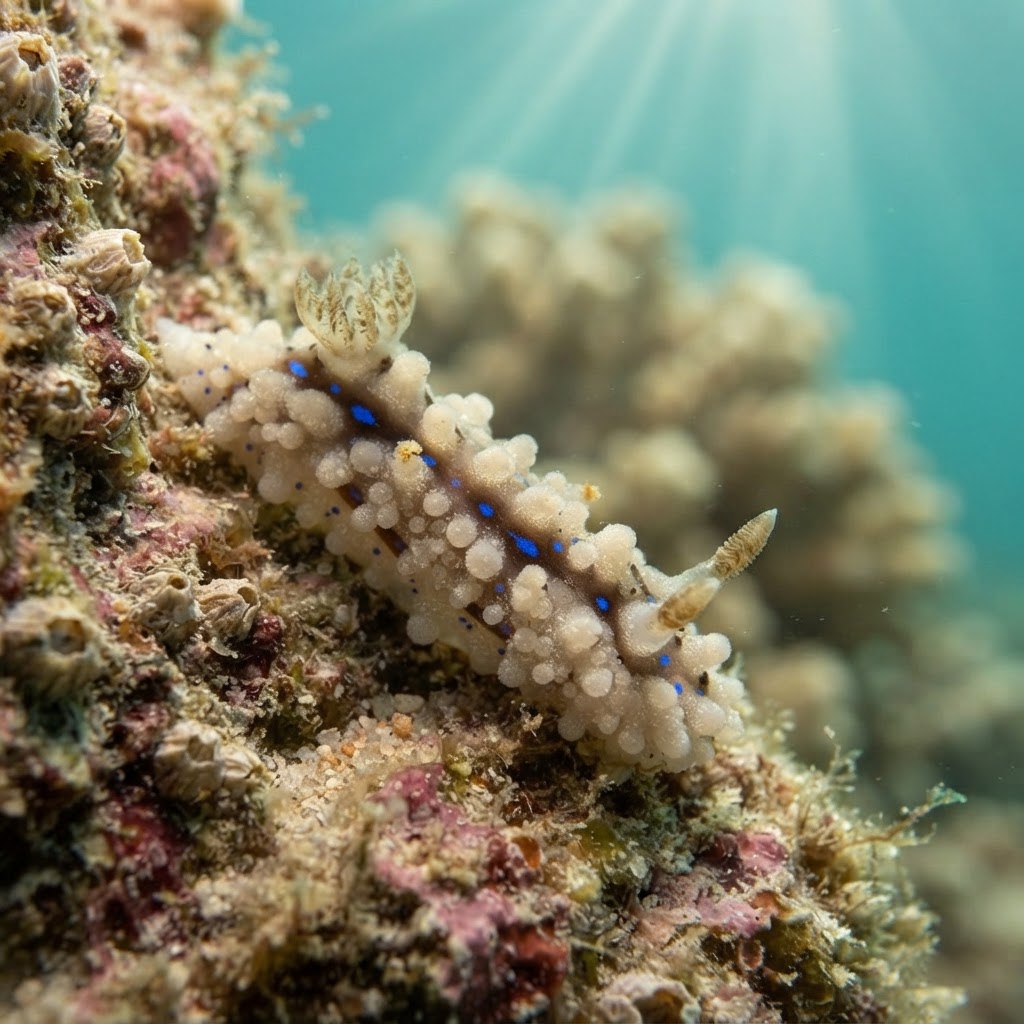
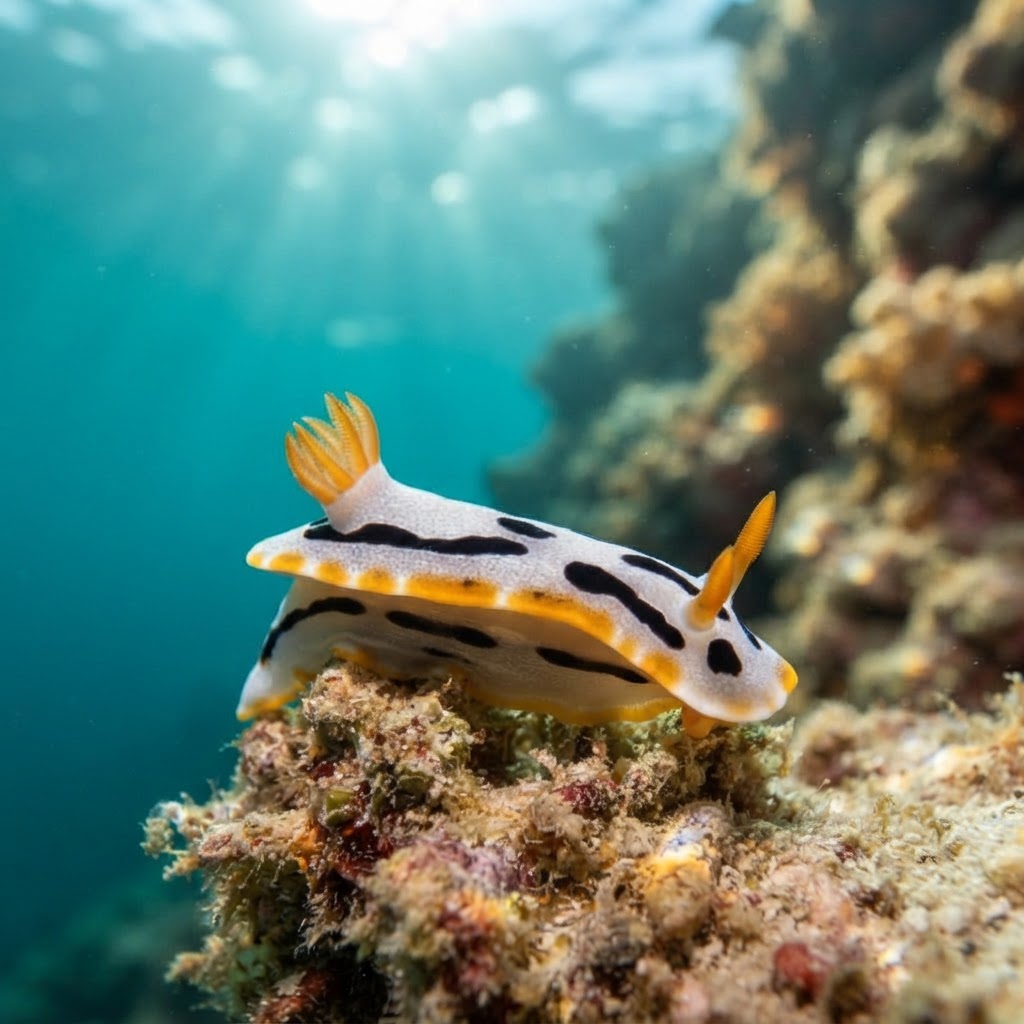
Look for a slug-shaped body a few centimetres long, its white to pale mantle rimmed with a bright orange or yellow band running the full length of the edge. A row of faint grey or translucent markings often runs down the centre of the back, with the two rhinophores (sensory horns) and the feathery gill tuft at the rear both tipped in the same orange as the mantle border. It moves slowly across rubble and sponge-covered surfaces, so once you spot the colour combination it is easy to hold in view for a photo.
Divers find it grazing slowly over rubble, sponge patches and low reef structure, usually during the day rather than on night dives. It does not react to divers beyond continuing its slow crawl, and because it stays put on a feeding patch for a while, a spotted individual is usually easy to photograph without chasing it. Like most chromodorid nudibranchs, expect to find it at a measured pace rather than any burst of movement.
Its orange mantle border almost certainly signals a chemical defence borrowed or produced from the sponges it feeds on, a strategy shared across the Chromodoris genus that lets these otherwise soft, shell-less molluscs move around the reef in daylight without much predation pressure.
Sightings show no clear seasonal pattern, so treat this as a year-round find. Its observed range of roughly 25.6 to 31.6 C matches warm tropical reef water in the Philippines and Vietnam through every month, which fits with divers logging it consistently rather than in a single season.
This one is most reliably found in the Philippines, with the strongest logs coming out of Luzon and the Visayas, making those regions the best bet for a planned sighting. Vietnam is the other dependable spot, with Nha Trang contributing a solid share of records, so a muck or reef dive there is also worth checking macro sites closely.
Mapping where Diana's Chromodoris is logged…
Your best odds are in the Philippines, particularly around Luzon and the Visayas, where it turns up most consistently on rubble and reef macro dives. Nha Trang in Vietnam is the other region with a steady record of sightings.
There is no strong season in the sighting data, so it can turn up on any dive through the year. Warm water in the 25.6 to 31.6 C range keeps it active on Philippine and Vietnamese reefs year-round.
Check for a white to pale body with a continuous orange or yellow line running around the mantle edge, plus matching orange tips on the rhinophores and gill tuft. It is small, slow-moving, and usually found on rubble or sponge-covered substrate rather than open sand.
Exact size data is not confirmed for this species, but like most Chromodoris nudibranchs it stays in the small macro-subject range, typically a few centimetres long when fully grown.
No, it poses no threat to divers. It is a small, slow-moving grazer that can be safely photographed at close range without any risk of sting or bite.
Its bright mantle border likely functions as a warning signal linked to chemical compounds taken up from sponge prey, a common defence strategy across the Chromodoris nudibranch group that lets it graze openly in daylight.
Site and sighting data is aggregated from diver logs, iNaturalist and GBIF. For taxonomy and conservation status:
Blue Dragon
3,163 sites