Tritonia festiva
Tiny orange-ridged slug found on cold-water reefs from British Columbia to California, year-round in 9-19C water.
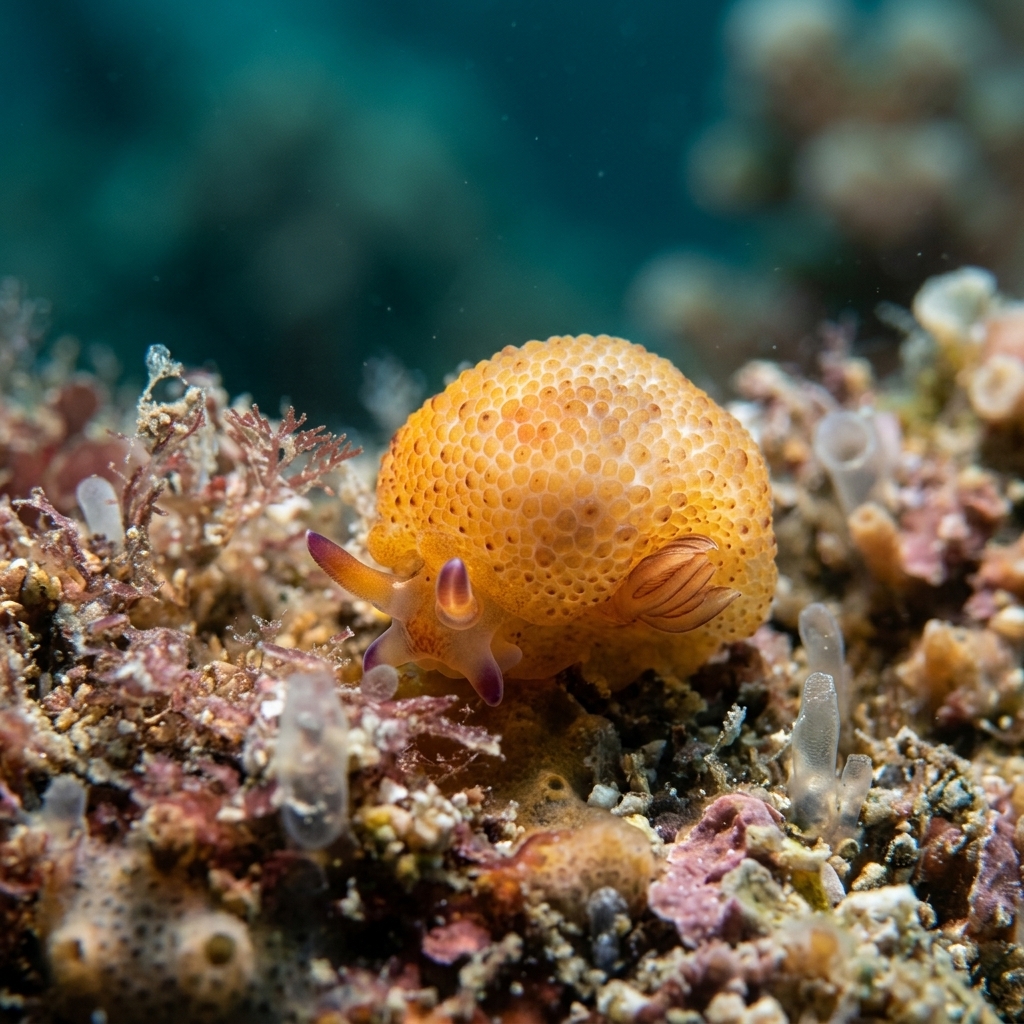
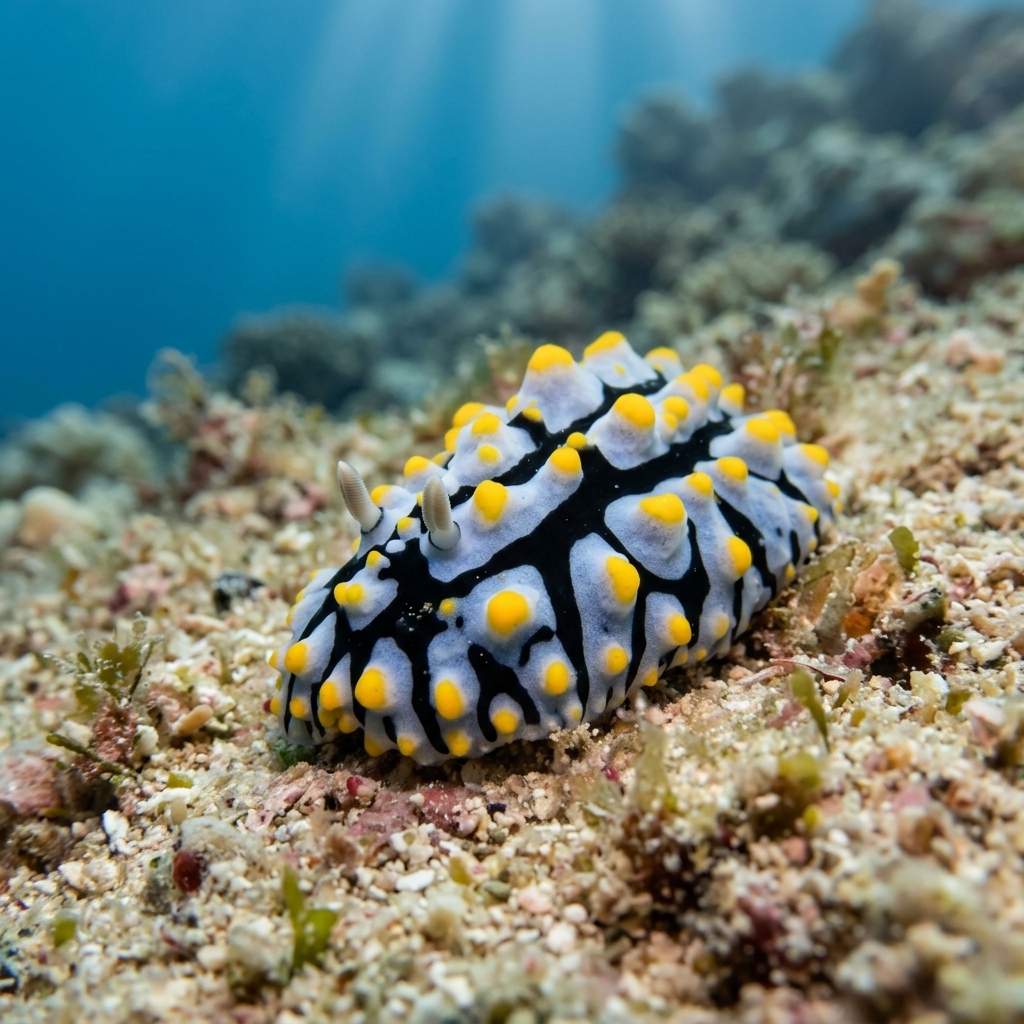
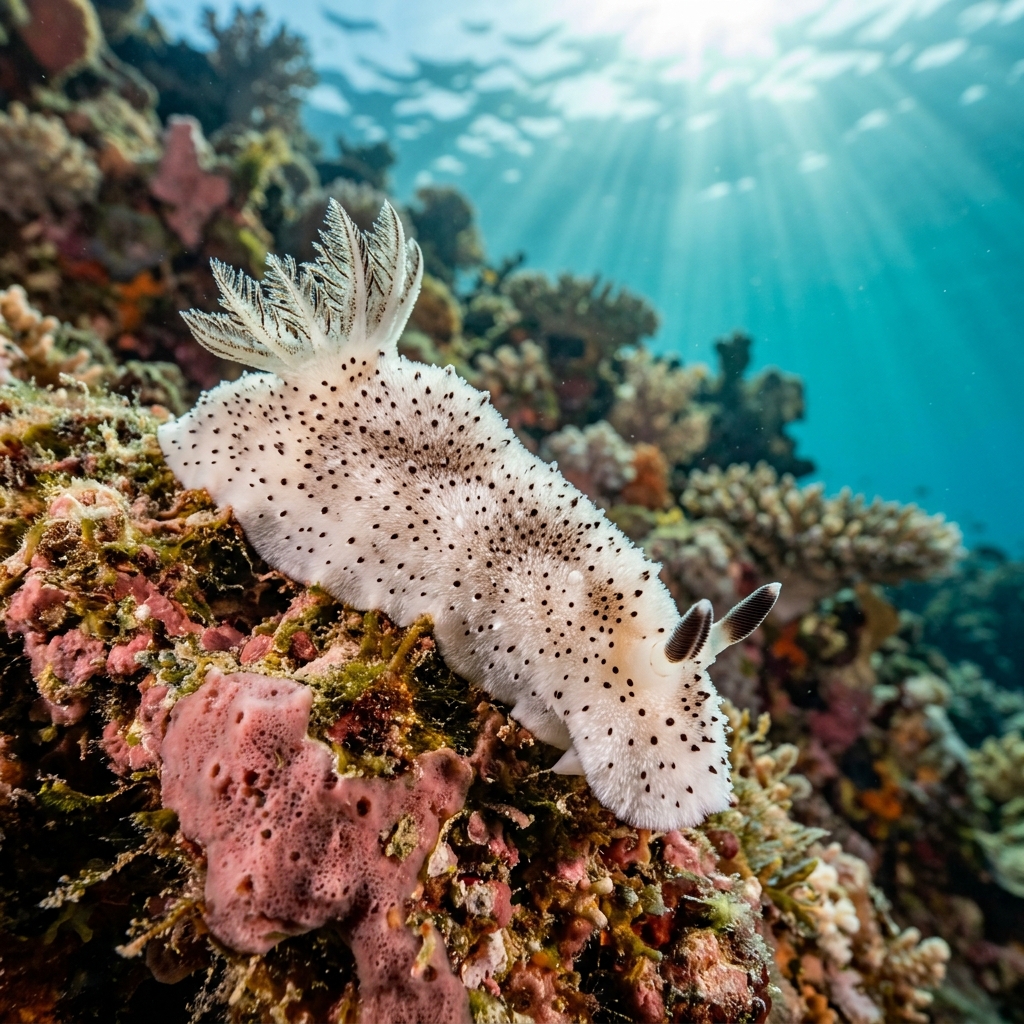
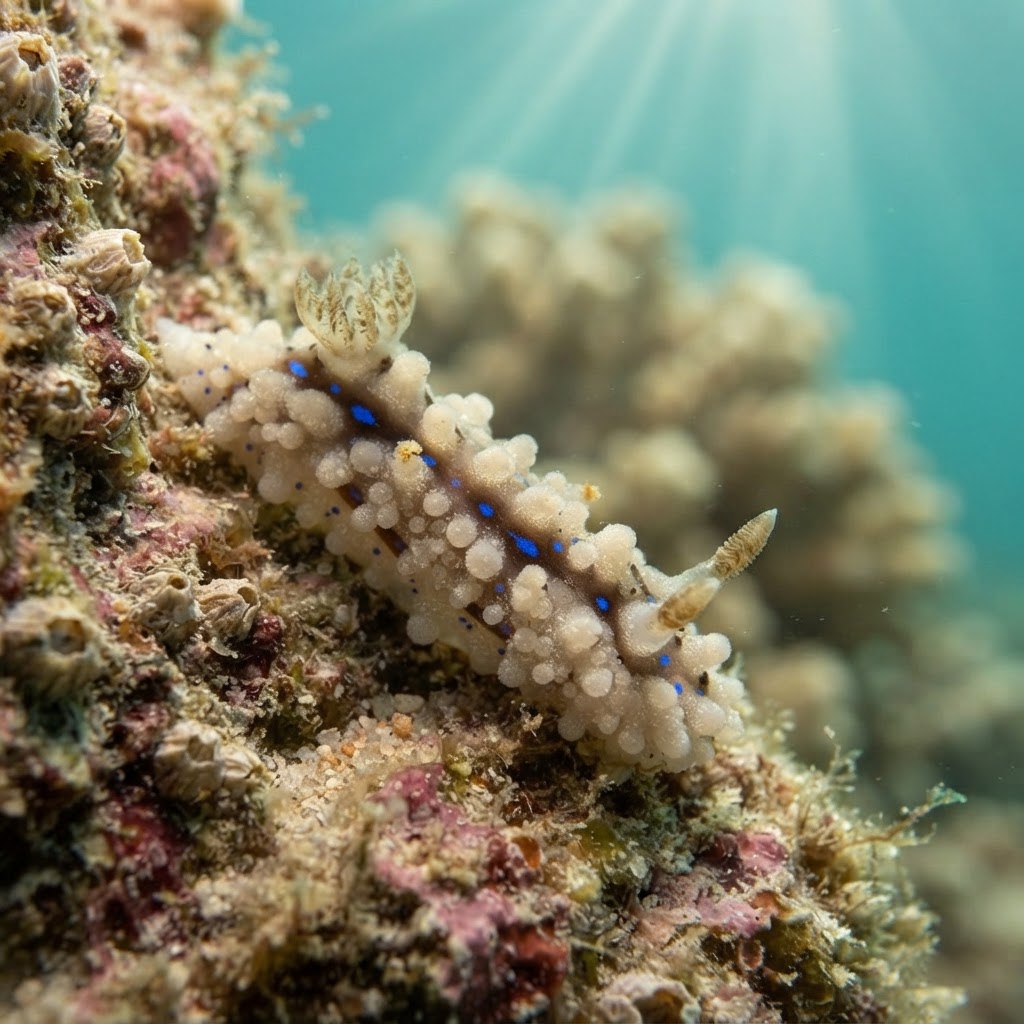
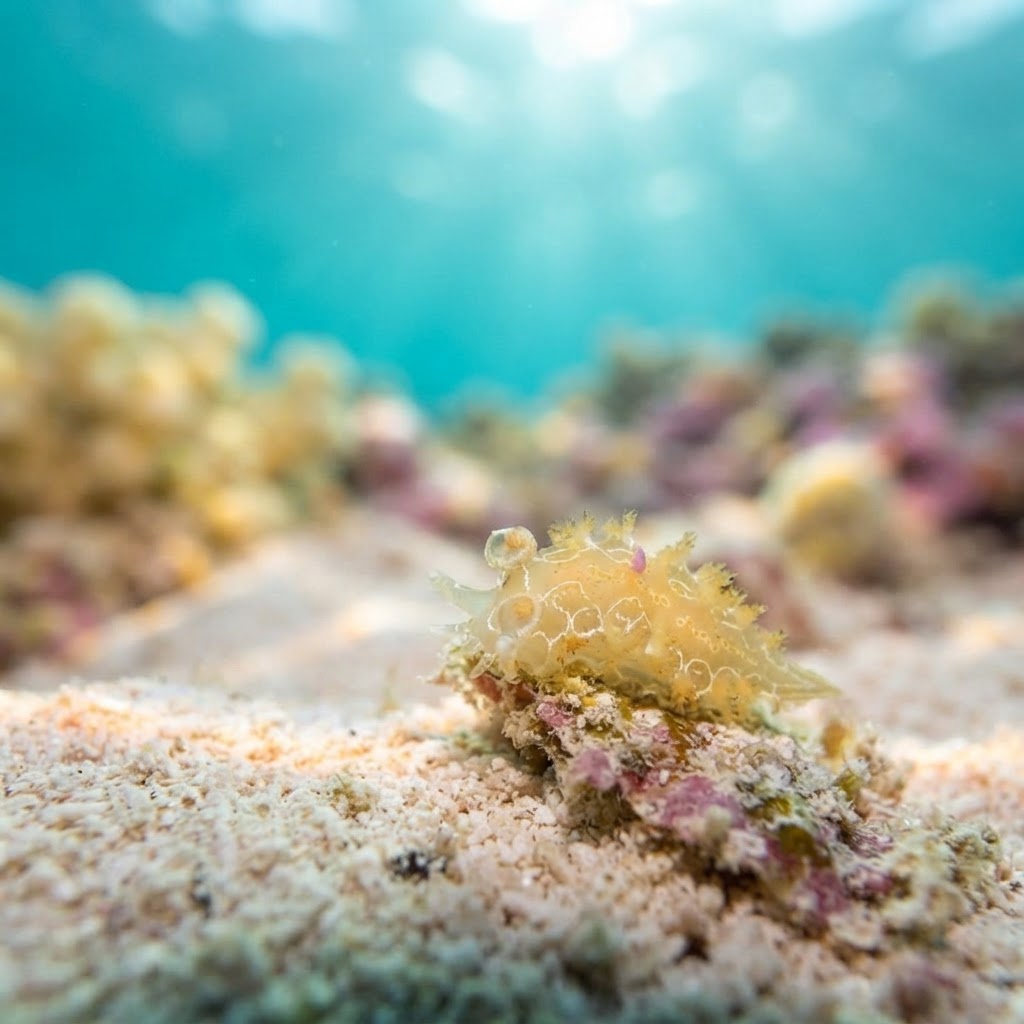
Barely a centimetre long, so you're hunting for a small ridged bump rather than a paddling swimmer. Body is translucent white to pale orange with a row of soft, rounded tubercles (bumps) running down the back that give it a slightly diamond-patterned texture under torchlight. It lacks the feathery gill cluster and rhinophores (sensory tentacles) that many showier nudibranchs flaunt, keeping a low, smooth-edged profile instead. Look for it parked directly on the substrate near its prey rather than out in open water.
Found sitting still on rock or reef surfaces, usually tucked close to the hydroids or soft coral colonies it feeds on rather than crawling across open ground. It shows no reaction to divers beyond simply not moving fast, since it has no eyes to notice you and no real means of fleeing anyway. Most sightings come from divers scanning slowly with a torch or magnifier rather than spotting it in open water.
Like other tritoniid nudibranchs, it feeds by rasping directly on soft coral or hydroid polyps, and divers who find one usually find its food source an inch away if they look closely.
No clear seasonal pattern shows up in the data, so treat it as a year-round find on cold-water reefs. Its comfort range of roughly 9 to 19C matches the Pacific Northwest and British Columbia water temperature for most of the year, which likely explains the lack of a tight season.
Most reliably logged along the Pacific coast of North America, with strong numbers in the Pacific Northwest and British Columbia, plus a solid showing in California. Divers in the US log it slightly more often overall, but British Columbia sites rival California for site count, making the whole Pacific Northwest to Southern California stretch the place to search.
Mapping where Diamondback Nudibranch is logged…
It's most often logged in the Pacific Northwest and British Columbia, with a solid number of sightings in California too. Nearly all recorded sightings come from these Pacific coast regions of the US and Canada.
There's no strong seasonal pattern in the data, so it's considered a year-round sighting. Water temperatures in its core range sit between roughly 9 and 19C for most of the year, which suits its cold-water habits.
Look for a translucent white to pale orange slug barely a centimetre long, with a row of soft rounded bumps along its back. It sits still on rock or near soft coral and hydroids, without the bright colours or feathery gills many other nudibranchs show.
They stay tiny, typically around 1 centimetre long, so most divers need a torch and a close look to spot one at all.
No, they pose no danger to divers at all. They have no sting or bite that affects humans and simply sit on the reef feeding on hydroids and soft coral polyps.
It feeds by rasping directly on the polyps of hydroids and soft corals, so finding one usually means its food source is sitting right beside it on the reef.
Site and sighting data is aggregated from diver logs, iNaturalist and GBIF. For taxonomy and conservation status:
Nudibranch
3,168 sites