Dermatobranchus caeruleomaculatus
An uncommon nudibranch logged mostly on the UAE's East Coast in warm 25-31 C water, year-round with no fixed season.
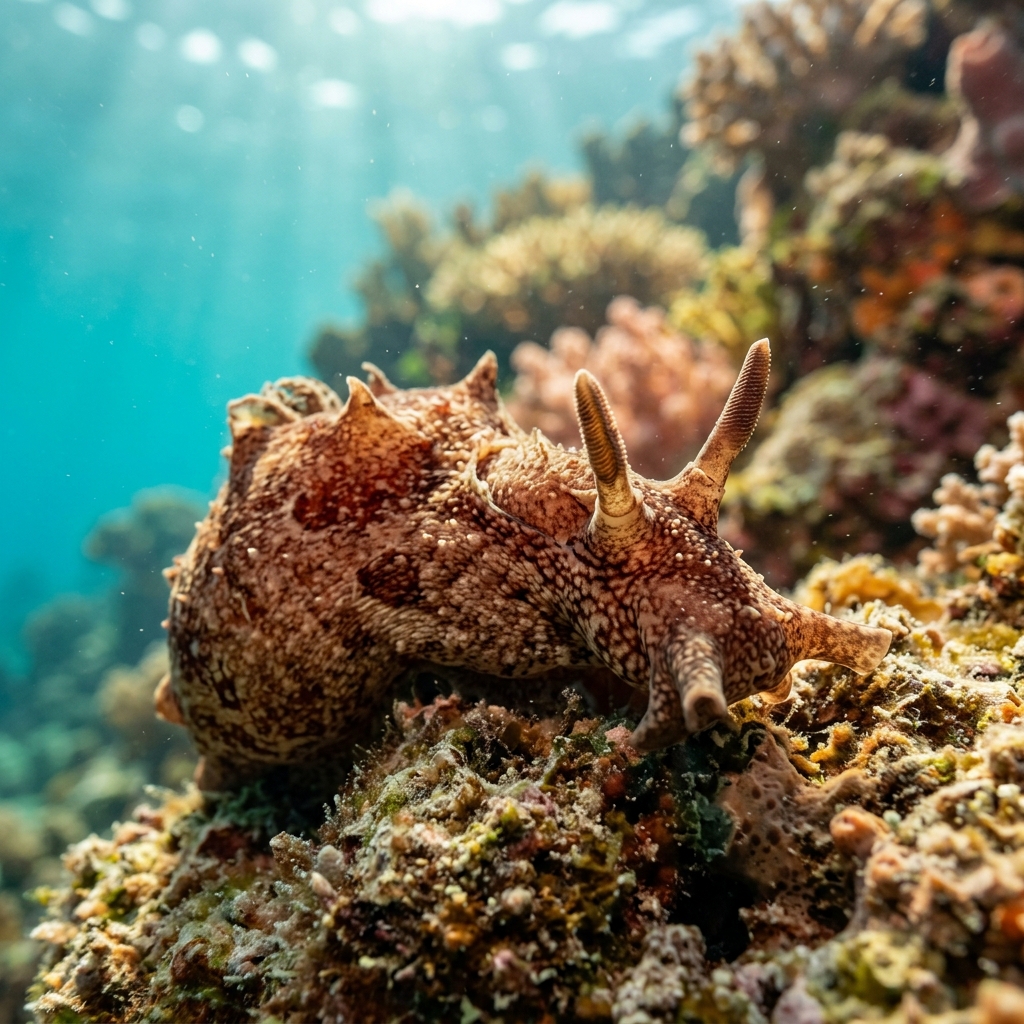
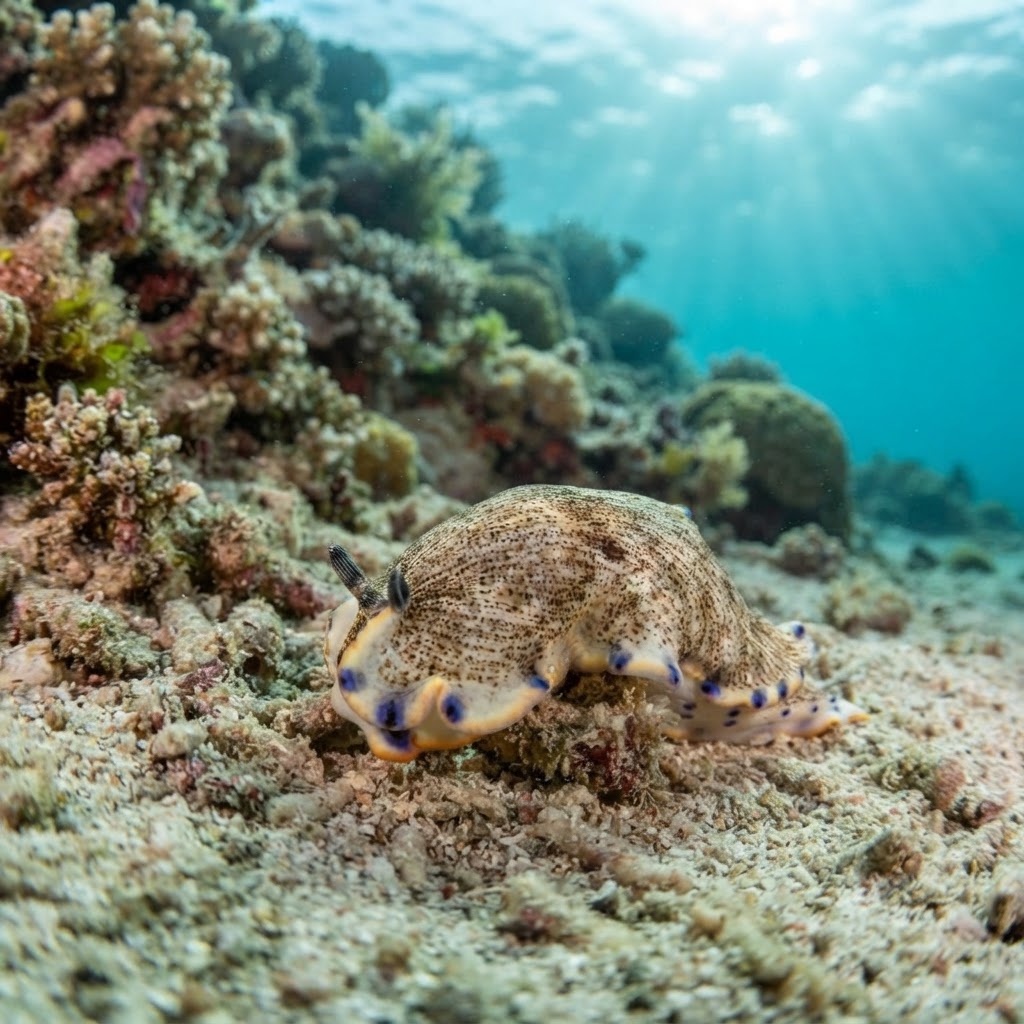
A small elongated nudibranch with a smooth, arched back rather than the frilly gills seen on many dorids, giving it a slug-like, almost armoured profile. The body carries scattered pale blue spots against a muted background colour, which is the main feature divers use to pick it out on the substrate. It sits low and close to rubble or sand, easy to swim past if you are not scanning closely.
Divers find it moving slowly over rubble, sand patches or low reef structure, usually alone rather than in groups. It shows no reaction to divers beyond continuing its slow crawl, so a close, steady light and a patient eye are more useful than any change in your approach. Most logs come from daytime dives rather than night dives, suggesting it is active or at least visible outside darkness.
Like other Dermatobranchus species, it likely feeds on soft corals or gorgonians, using its arched, low-profile body to move unnoticed across the colonies it grazes on.
Sighting records do not show a clear season, and the water temperatures it has been logged in, roughly 25 to 31 C, span most of the year on these reefs, so it is best treated as a year-round possibility rather than a seasonal target.
Almost all logged sightings come from the East Coast of the United Arab Emirates, making that region the most reliable place to look for it, with a single additional record from Luzon in the Philippines. Divers searching for this species should focus their efforts on UAE East Coast sites rather than the wider Philippines, where it has barely been logged.
Mapping where Blue-spotted Dermatobranchus is logged…
It is most reliably found along the East Coast of the United Arab Emirates, where the bulk of dive logs for this species come from. A single record also exists from Luzon in the Philippines, but the UAE East Coast is the stronger bet.
There is no detected season in the sighting data, and it has been logged across a wide temperature range of roughly 25 to 31 C, so divers can look for it on any trip to the UAE East Coast rather than timing a visit to a particular month.
Look for a small, low-bodied nudibranch with a smooth arched back rather than feathery gills, marked with scattered pale blue spots. It sits close to rubble or sand and moves slowly, so a careful scan of the substrate is needed to spot it.
Exact size data is not confirmed for this species, but like most members of its genus it stays small, typically only a few centimetres long, and is easy to overlook on a busy reef floor.
No, this species poses no risk to divers. It has no venomous stingers or biting parts of concern, and simply crawls slowly across the substrate regardless of nearby divers.
It is logged as uncommon at every site where it has been recorded, so spotting one is a matter of careful, slow searching rather than an expected sighting on a typical dive.
Site and sighting data is aggregated from diver logs, iNaturalist and GBIF. For taxonomy and conservation status:
Light-spotted Aegires
3,168 sites