Dendronotus iris
Spot Giant Frond-aeolis along British Columbia and the US Pacific Coast in cold 8-16°C water. Sightings peak Jan, Aug. Here's where and how to find one.
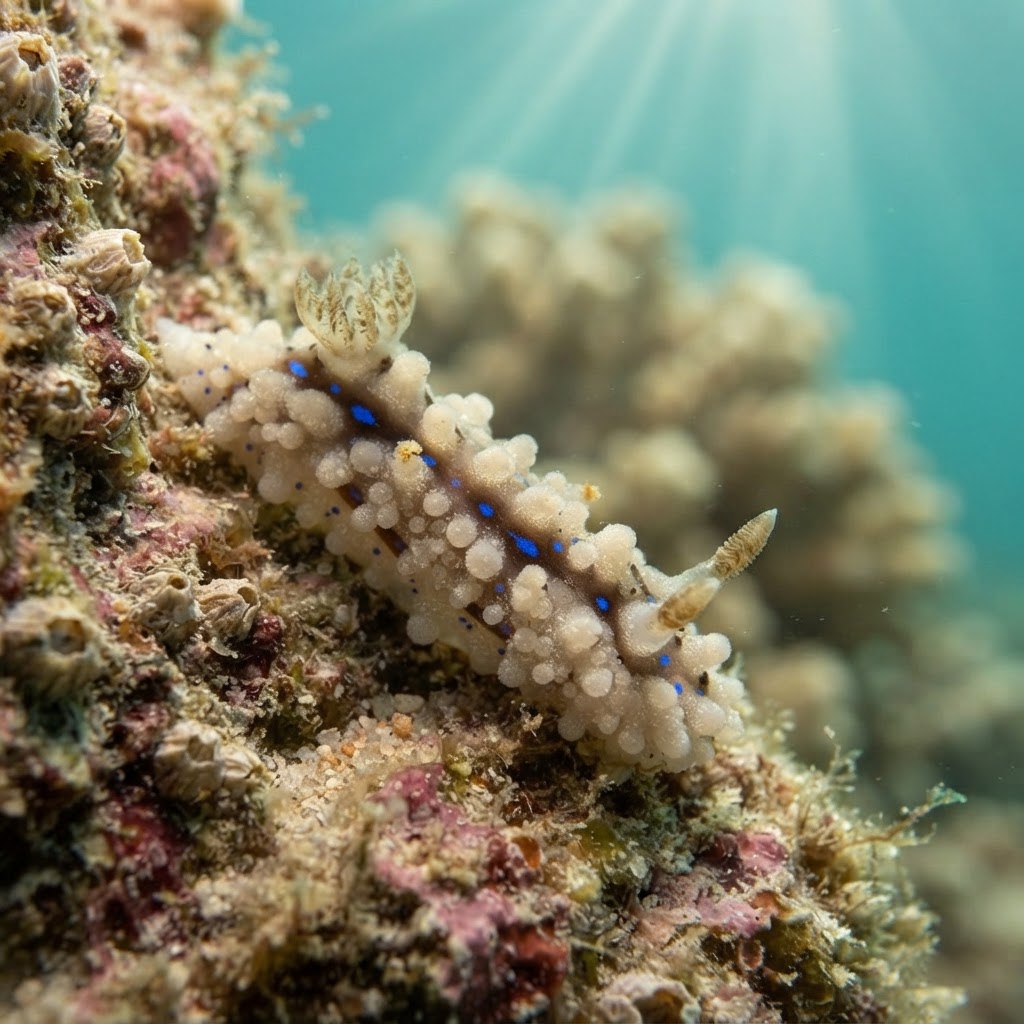
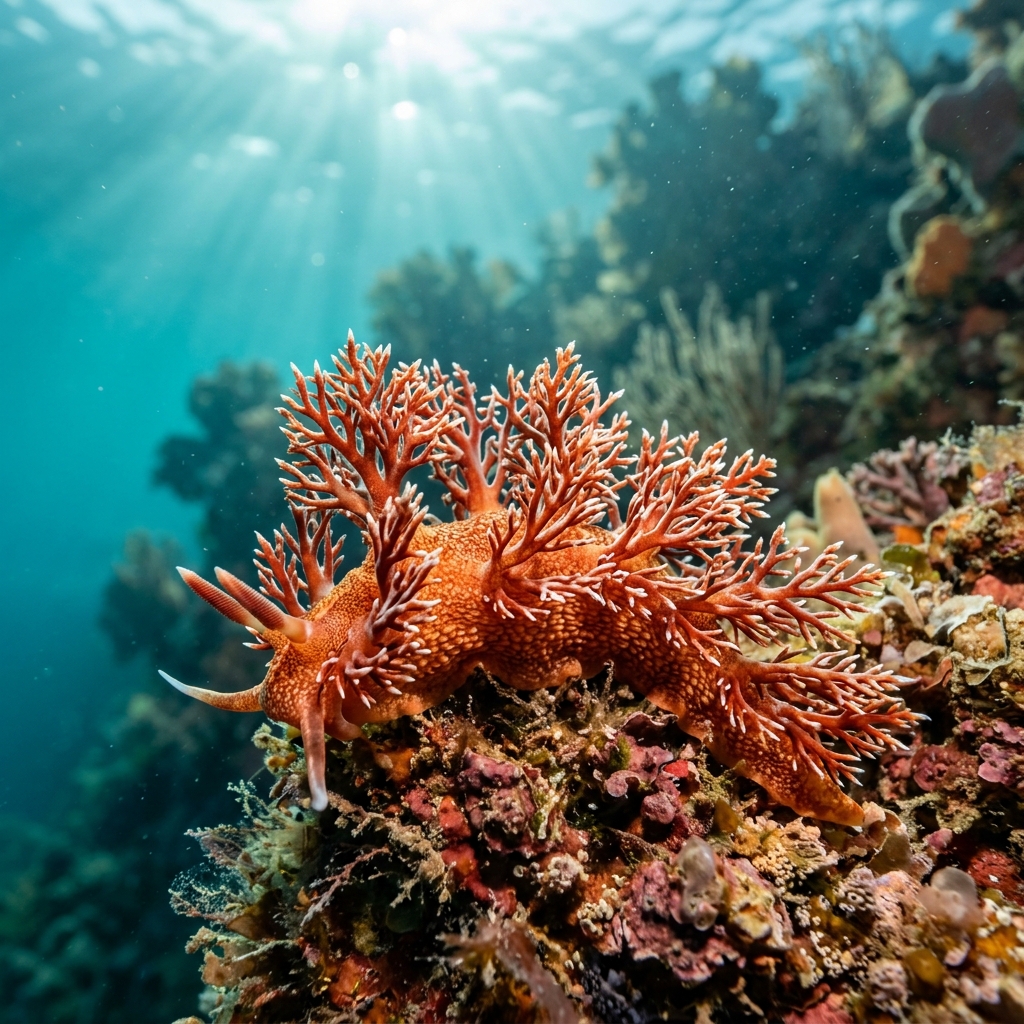
One of the largest nudibranchs on the north-east Pacific coast, Dendronotus iris carries tall, tree-like branching cerata (the feathery projections along its back) that give it an almost shaggy silhouette underwater. Body colouration runs from translucent white to pale lavender or orange-pink, often with darker banding or blotching on the cerata tips. The oral veil, the wide flap framing the head, is notably broad and frilled, making the front end look especially bushy. On a rocky, kelp-draped wall you are most likely to spot it by that distinctive branching profile rather than any bold colour.
Most divers encounter this nudibranch moving slowly across rocky substrate or over tube anemones, which are a known prey item. It tends to be unhurried and largely indifferent to diver presence, making extended observation straightforward if you move calmly. Look closely along the base of rocky walls and silty ledges rather than out on open reef, where it blends surprisingly well despite its size.
Dendronotus iris is one of the few nudibranchs known to actively pursue and feed on large tube anemones such as Pachycerianthus, a prey item most other slugs ignore entirely. This dietary specialisation means your best search strategy on a dive is to scan aggregations of tube anemones first.
Sightings in the Northern Hemisphere concentrate between January and August, so the colder months of winter through early summer are your best window. This fits neatly with the species' observed temperature niche of 8 to 16°C, typical of Pacific Northwest conditions in that period.
The vast majority of logged sightings come from the British Columbia coast in Canada, making that region by far the strongest bet. The US Pacific Coast, particularly Washington and Oregon, also produces regular records. A single record from China rounds out the known range, but for practical planning the cold-water coastlines of the Canadian and American Pacific Northwest are where you should focus.
Mapping where Giant Frond-aeolis is logged…
The British Columbia coast in Canada holds the strongest concentration of logged sightings, with the US Pacific Coast (Washington, Oregon, and northern California) also producing regular encounters. Cold, rocky, kelp-rich sites in both regions are the most productive spots to search.
Diver records in the Northern Hemisphere cluster between January and August. This nudibranch thrives in water between 8 and 16°C, so the colder months of winter through early summer align with both peak sighting frequency and ideal water conditions along the Pacific Northwest coast.
Look for a large, pale nudibranch with tall, heavily branched cerata running along its back, giving it a bushy, tree-like profile. The broad, frilled oral veil at the head end is a reliable secondary feature. Body colour is typically translucent white to pale lavender or orange-pink, sometimes with darker cerata tips.
Dendronotus iris is considered one of the largest nudibranchs on the Pacific coast of North America, with some individuals reported to exceed 30 cm in length. In the water they can look impressively substantial compared with most other nudibranch species you might encounter on the same dive.
This species is a specialist predator of tube anemones, particularly large burrowing cerianthids. It is one of the very few nudibranchs known to tackle prey this large. On a dive, finding a cluster of tube anemones on a silty or rocky bottom is often the best indicator that a Giant Frond-aeolis may be nearby.
Site and sighting data is aggregated from diver logs, iNaturalist and GBIF. For taxonomy and conservation status:
Light-spotted Aegires
3,168 sites