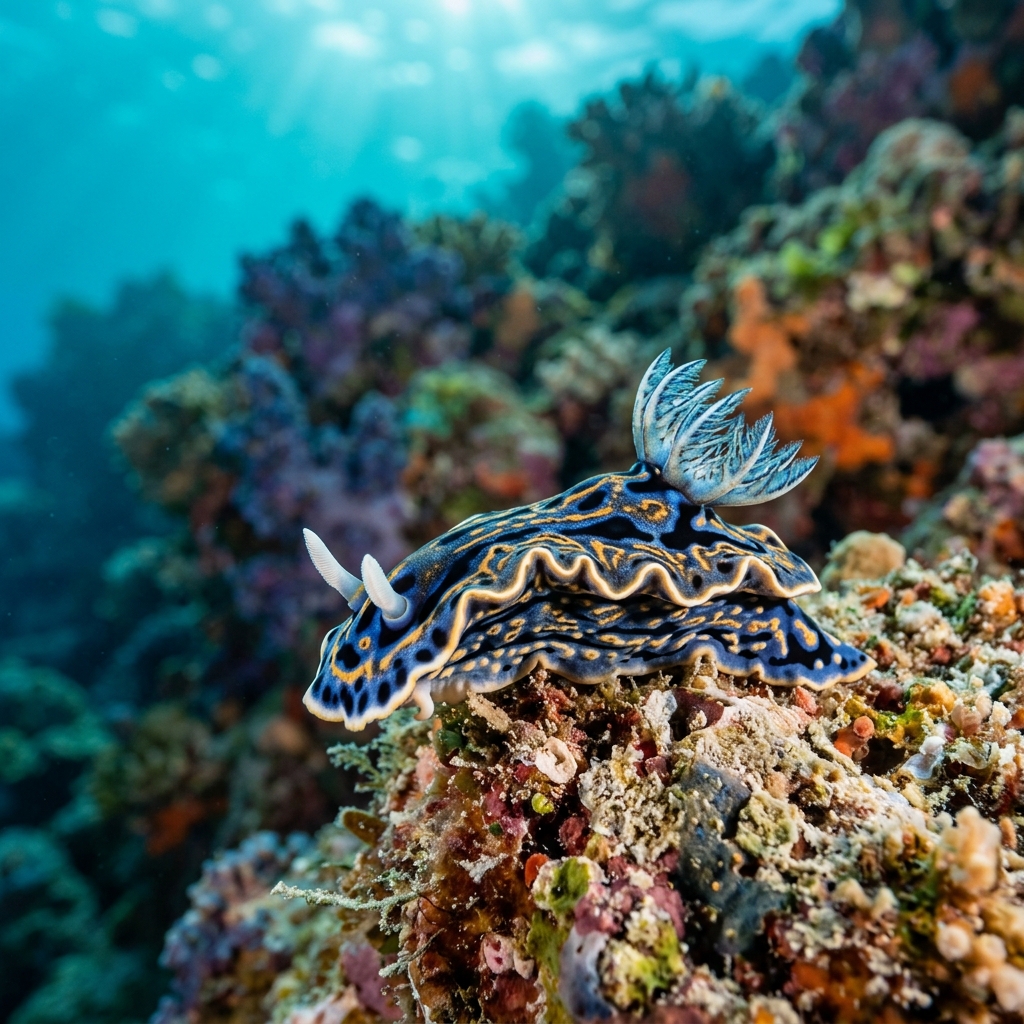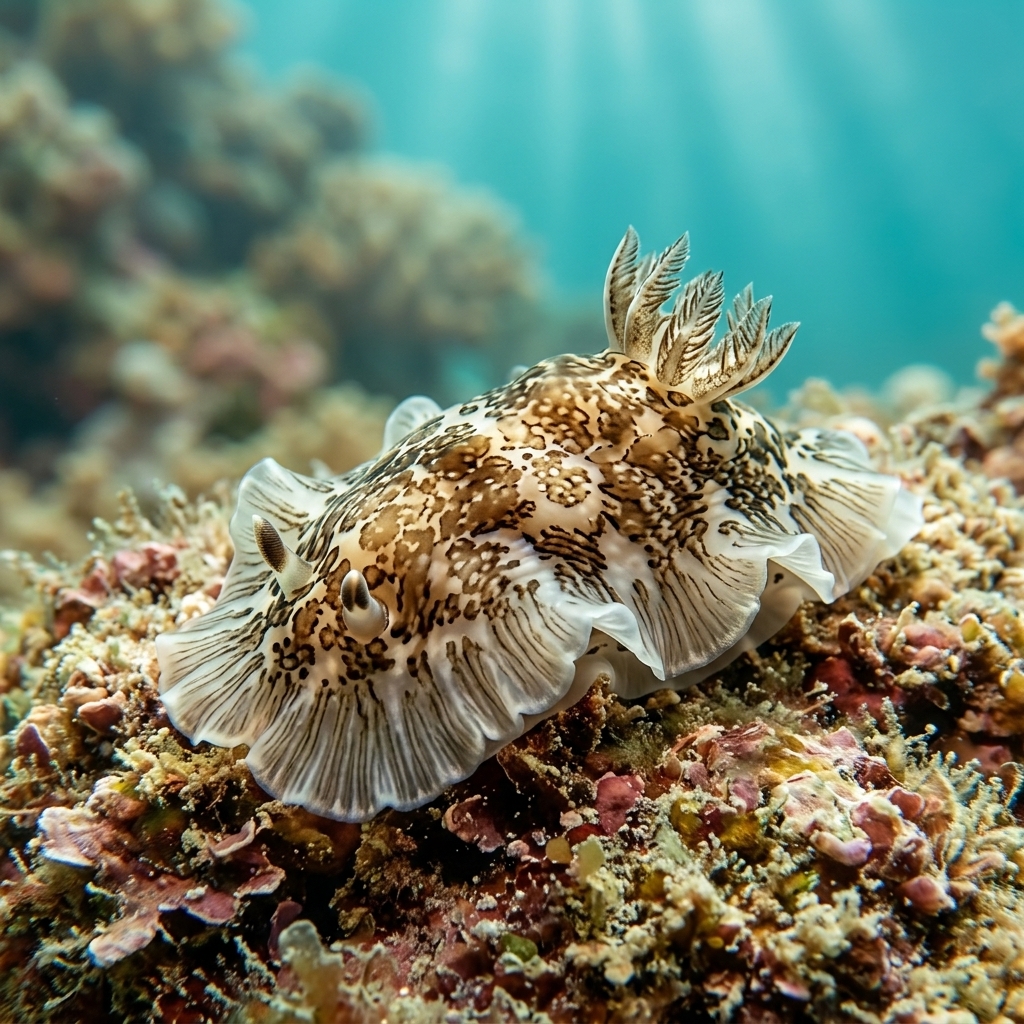
Dendrodoris grandiflora
Spot Dendrodoris grandiflora on the French Riviera and Lisbon Coast in cool 13-22°C water. Rare but unmistakable, here's how to find and ID it.
A dorid nudibranch (soft-bodied mollusc that breathes through an exposed gill plume on its back) with a noticeably bumpy, granular dorsal surface, the texture is one of the key features to lock onto. Body colour tends toward dark brown to purplish-black, often with a paler, sometimes orange-tinged margin. The plume of branched gills at the rear and a pair of retractable rhinophores (chemical-sensing horns) at the front are typically dark, matching the body. No hard size data exists from dive records, so expect a small nudibranch in the centimetre range typical of the genus.
Like other dendrodorid nudibranchs, it is most often seen moving slowly across rocky substrate or sponge-covered reef, where it feeds on sponges using a specialised sucking mouth rather than a rasping radula. It shows little reaction to divers but is easily missed because it tends to hug crevices and shaded surfaces. Sightings are nearly always solitary.
Dendrodorid nudibranchs lack the toothed feeding structure (radula) found in most other nudibranchs, instead using a muscular pump to suck material from soft sponges, making this group unusual even within an already quirky family of molluscs.
There is not enough monthly sighting data to point to a specific season, so treat it as potentially present year-round wherever its cool-water habitat is accessible. The observed temperature range of 13 to 22°C suggests it favours cooler periods in the Mediterranean.
Almost all confirmed sightings come from the French Riviera and Provence, where it has been recorded at multiple sites along that rocky coastline. There is also a sighting on the Lisbon Coast in Portugal. Both locations sit within the species' observed temperature window of 13 to 22°C, so look for it on temperate rocky reefs rather than warm tropical destinations.
Mapping where Dendrodoris grandiflora is logged…
Confirmed dive sightings come from the French Riviera and Provence in France and the Lisbon Coast in Portugal. The French Riviera accounts for the majority of records. Both areas offer rocky, temperate reefs in the right temperature range.
Monthly sighting data is too limited to identify a peak season, so no specific time of year can be recommended confidently. The species' observed water temperature range of 13 to 22°C suggests it may be more active during cooler months on Mediterranean sites.
Look for a small, dark nudibranch with a heavily granular (bumpy) dorsal surface, dark gills at the rear, and a pale or orange-tinged body margin. The strongly textured back is the standout feature that separates it from smoother dorid nudibranchs in the same habitat.
It is rare at most sites where it has been recorded, with only one site reporting it as uncommon. Expect to need multiple dives on suitable rocky reef habitat before encountering one, and treat any sighting as a noteworthy find.
No, they pose no risk to divers. Like most nudibranchs they are small, slow-moving, and entirely harmless. They should not be handled, however, as touching any nudibranch can stress the animal and damage its delicate body.
Site and sighting data is aggregated from diver logs, iNaturalist and GBIF. For taxonomy and conservation status:
Blue Dragon
3,163 sites