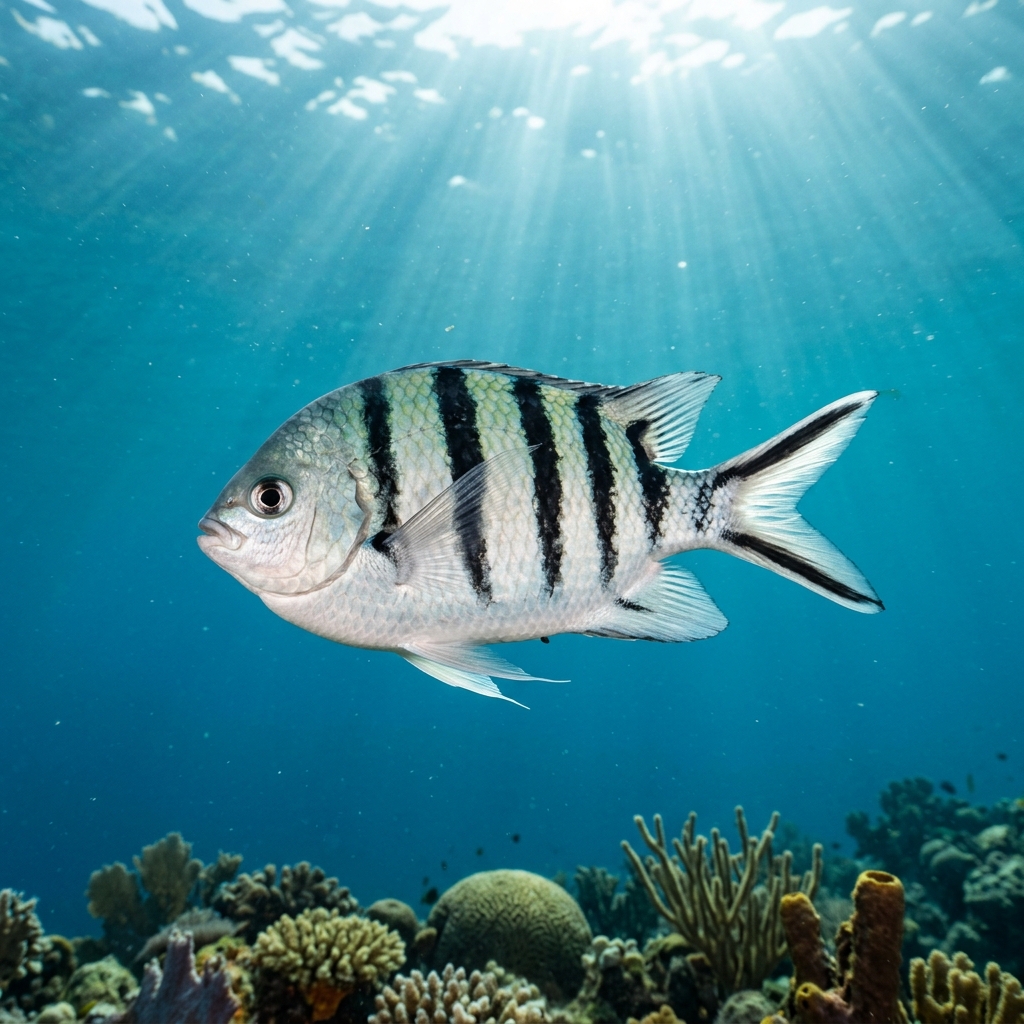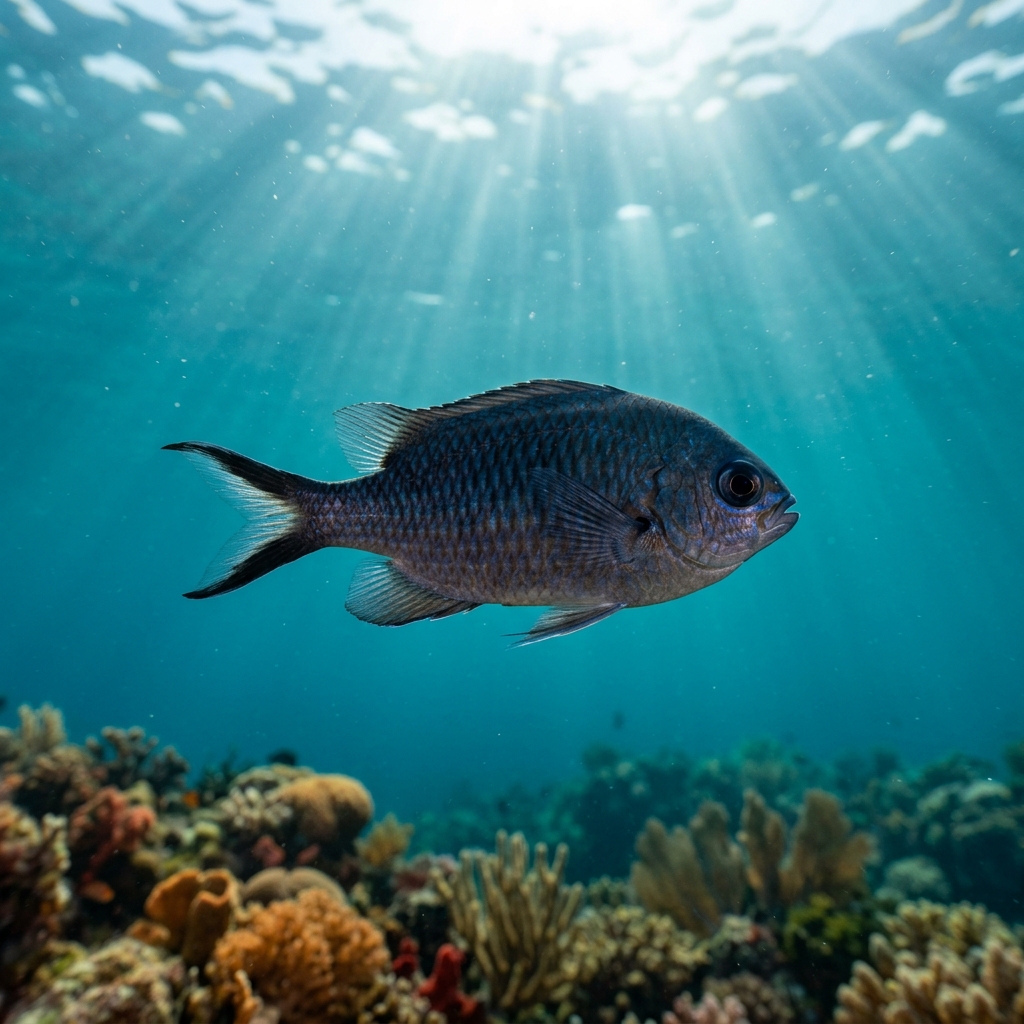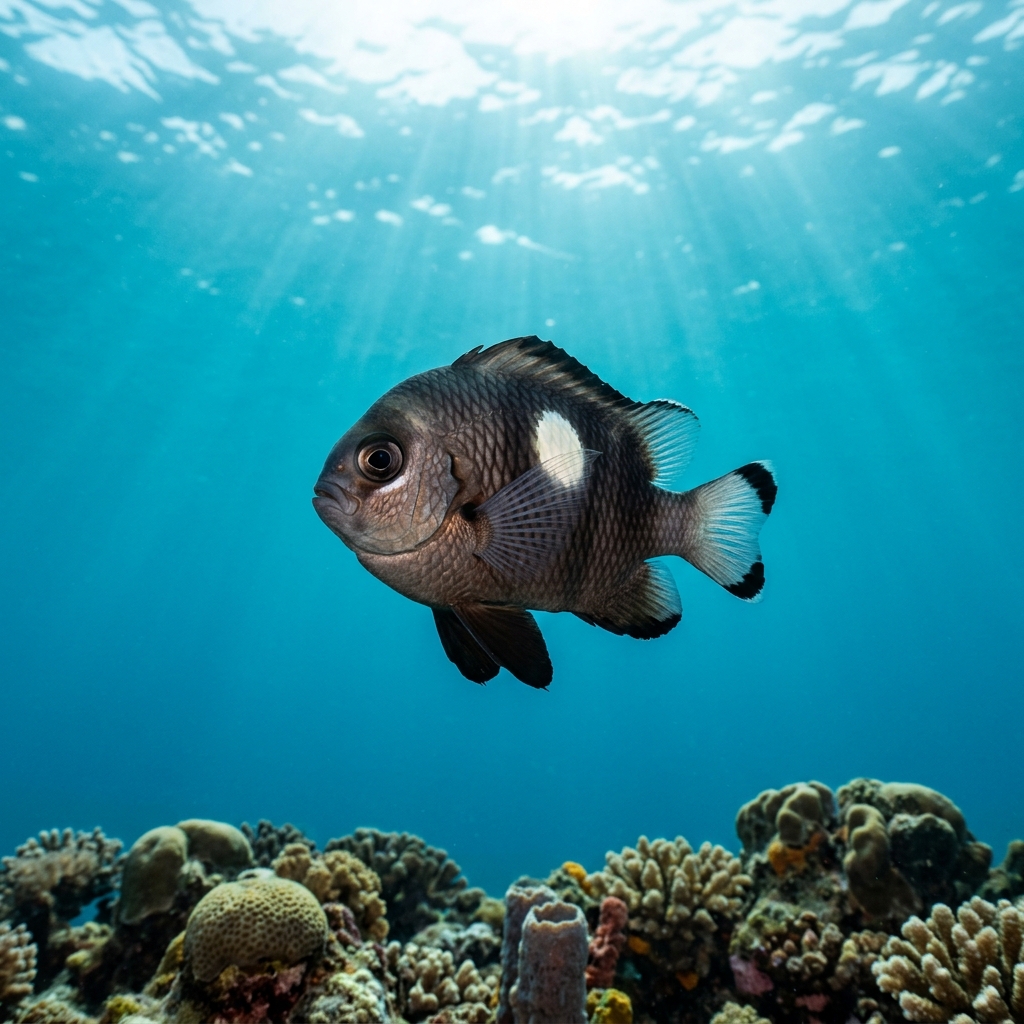
Dascyllus albisella
Spot Hawaiian Dascyllus across Hawaii and French Polynesia in warm 24-27 °C water. Here's how to ID this bold damselfish and when to find it.
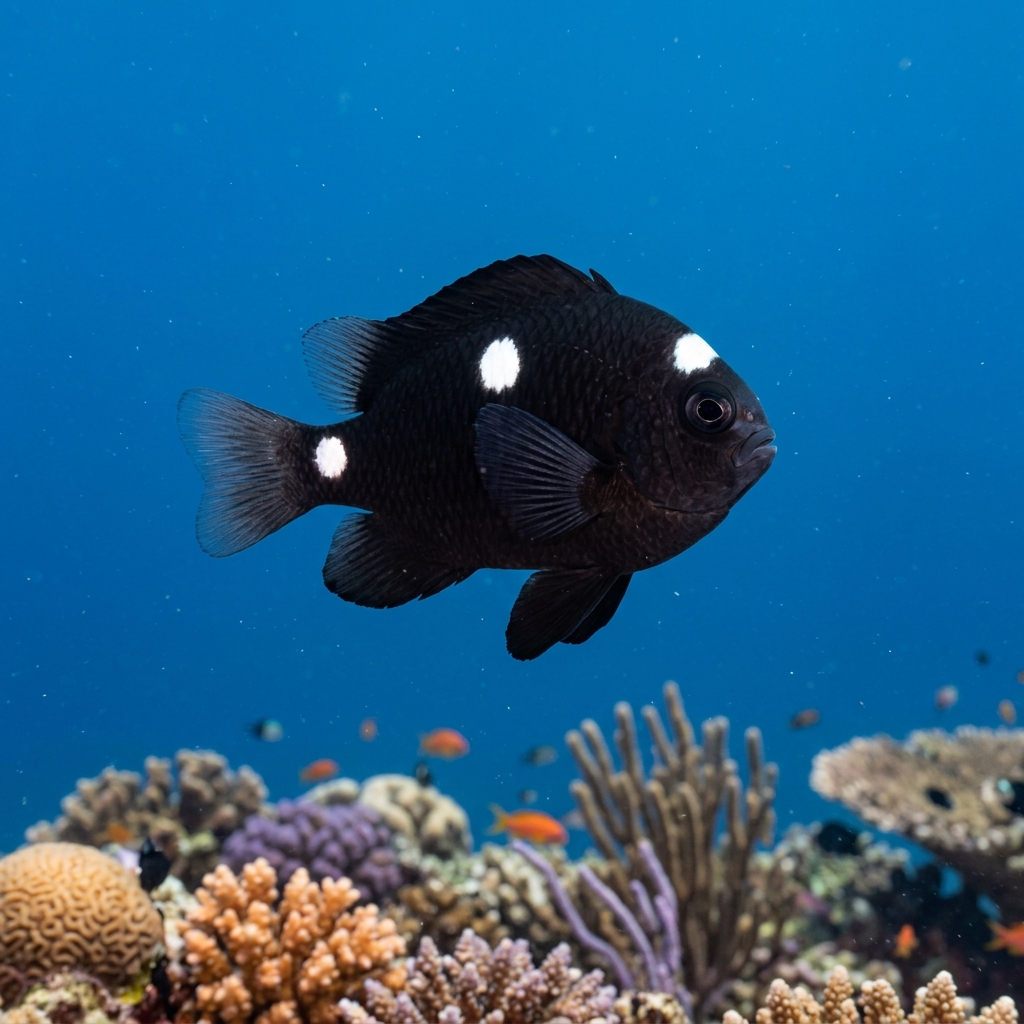
A compact, deep-bodied damselfish with a mostly white body and a dark black patch covering the back and dorsal fin, giving it a striking two-tone look underwater. Look for the bold white forehead spot, which is one of the clearest field marks when you're face-to-face with one near the coral. Juveniles are notably darker overall, with the white areas much reduced, which can make young fish look almost entirely black at a glance.
Hawaiian Dascyllus are highly site-attached, typically seen hovering in loose aggregations directly above or around branching corals and heads, retreating into the coral structure when threatened. They are inquisitive but skittish; approach slowly and they may hold their ground, but sudden movements send the whole group dashing into the coral. Encounters happen across a range of shallow reef depths during daylight dives.
Like other dascyllus species, Hawaiian Dascyllus are protogynous hermaphrodites (females can transition into males), with dominant males actively defending nest sites on the reef substrate and fanning eggs until they hatch.
In Hawaii and other Northern Hemisphere sites, sightings concentrate from August through April. In Southern Hemisphere locations such as French Polynesia and the Cook Islands, the peak runs from May through December, broadly overlapping with the warmer months in those waters.
Most sightings come from Hawaii and French Polynesia, which together account for the overwhelming majority of logged encounters. Within French Polynesia, Tahiti and the Society Islands (Leeward) are the strongest spots, with additional records from Rangiroa, Tikehau, and Fakarava. The Cook Islands, particularly Rarotonga, also hold reliable populations.
Mapping where Hawaiian Dascyllus is logged…
Hawaii is the top destination, with strong records across the islands. French Polynesia is equally well-represented, particularly around Tahiti, the Society Islands (Leeward), Rangiroa, and Tikehau. The Cook Islands, especially Rarotonga, are also reliable spots.
In Hawaii, sightings are most consistent from August through April. In French Polynesia and the Cook Islands, the peak season runs May through December. Water temperatures across its range sit between about 24 and 27 °C, so it stays tied to warm tropical reef conditions year-round.
Look for a small, deep-bodied fish that is white below and black across the back and dorsal fin. The white spot on the forehead is the clearest single field mark. Juveniles appear much darker overall and can look almost entirely black, so check for the forehead spot even on dark individuals.
Hawaiian Dascyllus are a small damselfish; adults typically reach around 12-13 cm in length, though many individuals you encounter on the reef are noticeably smaller. Their deep, disc-like body shape makes them look stockier than their length suggests.
No. They are entirely harmless to divers. Like many damselfish they can be territorial and may dart towards your hand near their coral head, but this is a bluff and no risk is involved.
Yes. They are protogynous hermaphrodites, meaning females can transition into males. Dominant males establish territories and guard nests, fanning the eggs until they hatch. This reproductive strategy is common across the damselfish family and explains why you often see one larger fish presiding over a group.
Site and sighting data is aggregated from diver logs, iNaturalist and GBIF. For taxonomy and conservation status:
Yellowtail Clownfish
3,523 sites