Cadlina sparsa
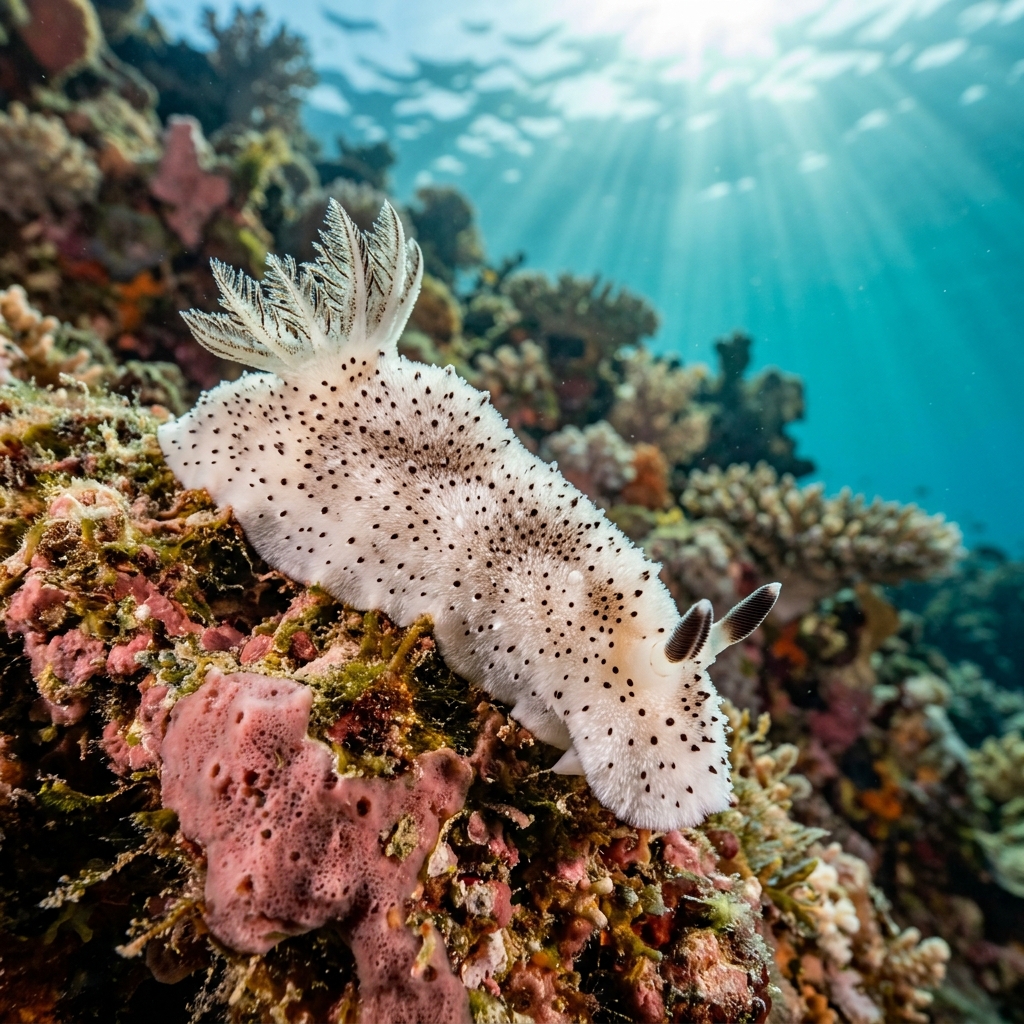
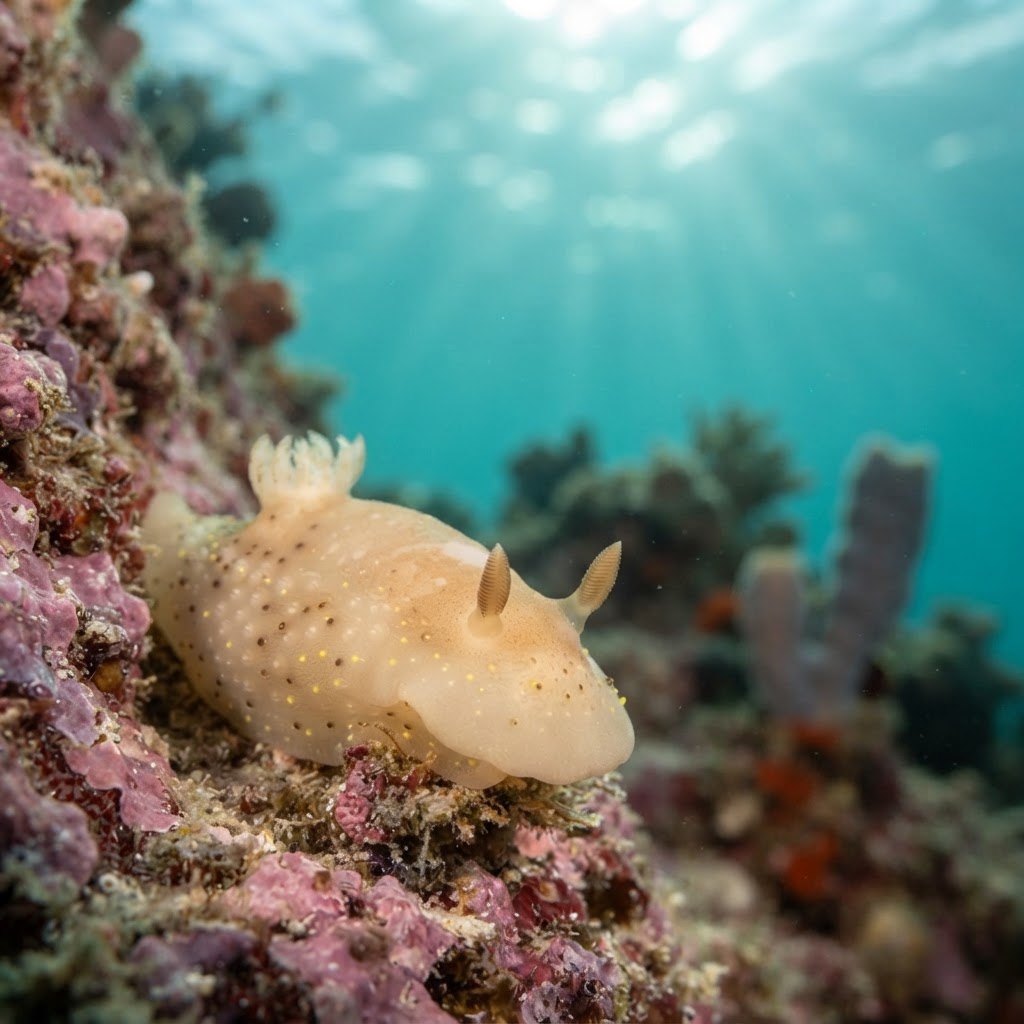
White nudibranch with dark speckles, best spotted at California dive sites in cool 14.6-20.6C water year-round.
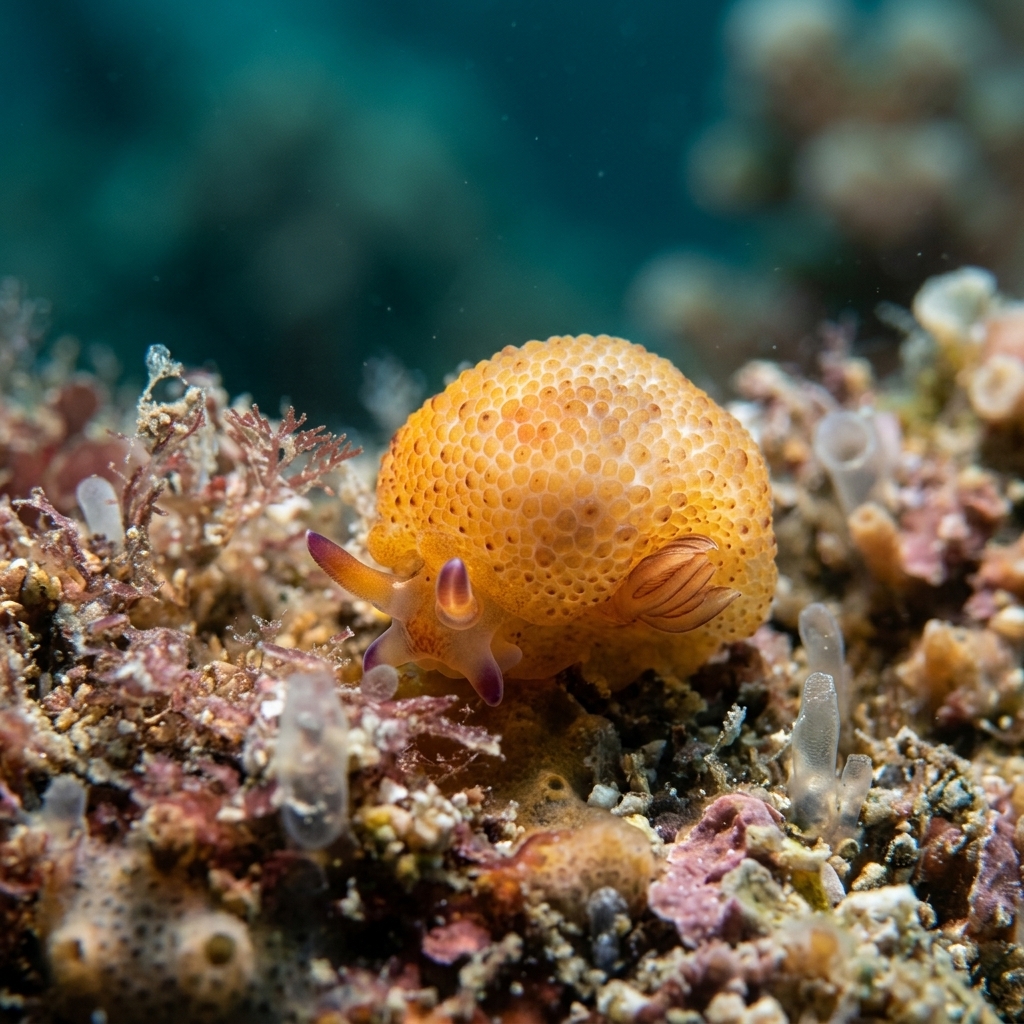
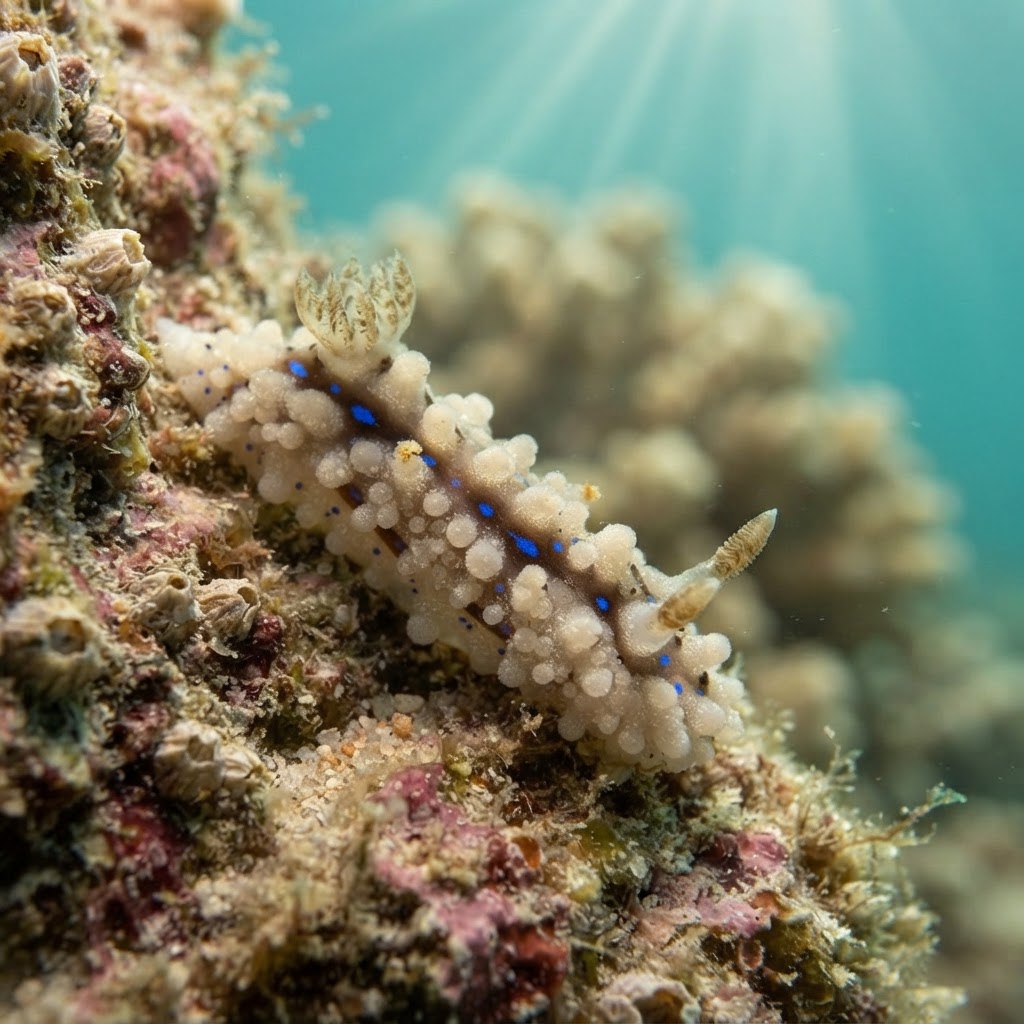
A small white-bodied nudibranch, rarely more than 3 cm, with scattered dark spots across its back that give it the speckled look its name refers to. Look for the rhinophores (paired sensory tentacles on the head) and the gill cluster near the tail, both edged in the same pale tone as the body. The soft, rounded profile and slow crawl across rock and algae make it easy to pick out once you're used to searching cool-water rubble and boulder slopes.
Divers typically find this nudibranch moving slowly over rock, boulder, and algae-covered surfaces where it grazes, paying little attention to divers nearby. It's logged as uncommon at most sites it's been recorded, so expect a slow, deliberate search along ledges and crevices rather than an easy spot. At the one site where it's called common, a careful scan of similar cool-water rocky habitat is your best bet.
Like other dorid nudibranchs, it likely feeds on sponges, using bright warning colouration as a defence against predators once it has absorbed distasteful compounds from its prey.
Sightings show no clear seasonal pattern, so this is a year-round find rather than a seasonal one. It sits comfortably in the 14.6 to 20.6C range typical of California's cooler coastal dive sites, which likely explains why it turns up across the year rather than in a narrow window.
Currently most reliably logged in California, United States, where all recorded sightings come from, making it a California specialty for divers hunting cool-water nudibranchs on the US west coast.
Mapping where Dark-spot Cadlina is logged…
California, United States is currently the most reliable place to find it, with sightings concentrated along the state's cooler rocky coastal dive sites.
There's no strong seasonal pattern in the data, so it's considered a year-round find in the 14.6 to 20.6C water it favours.
Look for a small white nudibranch, around 3 cm, with scattered dark spots over its back, plus pale-edged rhinophores and gill cluster. It moves slowly over rock and algae rather than swimming.
They typically reach about 3 cm in length, making them a small find that rewards a slow, close look at rocky reef surfaces.
No, they pose no danger to divers. Like most nudibranchs, they're harmless to observe and simply worth spotting without disturbing.
As a dorid nudibranch, it likely feeds on sponges and may repurpose compounds from its prey as a chemical defence against predators.
Site and sighting data is aggregated from diver logs, iNaturalist and GBIF. For taxonomy and conservation status:
Nudibranch
3,168 sites