Cuthona tina
A small, uncommon nudibranch turning up on reefs around Basse-Terre and Îles des Saintes, Guadeloupe, in warm 25-31C water year-round.
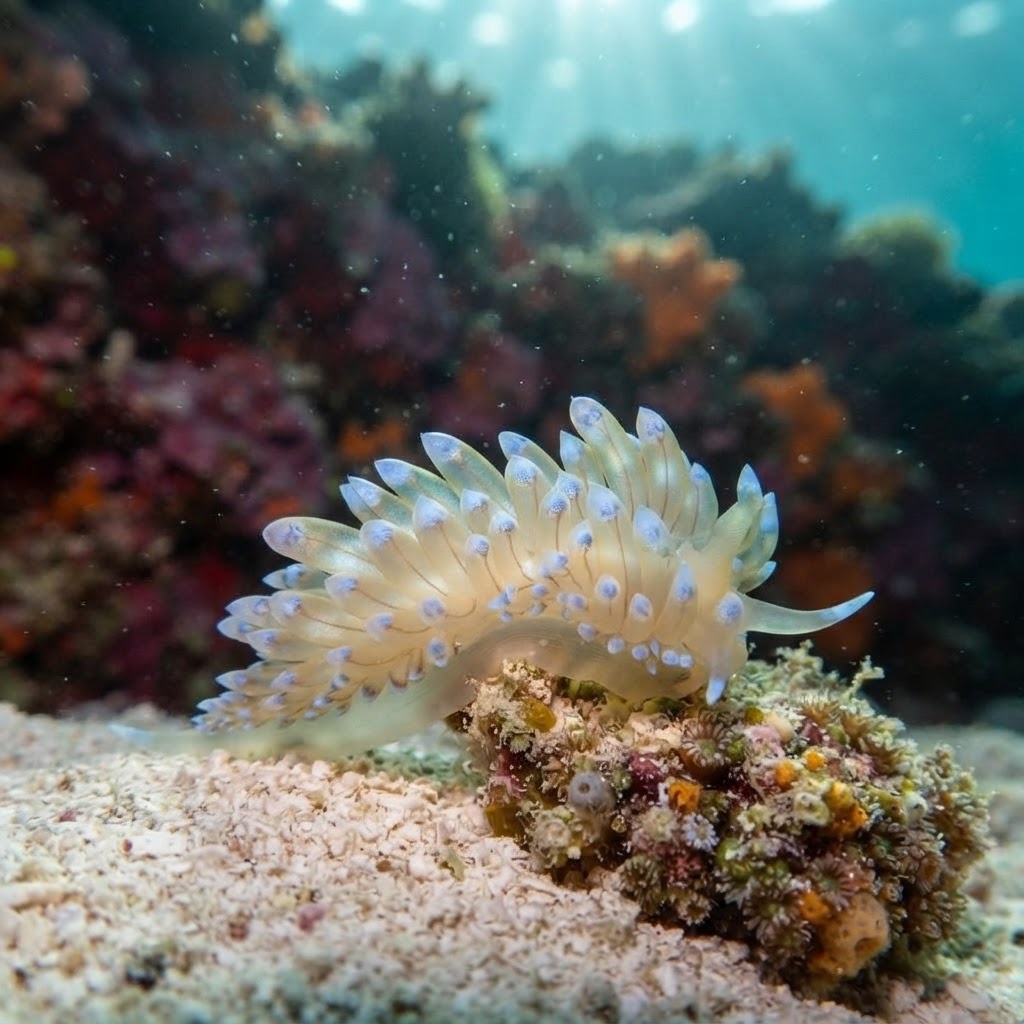
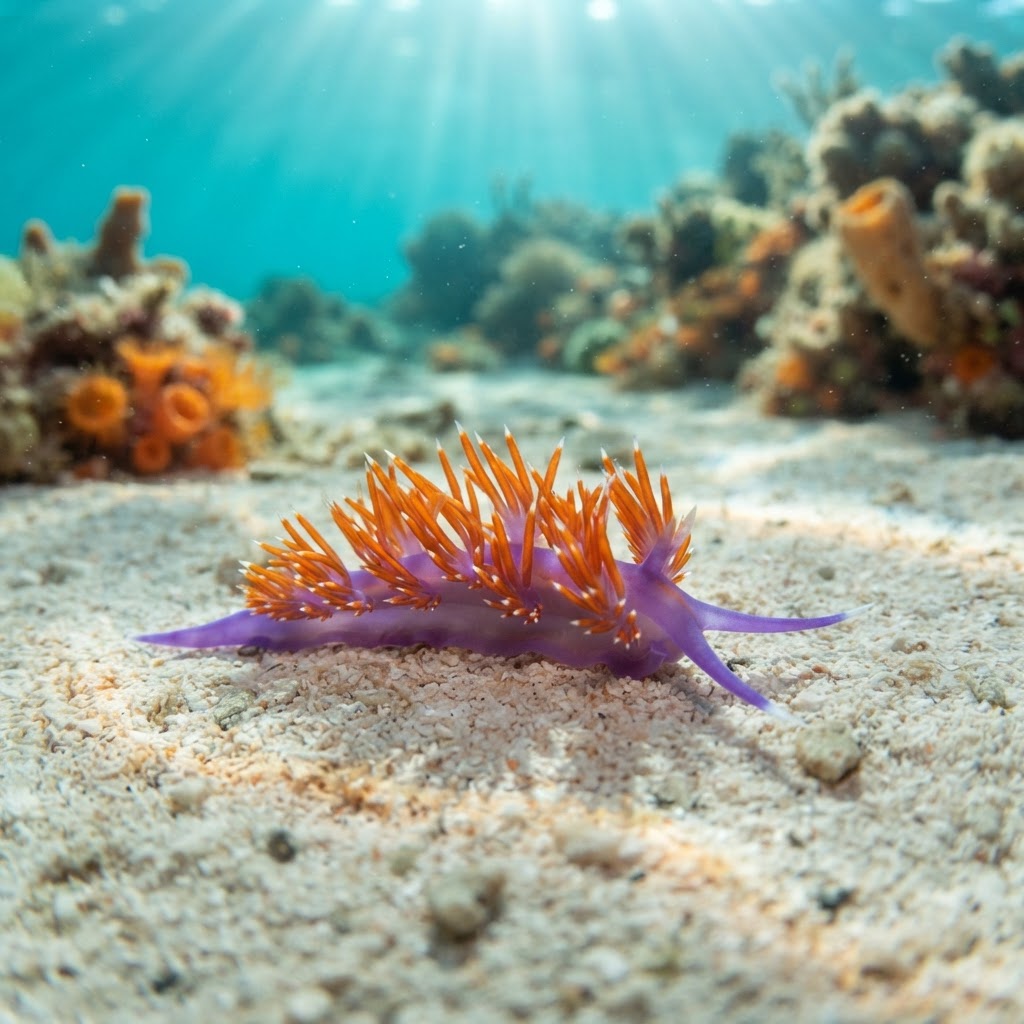
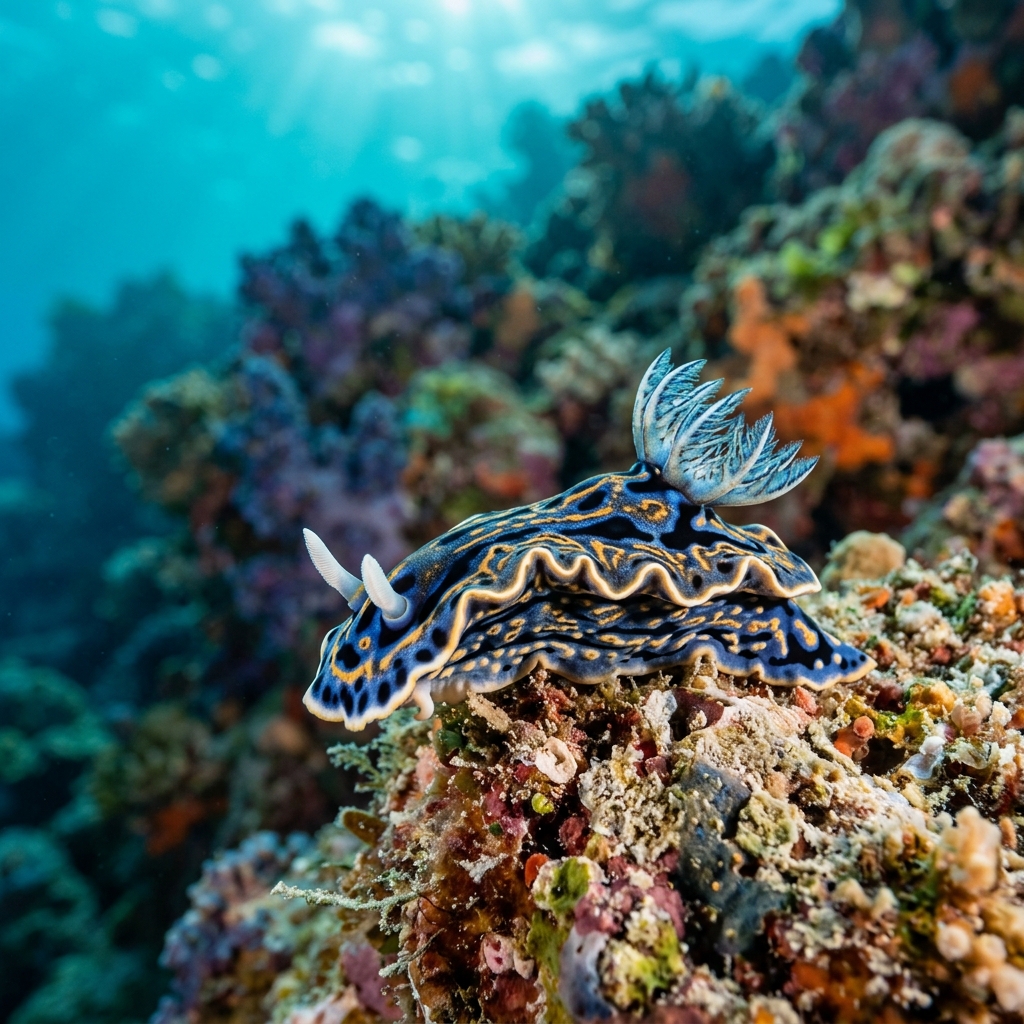
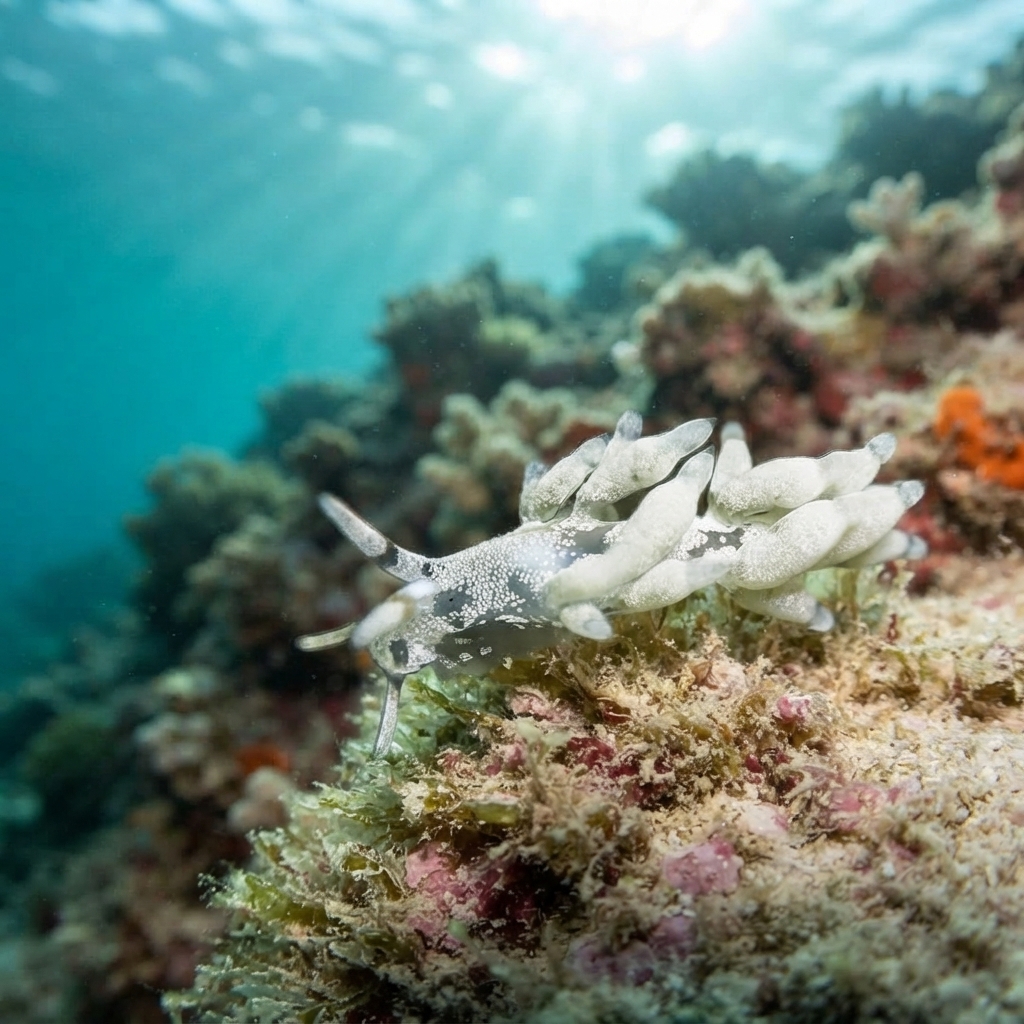
A small aeolid nudibranch (a group that carries finger-like projections called cerata along its back), identified more by its cerata pattern and body shape than by size, which is not well documented for this species. Look closely on hard substrate and rubble rather than expecting a showy, brightly patterned dorid; aeolids like this one tend to blend into their background until you get close with a torch or macro lens.
Divers find it tucked onto reef structure and rubble rather than out swimming in open water, typical of small aeolid nudibranchs that graze slowly over hard substrate. It shows no reaction to divers beyond retracting slightly if disturbed, so a slow approach and a steady light give the best look.
Like other aeolid nudibranchs, it likely feeds on hydroids and can store stinging cells from its prey in its cerata for its own defence, though this has not been specifically documented for Cuthona tina.
No clear seasonal pattern shows up in the sightings, and the observed water temperature range of roughly 25 to 31C fits a year-round tropical reef, so there is no strong reason to target a particular month.
Reef neighbours a diver could mistake it for. Use the identification notes above to tell them apart.
Guadeloupe is the strongest bet, with sightings concentrated in Basse-Terre and Îles des Saintes, and it also turns up around Sint Maarten in St. Martin / Sint Maarten. Across all 17 logged sites it stays an uncommon find, so treat any sighting as a bonus rather than a guarantee.
Mapping where Cuthona Tina is logged…
Guadeloupe is the best-documented location, especially around Basse-Terre and Îles des Saintes, with further sightings around Sint Maarten in St. Martin / Sint Maarten. It stays uncommon everywhere it is found, so search rubble and reef structure carefully rather than expecting an easy find.
There is no detected season in the sighting data, and the warm water niche it occupies (around 25 to 31C) is present year-round on these reefs, so any month is as good as another.
It is a small aeolid nudibranch recognised by the cerata (finger-like projections) along its back rather than a bold overall pattern. Look closely on rubble and hard substrate with a torch, since it does not stand out at a distance.
Size is not well documented for this species, but like most Cuthona nudibranchs it is small, typically only a centimetre or two, and easy to overlook on the reef.
No, they pose no danger to divers. Like other small nudibranchs, they are entirely focused on grazing and pose no threat, so it is fine to observe closely without disturbing them.
Site and sighting data is aggregated from diver logs, iNaturalist and GBIF. For taxonomy and conservation status:
Blue Dragon
3,163 sites