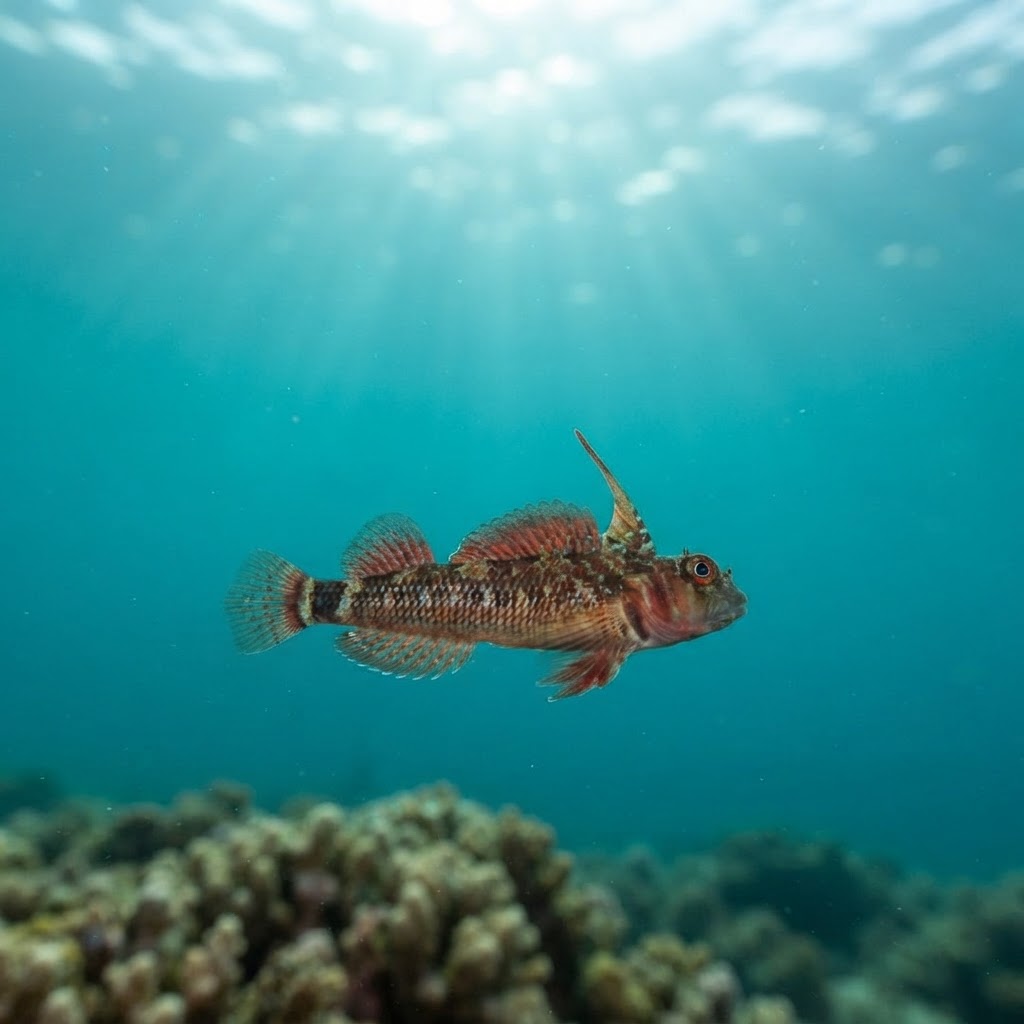
Helcogrammoides cunninghami
A tiny cold-water blenny relative logged again and again around Puerto Madryn, Argentina, in water as cool as 9.7C. Here's how to spot it.
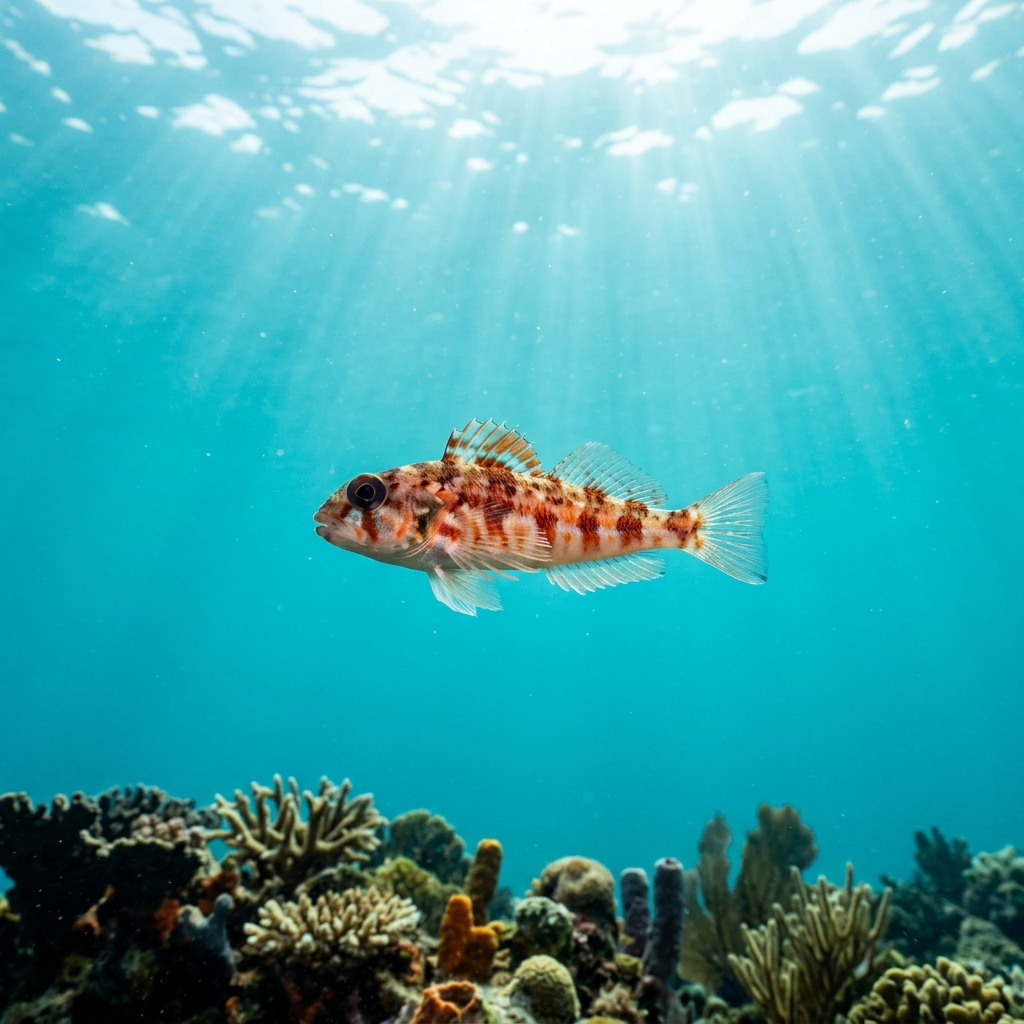
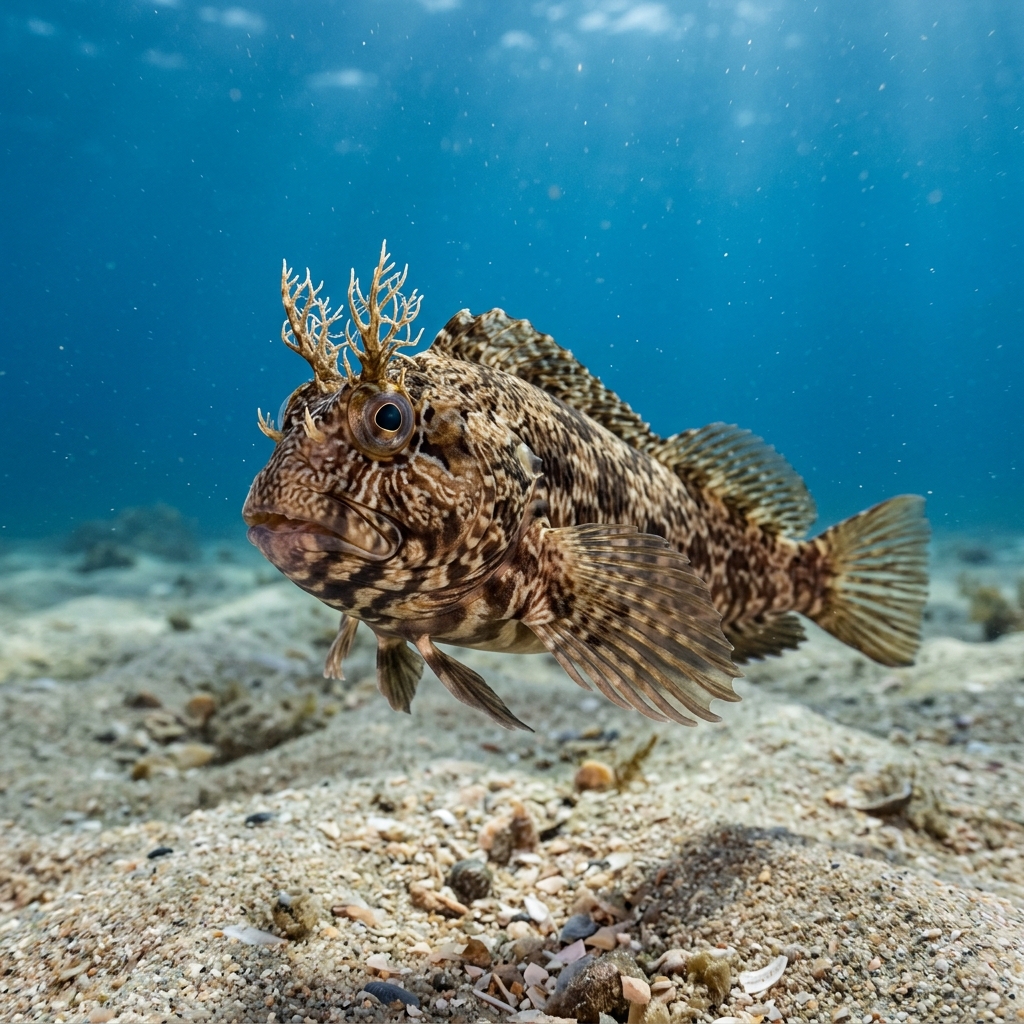
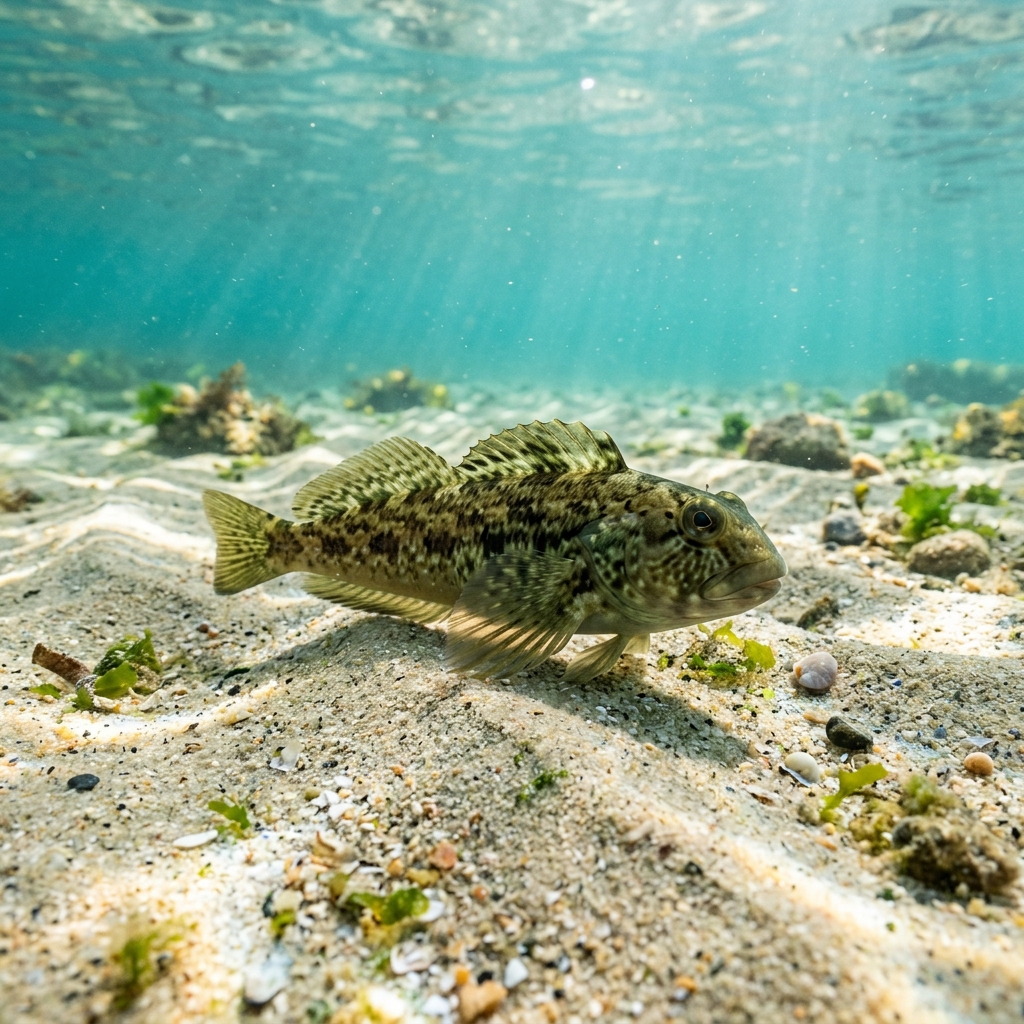
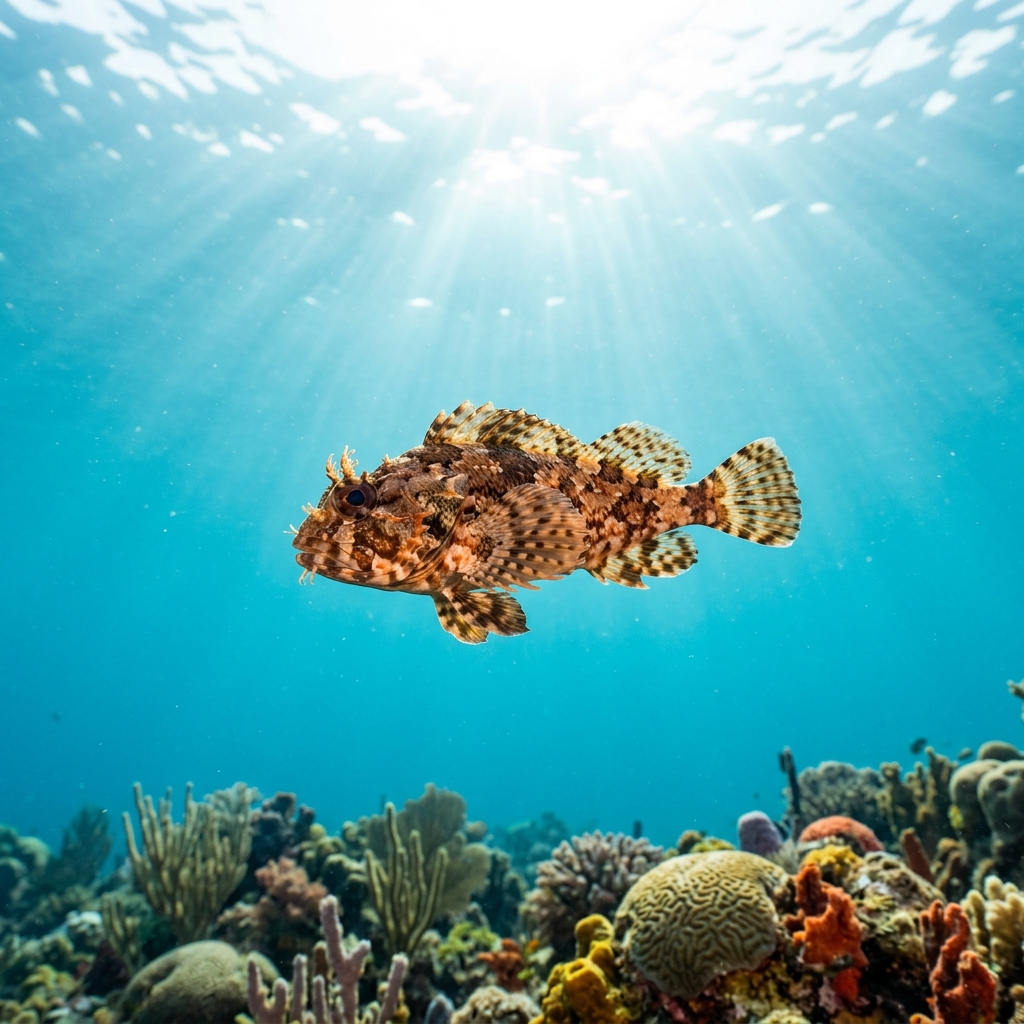
A 4 cm fish that sits propped on its pelvic fins on rock or amid algae rather than swimming freely, which is the fastest way to pick it out. Look for a mottled brown to olive body broken up with darker blotches, camouflage suited to the rubble and kelp holdfasts it perches on, plus the three separate dorsal fins that give the triplefin family its name. It rarely moves far when spotted, so a slow scan of rocky ledges at close range beats swimming past.
Divers mostly find it perched motionless on rock ledges or tucked into algae and rubble, using its pelvic fins like a tripod rather than cruising open water. It tends to hold its ground when a diver approaches slowly, relying on its blotched camouflage rather than fleeing, which makes it a patient subject once you've picked it out. Most sightings are logged as single individuals rather than groups, so expect one fish at a time on any given ledge.
Like other triplefins, it lacks a swim bladder, which is exactly why it spends its time resting on the bottom rather than hovering in midwater like most reef fish.
Sightings show no detectable seasonal pattern, so treat it as a year-round find. It's recorded in a fairly narrow cold-water band of roughly 9.7 to 15.7C, consistent with Patagonia's cool coastal waters at any time of year.
This is very much a Patagonian species: the overwhelming majority of logged sightings come from Argentina, especially around Puerto Madryn, with a smaller cluster near Camarones. It also turns up across the Andes on the Chilean coast around Valparaíso, though in far fewer numbers.
Mapping where Cunningham's Triplefin is logged…
It's most reliably logged around Puerto Madryn, Argentina, with further sightings near Camarones and across the water at Valparaíso, Chile. Argentina accounts for the vast majority of recorded dives with this species.
There's no clear season in the sighting data, so it's considered a year-round species in its cool Patagonian range, seen in water from roughly 9.7 to 15.7C.
Look for a tiny, 4 cm mottled brown fish propped motionless on rock or algae rather than swimming in open water. The three-part dorsal fin and camouflaged blotchy pattern are the key clues once you slow down and look closely at ledges.
They stay small, typically around 4 cm long, which is one reason divers often swim right past them without noticing.
No. It poses no threat to divers and simply rests on rock or algae, easy to observe up close without any risk.
It has no swim bladder, so unlike most reef fish it can't hover in midwater and instead rests propped on its pelvic fins on the seabed, a trait shared across the triplefin family.
Site and sighting data is aggregated from diver logs, iNaturalist and GBIF. For taxonomy and conservation status:
Rusty Blenny
2,605 sites