Coryphellina lotos
A pink and orange nudibranch logged in Luzon, Philippines and Central Japan, in warm water between 25.6 and 31.6C.
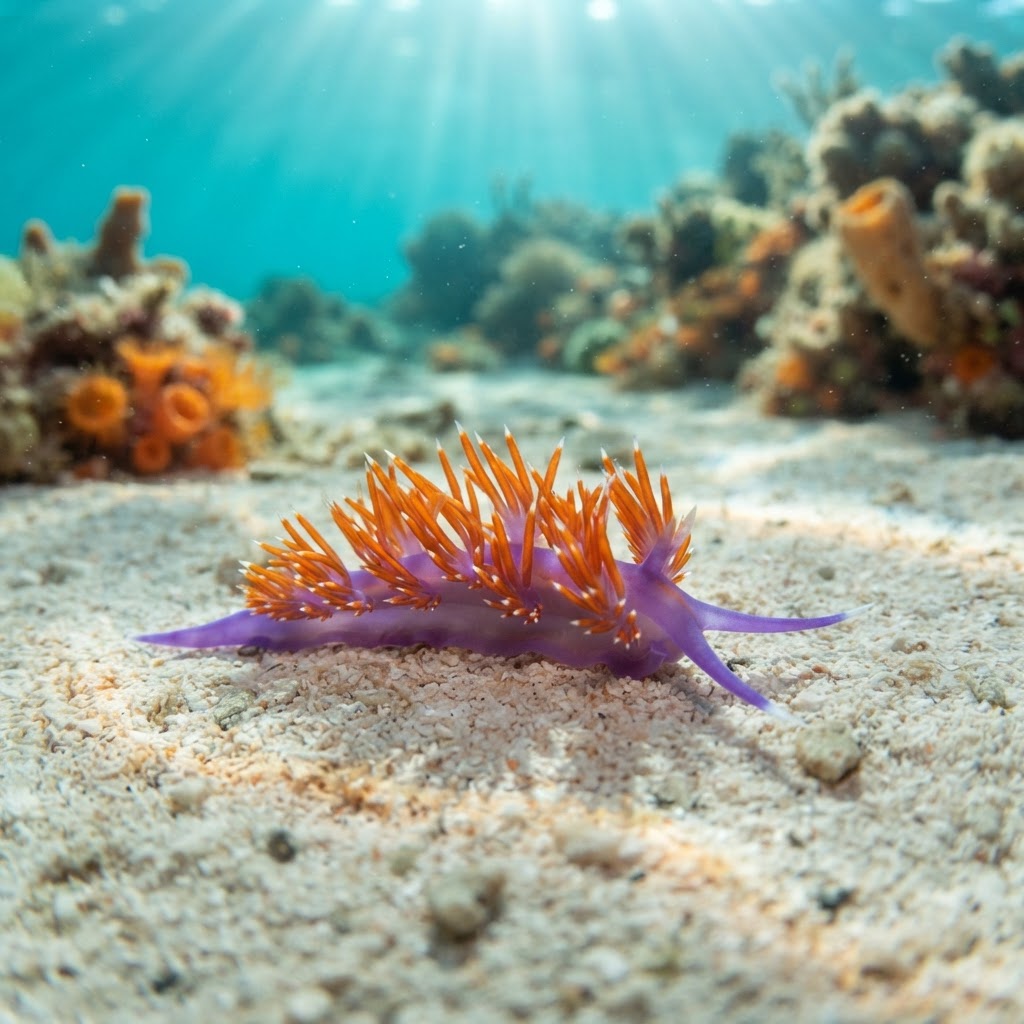
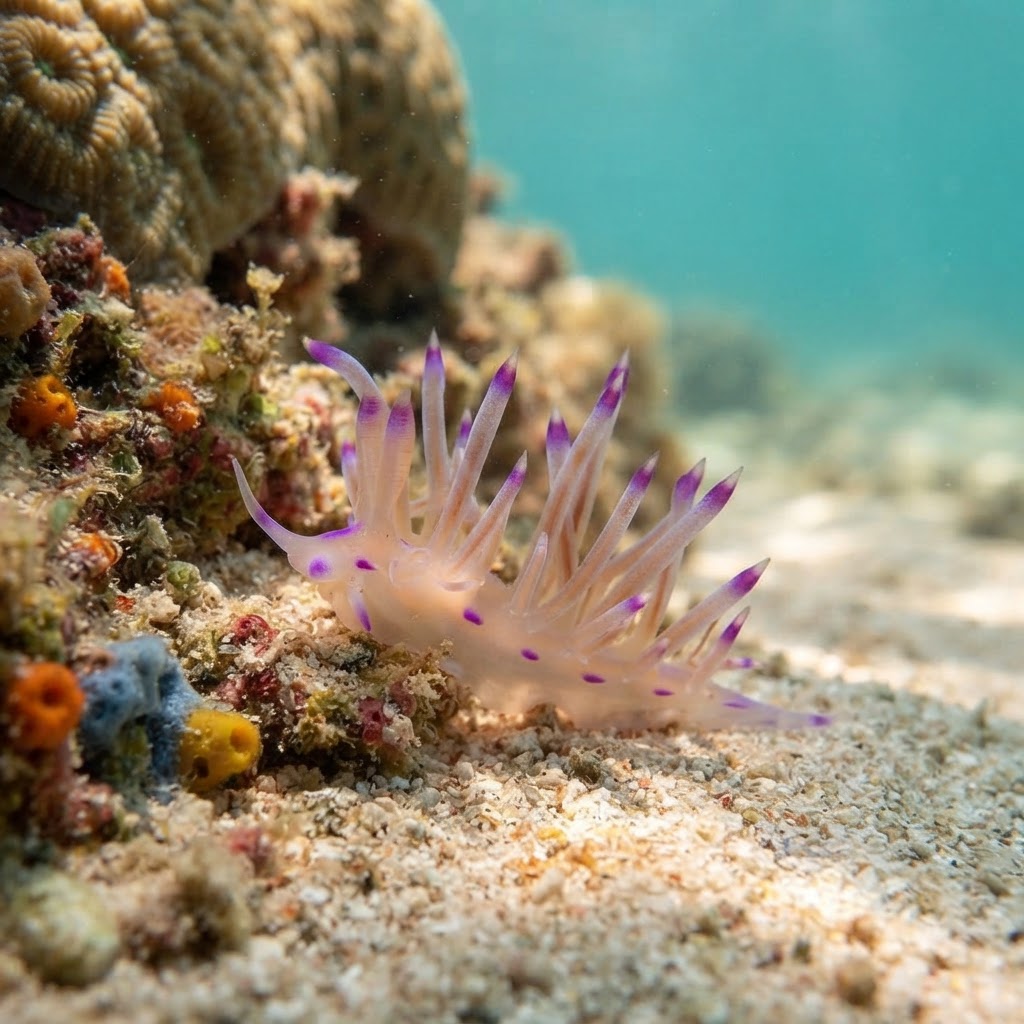
Small, slender nudibranch with a translucent white to pale pink body and rows of long, finger-like projections (cerata) tipped in vivid orange or red running down its back. The head carries a pair of curled, ringed sensory tentacles (rhinophores) that stand out against the pale body. Its narrow, elongated shape and the orange-on-white contrast are the main things to look for on close inspection of rubble or hydroid-covered surfaces.
Divers find it crawling slowly over rubble, sponge, or hydroid patches, usually on a macro-focused dive rather than out in open water. It shows no reaction to divers beyond withdrawing its cerata slightly if disturbed, and sightings tend to come from patient, close-focus searching rather than mid-water encounters.
Like other flabellinid nudibranchs, it likely feeds on hydroids and can incorporate stinging cells from its prey into its own cerata as a defence, meaning that colourful fringe you photograph may double as a chemical weapon.
No clear seasonal pattern shows up in the sighting data, and its comfortable range of 25.6 to 31.6C spans typical year-round tropical and warm-temperate conditions, so treat it as a possible find in any month.
Reef neighbours a diver could mistake it for. Use the identification notes above to tell them apart.
Most reliably logged in the Philippines, particularly around Luzon, with a further confirmed site in Central Japan. Sightings are still limited across both countries, so finding one takes a dedicated muck or macro dive rather than a general reef cruise.
Mapping where Coryphellina lotos is logged…
Confirmed sightings come from Luzon in the Philippines and Central Japan, making these the two most reliable regions to search for it. It is not a widespread find, so most dive operators will not target it specifically.
There is no detected seasonal pattern, and its known temperature range of 25.6 to 31.6C covers warm reef conditions year-round, so any month can produce a sighting.
Look for a slender, pale pink to translucent body with rows of orange-tipped cerata along the back and curled, ringed rhinophores on the head. It is a small, close-focus find best spotted on rubble or hydroid-covered surfaces.
Exact size data is not confirmed, but like most Coryphellina species it stays small, typically only a couple of centimetres long, so a macro lens or sharp eyes help when searching for it.
No, this nudibranch poses no threat to divers. It has no ability to harm anything larger than the small invertebrates it feeds on.
Site and sighting data is aggregated from diver logs, iNaturalist and GBIF. For taxonomy and conservation status:
Blue Dragon
3,163 sites