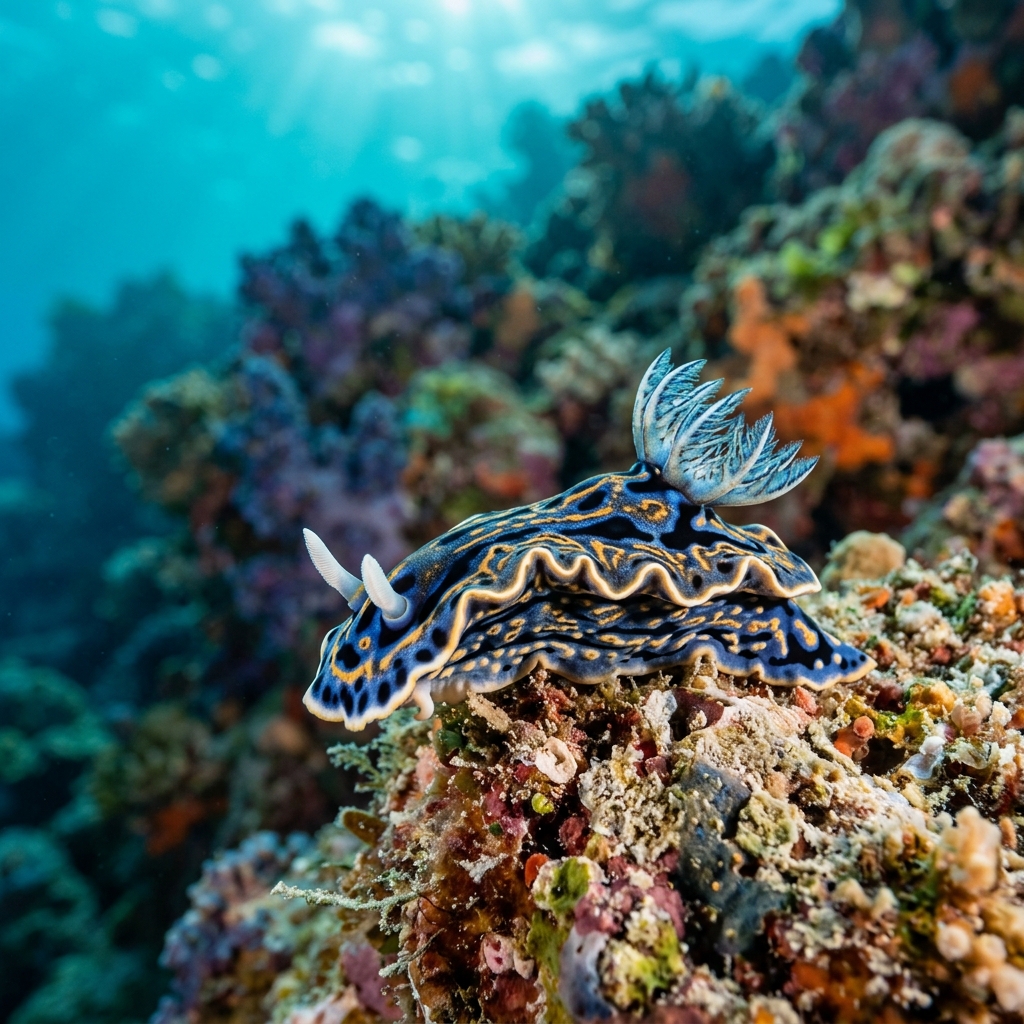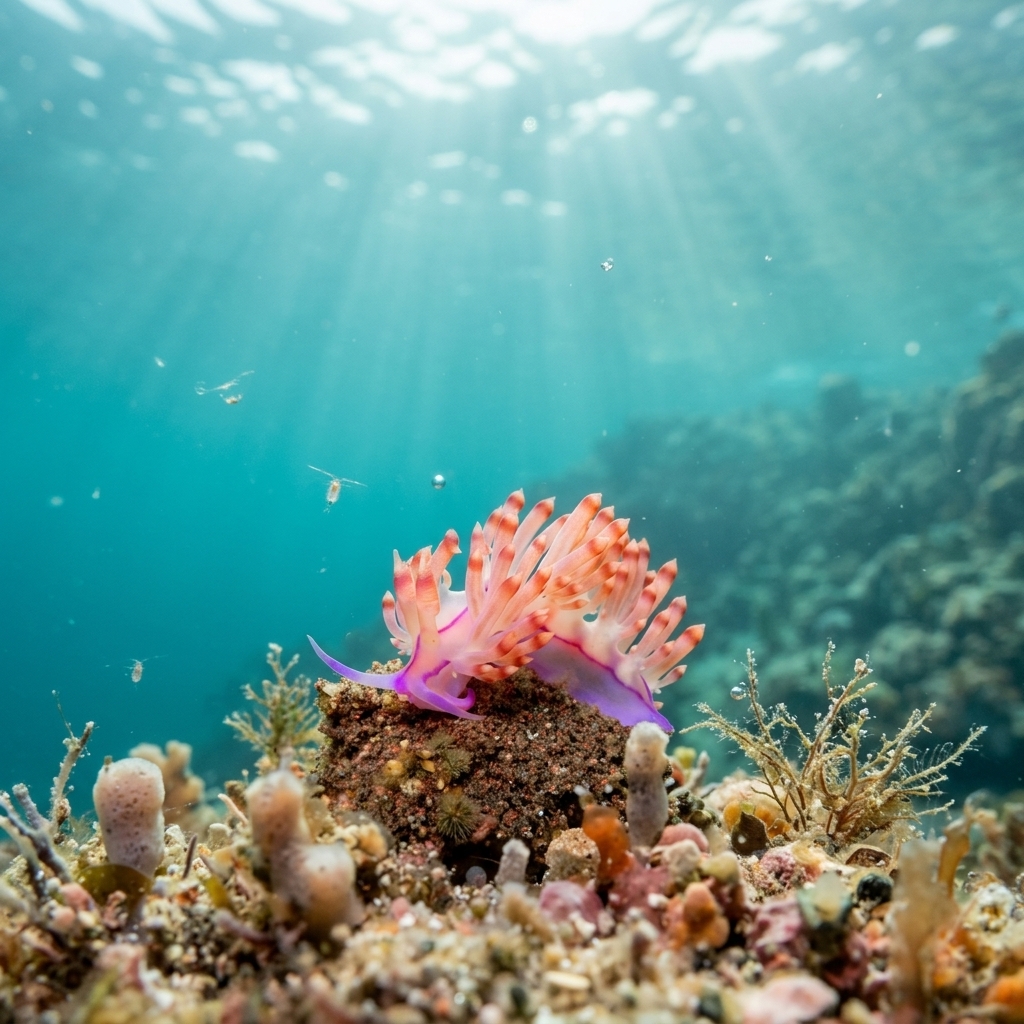
Coryphellina flamma
Spot Coryphellina flamma in warm 27-29 °C waters across the Philippines, Malaysia and Indonesia. Here's where divers find it and how to recognise it.
Look for a slender, elongated nudibranch body adorned with densely packed cerata (finger-like projections on the back) that are typically vivid orange to flame-red, with pale or white tips. The rhinophores (sensory head appendages) are usually a matching bright orange, sometimes banded. It is a small animal, easy to overlook against colourful reef rubble, so slow and methodical searching pays off. The fiery colouration is the key field mark underwater.
Like most small aeolid nudibranchs, it is typically spotted crawling slowly across reef rubble, hard coral, or algae-covered substrate while searching for prey such as hydroids. It shows little concern for divers who approach gently, often continuing to feed undisturbed. Night dives and dawn dives tend to turn up more individuals, as many nudibranchs are more active in low light.
The species name 'flamma' is Latin for flame, a direct reference to the animal's vivid colouration, which is thought to advertise its unpalatability to predators, a strategy known as aposematism.
Northern Hemisphere data points to September through January as the peak window for sightings. Water temperatures across its core range sit between roughly 27 and 29 °C, so tropical sites in the Philippines, Malaysia, and Indonesia remain warm enough to support it throughout much of the year.
Most sightings come from the Indo-Pacific triangle of the Philippines, Malaysia, and Indonesia. The Perhentian and Redang islands in Malaysia and the reefs around Sulawesi in Indonesia are among the most productive areas, while Palawan and Apo Reef in the Philippines also produce reliable records. Smaller numbers have been logged in Queensland, Australia, and along the north coast of Timor-Leste.
Mapping where Coryphellina flamma is logged…
The strongest concentration of records comes from the Philippines (particularly Palawan, Apo Reef, and Luzon), Malaysia (Perhentian, Redang, Sipadan), and Indonesia (Sulawesi). It has also been logged in Queensland, Australia, and along the Timor-Leste north coast, all warm Indo-Pacific reef destinations.
Based on available data, sightings concentrate between September and January in Northern Hemisphere sites. Because its preferred water temperatures of 27-29 °C persist year-round across much of the tropical Indo-Pacific, there is likely no hard off-season at most core sites.
Key in on the flame-orange to red cerata (the finger-like projections covering the back) and matching bright rhinophores, which usually have pale or whitish tips. It is a small, slender nudibranch, so scanning slowly over rubble and hydroid patches at close range is essential. The intense fiery colouration distinguishes it from most other small nudibranchs sharing the same habitat.
It is generally uncommon to rare across the many sites where it has been recorded, with only a handful of sites reporting it as common. Patience, slow diving, and a sharp eye for small animals on the reef are the best strategies. Night dives often improve your chances.
No. Like all nudibranchs, it poses no threat to divers whatsoever. It is tiny and slow-moving. The only risk is inadvertently disturbing it, so look without touching and maintain good buoyancy when searching for it on the reef.
Site and sighting data is aggregated from diver logs, iNaturalist and GBIF. For taxonomy and conservation status:
Blue Dragon
3,163 sites