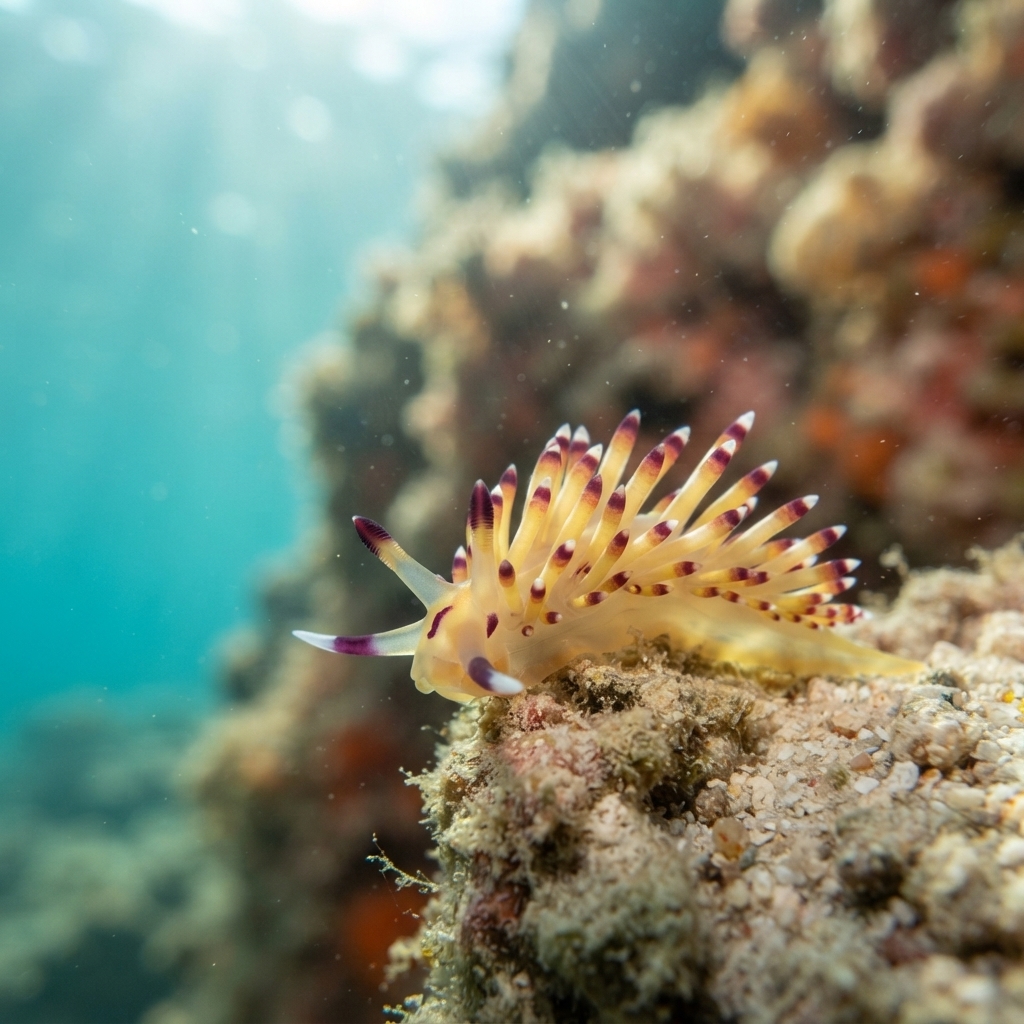
Coryphellina delicata
A rare, delicate nudibranch logged in Luzon, Philippines, in warm 25.5-31.5C reef water. Here's how to spot one.
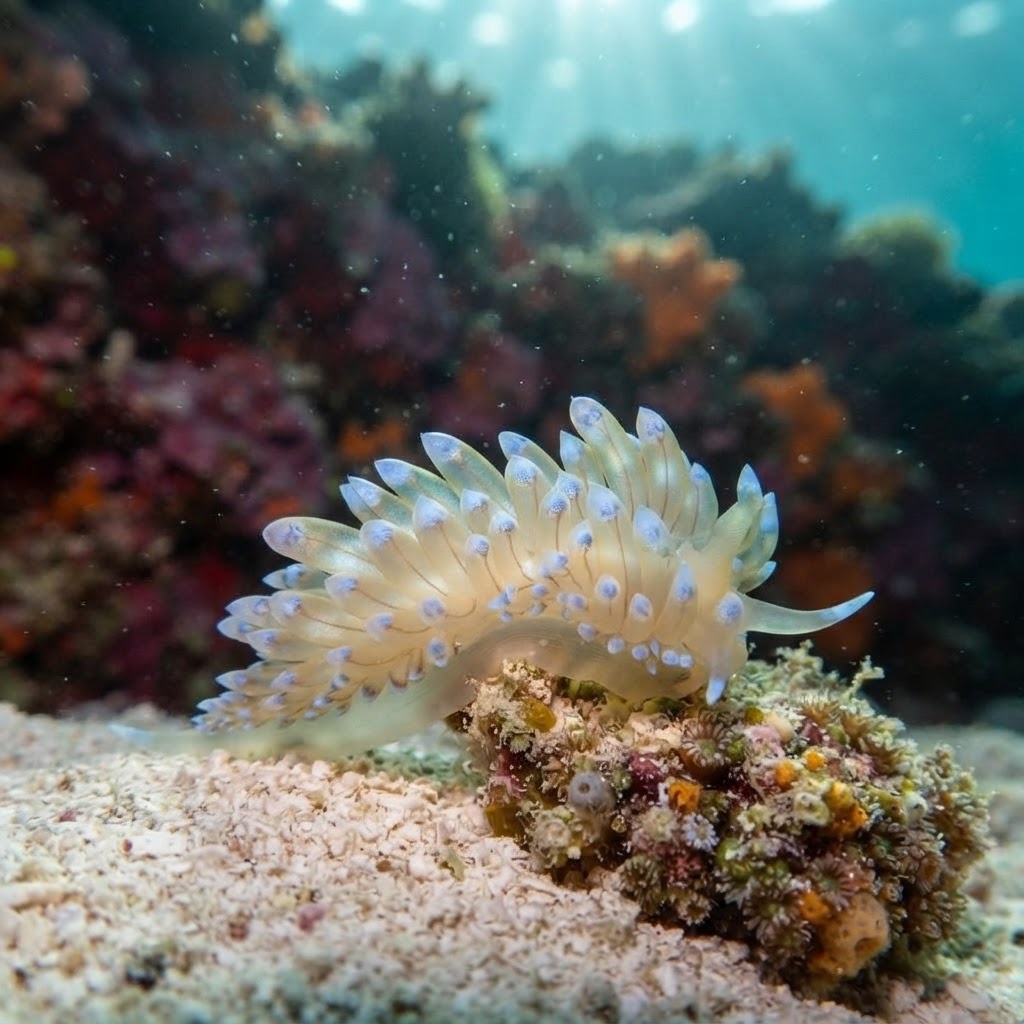
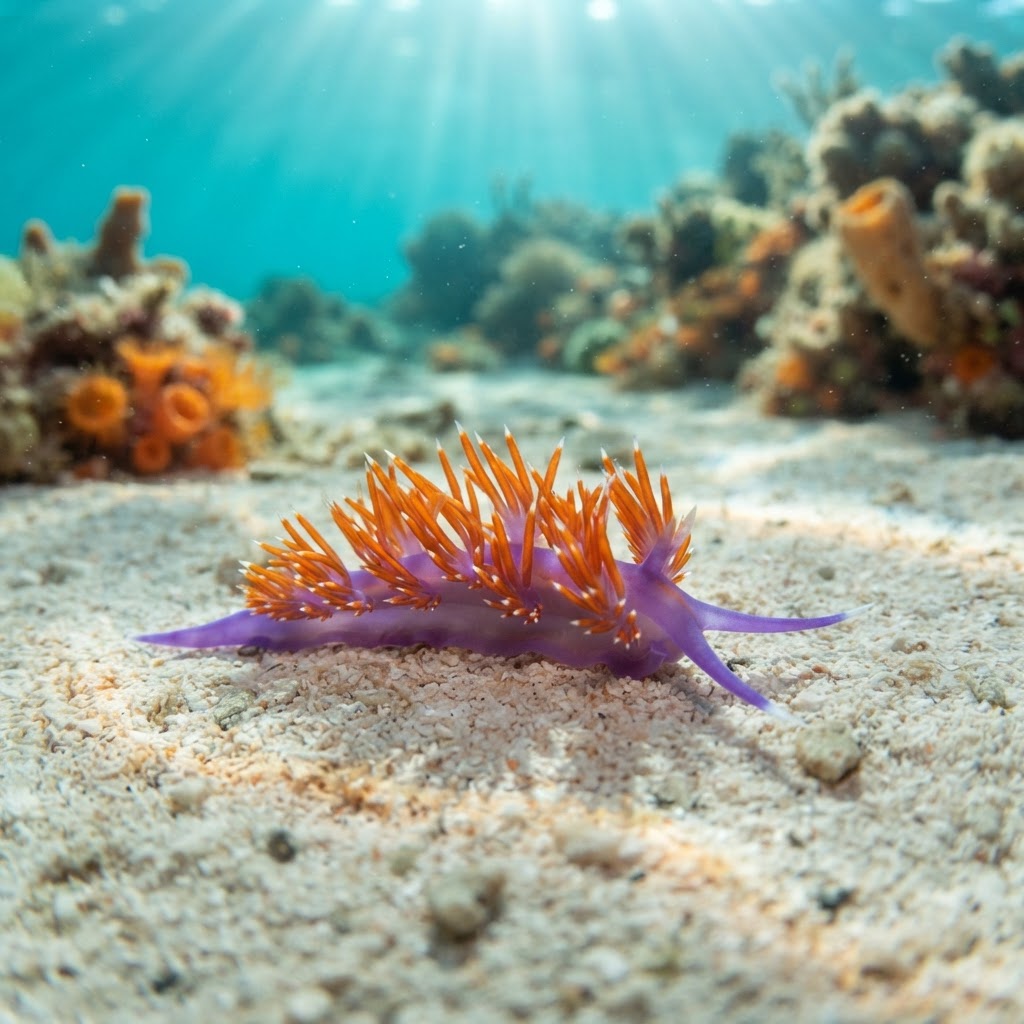
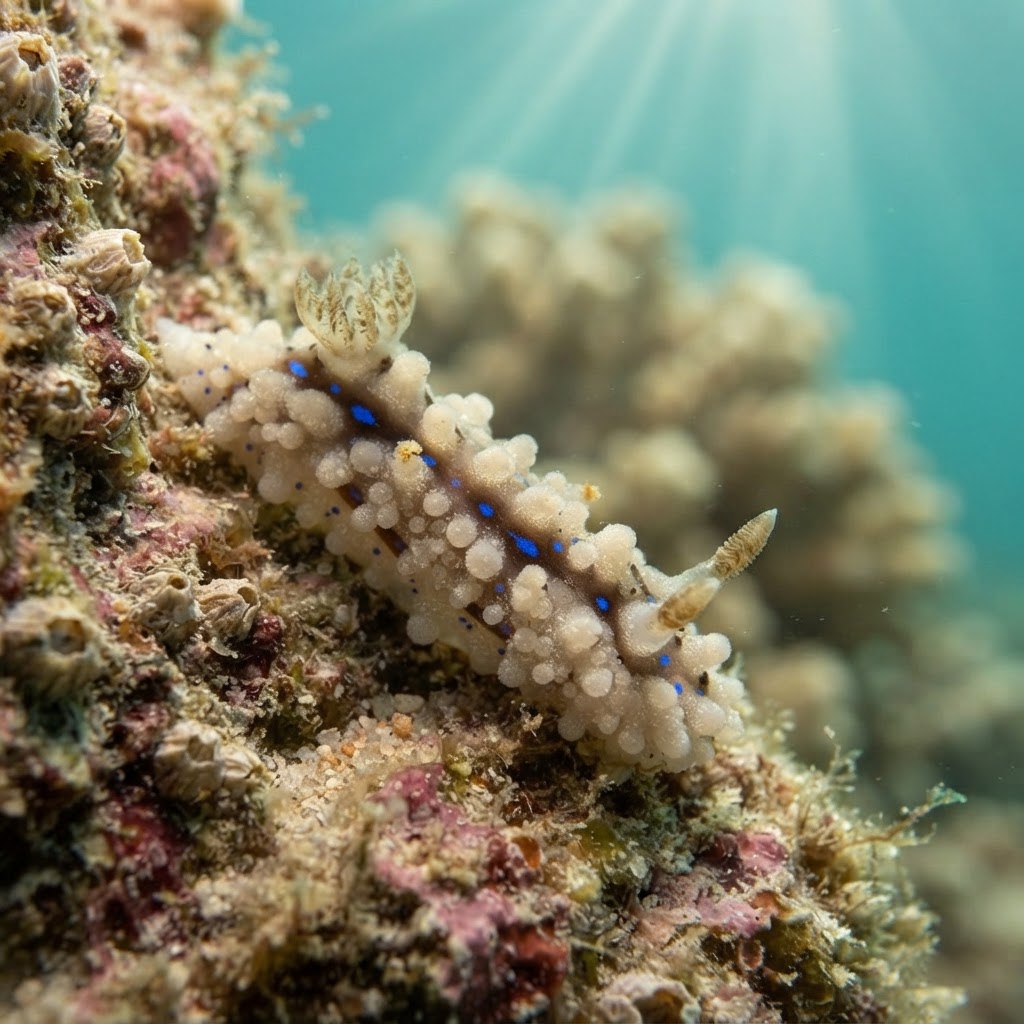
A small, slender sea slug with a translucent white to pale body and rows of finger-like projections (cerata) along its back tipped in orange or pink. The cerata give it a feathery, almost fragile look rather than the smooth-backed profile of many reef nudibranchs. It moves slowly across hard substrate and rubble, staying low-profile and easy to miss unless you are scanning closely.
Found moving slowly over rubble and hard bottom, grazing on the hydroids it feeds on, which is where its cerata colouring comes from. It shows no reaction to divers, being far too small and slow to register a threat, so a careful macro pass with a torch and patience is the only way to find one.
Like other flabellinid nudibranchs, it likely stores stinging cells from the hydroids it eats in the tips of its cerata, turning its own food into a defence.
Sighting data does not show a clear season, and the observed water temperature range of 25.5 to 31.5C spans typical Luzon reef conditions year-round, so there is no strong reason to target a particular month.
Reef neighbours a diver could mistake it for. Use the identification notes above to tell them apart.
Currently confirmed by divers only in the Philippines, with the one logged site in the Luzon region. It is a real specialist find rather than a species you can plan a trip around elsewhere in its known range.
Mapping where Coryphellina delicata is logged…
The only confirmed diver sightings so far are in the Philippines, specifically in the Luzon region. It is logged as uncommon even there, so treat any sighting as a lucky find rather than a guaranteed one.
There is not enough data to point to a season. It has been observed in water from 25.5 to 31.5C, which covers normal year-round conditions on Luzon's reefs.
Look for a small, slender, translucent-bodied nudibranch with rows of cerata tipped in orange or pink running down its back. It sits low on rubble and hard substrate and moves slowly, so a close macro search is needed to spot one.
Exact size data is not available, but like most Coryphellina and Flabellina species it is a small nudibranch, typically found in the centimetre range rather than anything conspicuous from a distance.
As a flabellinid nudibranch it feeds on hydroids and is thought to recycle their stinging cells into its own cerata tips, turning prey defences into personal protection.
Site and sighting data is aggregated from diver logs, iNaturalist and GBIF. For taxonomy and conservation status:
Blue Dragon
3,163 sites