Coryphella longicaudata
Cold-water nudibranch logged across British Columbia in 7.5 to 13.5C water, year-round on Pacific Northwest reefs and walls.
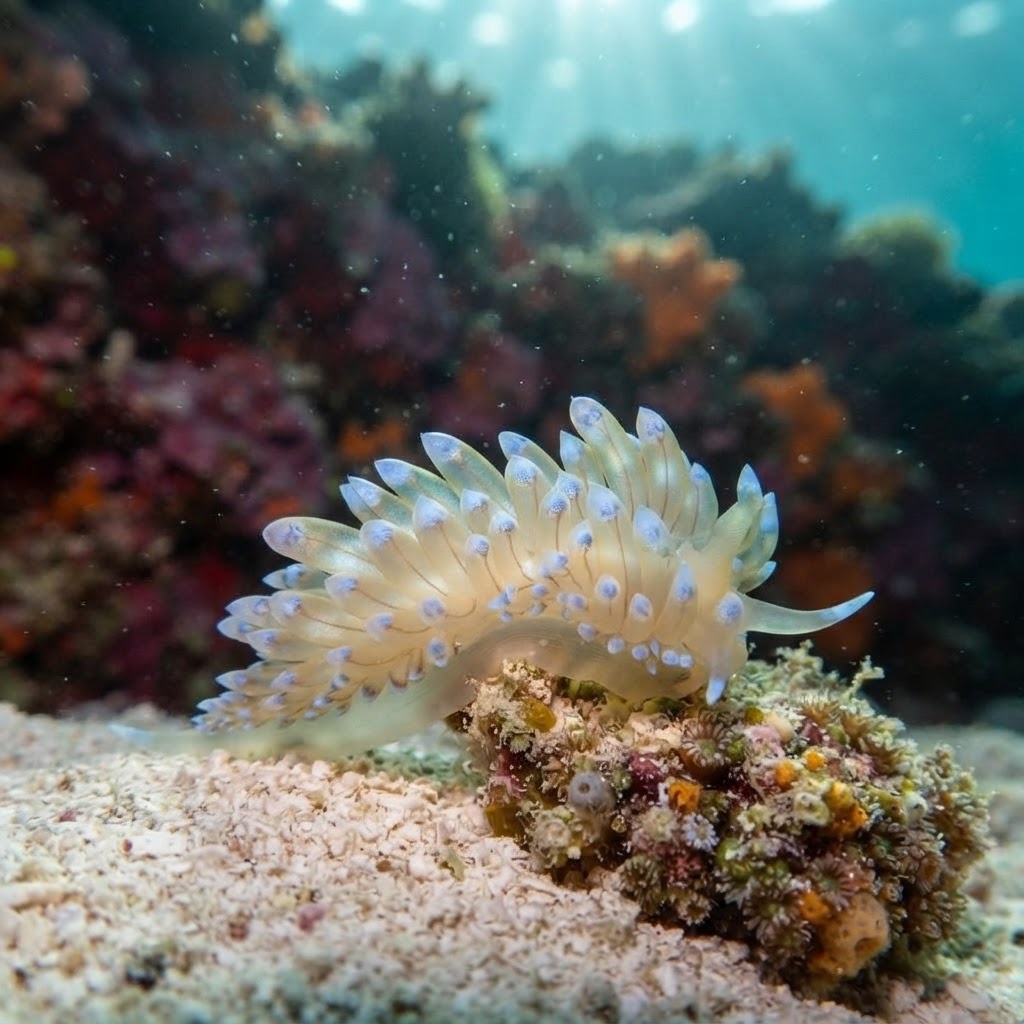
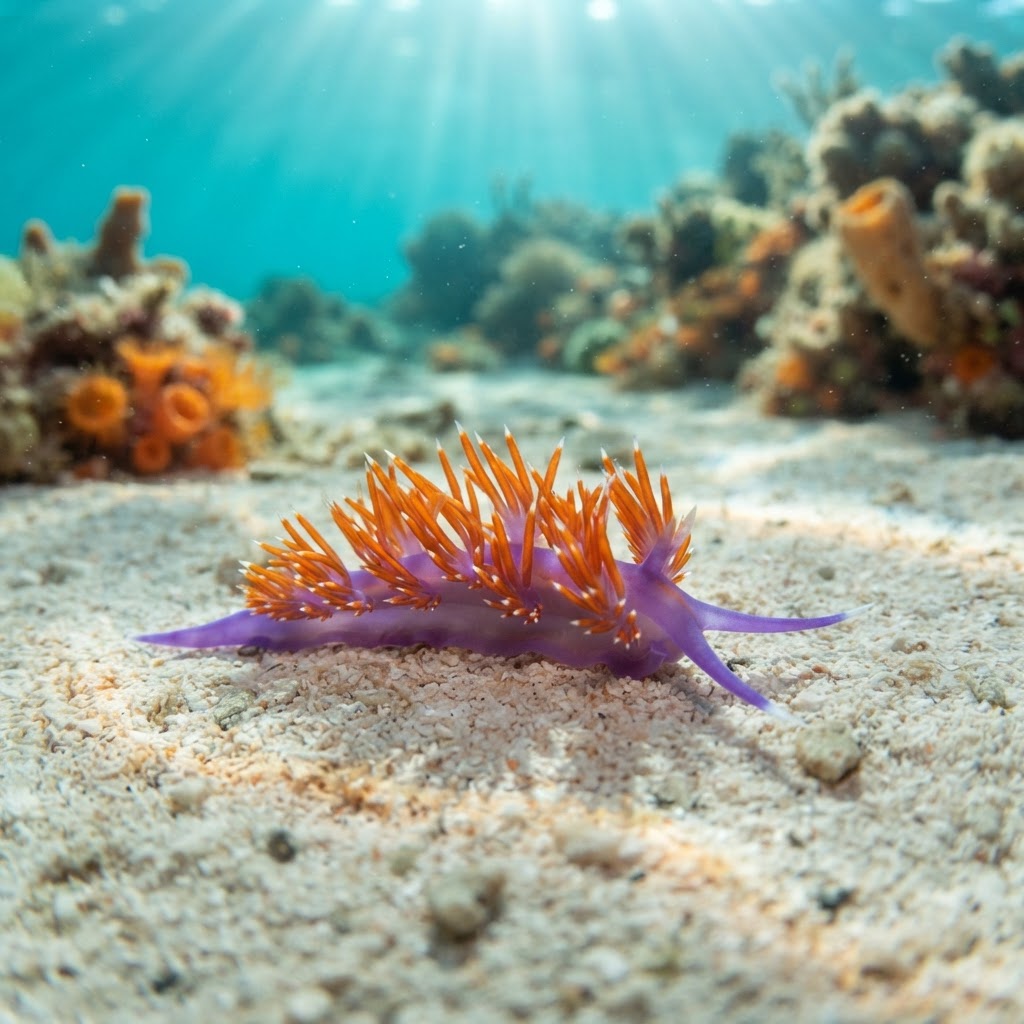
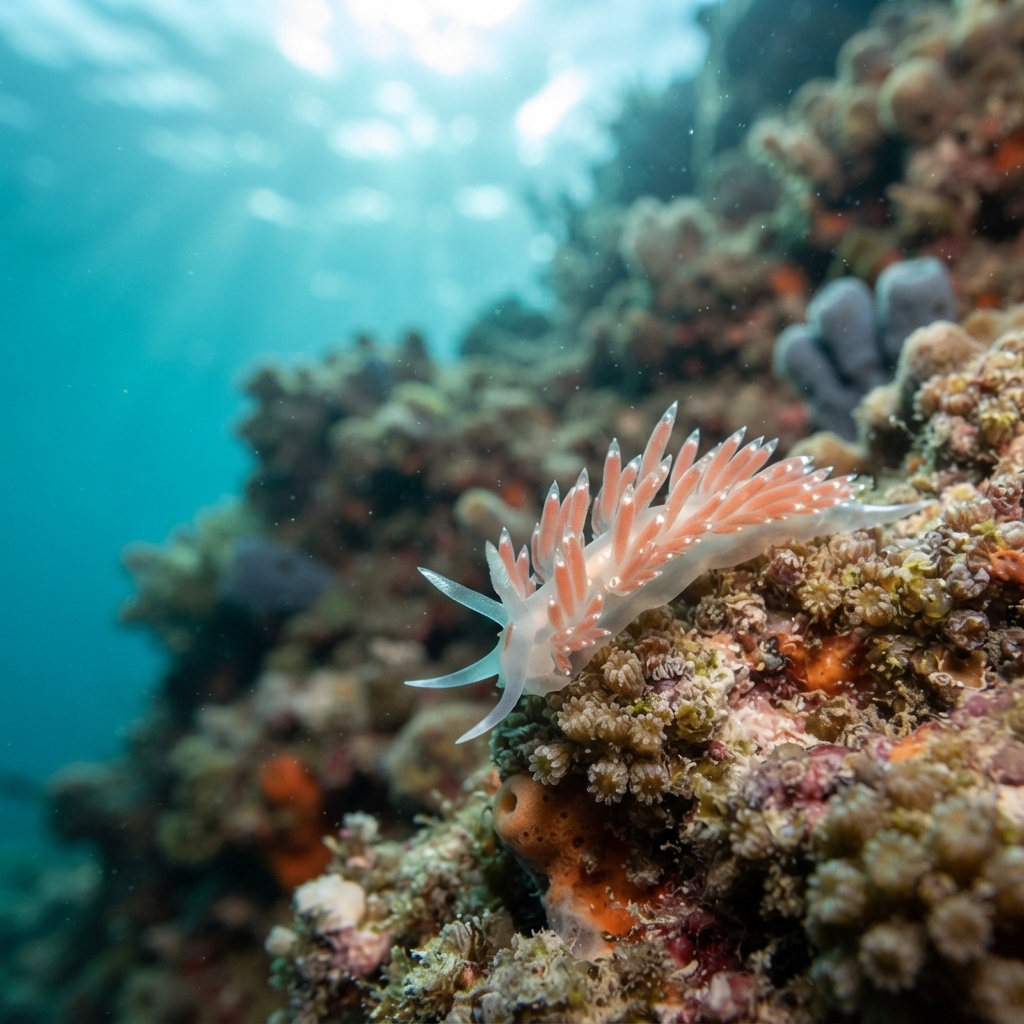
Look for a slim, translucent white to pale body covered in long, slender cerata (the finger-like projections on the back) tipped in orange to reddish-brown. The cerata run in dense rows down both sides, giving it a bristly, almost feathery silhouette against dark rock or algae. It is small enough that most divers only spot it once they slow down and scan cracks and holdfasts closely.
Divers find it grazing slowly over rock walls, pilings and algae-covered surfaces, usually tucked into cracks or clinging to hydroids, which make up its diet. It shows no reaction to divers beyond its usual slow, deliberate crawl, so a steady light and a close look are all it takes to watch it feed. Most logs describe it as an uncommon find rather than something you stumble on every dive, so it rewards divers doing a slow macro-focused search rather than a cruise past the wall.
Like other Coryphella species, it feeds on hydroids and can incorporate stinging cells from its prey into the tips of its own cerata, turning its food source into a borrowed defence.
Sightings show no clear seasonal pattern, so treat it as a year-round find on cold-water dives. It sits in a narrow 7.5 to 13.5C niche, which matches BC and Pacific Northwest water temperatures for most of the year rather than a single warm-season window.
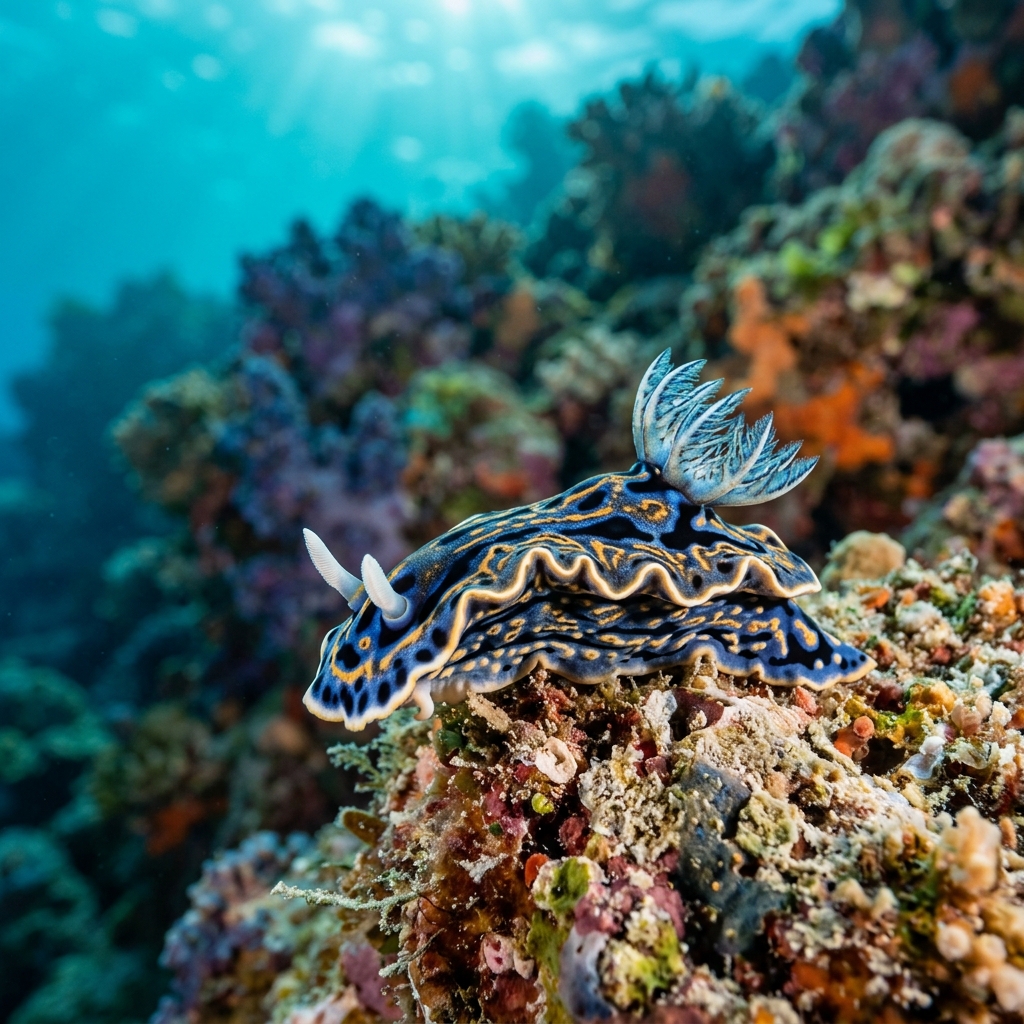
Reef neighbours a diver could mistake it for. Use the identification notes above to tell them apart.
This is a British Columbia species first and foremost, with by far the strongest logging around Vancouver Island and the wider British Columbia coast. Divers in the Pacific Northwest region of the United States and further north in Alaska also report it, but at lower and more occasional rates than in Canadian waters.
Mapping where Coryphella Longicaudata is logged…
It is most reliably logged in British Columbia, Canada, particularly around Vancouver Island, with additional sightings in the Pacific Northwest and Alaska regions of the United States.
There is no strong seasonal pattern in the sightings, so it can turn up on any cold-water dive through the year in its 7.5 to 13.5C temperature range.
Check for a translucent white body covered in long, slender cerata tipped orange to reddish-brown, arranged in dense rows down the back. It is a small, bristly-looking nudibranch usually found tucked against rock or hydroid growth.
Exact size data is not established, but like other Coryphella species it stays small, typically only a few centimetres long, making it a slow-search macro find rather than something spotted from a distance.
It feeds on stinging hydroids and can store their unfired stinging cells in the tips of its own cerata, turning a meal into a personal defence system.
Site and sighting data is aggregated from diver logs, iNaturalist and GBIF. For taxonomy and conservation status:
Blue Dragon
3,163 sites