Doto coronata
A 1cm nudibranch with cactus-like gills, most reliably found in Zeeland, Netherlands and Nova Scotia in water as cold as 7 C.
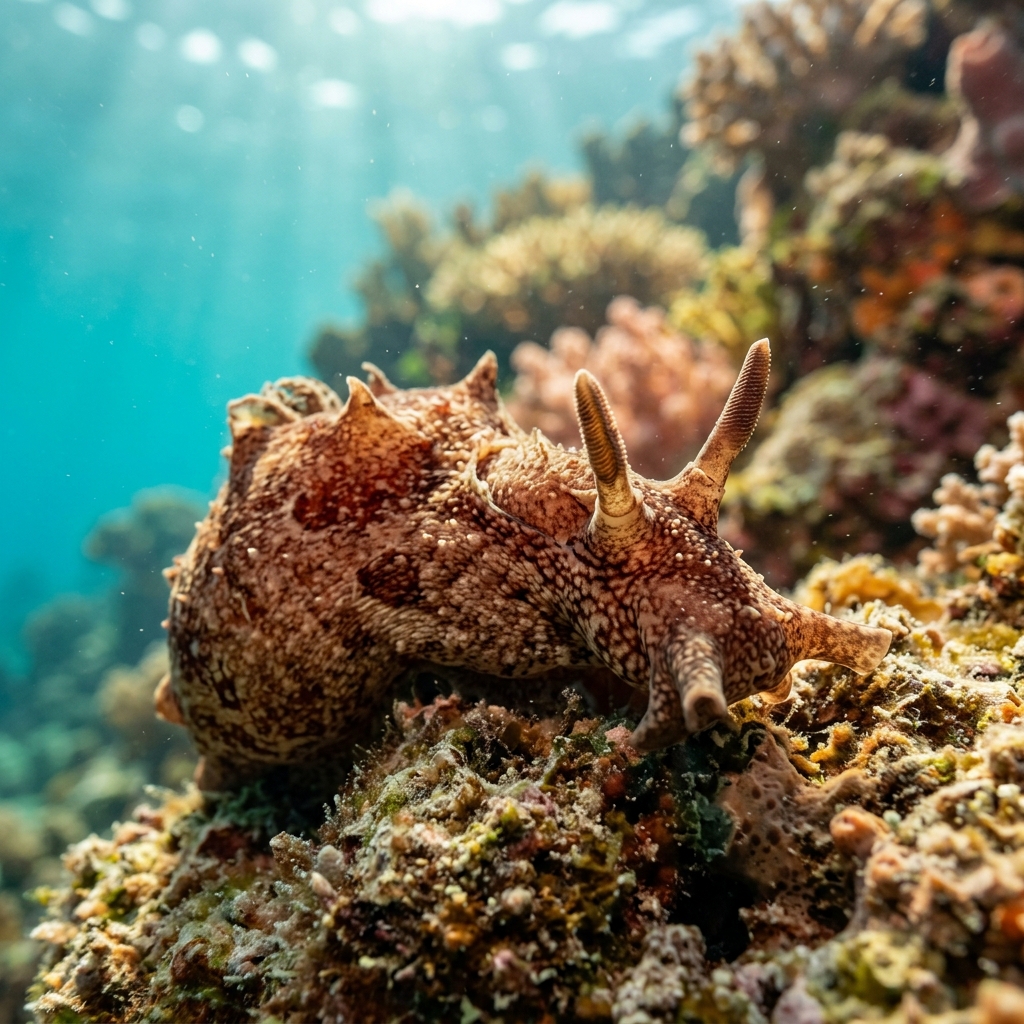
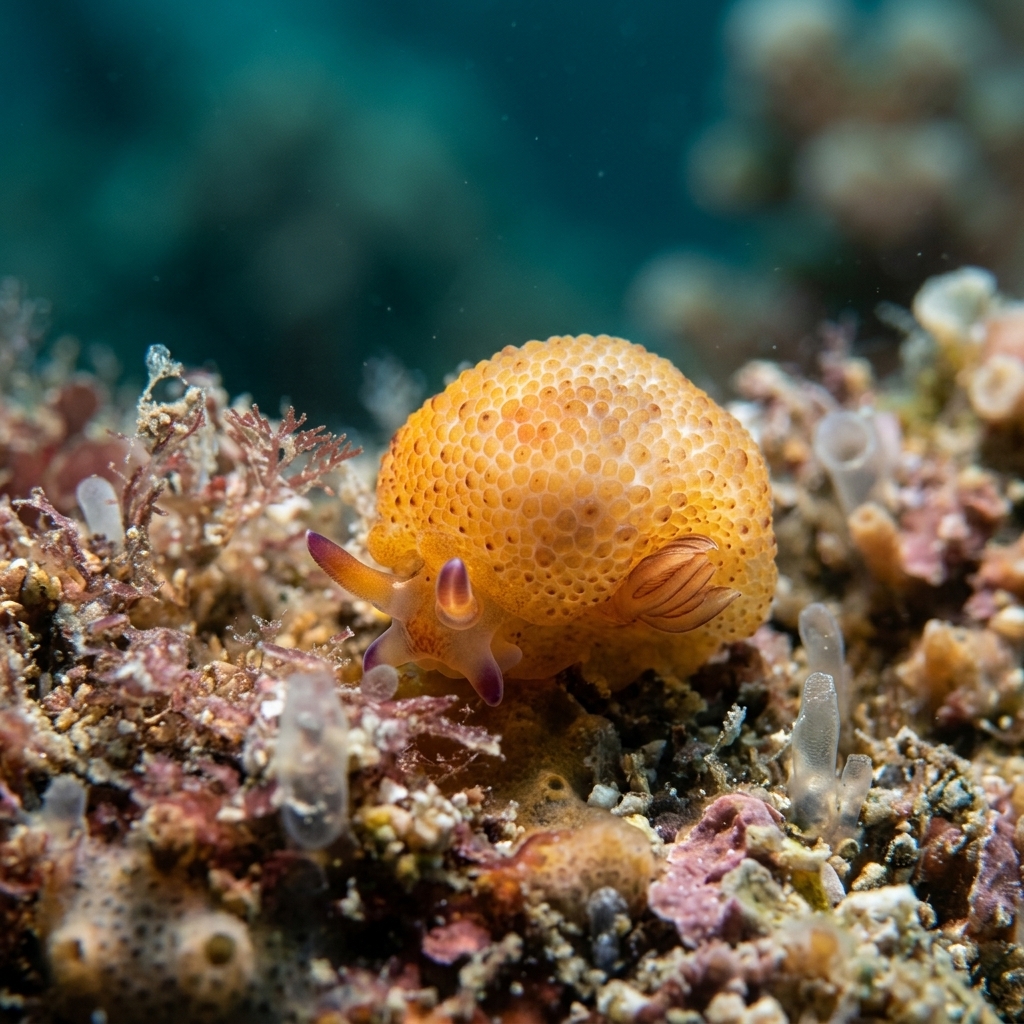
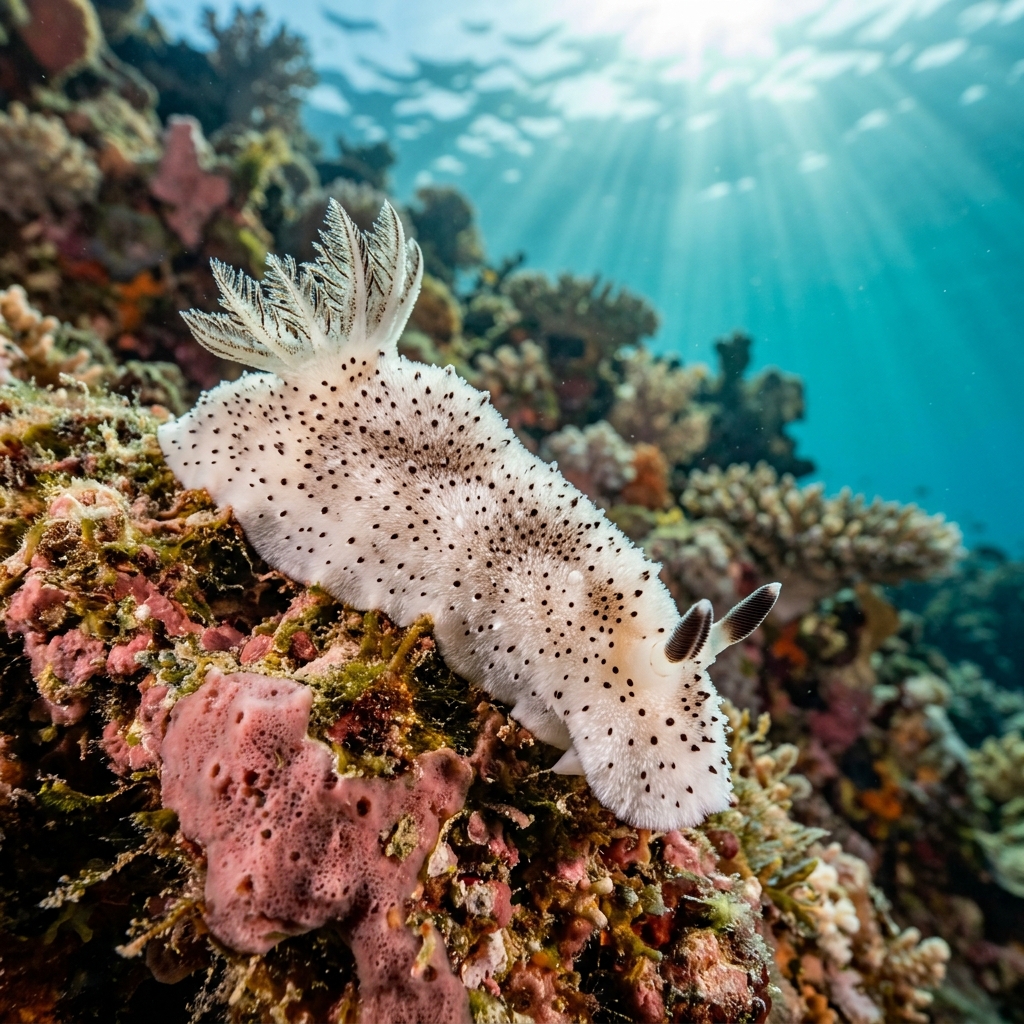
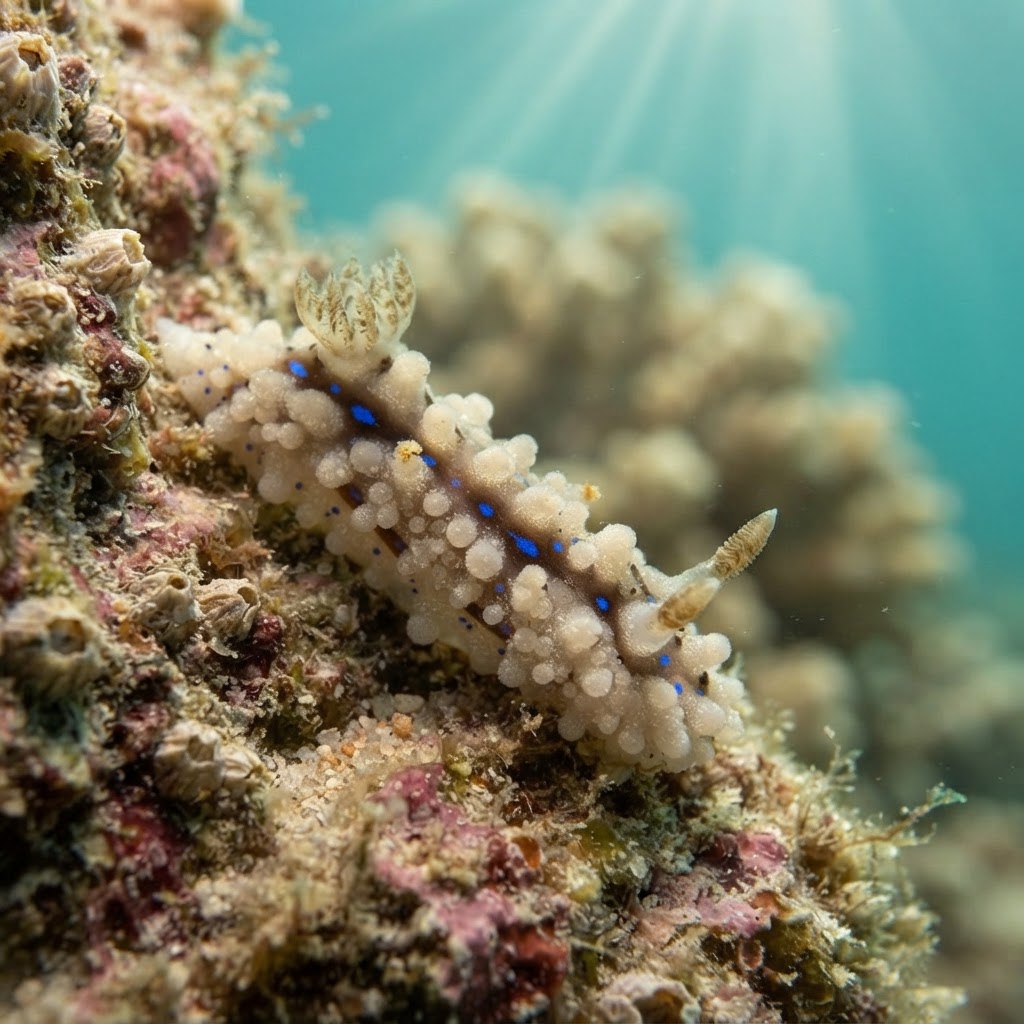
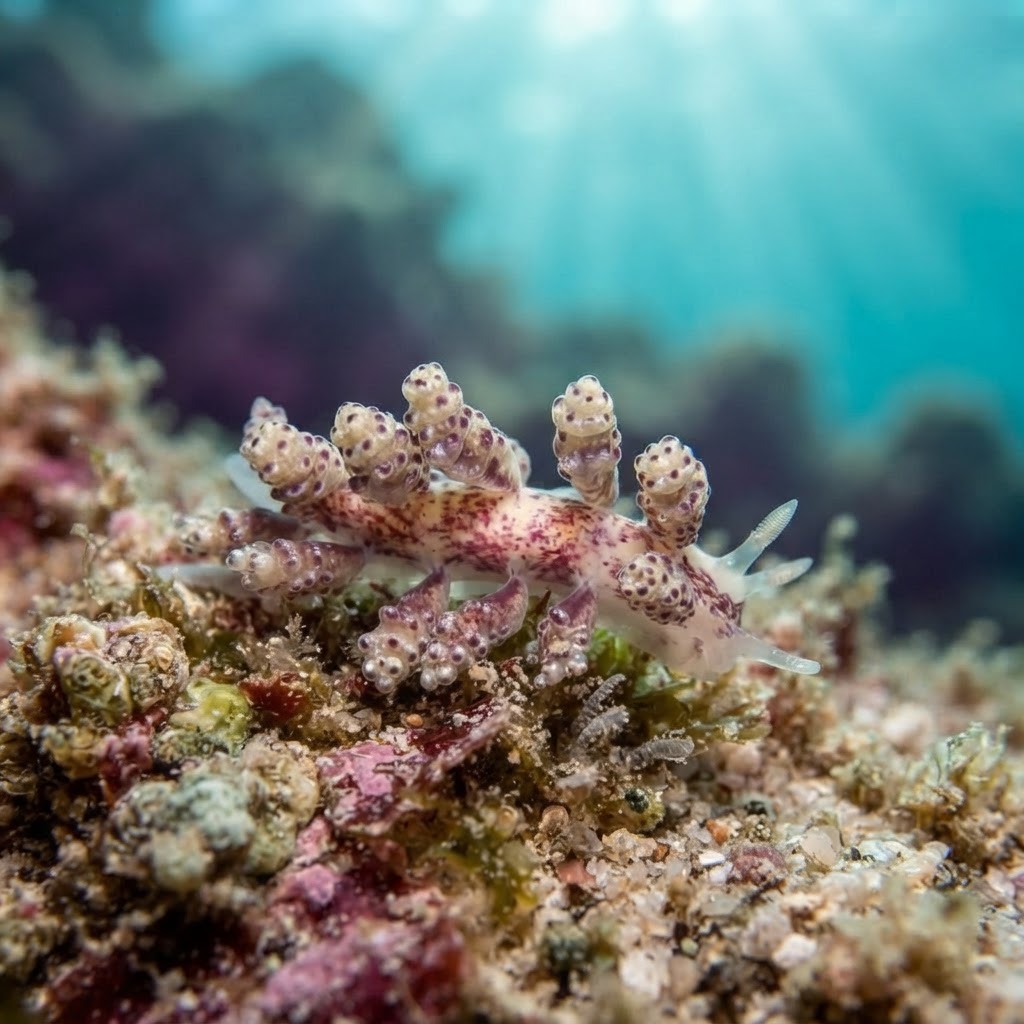
Barely a centimetre long and easy to swim past unless you slow down and check hydroid stands closely. Body is translucent to pale white with a scattering of rounded, wart-like tubercles (bumps housing gill tissue) along its back, often tipped in orange, brown or yellow depending on what it has been feeding on. No obvious head tentacles stand out at a glance; the outline is soft and clustered rather than sleek, which is the main giveaway against smoother slugs nearby.
Found sitting motionless on the hydroids it feeds on, usually tucked among the branches rather than out in the open, which is why most divers only spot it on a slow, close look with a torch or magnifying lens. It shows no reaction to divers beyond the passive stillness typical of small sea slugs, and sightings lean toward uncommon rather than common even at its best sites, so finding one is a matter of patient searching rather than luck at a glance.
Those back tubercles are not just decoration: they contain extensions of the digestive gland and can store stinging cells lifted from the hydroids it eats, giving this tiny slug a borrowed defence against predators.
Sightings show no clear seasonal pattern, so treat it as a year-round find at sites within its temperature niche. It has been logged in water from about 7 to 15 C, which fits the cooler months in temperate Atlantic sites as much as summer.
Most consistently logged in Zeeland, Netherlands, which accounts for the bulk of recorded sightings, followed by Nova Scotia, Canada and the Northeast United States. A smaller number of dives have turned it up in Nordland, Norway, so cold-water sites across the North Atlantic on both sides are worth checking on hydroid-covered structure.
Mapping where Coronate Doto is logged…
It is most reliably found in Zeeland, Netherlands, with strong records also from Nova Scotia, Canada and the Northeast United States, plus occasional sightings in Nordland, Norway. Look on hydroid growth at cold-water sites in these regions rather than on tropical reefs.
There is no strong seasonal pattern in the data, so it can turn up any time of year at sites within its cold-water range. It has been recorded in temperatures from about 7 to 15 C, covering much of the diving season in these regions.
Look for a translucent white body under 1 cm long with clusters of rounded, orange or brown-tipped tubercles along its back, sitting still on hydroid branches. Its small size and lumpy, clustered profile separate it from smoother, more streamlined sea slugs on the same structure.
It stays tiny, typically around 1 cm long, which makes it one of the easier nudibranchs to overlook on a dive. Bring a magnifying lens or macro focus light if you are hunting for one deliberately.
It feeds on hydroids and can store the stinging cells from its prey inside the tubercles on its back, turning a meal into a borrowed defence system. This trick, called kleptocnidae use, is shared by several related nudibranch groups.
Site and sighting data is aggregated from diver logs, iNaturalist and GBIF. For taxonomy and conservation status:
Light-spotted Aegires
3,168 sites