Catriona aurantia
A small orange-tipped sea slug most reliably found in Zeeland's cold Dutch waters, spotted year-round between 7 and 13 C.
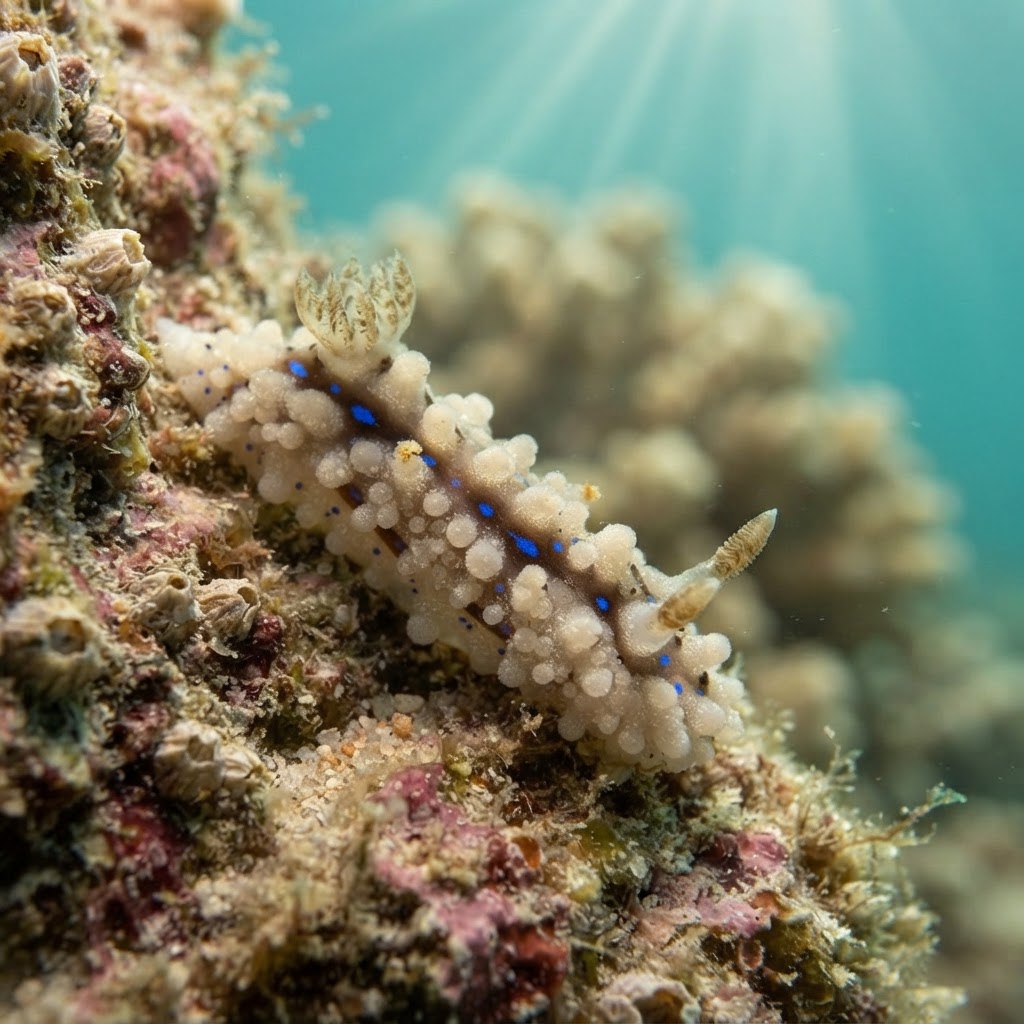
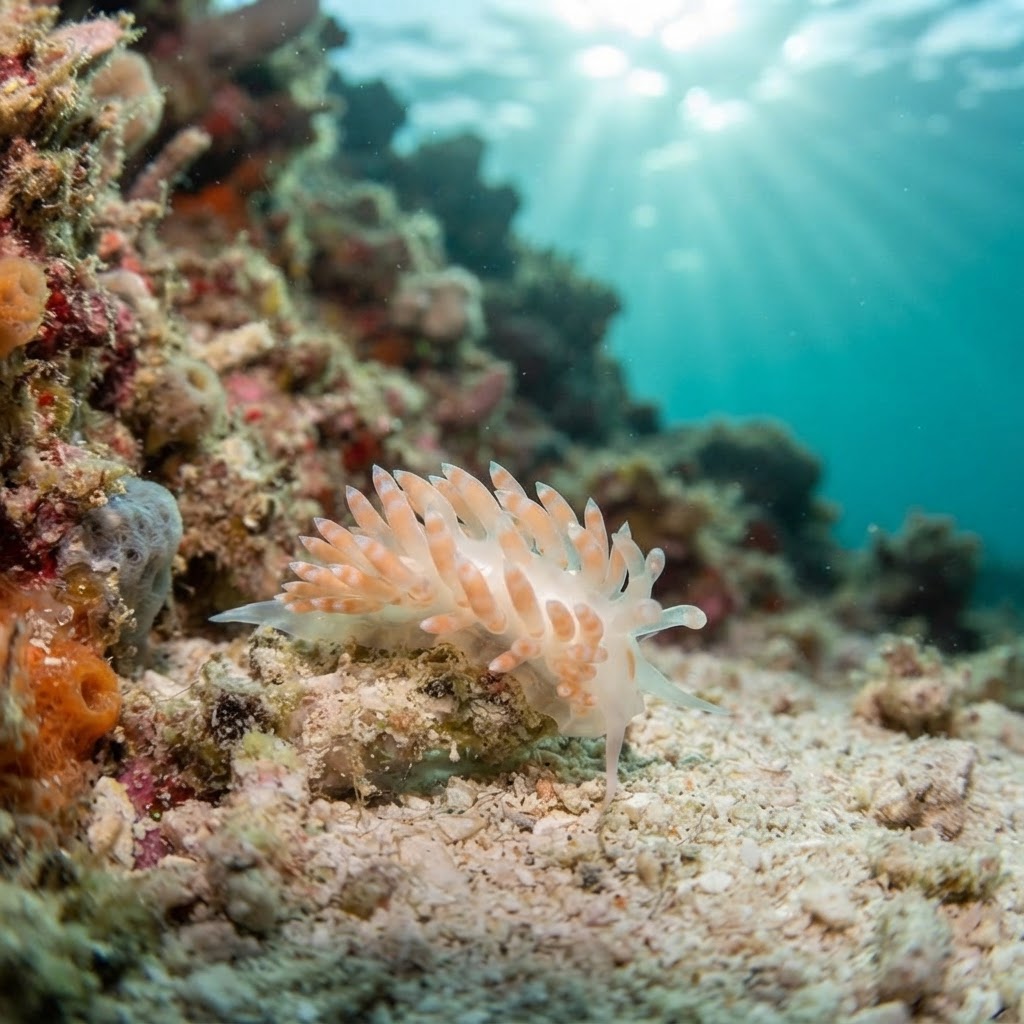
Look for a small, slender sea slug with a translucent to pale body covered in slim finger-like projections called cerata, each one tipped in bright orange. The head end carries a pair of long, ringed sensory tentacles (rhinophores) that it waves slowly as it moves. Its whole outline is narrow and almost see-through except for those orange tips, which is really the one thing to key on against the low-visibility silt and rock it tends to sit on.
Divers usually find it creeping slowly over rock, silt or algae-covered substrate rather than out in open water, often tucked in among the very hydroids it feeds on. It shows no real reaction to divers beyond its usual unhurried pace, so a slow, close look with a torch and a bit of patience is the way to actually pick it out against the bottom. Most logs describe it as an uncommon find even at sites where it does turn up, so it rewards divers doing a deliberate macro search rather than swimming past.
Like other members of its family, it almost certainly feeds on hydroids and can incorporate their stinging cells into its own cerata as a borrowed defence, a trick many small aeolid sea slugs rely on instead of a shell.
Sightings show no clear seasonal pattern, so treat it as a year-round find in the cold water it favours, typically logged between about 7 and 13 C. Plan around water temperature rather than calendar month when picking a dive.
This one is most reliably found in the Netherlands, with Zeeland producing far more sightings than anywhere else in the data. Norway's Østlandet region and Denmark's Jutland coast are the next best bets, and it has also turned up on a couple of sites in Wales. Outside these four countries there is currently no record of it, so cold-water dive spots in northern Europe are the place to search.
Mapping where Corange-tip Cuthona is logged…
It is most consistently logged in Zeeland in the Netherlands, with further sightings in Norway's Østlandet region, Denmark's Jutland coast, and a couple of sites in Wales. These cold-water regions of northern Europe currently hold the only confirmed records.
There is no strong seasonal pattern in the sightings, so it is considered a year-round find. It has been observed in water between roughly 7 and 13 C, so cooler-water dive seasons in its home regions are a safe bet.
Look for a small, slim, mostly translucent sea slug with rows of narrow cerata tipped in orange, plus a pair of long ringed rhinophores on the head. It moves slowly over rock or silt, usually near hydroid growth, and stays hard to spot without a close macro look.
Exact size data isn't confirmed for this species, but like most members of its family it is a small nudibranch, likely only a centimetre or two long, making a close macro search essential to find one.
It likely feeds on hydroids and can repurpose their stinging cells for its own defence, storing them in the tips of its cerata. This borrowed weaponry is a common trick among small aeolid sea slugs that lack a protective shell.
No, it poses no danger to divers. It's a small, slow-moving sea slug best appreciated at close range without any need for caution.
Site and sighting data is aggregated from diver logs, iNaturalist and GBIF. For taxonomy and conservation status:
Light-spotted Aegires
3,168 sites