Corambe steinbergae
A rare, translucent nudibranch spotted on cold-water dives in California and the Pacific Northwest, year-round in 9 to 18.5C water.
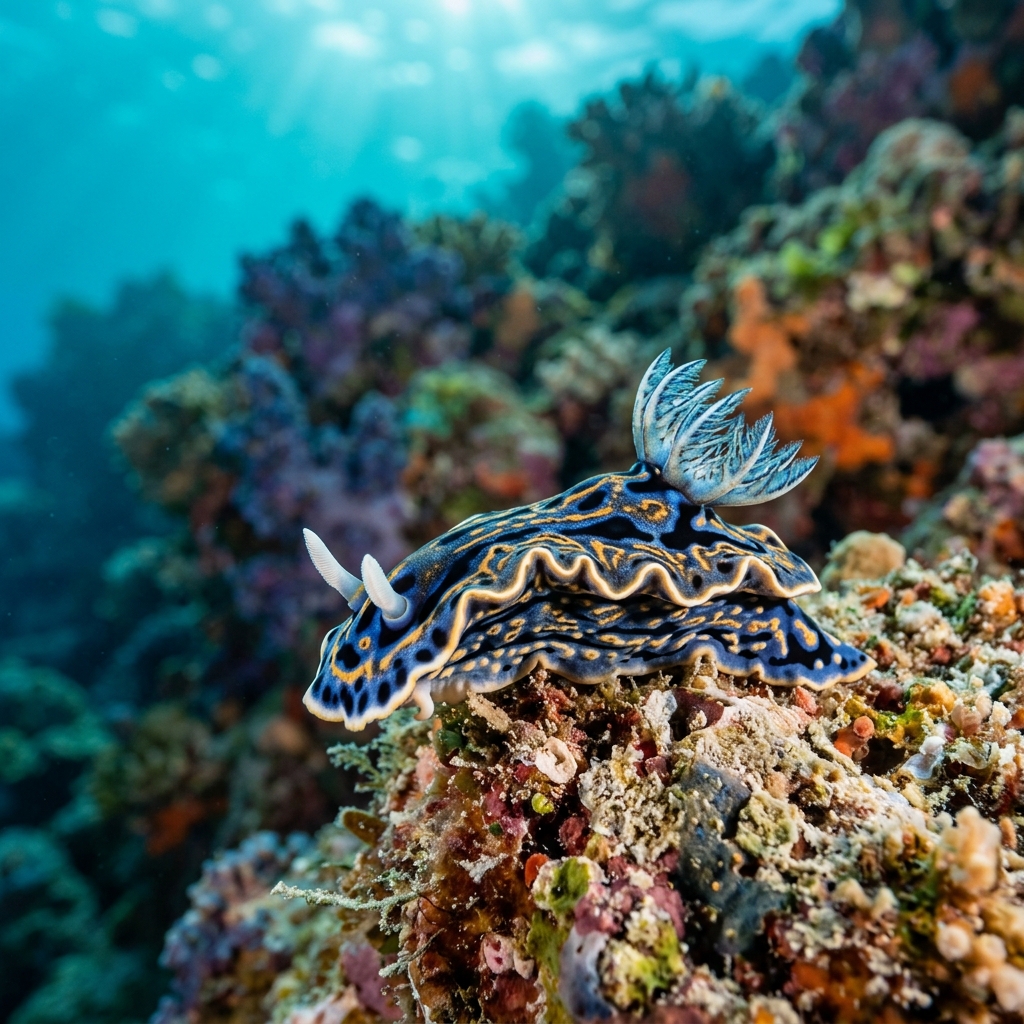
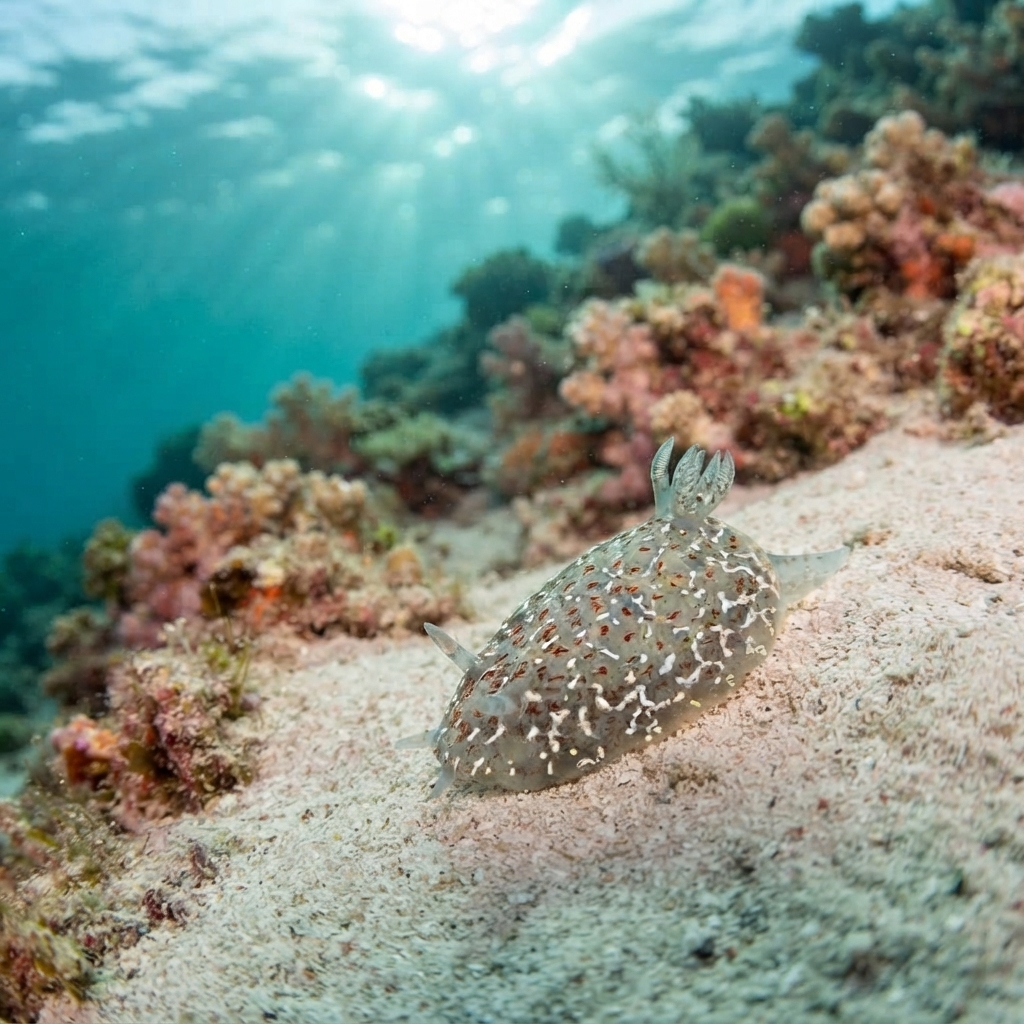
A tiny, flattened nudibranch whose body is nearly see-through with a pale, mottled surface that blends into the encrusting bryozoan colonies it lives on. Look for a low, oval outline with a thin frilled edge rather than obvious rhinophores or gills standing tall, since this species stays close and camouflaged against its host. Size in the water is small enough that most divers need to know exactly what patch of bryozoan to scan before they spot one.
Divers find this one sitting still on the surface of bryozoan colonies, which it grazes on and closely resembles in colour and texture. It shows no reaction to divers, being both slow-moving and easy to miss unless you are actively searching bryozoan patches with a torch or magnifying lens. Most logged sightings come from macro-focused dives rather than casual reef swims.
Its camouflage isn't decorative, it feeds directly on the bryozoan species it mimics, so its colour and pattern closely track whatever colony it's currently living on.
Sightings show no detectable seasonal pattern, so treat it as a year-round find in the 8.9 to 18.5C water it's been logged in. Cold-water divers in California and the Pacific Northwest can look for it on any dive where bryozoan colonies are present.
Most commonly logged along the California coast and the wider Pacific Northwest of the United States, with a further site recorded in British Columbia, Canada. This is a cold-water species tied to specific bryozoan-covered reef and rock habitat rather than a wide-ranging tropical find, so search where those encrusting colonies grow rather than open reef.
Mapping where Corambe steinbergae is logged…
It's most often logged in California and the Pacific Northwest of the United States, with an additional sighting in British Columbia, Canada. Look specifically at sites with encrusting bryozoan growth on rock or reef rather than open sand or coral.
There's no clear seasonal pattern in sightings, so it can turn up any time of year in the 8.9 to 18.5C water divers have recorded it in. Cold-water conditions year-round in its range are what matter, not a particular month.
Look for a small, flattened, nearly translucent nudibranch sitting directly on bryozoan colonies, matching their pale mottled texture closely. It lacks the bold colour contrasts of many nudibranchs, so a slow scan of bryozoan patches with a torch is the best way to spot one.
Exact size data isn't available, but like most members of the Corambidae family it's a small nudibranch, easily overlooked against its bryozoan host without close-focus observation.
No, it poses no risk to divers. It's a tiny, slow-moving grazer with no sting or defensive behaviour of concern.
It feeds on and camouflages against specific bryozoan colonies, so its appearance can shift depending on which colony it's currently living on, making it one of the more host-dependent nudibranchs divers might encounter.
Site and sighting data is aggregated from diver logs, iNaturalist and GBIF. For taxonomy and conservation status:
Blue Dragon
3,163 sites