Corambe pacifica
A translucent, hard-to-spot nudibranch logged along California, best found by checking bryozoan colonies closely in cool 12-19C water.
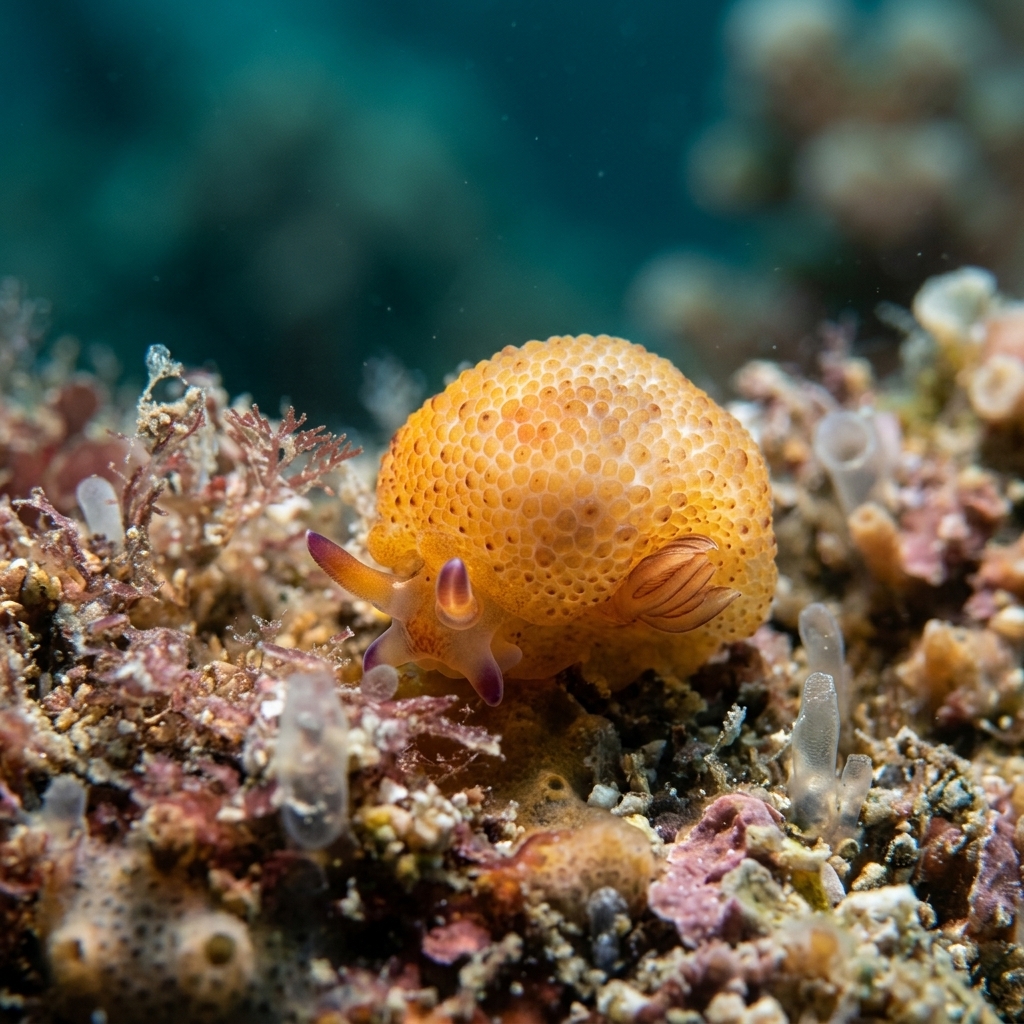
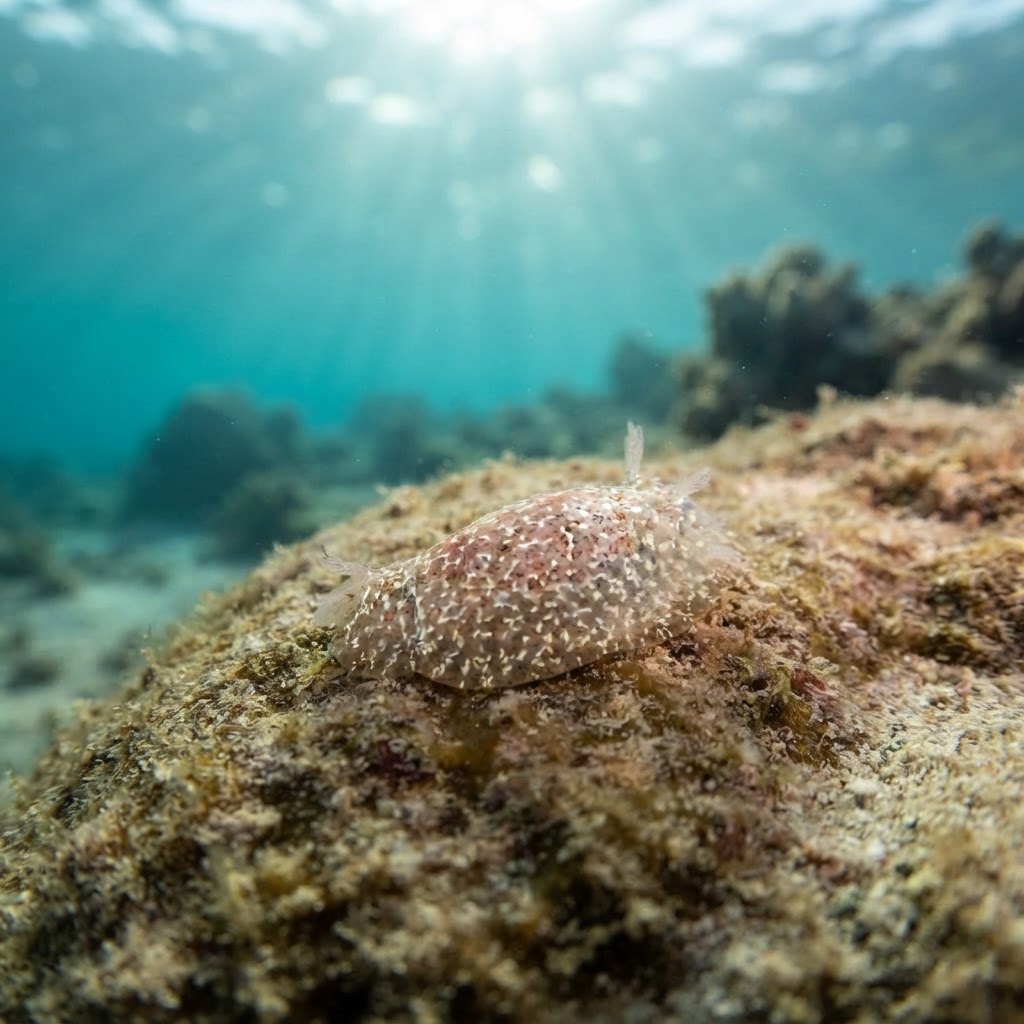
A small, flattened, almost translucent nudibranch with a leaf-shaped body that mimics the bryozoan colonies it lives on. Its edges are thin and scalloped, and the body often shows faint mottled patterning that breaks up its outline against the encrusting growth it sits on. There is no bold colour to key on here, so divers usually spot it by scanning bryozoan patches closely rather than looking for the animal itself.
Divers find it sitting still on encrusting bryozoan colonies, which it feeds on and blends into almost perfectly. It shows no reaction to divers and relies entirely on camouflage rather than movement to avoid attention, so a slow, close look at bryozoan patches is the only way to pick it out. Most logs describe it as a deliberate find rather than a casual spot, given how uncommon to rare it is at the sites where it has turned up.
Its flattened, translucent body and mottled markings are shaped almost entirely by camouflage against the bryozoan colonies it lives and feeds on, making it one of the harder nudibranchs to spot on purpose.
Sightings don't show a clear seasonal pattern, so treat it as a year-round possibility in California waters. Observed water temperatures range from 12.3 to 18.9C, which covers the cooler end of California diving conditions across most of the year.
Every logged sighting so far comes from California, in the United States, making it the only region with a real track record for this species. Within California it turns up as an uncommon to rare find on reef sites where its bryozoan food source grows thickly, so it rewards divers who search rubble and encrusting growth rather than open reef.
Mapping where Corambe Pacifica is logged…
All confirmed sightings come from California, in the United States, where it has been logged at multiple sites as an uncommon to rare find. Look for it wherever encrusting bryozoan colonies are present on rock or rubble.
There isn't a detected seasonal pattern for this species, so it's best treated as a year-round possibility in California. It has been observed in water between 12.3 and 18.9C, typical of California's cooler diving conditions.
Look for a small, flattened, near-translucent nudibranch with a leaf-like outline and scalloped edges, sitting directly on encrusting bryozoan. It has no bold colour pattern, so its camouflage against the bryozoan colony is the main giveaway.
Exact size data isn't available for this species, but like most members of the Corambidae family it stays small, generally under a couple of centimetres, and is easy to overlook on encrusting growth.
No, it poses no danger to divers. It has no known defensive behaviours toward humans and relies solely on camouflage to avoid predators.
Its body shape and mottled surface closely mimic the encrusting bryozoan colonies it feeds on, giving it one of the more effective camouflage strategies among nudibranchs. This makes it a species you find by searching bryozoan patches rather than spotting movement.
Site and sighting data is aggregated from diver logs, iNaturalist and GBIF. For taxonomy and conservation status:
Blue Dragon
3,163 sites