
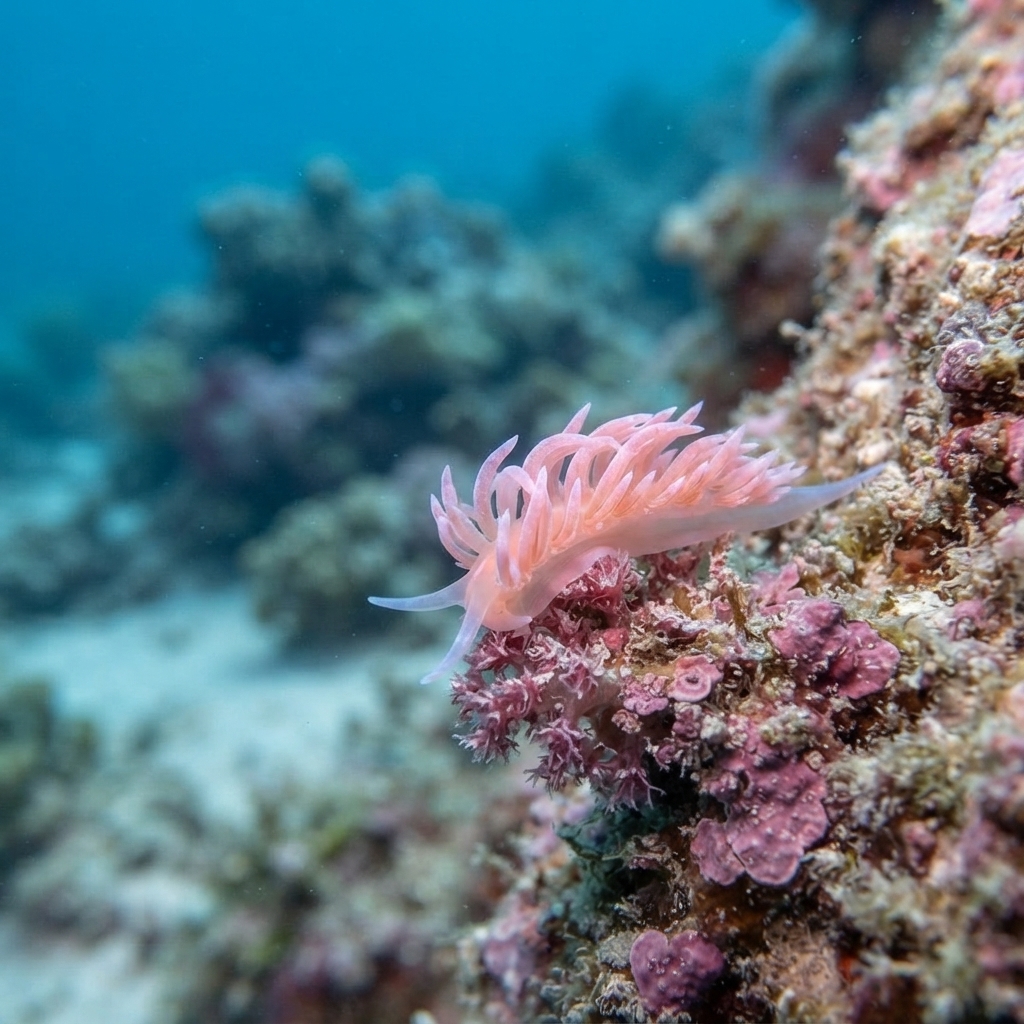
Phyllodesmium serratum
A 2cm reef grazer logged commonly across Victoria, Australia, in water from 15 to 29C, year-round if you know where to look.
Look for a slug barely 2cm long, with a soft, elongated body covered in finger-like projections called cerata that branch and taper, giving it a frilly, almost coral-like texture. Colour tends toward pale cream, tan or greenish tones that let it blend into the soft coral it feeds on, so most divers find it by scanning slowly rather than spotting it from a distance. There's no bold contrasting stripe or spot to key on here; the shape and texture of those branching cerata are the main tell.
Divers find this nudibranch parked on or near the soft coral colonies it feeds on, moving at the unhurried pace typical of sea slugs and paying no attention to divers hovering close with a torch or macro lens. It's a benthic (bottom-dwelling) grazer, so check ledges, coral heads and other structure within recreational depths rather than open water. Most sightings happen during slow, methodical scanning rather than while cruising past on a reef tour.
Many Phyllodesmium species are known for stealing stinging or photosynthetic cells from the soft corals they eat and repurposing them in their own cerata, a trick that likely helps this genus blend into its coral hosts.
Sightings don't show a clear seasonal pattern, and the recorded temperature range (roughly 15 to 29C) spans cooler and warmer months alike, so treat this as a year-round find in Victoria rather than something tied to a specific season.
This one is essentially an Australia specialty in the logged data, with every recorded sighting coming from sites in Victoria. If you're diving temperate Victorian reefs and macro sites, it's a species worth adding to your slug search list rather than something you'd expect to stumble on elsewhere.
Mapping where Coral Nudibranch is logged…
Logged sightings are concentrated in Victoria, Australia, where it turns up as a common find at many sites. Outside this region it hasn't been reliably recorded, so Victorian reefs are the place to look.
There's no strong seasonal pattern in the data, and it's been recorded across a wide temperature range, so it's a reasonable year-round target in Victoria rather than a seasonal species.
It's a tiny slug, around 2cm, with soft branching cerata covering its back that give it a textured, coral-like look. Colour is muted and blends with the soft coral hosts it sits on, so slow, close scanning is the best way to find one.
They're small, typically around 2cm long, which makes them a macro subject rather than something spotted from a distance.
Like other Phyllodesmium nudibranchs, it likely borrows cells from the soft corals it eats, incorporating them into its own body to help it blend in and possibly gain a defensive or nutritional benefit.
Site and sighting data is aggregated from diver logs, iNaturalist and GBIF. For taxonomy and conservation status:
Light-spotted Aegires
3,168 sites





