Phestilla lugubris
A tiny coral-eating nudibranch logged off Hawaii, thriving in 23-29C reef water year-round. Here's how to spot one.
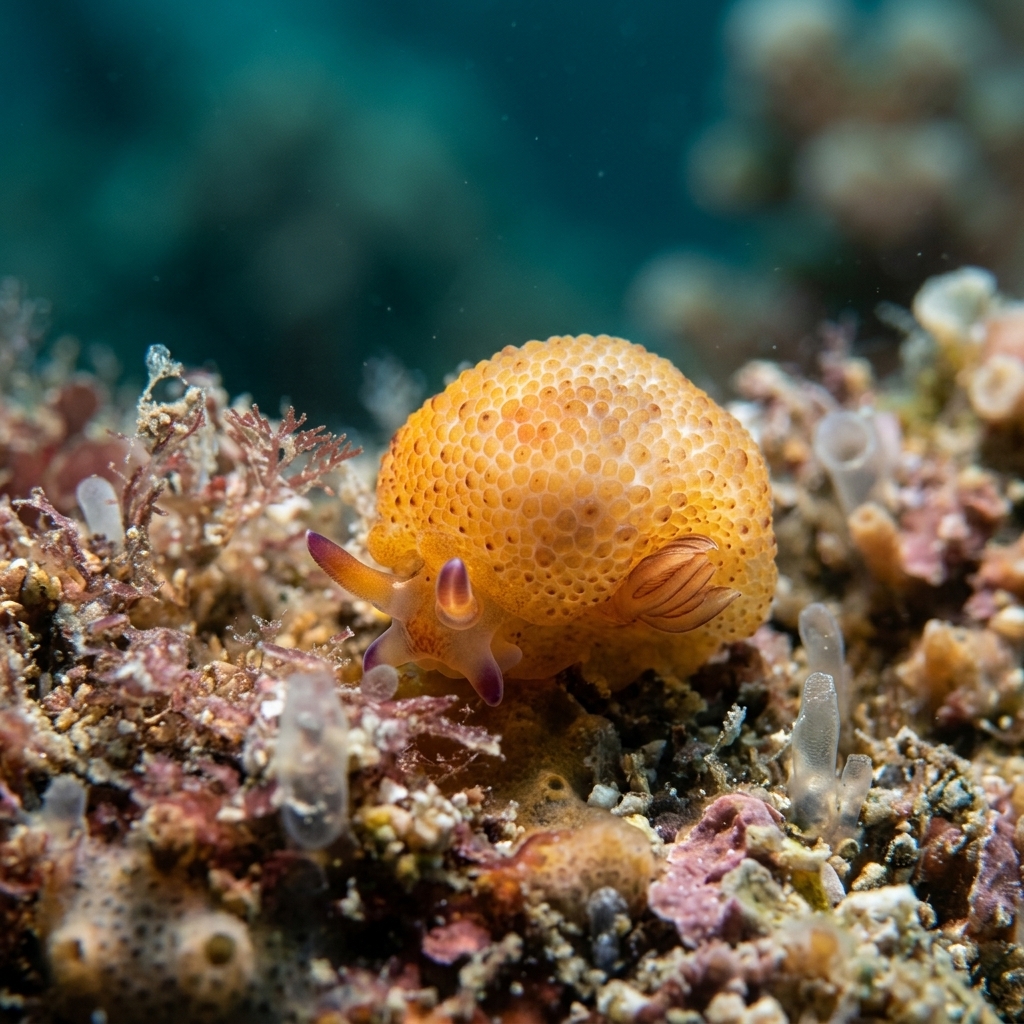
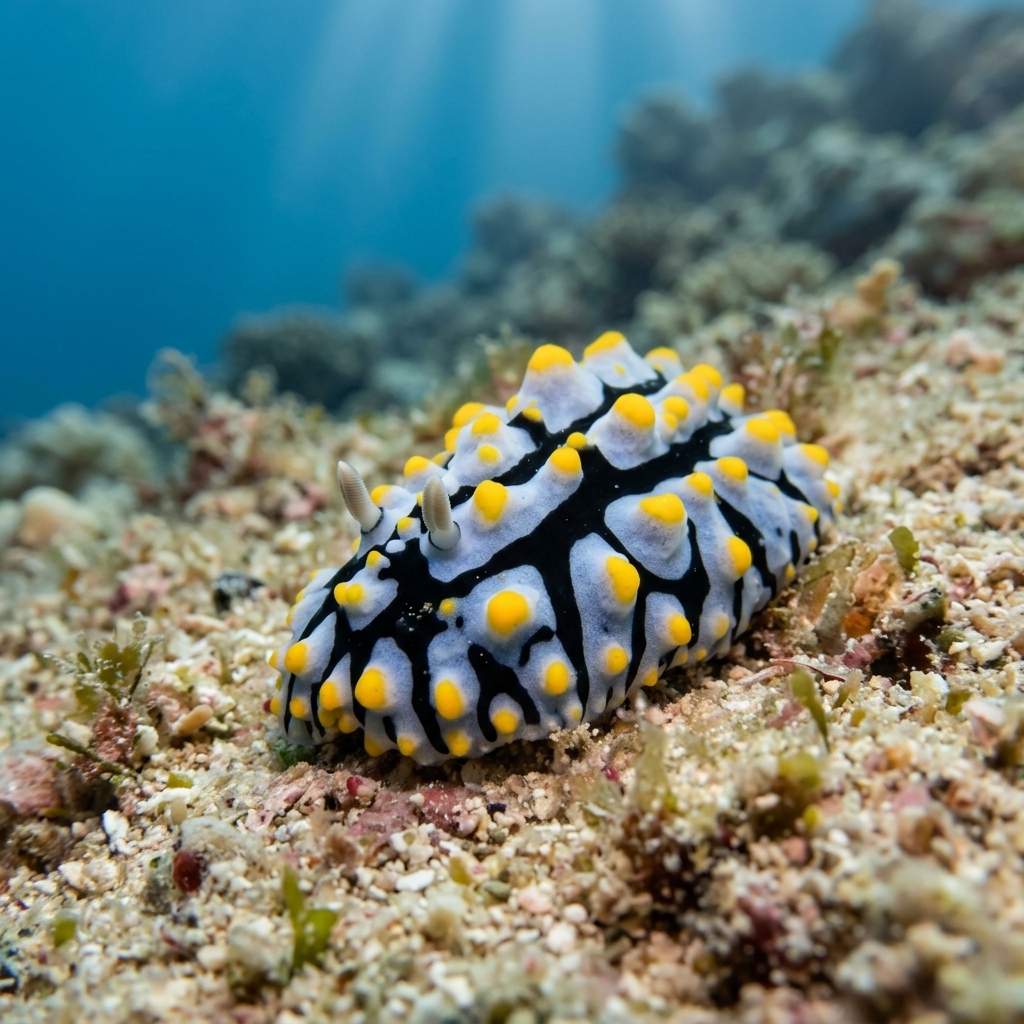
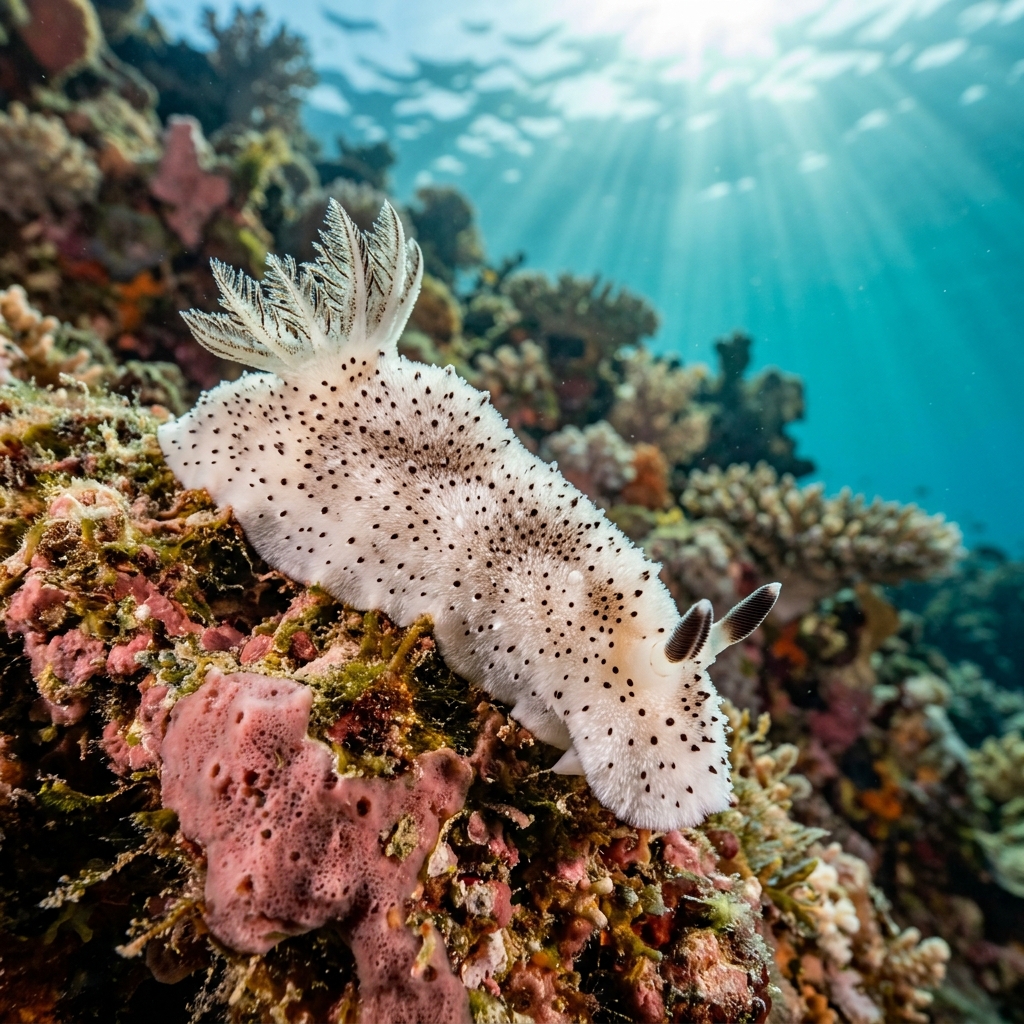
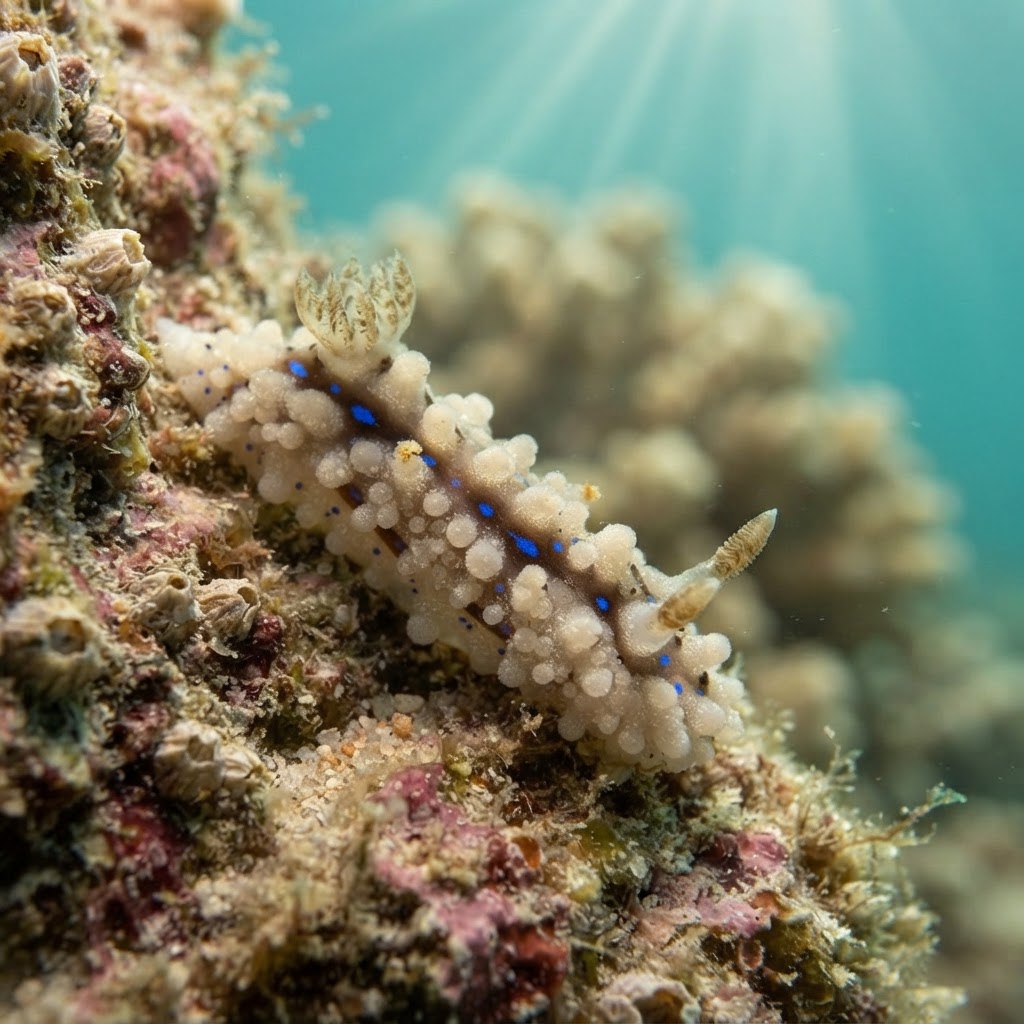
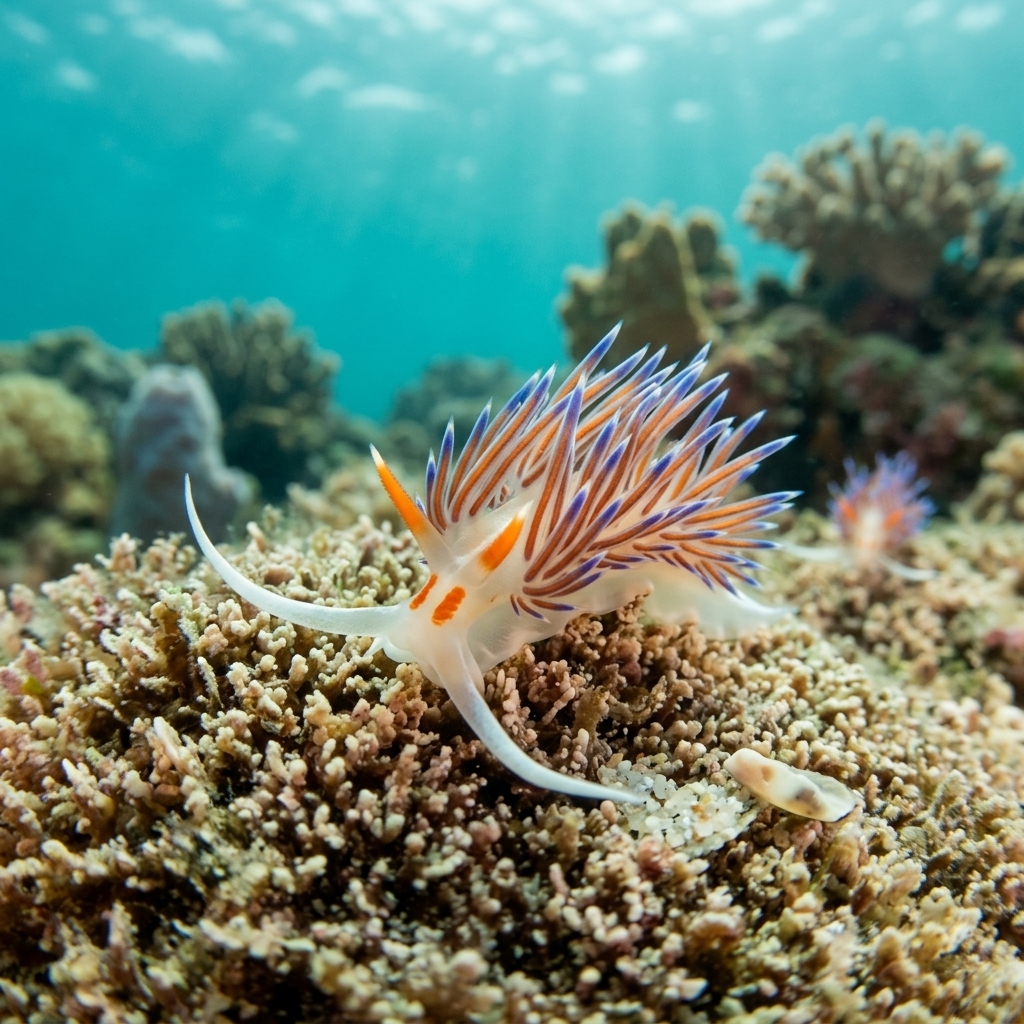
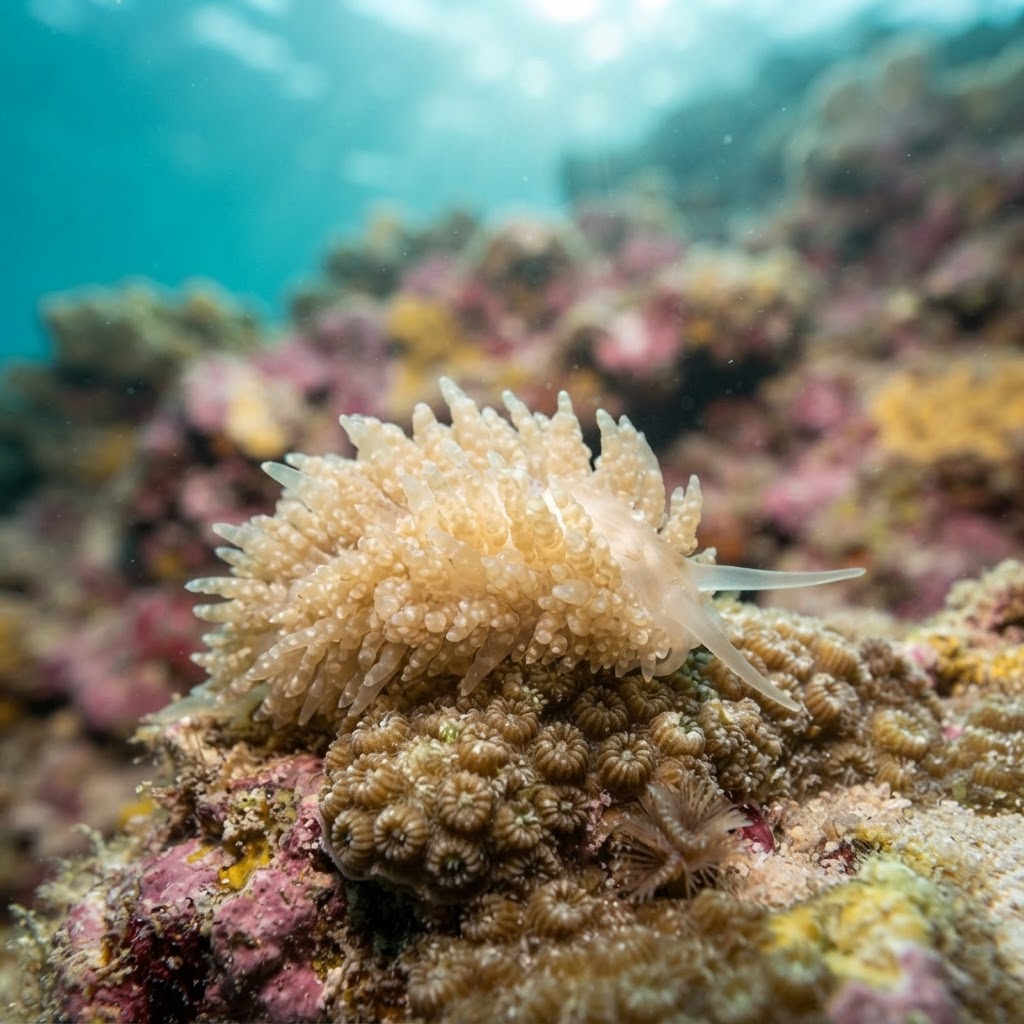
A small, slender sea slug reaching about 4 cm, with a translucent to pale body that lets the gut colour show through faintly along its back. The real giveaway is the row of finger-like projections (cerata) running down each side, which pick up subtle colour from the coral tissue it has been feeding on. It has no showy stripes or spots like many reef nudibranchs, so look closely on coral heads rather than scanning open sand or rubble.
Found parked directly on the coral colonies it feeds on, often tucked into branch structure where its cerata blend with the coral's own texture. It moves slowly and shows no reaction to divers, so patience and a slow, close look at coral heads is the only way to pick one out. Best searched during the day with a torch angled low across the coral surface to catch the contrast of its cerata.
Like other Phestilla species, it feeds directly on stony coral polyps, making it one of the few nudibranchs that lives its whole life on a single coral colony rather than roaming the reef.
Sightings so far don't show a clear season, and the water temperature range it tolerates, 23.4 to 29.4C, spans typical Hawaiian reef conditions year-round, so there's no obvious better month to look.
Currently logged from a single site in Hawaii, United States, making it a specialist find for divers exploring Hawaiian reefs rather than a species you would plan a wider regional trip around. Keep expectations modest elsewhere until more sightings come in from other Indo-Pacific locations where this genus is known to occur.
Mapping where Coral Feeding Aeolid is logged…
The only confirmed sightings so far are from Hawaii, United States, where it has been logged on coral reef habitat. It's considered uncommon even at that site, so treat any encounter as a bonus rather than a guarantee.
There's no detected seasonal pattern yet, and it's been recorded across water temperatures from 23.4 to 29.4C, which covers Hawaiian reef conditions most of the year. Year-round searching is your best bet.
Look for a small, pale, translucent slug around 4 cm long sitting directly on coral tissue, with rows of cerata along its back that pick up faint colour from its coral host. It lacks bold patterning, so it's easy to miss unless you check coral heads closely.
They typically reach around 4 cm in length, making them a small find that rewards a slow, close look at coral surfaces rather than a wide-angle scan of the reef.
It spends its life feeding on the polyps of a single stony coral colony, taking on subtle colour cues from that coral through its cerata rather than roaming the reef like many other nudibranchs.
Site and sighting data is aggregated from diver logs, iNaturalist and GBIF. For taxonomy and conservation status:
Nudibranch
3,168 sites