Phyllodesmium colemani
A rare aeolid nudibranch most reliably logged around Kenting, Taiwan, in reef water between 24.7 and 30.7 C, year-round.
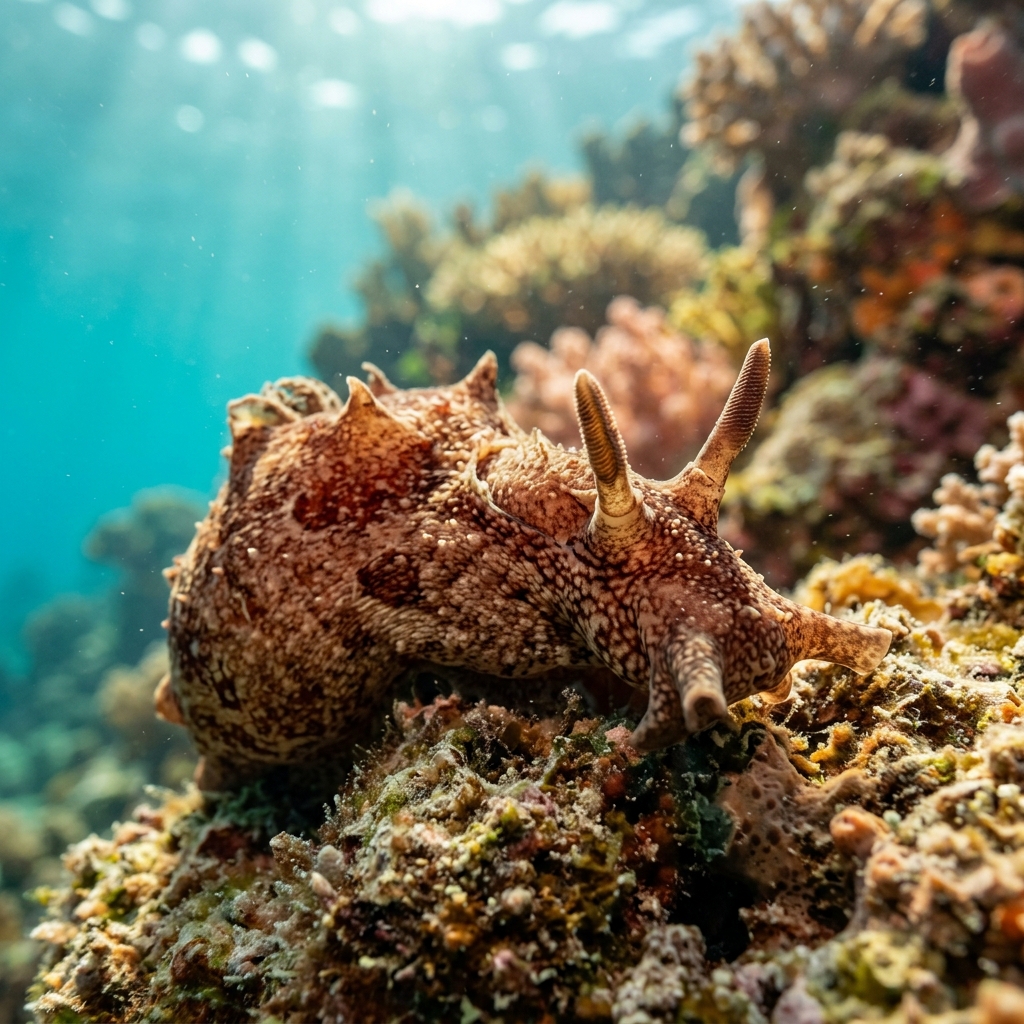
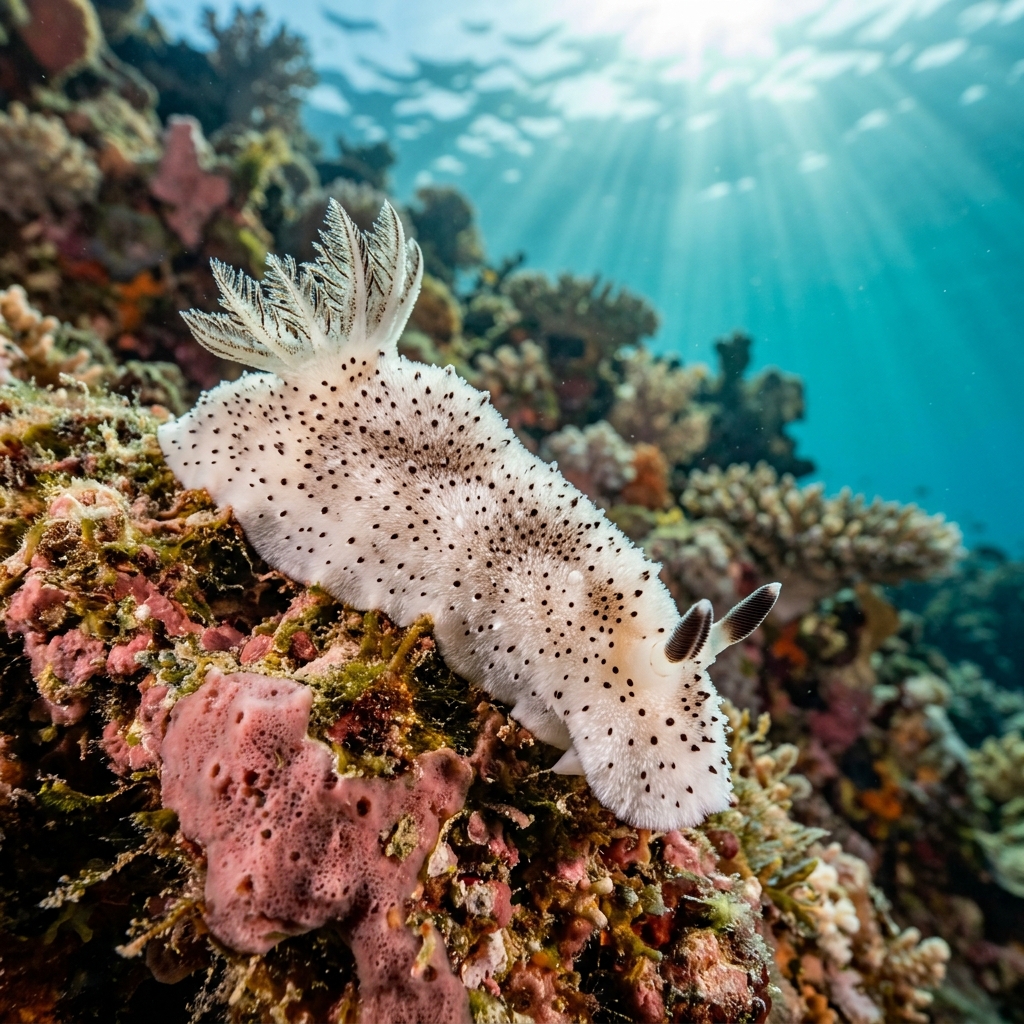
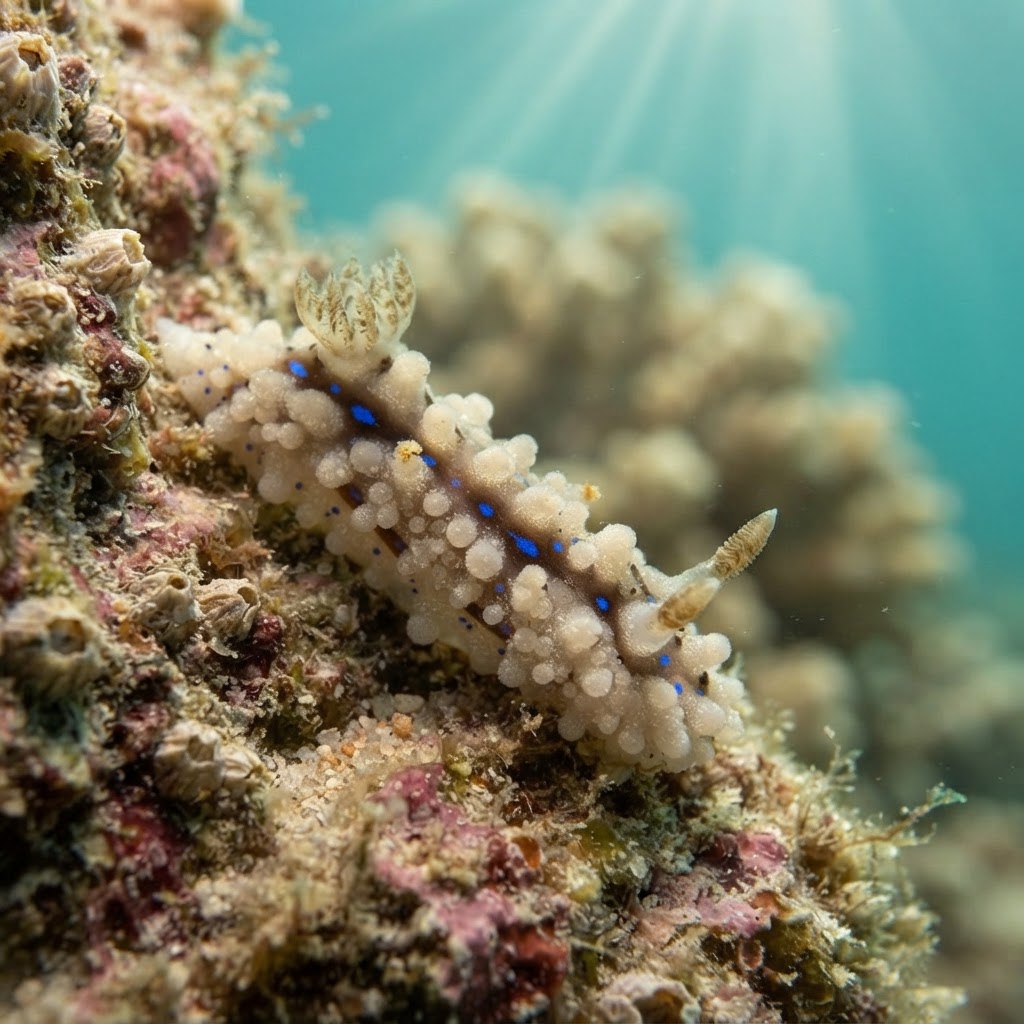
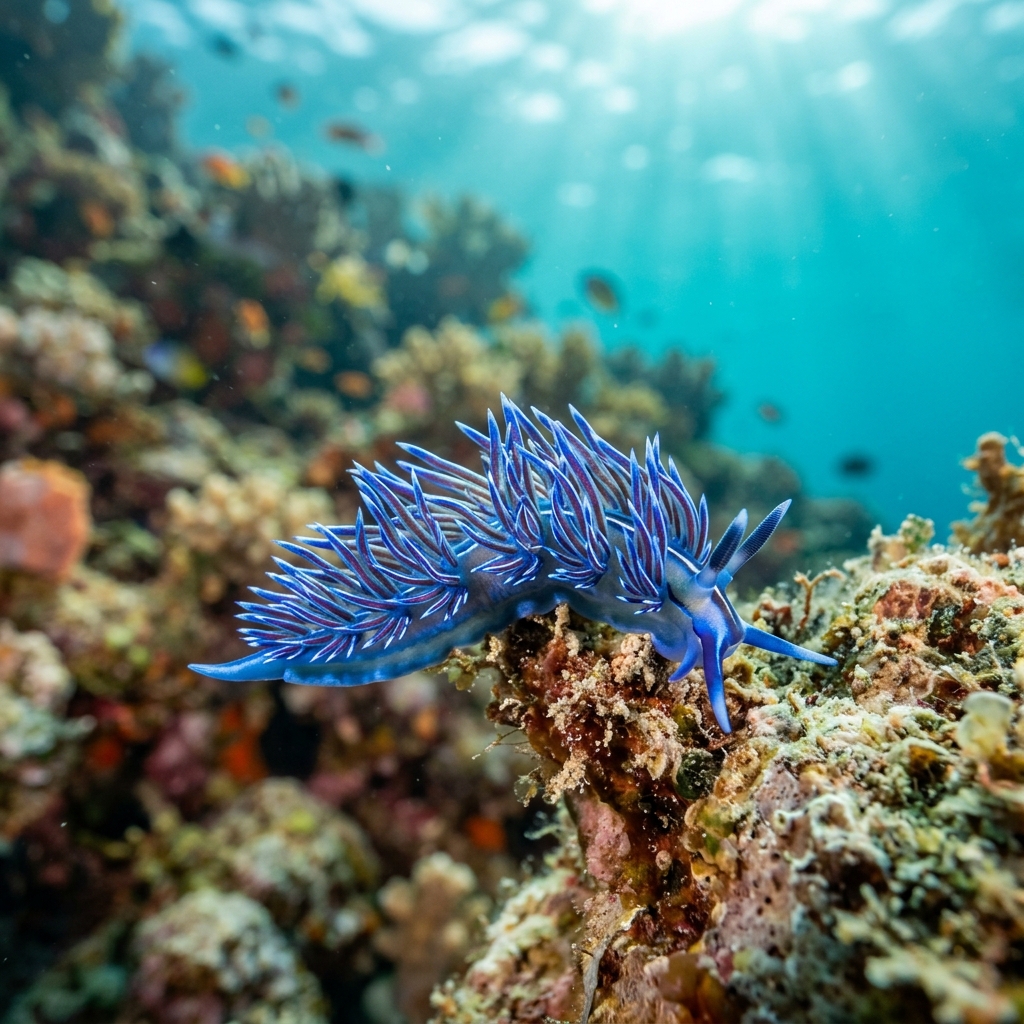
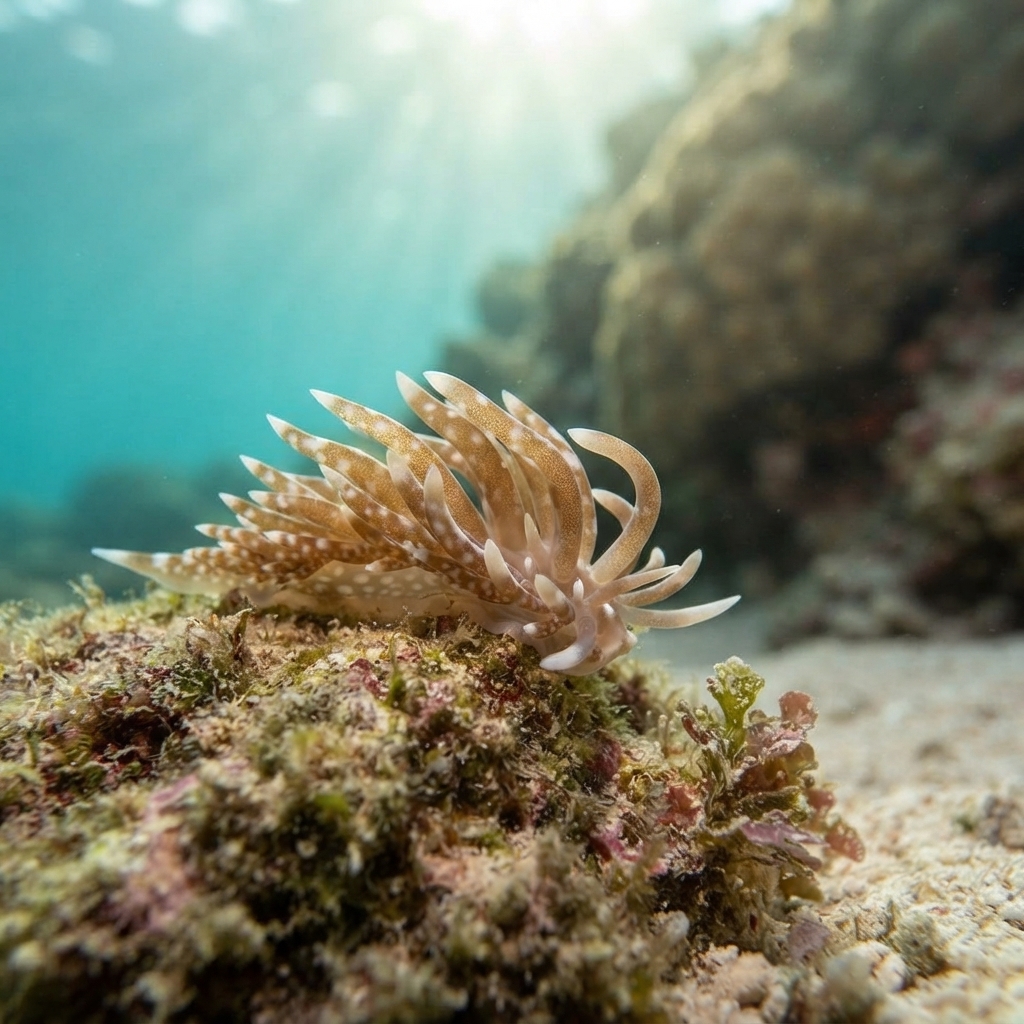
A small aeolid nudibranch (a group with finger-like projections called cerata covering the back) with a slender, translucent body that lets internal organs show through as pale colouring. The cerata are branched and clustered densely along the sides, often carrying a soft brownish or greenish tint from the coral tissue it feeds on. There's no bold contrast pattern here, so divers key on the branching cerata shape and the overall soft, camouflaged look rather than a striking colour code.
Found creeping slowly over reef substrate and soft coral colonies, where it grazes on the coral tissue itself rather than algae or sponges. It's not skittish and won't react to a diver's presence the way a fish would, but its small size and muted colouring mean it's easy to swim straight past. Most logs come from divers doing deliberate slow, close-focus searches rather than casual reef cruising.
Like other Phyllodesmium species, it likely sequesters stinging or chemical compounds from the soft corals it eats and stores them in its cerata as a borrowed defence, a trick common across this nudibranch family.
Sightings don't show a clear seasonal pattern, and with a comfortable range of 24.7 to 30.7 C it's likely present on these reefs across the year rather than tied to a single window. Plan around good macro conditions at your chosen site rather than a specific month.
Most consistently logged around Kenting in Taiwan, which accounts for the bulk of confirmed sightings, with smaller numbers reported from Luzon in the Philippines and a single site in New South Wales, Australia. Outside Kenting it turns up as an occasional find rather than a target species, so Taiwan is the strongest bet for a dedicated search.
Mapping where Coleman's Phyllodesmium is logged…
Kenting in Taiwan is by far the most reliable region, with additional sightings logged in Luzon, Philippines, and a single site in New South Wales, Australia.
There's no detected season in the sighting data, and its comfortable range of roughly 25 to 31 C suggests it's present on tropical reefs year-round rather than at a specific time.
Look for a small, translucent aeolid nudibranch with densely branched cerata along its back, often tinted brown or green from the coral it feeds on. It lacks bold contrast markings, so its soft, camouflaged look and branching cerata shape are the main clues.
Exact size data isn't well documented for this species, but like most Phyllodesmium nudibranchs it's a small animal typically found by divers doing close-focus macro searches rather than spotted from a distance.
It feeds directly on soft coral tissue and is thought to store the coral's defensive compounds in its cerata, turning a borrowed chemical weapon into its own protection, a strategy shared across the Phyllodesmium genus.
Site and sighting data is aggregated from diver logs, iNaturalist and GBIF. For taxonomy and conservation status:
Light-spotted Aegires
3,168 sites