Notodoris citrina
Bright lemon-yellow with warty knobs, most reliably logged around Luzon, Palawan and Queensland in warm 21-29C reef water.
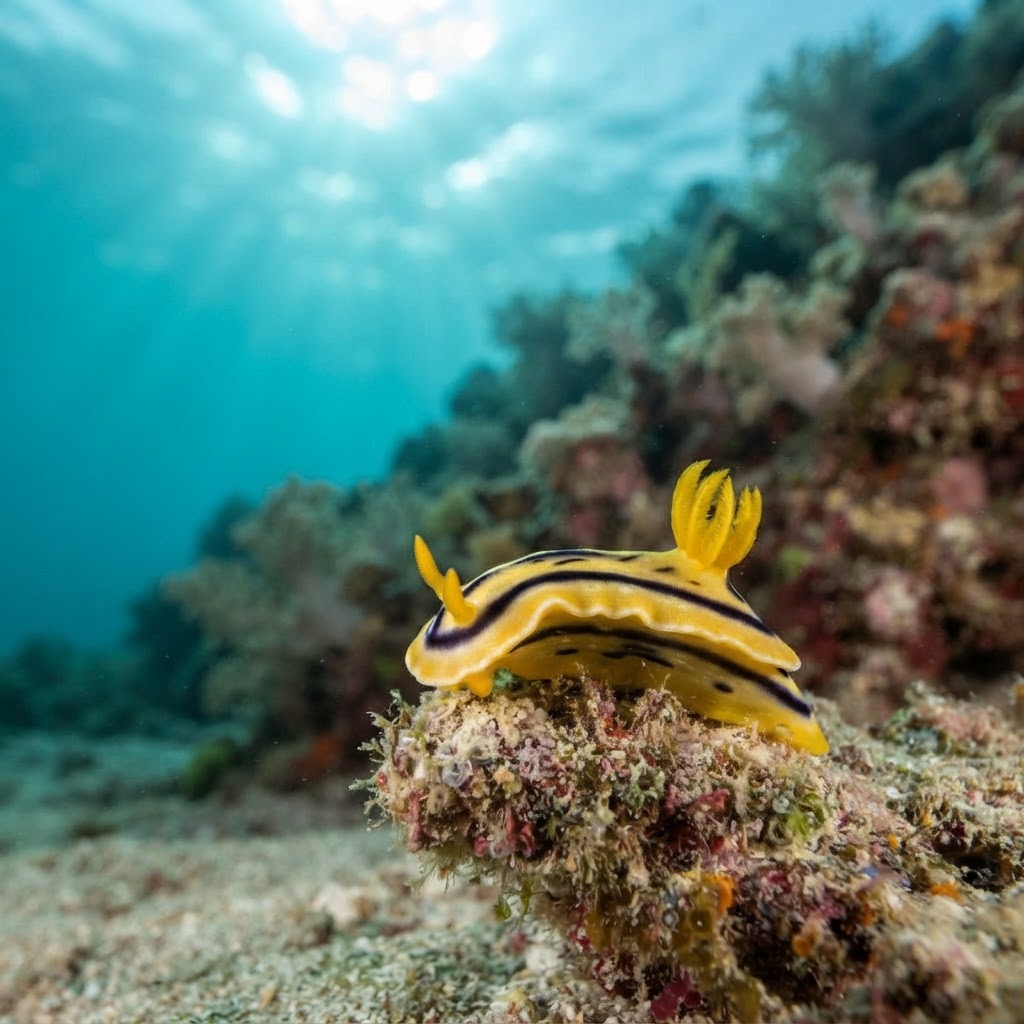
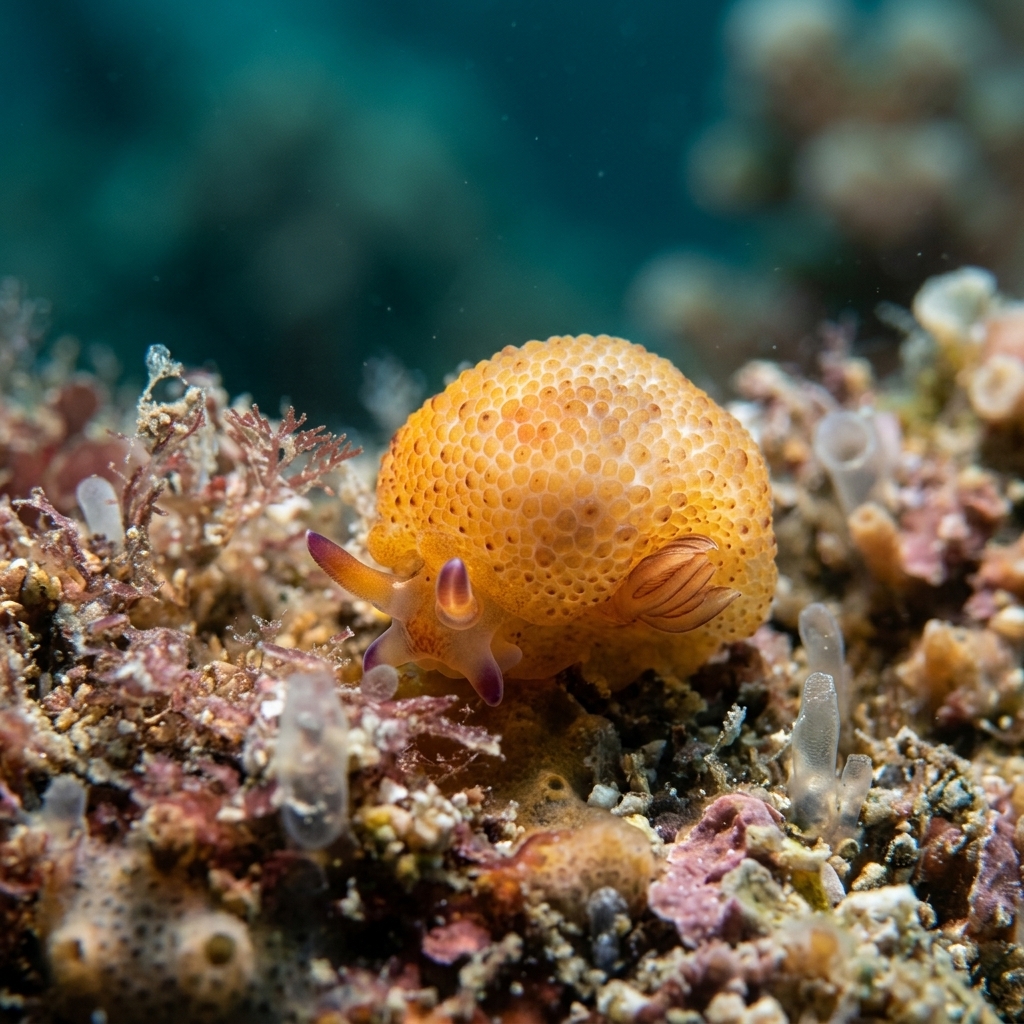
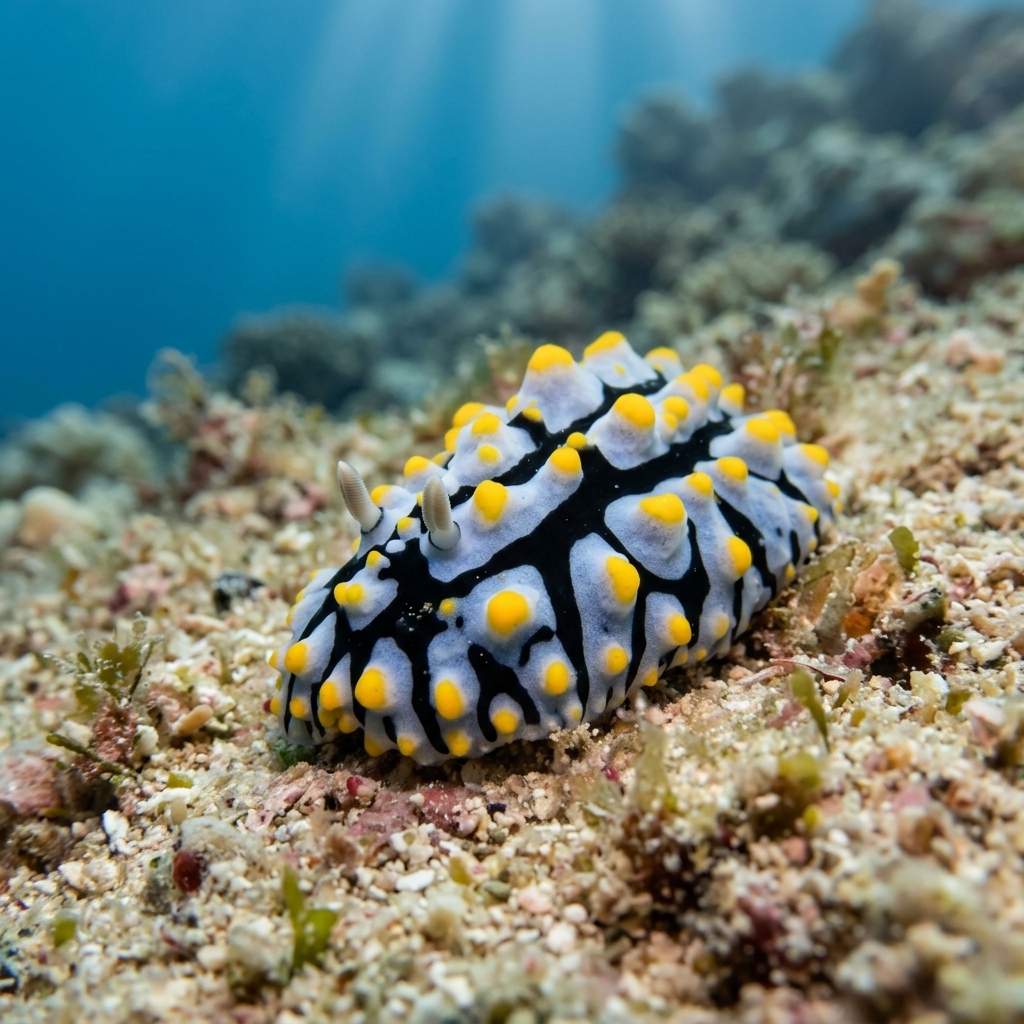
Solid lemon-to-egg-yolk yellow all over, body covered in rounded warty tubercles rather than smooth skin, and only about 4 cm long so you're scanning rubble and sponge at close range to spot it. It lacks the branching gills of many nudibranchs; instead look for a low, ridged mantle and a pair of small rhinophores (sensory tentacles) poking up near the head, both the same solid yellow as the body.
Turns up crawling slowly across reef rubble, sponge and rock in the shallower parts of the reef, moving at the unhurried pace typical of dorid nudibranchs while grazing. It pays divers no attention and won't react to a torch or close approach, which makes it an easy macro subject once you've actually found one since it's logged as uncommon even at sites where it's known to occur.
It's thought to feed on sponges, and like other dorid nudibranchs it likely gets its yellow colouring and any chemical defences from compounds in that sponge diet, meaning its body colour effectively broadcasts what it's been eating.
Sightings don't show a clear seasonal pattern, and its comfort range of roughly 21 to 29C covers tropical reef conditions year-round across its range, so any month is fair game.
Reef neighbours a diver could mistake it for. Use the identification notes above to tell them apart.
Most consistently logged in the Philippines, especially Luzon, Palawan, Mindanao and the Visayas, with strong numbers also coming out of Queensland in Australia and Okinawa in Japan. Indonesia's Sulawesi and Malaysia's Sabah round out the reliable spots, so this is very much a Coral Triangle and western Pacific species rather than an Indian Ocean or Caribbean one.
Mapping where Citrus Nudibranch is logged…
Best chances are in the Philippines, particularly Luzon, Palawan, Mindanao and the Visayas, plus Queensland in Australia and Okinawa in Japan. Sulawesi in Indonesia and Sabah in Malaysia are also solid regions to search rubble and sponge patches.
There's no strong seasonal signal in sightings, and it tolerates a wide 21 to 29C range, so it's a year-round find on tropical reefs rather than a seasonal specialty.
Look for a small, solid yellow slug around 4 cm long with a warty, tubercle-covered body rather than smooth skin. The rhinophores near the head are the same yellow as the rest of it, and there's no flashy gill plume to key on, just the colour and texture.
They stay small, typically around 4 cm, so most divers spot them at close range while looking over rubble and sponge-covered surfaces.
No. They're harmless, slow-moving grazers with no sting or bite that affects divers, and they won't react to being approached or photographed.
It's believed to feed on sponges, a diet that likely accounts for both its bright yellow colour and any chemical defences it carries in its skin.
Site and sighting data is aggregated from diver logs, iNaturalist and GBIF. For taxonomy and conservation status:
Chromodoris joshi
Blue Dragon
3,163 sites