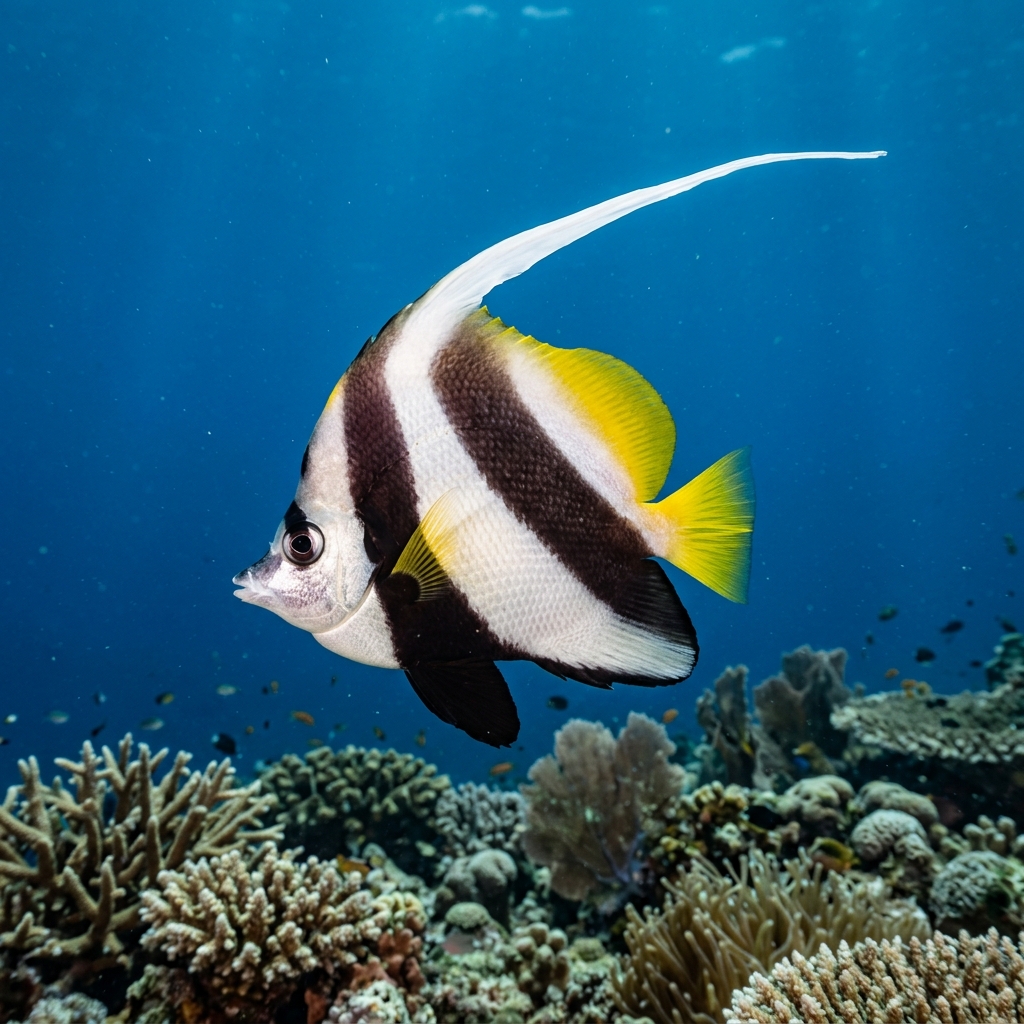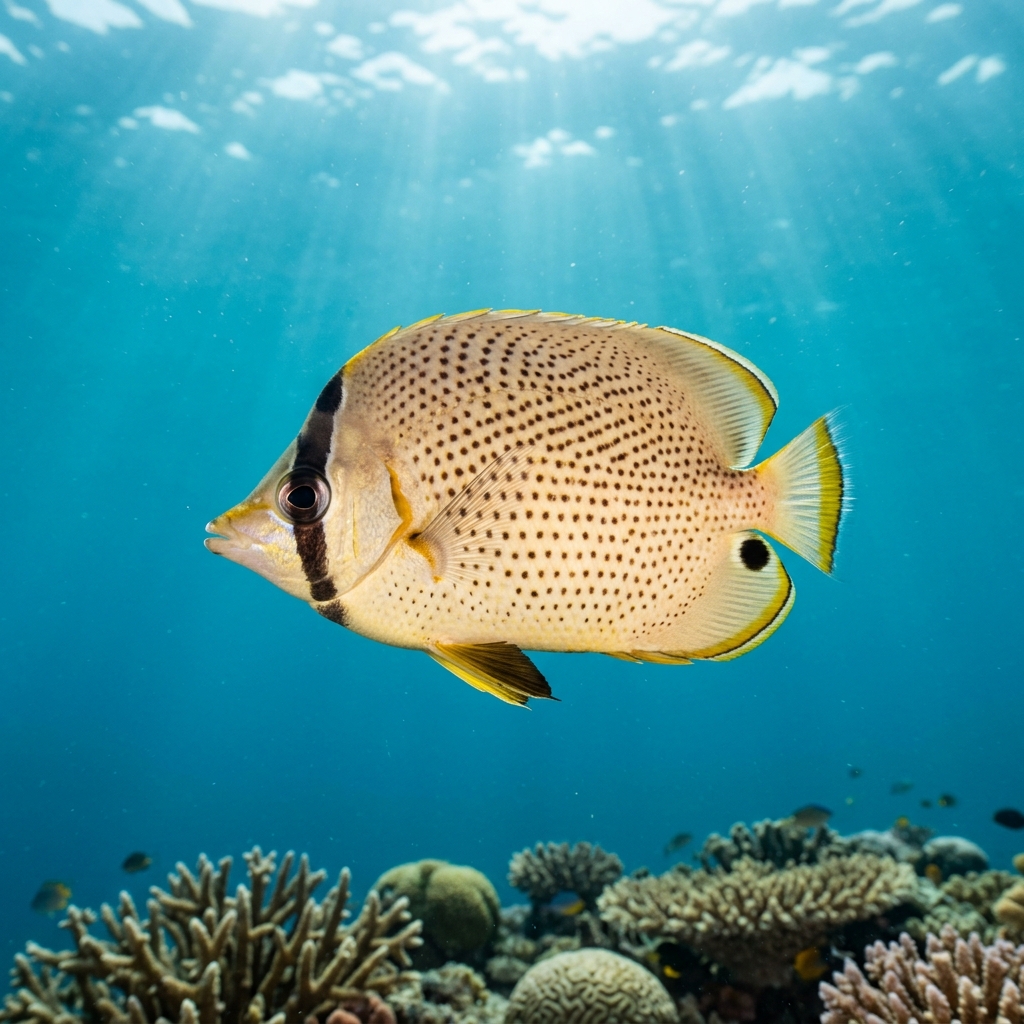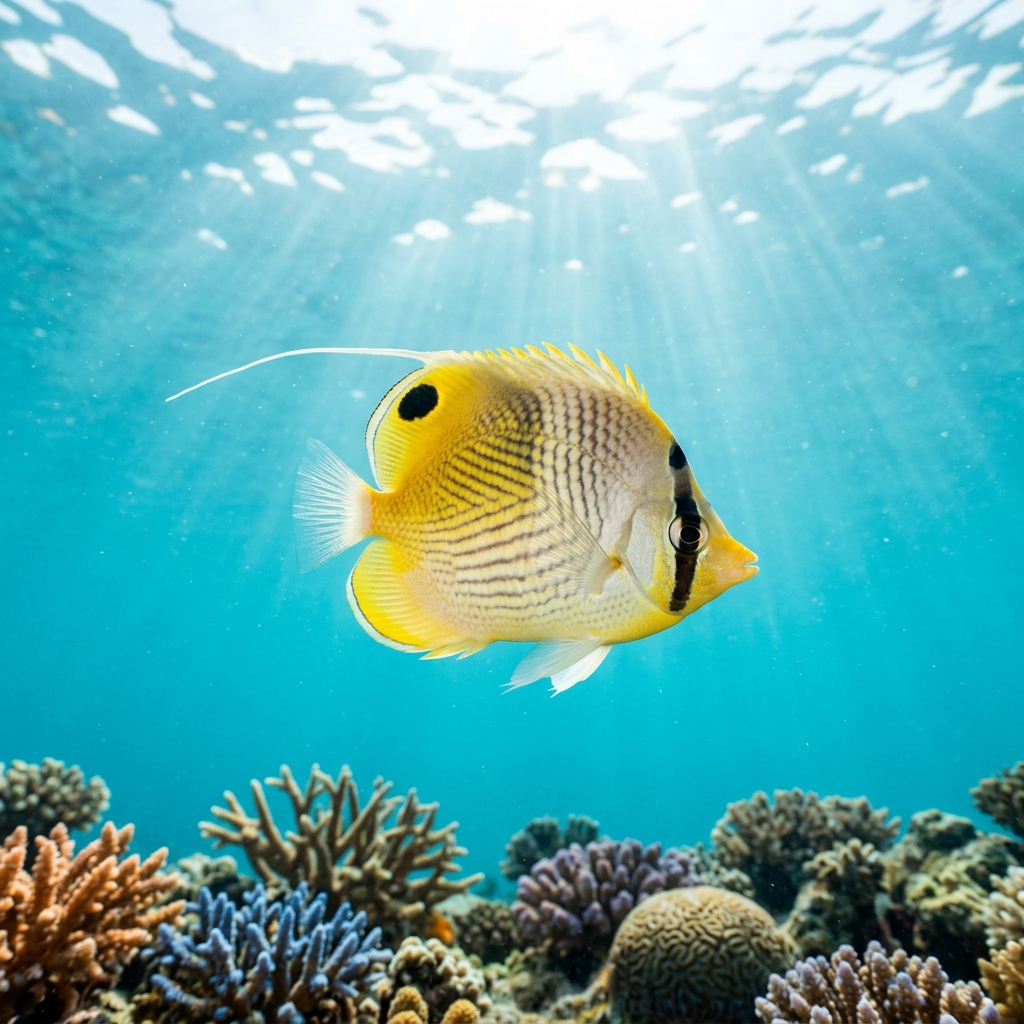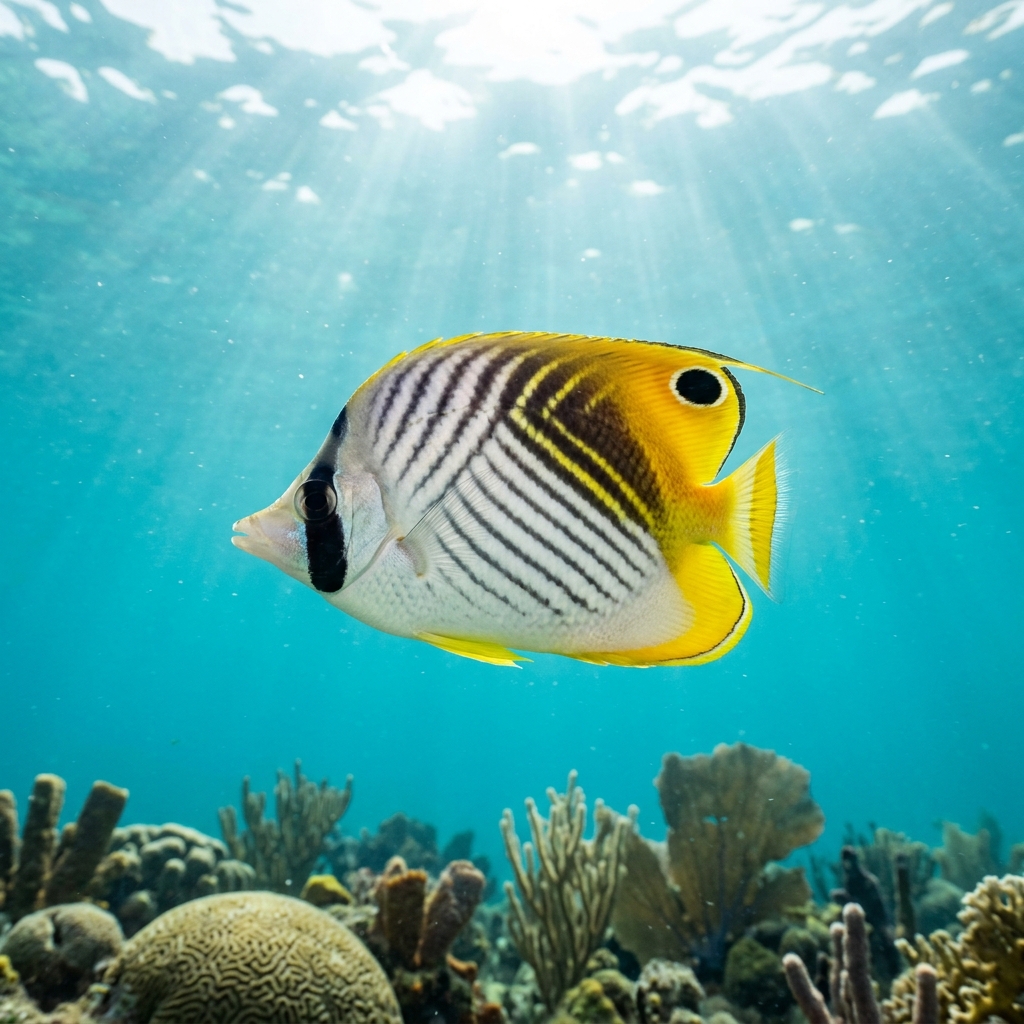
Chaetodon semilarvatus
Spot the Bluecheek Butterflyfish in Sharm el Sheikh and Marsa Alam, Egypt dominates sightings in waters from 22-28°C. Here's how to find and ID it.
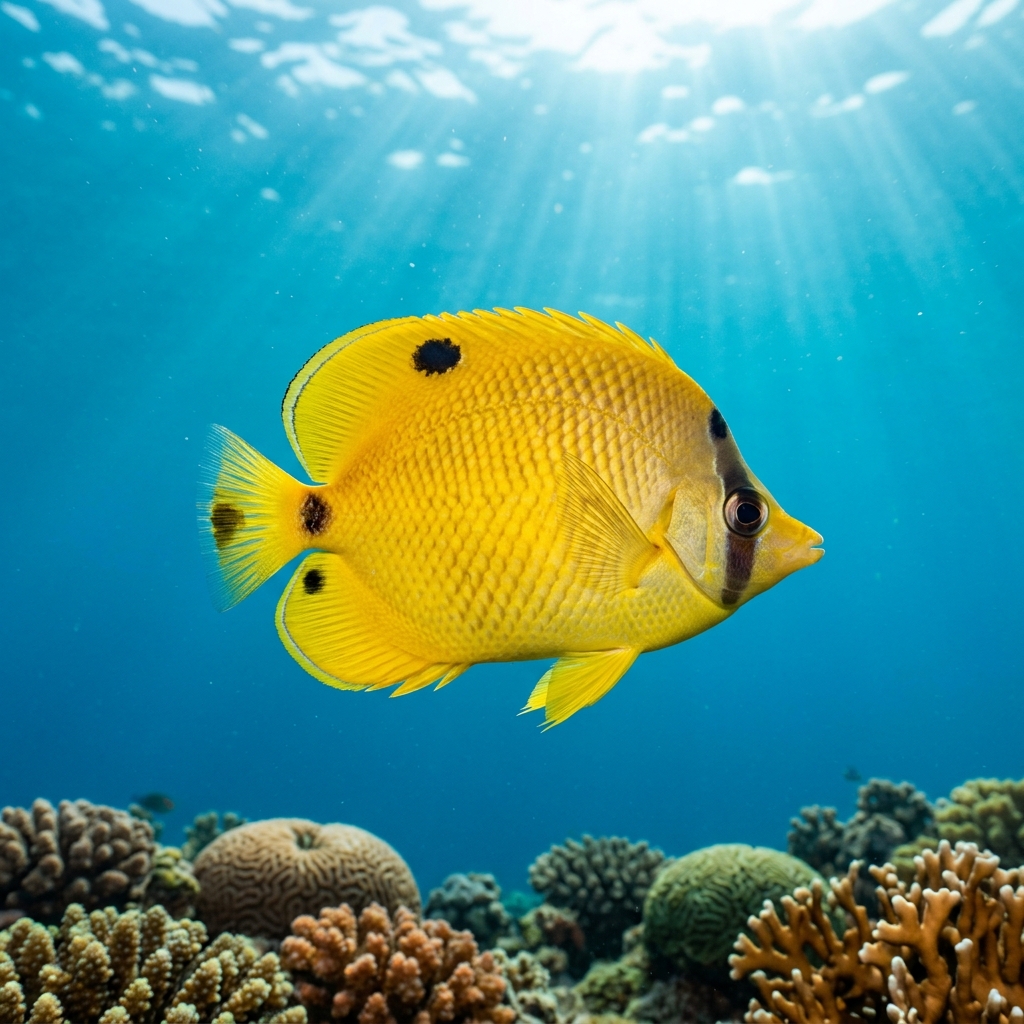
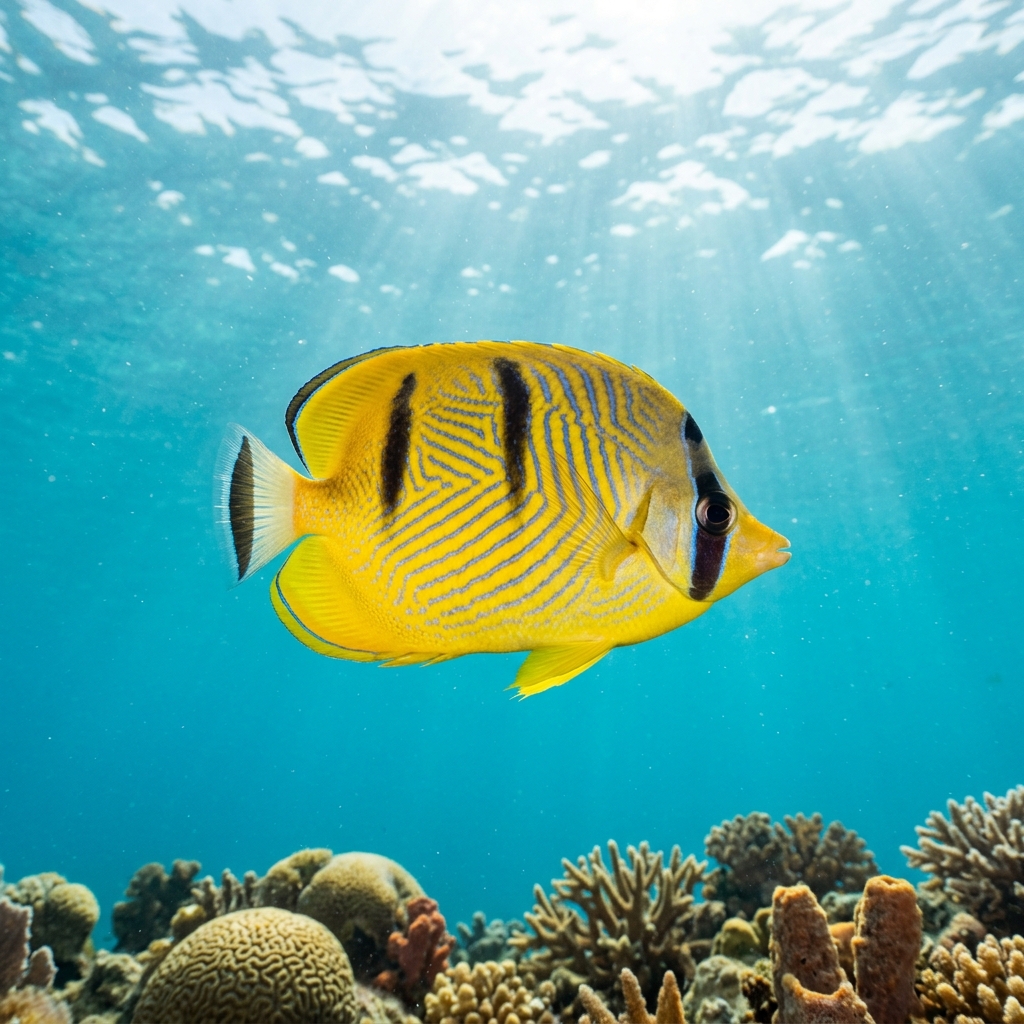
A large, deep-bodied butterflyfish dressed almost entirely in vivid yellow, with the standout feature being a bold blue-black mask that covers most of the face, hence the name. Vertical orange-red stripes run across the flanks, giving it a striped candy appearance. Unlike most butterflyfish there is no dark eyespot on the tail, which helps cut through confusion underwater. It is one of the bigger butterflyfish you will meet on Red Sea reefs, making it easier to spot than its smaller relatives.
Bluecheek Butterflyfish are typically seen in pairs or small groups cruising coral-rich sections of the reef, picking at coral polyps with their pointed snouts. They tend to be approachable and do not bolt at a diver's approach, often continuing to feed while you watch from a short distance. Look for them on well-developed reef walls and slopes rather than open sandy areas.
Chaetodon semilarvatus is one of very few butterflyfish species that forms long-term monogamous pair bonds, with paired individuals staying together year-round and often coordinating their movements so closely that you rarely see a lone individual.
Seasonality data from the Northern Hemisphere sites points to October and November as the months when sightings concentrate. The species is observed across a water temperature range of roughly 22 to 28°C, consistent with Red Sea conditions throughout much of the year, so encounters are possible beyond peak months.
Egypt is by far the dominant location, with sightings spread across Sharm el Sheikh, Marsa Alam, Safaga, and Hurghada, making the Egyptian Red Sea the place to look. Saudi Arabia's Red Sea coast, particularly around Jeddah and the Farasan Banks, also holds the species. A single record from Hienghène, New Caledonia sits well outside the core range and should be treated as a rarity there.
Mapping where Bluecheek Butterflyfish is logged…
The Red Sea is the place to be. Egypt leads the way, with strong sighting records across Sharm el Sheikh, Marsa Alam, Safaga, and Hurghada. Saudi Arabia's Red Sea sites around Jeddah and the Farasan Banks also deliver sightings, making the Red Sea as a whole the reliable destination for this species.
Sightings concentrate in October and November based on diver records from Red Sea sites. The species is present in waters from around 22 to 28°C, so encounters are possible across much of the year, but autumn appears to be the standout window.
Look for a large, bright yellow butterflyfish with a striking blue-black mask covering most of the face and orange-red vertical stripes across the body. The absence of a tail eyespot, common on many butterflyfish, is a useful confirming detail. Few reef fish in the Red Sea share this combination of full yellow body, blue face, and striped flanks.
They are one of the larger butterflyfish species on Red Sea reefs, typically reaching around 20 to 23 cm in length. Their size and bold colouration make them noticeably easier to spot than the smaller, more cryptic butterflyfish you encounter on the same reefs.
They are known to form long-term monogamous pairs, and you will almost always see them in twos rather than alone. Pairs coordinate closely as they move across the reef, which is one of the most reliable behavioural cues when you are trying to confirm what you are looking at.
Site and sighting data is aggregated from diver logs, iNaturalist and GBIF. For taxonomy and conservation status: