Chaetodon rainfordi
Spot Rainford's Butterflyfish in Queensland, Australia, most sightings concentrate Jul, Sep in waters between 22 and 28°C. Here's how to find and ID it.
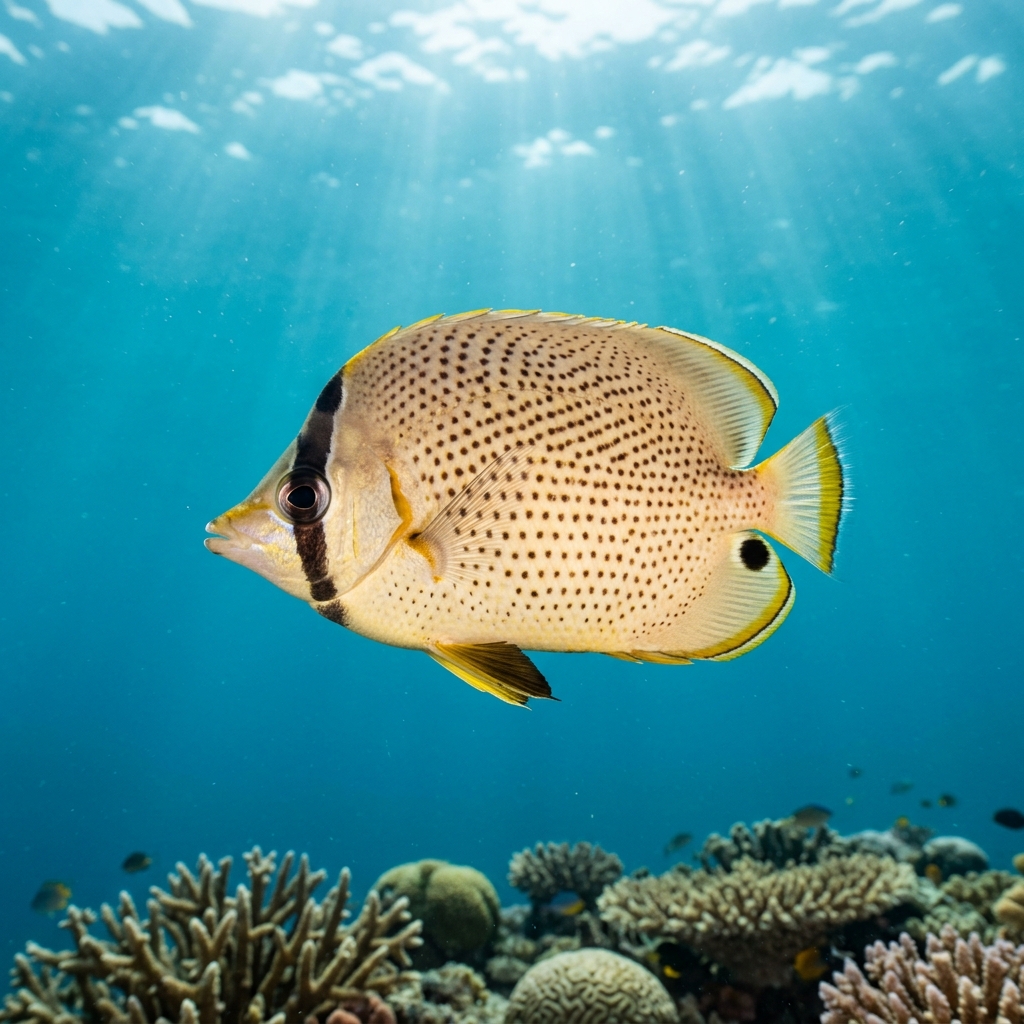
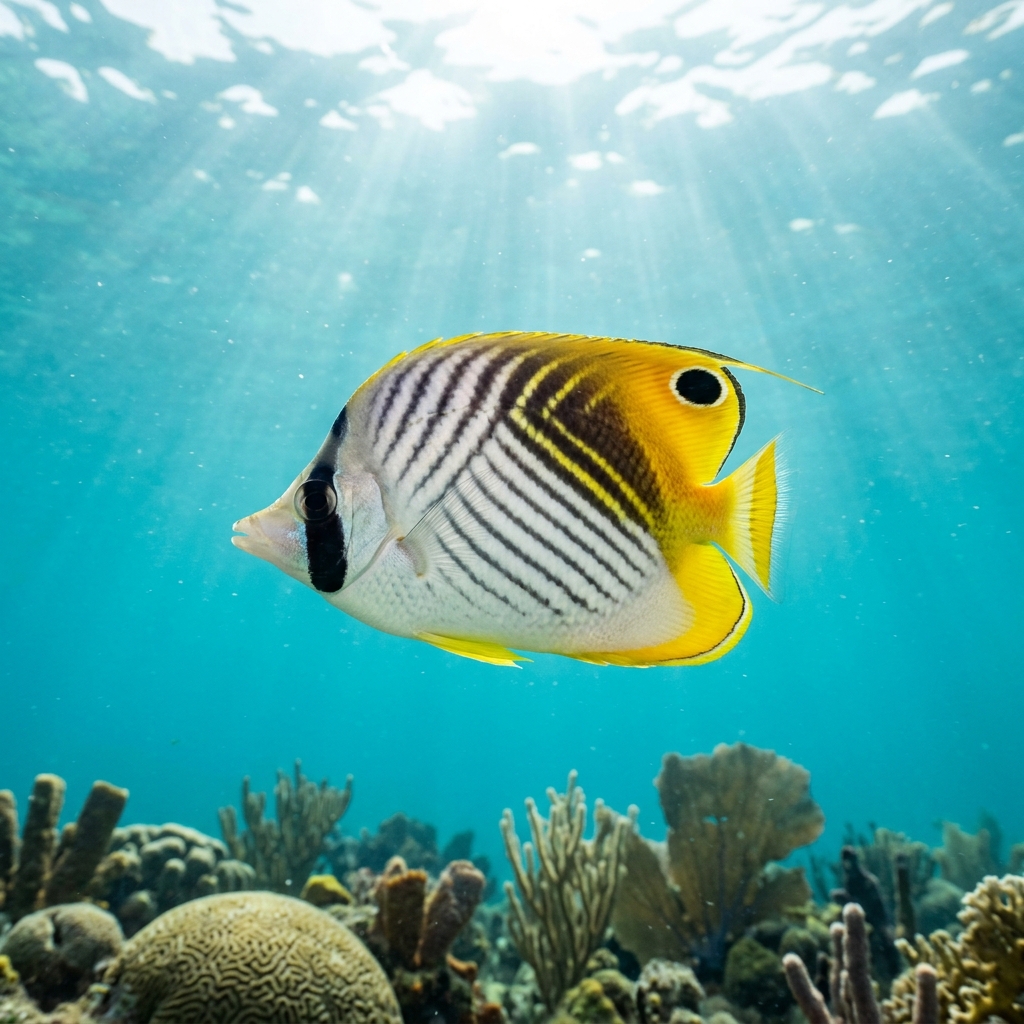
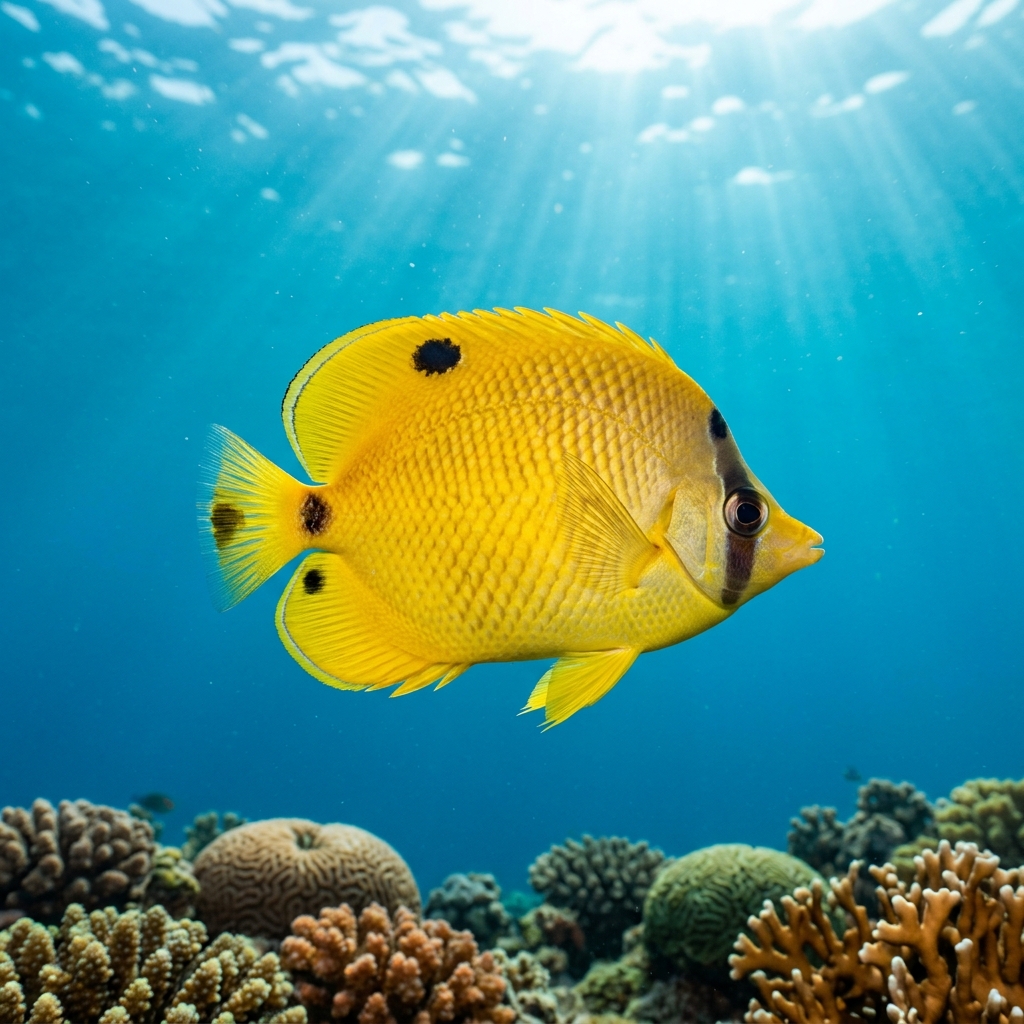
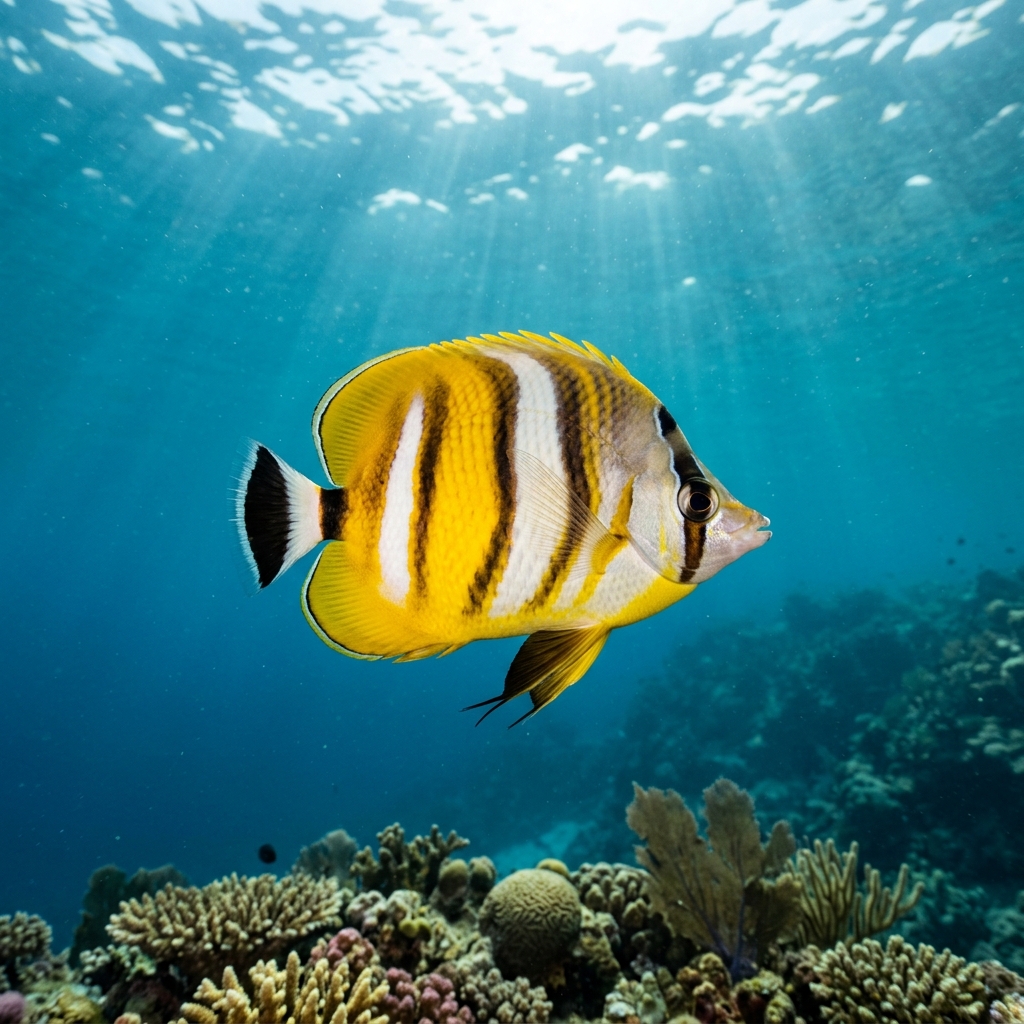
Pale yellow-white body crossed by a series of diagonal orange-brown stripes running from the back down towards the belly gives this butterflyfish a distinctly lined look unlike most of its relatives. A dark band passes through the eye, and the tail is pale with a yellow tinge. Body shape is the typical deep, disc-like oval of the butterflyfish family, appearing roughly palm-sized in the water. The combination of diagonal stripes and the relatively subdued colouring sets it apart from the bolder, more contrasting species it shares the reef with.
Rainford's Butterflyfish is typically seen picking at coral and reef substrate, browsing for coral polyps and small invertebrates in the manner typical of the family. It tends to stay close to the reef structure, usually in pairs or small groups, and is generally cautious around divers, retreating slowly into coral heads when approached too closely. Most encounters happen in relatively shallow reef zones during daylight dives.
Rainford's Butterflyfish is endemic to Australian and nearby western Pacific waters, making Queensland reef dives one of the very few places on the planet where you can reliably encounter it.
In the Southern Hemisphere, sightings concentrate between July and September, which corresponds to Australia's cooler winter months when water temperatures sit in the lower part of the species' observed range around 22°C.
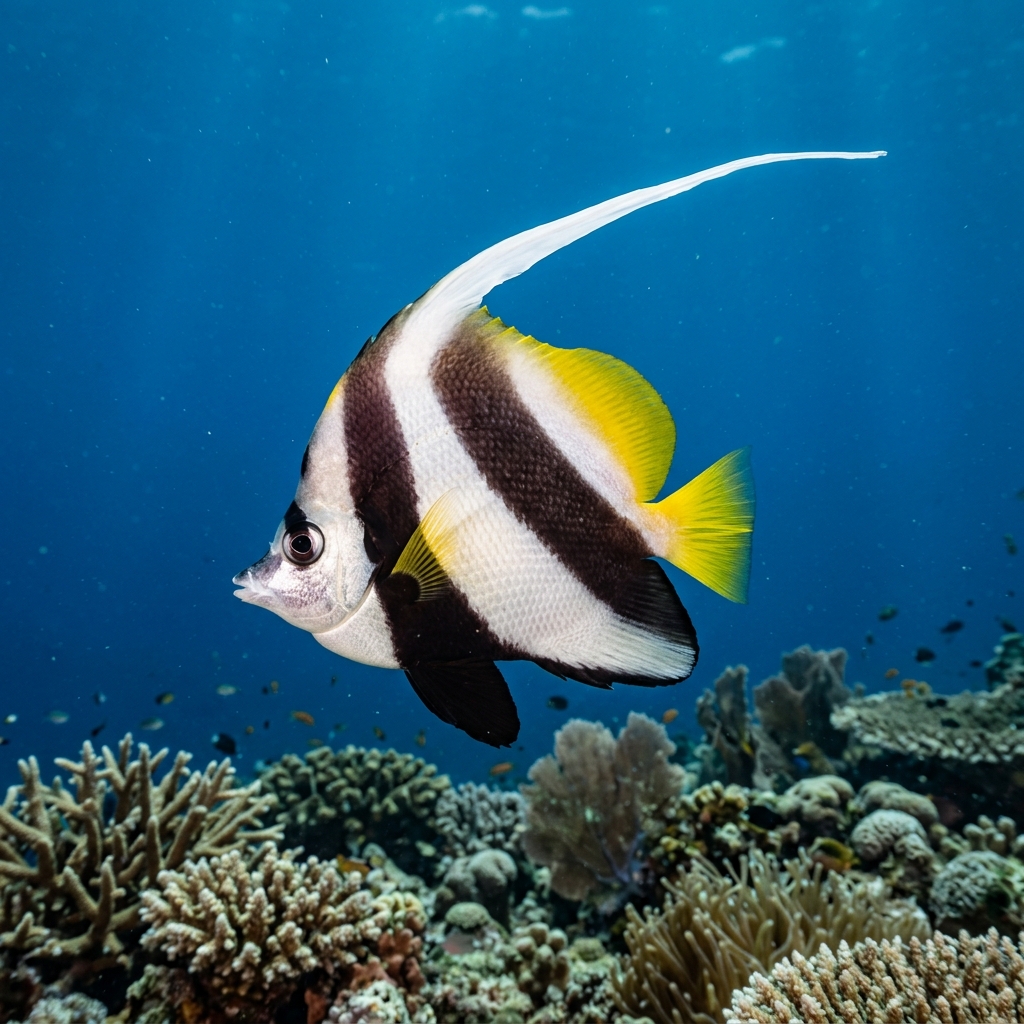
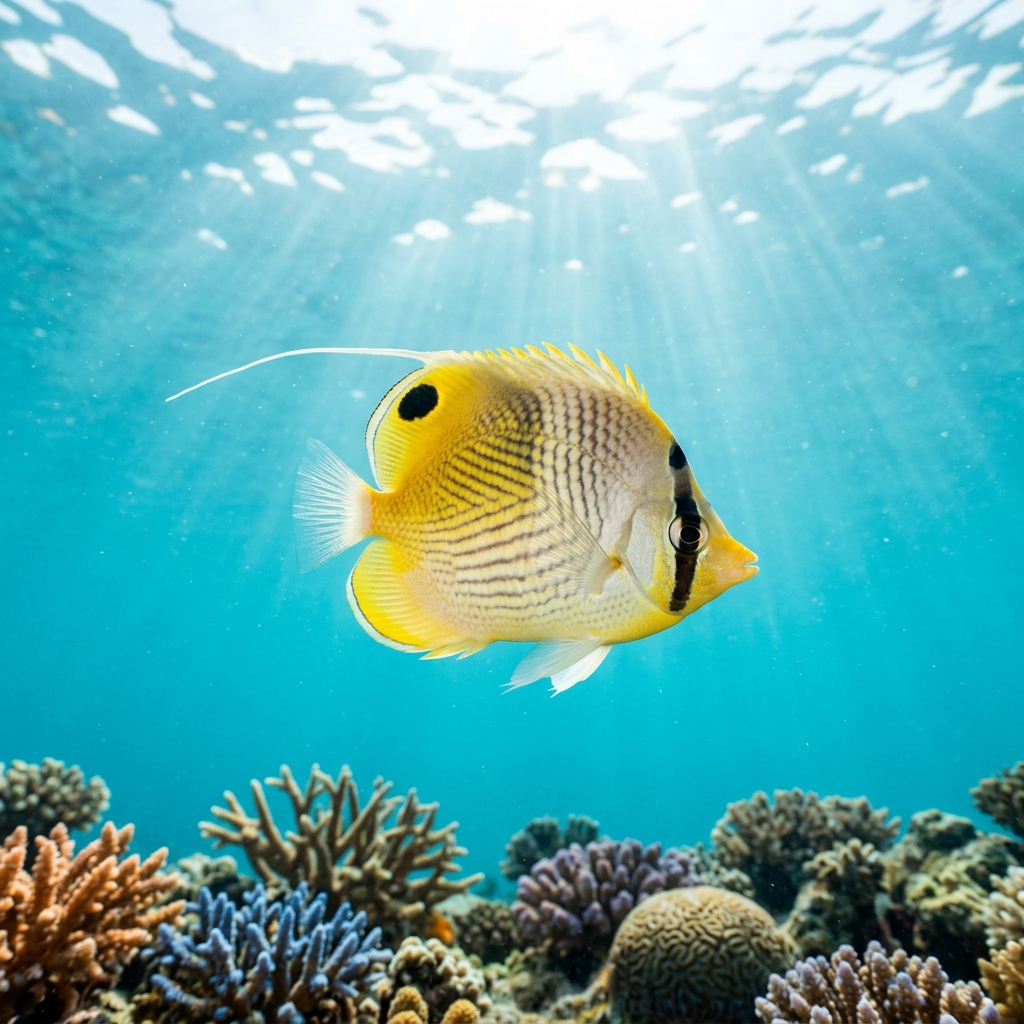
Reef neighbours a diver could mistake it for. Use the identification notes above to tell them apart.
Almost all recorded sightings come from Australia, with Queensland accounting for the overwhelming majority of logged sites. It is essentially an Australian endemic, and the Great Barrier Reef region is by far the most reliable place to look for it. A small number of sightings have also been recorded in Tahiti.
Mapping where Rainford's Butterflyfish is logged…
Rainford's Butterflyfish is almost entirely found in Australian waters, with Queensland, including the Great Barrier Reef, being the top region for sightings. A small number of records exist from Tahiti. If seeing this species is your goal, plan a Queensland reef dive.
Sightings in the Southern Hemisphere concentrate during July to September. This is Australia's winter, when water temperatures drop towards the lower end of the species' comfort range. Outside this window encounters are much less frequent.
Look for the diagonal orange-brown stripes crossing a pale yellow-white body, this striped pattern is the key field mark. A dark eye band is also present. Most other butterflyfish in the region have vertical bars or bold spots rather than diagonal lines, which makes Rainford's relatively distinctive once you know what to look for.
It is classed as uncommon at the majority of sites where it has been recorded, and rare at many others. Common sightings are the exception rather than the rule, so treat any encounter as a worthwhile find rather than a certainty.
The species is currently listed as Near Threatened on the IUCN Red List. Its restricted range, largely limited to Australian and nearby waters, makes it more vulnerable than widely distributed reef fish. Healthy reef conservation directly benefits this species.
Site and sighting data is aggregated from diver logs, iNaturalist and GBIF. For taxonomy and conservation status: