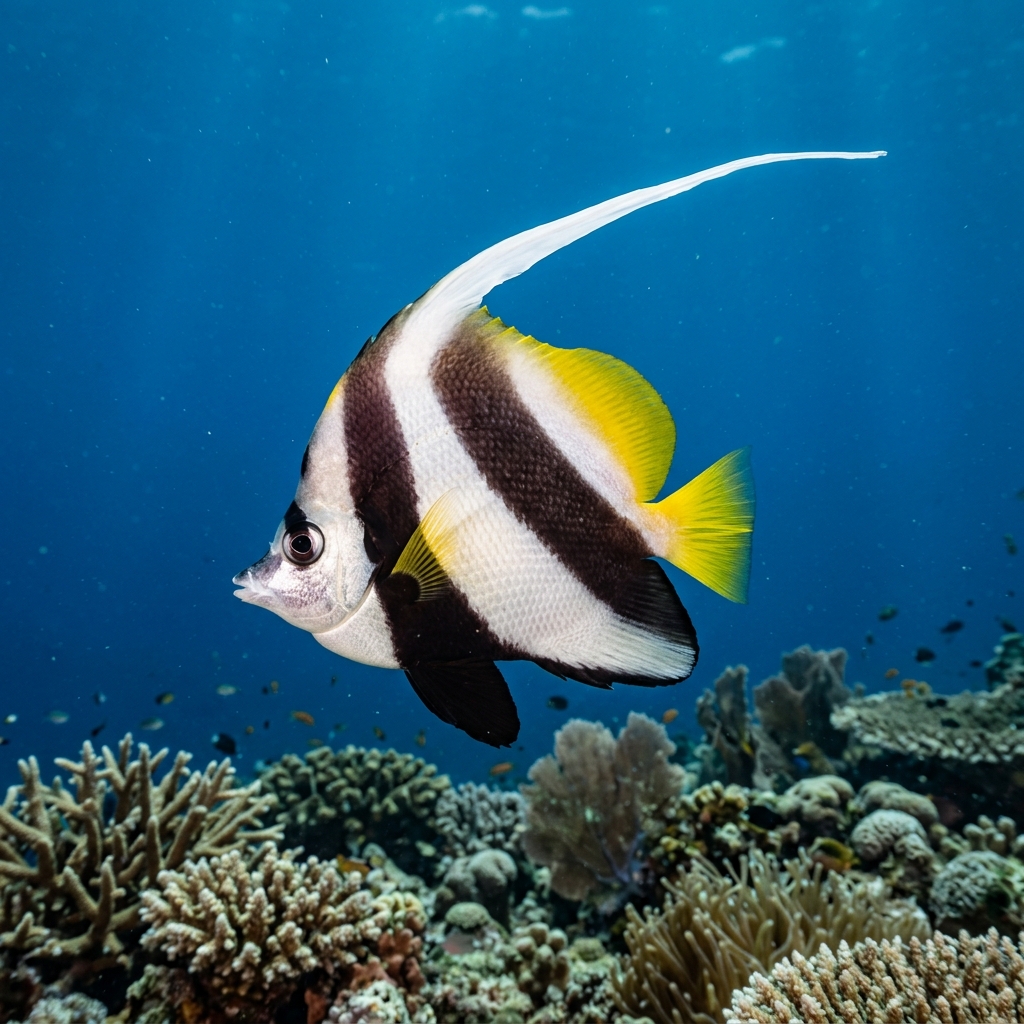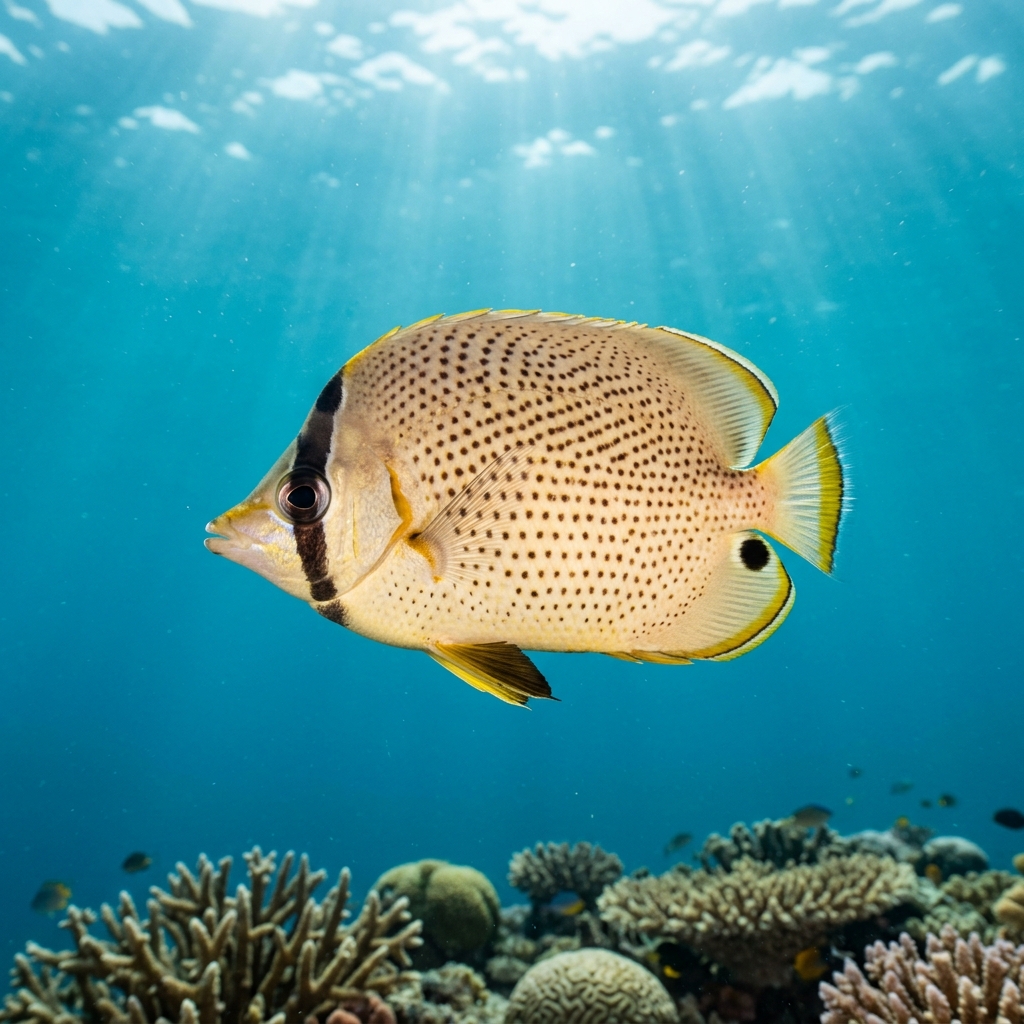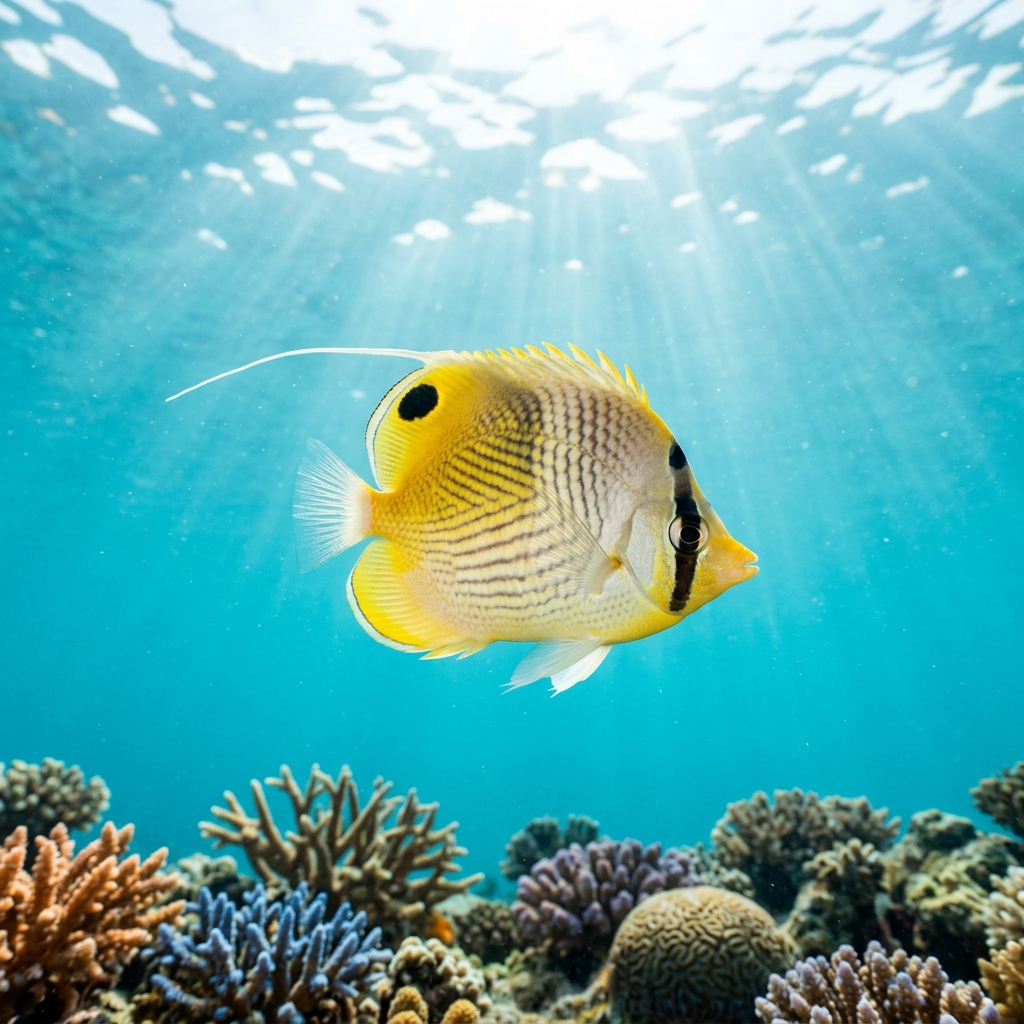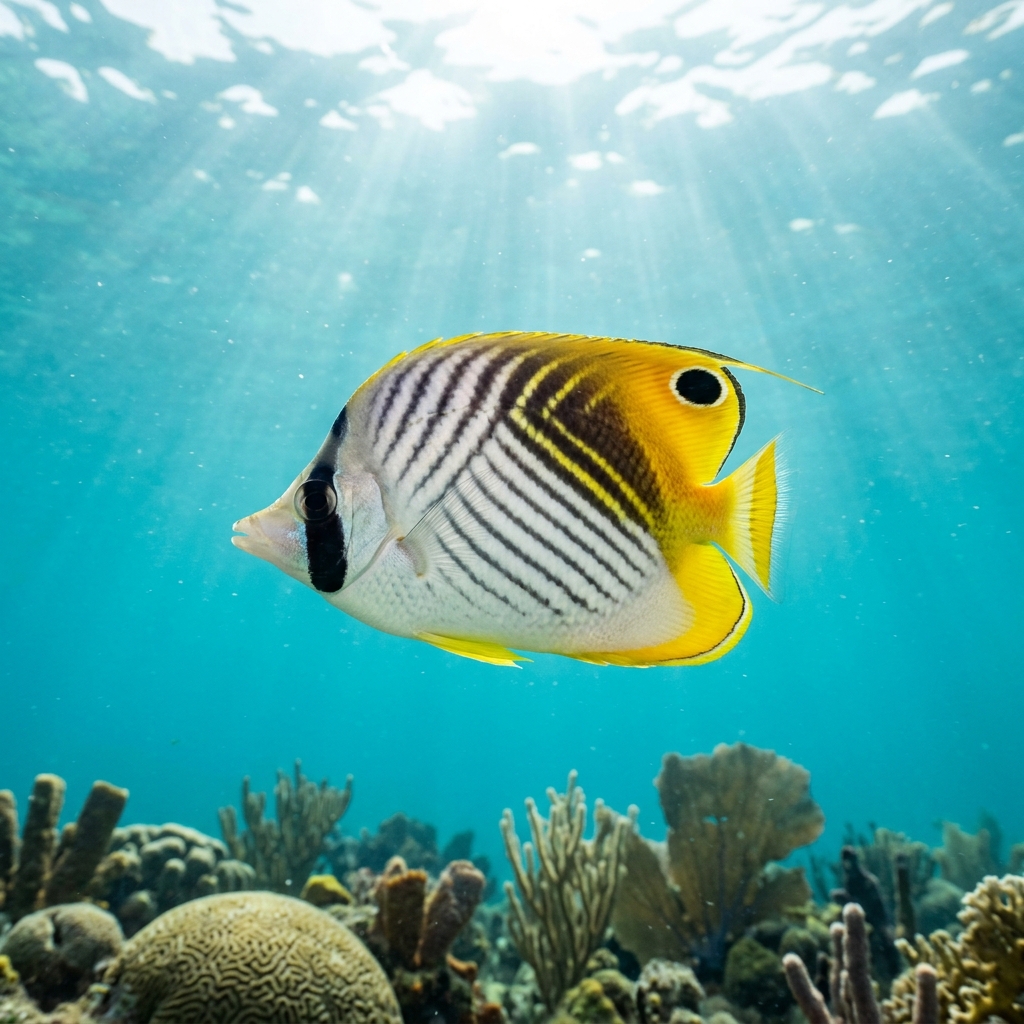
Chaetodon larvatus
Spot the bold black-and-blue hood of the Hooded Butterflyfish across Sharm el Sheikh and Marsa Alam reefs in the Red Sea. Here's where and how to find one.
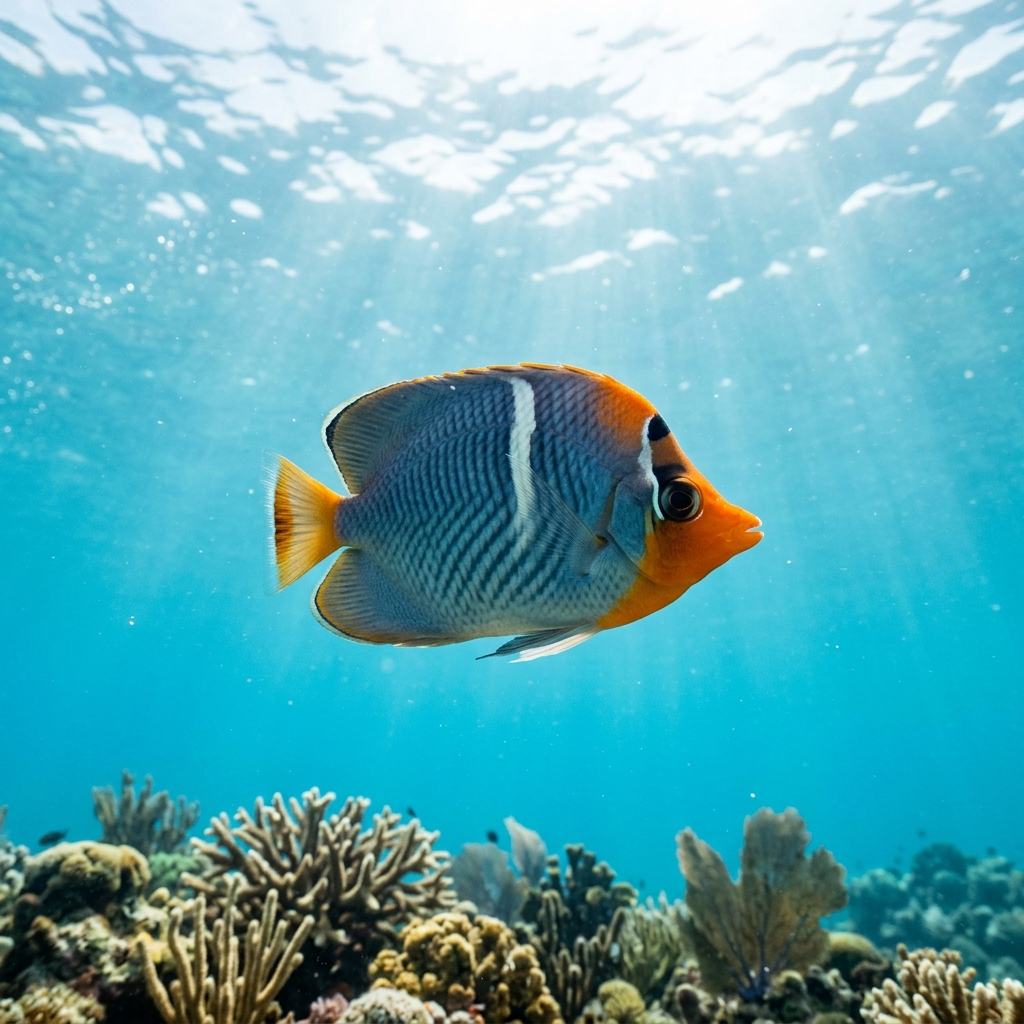
A compact, disc-shaped butterflyfish that stops divers in their tracks with its bold black hood sweeping across the face and upper head, contrasting sharply against an orange-and-white vertically striped body. The rear of the body fades to a deep blue-black patch, giving the fish a tricolour look that is unlike any other butterflyfish in the Red Sea. At typical reef distances it reads as orange-striped with a dark masked face and a dark tail end. No meaningful colour difference exists between sexes.
Typically encountered in pairs patrolling coral-rich areas, where it picks at coral polyps with its small, pointed snout. It tends to stay close to the reef structure and will move away from a diver rather than freeze, so a slow, unhurried approach gives you the best look. Most sightings happen in the shallower reef zones where coral growth is dense.
Hooded Butterflyfish are obligate corallivores, meaning they feed almost exclusively on live coral polyps. This tight dietary dependency makes them a useful indicator of reef health: a healthy population usually signals a reef with good hard-coral cover.
No clear seasonal peak emerges from the data, so it can be treated as a year-round resident. It tolerates a water-temperature range of roughly 23 to 29 °C, which covers Red Sea conditions across all seasons.
Overwhelmingly a Red Sea species in diver records, with Egypt accounting for the vast majority of logged sightings and Sharm el Sheikh and Marsa Alam standing out as the most reliable regions. Saudi Arabia's Red Sea coast around Jeddah also produces regular sightings, so any Red Sea liveaboard or shore-diving itinerary puts you in good territory.
Mapping where Hooded Butterflyfish is logged…
The Red Sea is the place to find them. Sharm el Sheikh and Marsa Alam in Egypt have the strongest diver records, followed by the Jeddah coast in Saudi Arabia. All sightings in the data come from Red Sea sites, making any Red Sea reef dive a viable opportunity.
There is no single peak season in the data. They appear to be year-round residents on Red Sea reefs, present whenever water temperatures sit in their comfortable range of around 23 to 29 °C, which describes the Red Sea across all seasons.
Look for the unmistakable black hood covering the face and upper head, a body striped in orange and white, and a deep blue-black patch towards the tail. No other butterflyfish in the Red Sea combines all three of those colour zones, so a good sighting is almost self-confirming.
Typical size data is not available in our records for this species. In line with most Red Sea butterflyfish, adults are generally small and disc-shaped, fitting comfortably in the palm of a hand.
They are obligate corallivores, feeding almost entirely on live coral polyps. This makes them one of the more specialised butterflyfish and a useful indicator of reef health: where you find them in good numbers, the hard-coral cover is usually in decent shape.
Site and sighting data is aggregated from diver logs, iNaturalist and GBIF. For taxonomy and conservation status: