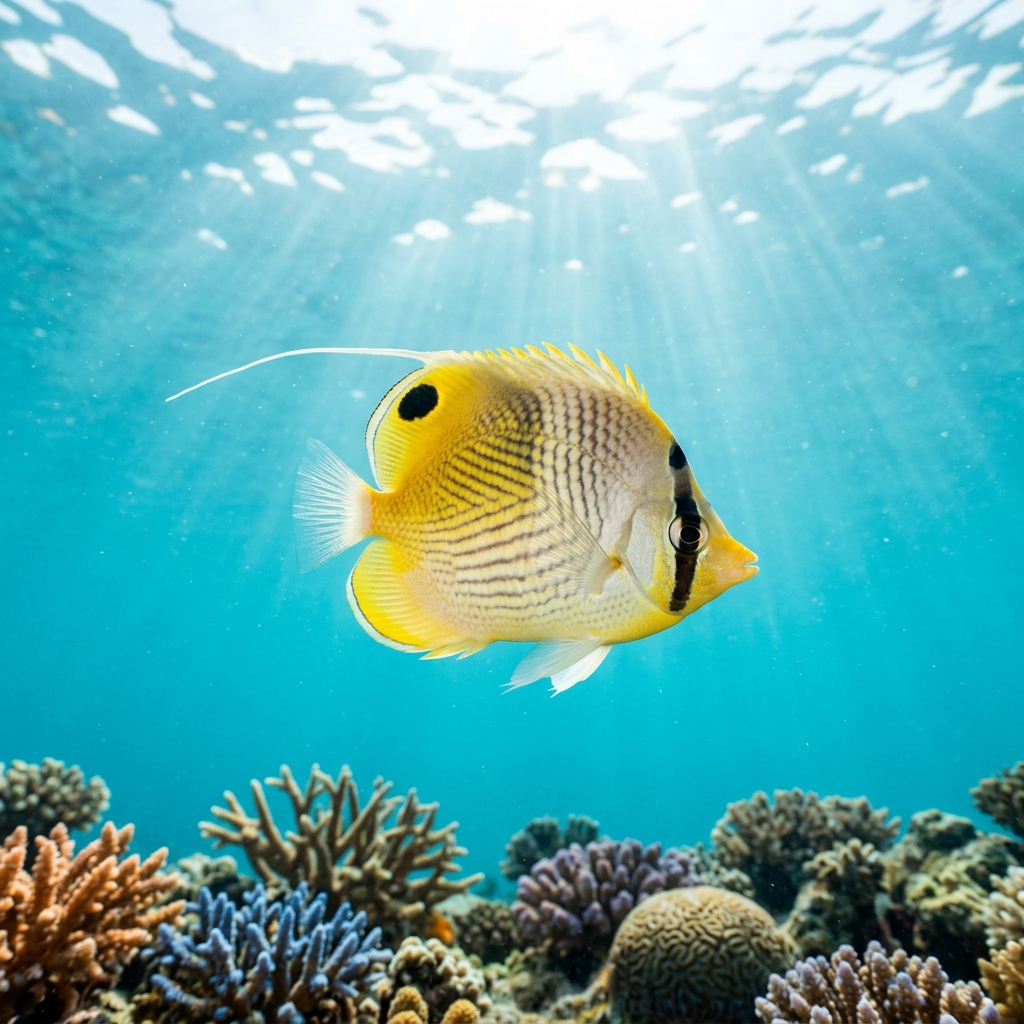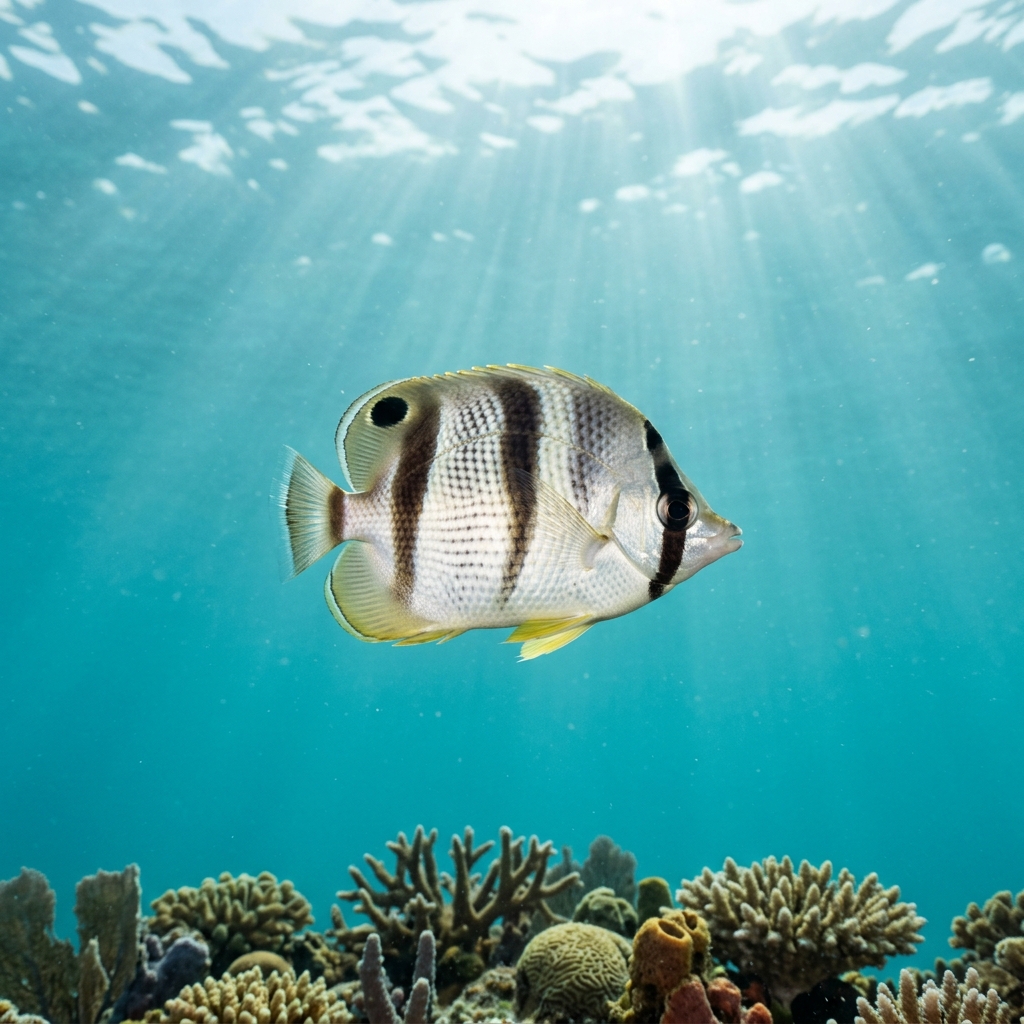
Chaetodon humeralis
Spot the Threebanded Butterflyfish across Mexico's Pacific Coast, Costa Rica's Papagayo Gulf, and the Galapagos. Water temps 22-29°C, mostly uncommon.
Three bold, dark vertical bars on a pale white-to-silver body make this one of the easier Eastern Pacific butterflyfishes to pin down underwater. The first bar runs through the eye, the second crosses the mid-body, and the third sits near the tail, giving the fish a clean, striped look even at a distance. Body shape is the classic disc-like butterflyfish form, deep and laterally compressed. No dramatic false eyespot marks the tail, which helps separate it from several look-alikes.
You will typically encounter it picking at reef surfaces, probing for small invertebrates and coral polyps with its pointed snout. It is usually seen singly or in loose pairs moving methodically over rocky and coral reef structures. It tends to keep a modest distance from divers but does not bolt immediately, giving you a reasonable window for observation if you approach slowly.
This species has a notably disjunct distribution: most of its range sits in the Eastern Pacific, yet a population also lives around the Cape Verde Islands in the Atlantic, an unusual biogeographic split that puzzles researchers studying how butterflyfish colonised such distant regions.
In Northern Hemisphere sites, sightings are recorded from July through May, making it effectively a near-year-round presence with only a slim gap around June. Warmer months (November to March) see the most activity at the few Southern Hemisphere sites logged, consistent with its comfortable temperature range of roughly 22 to 30°C.
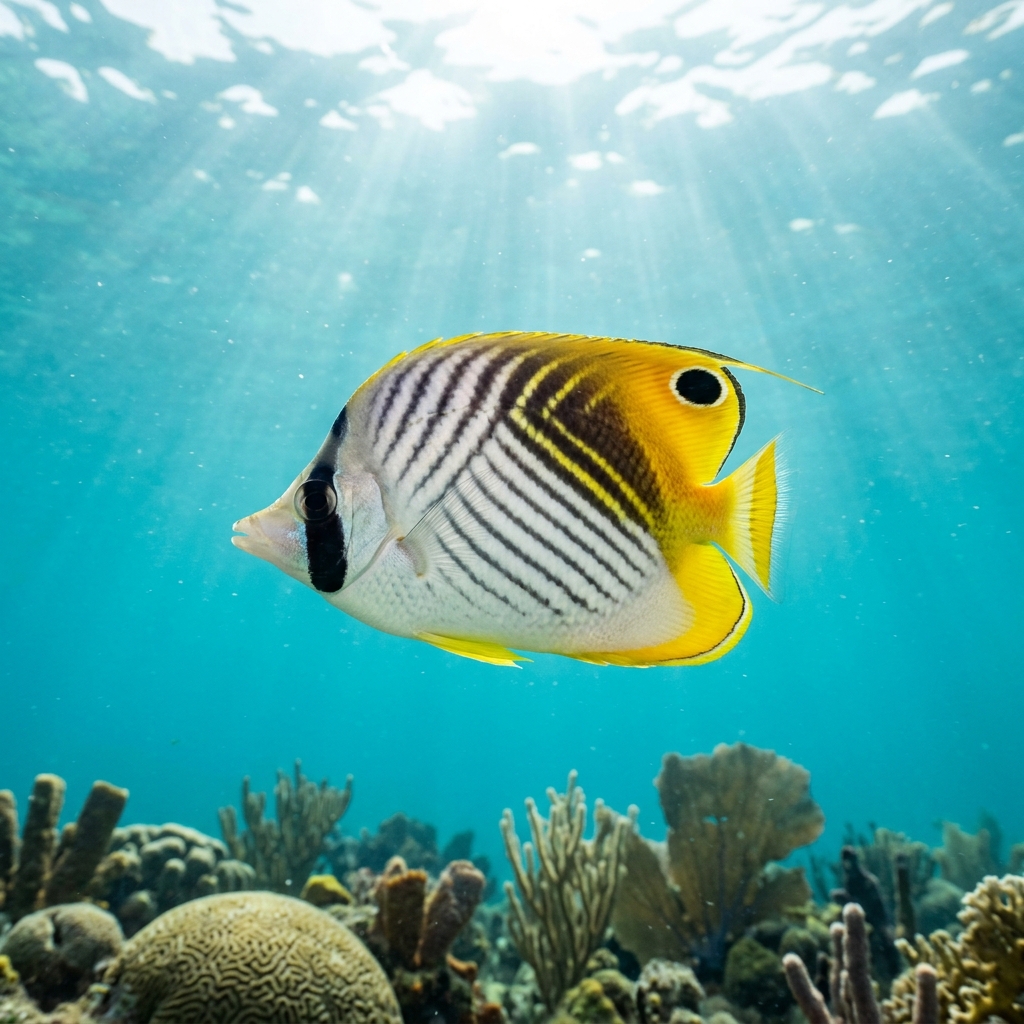
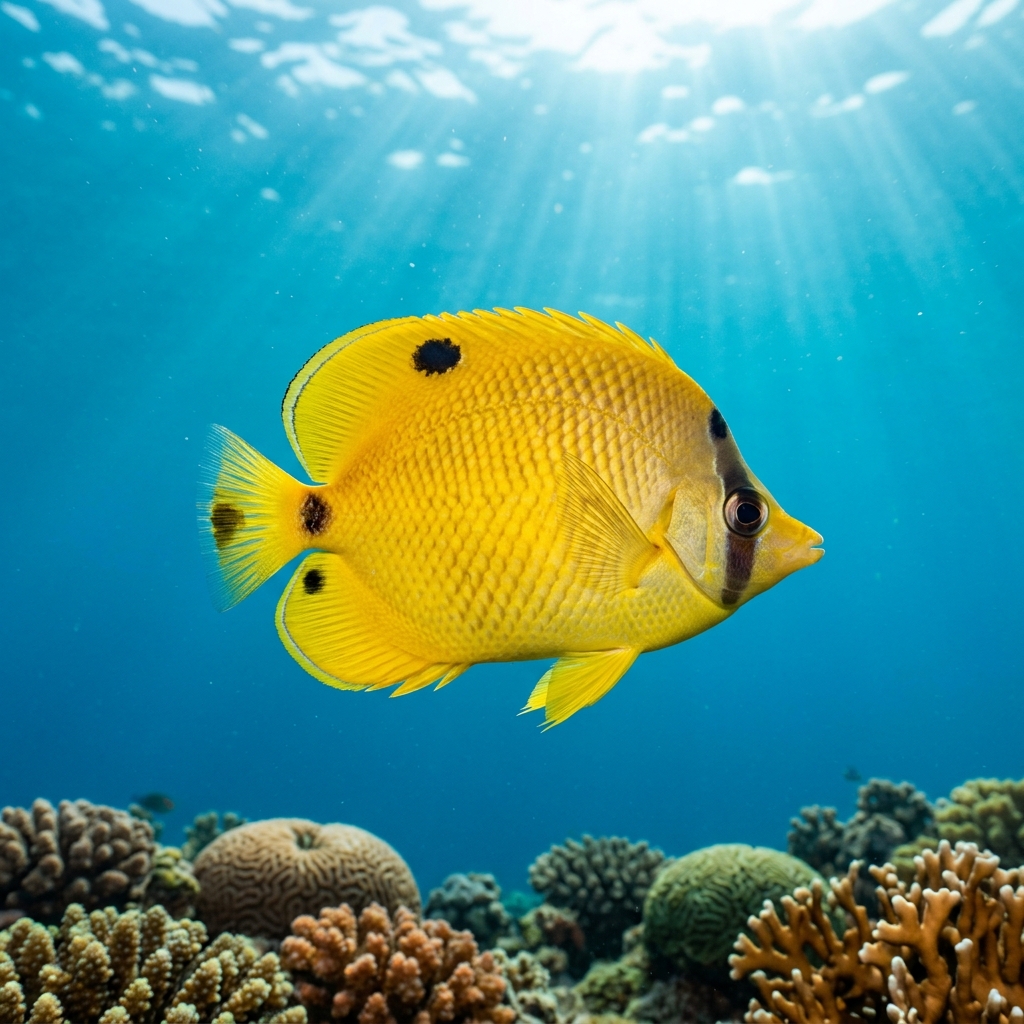
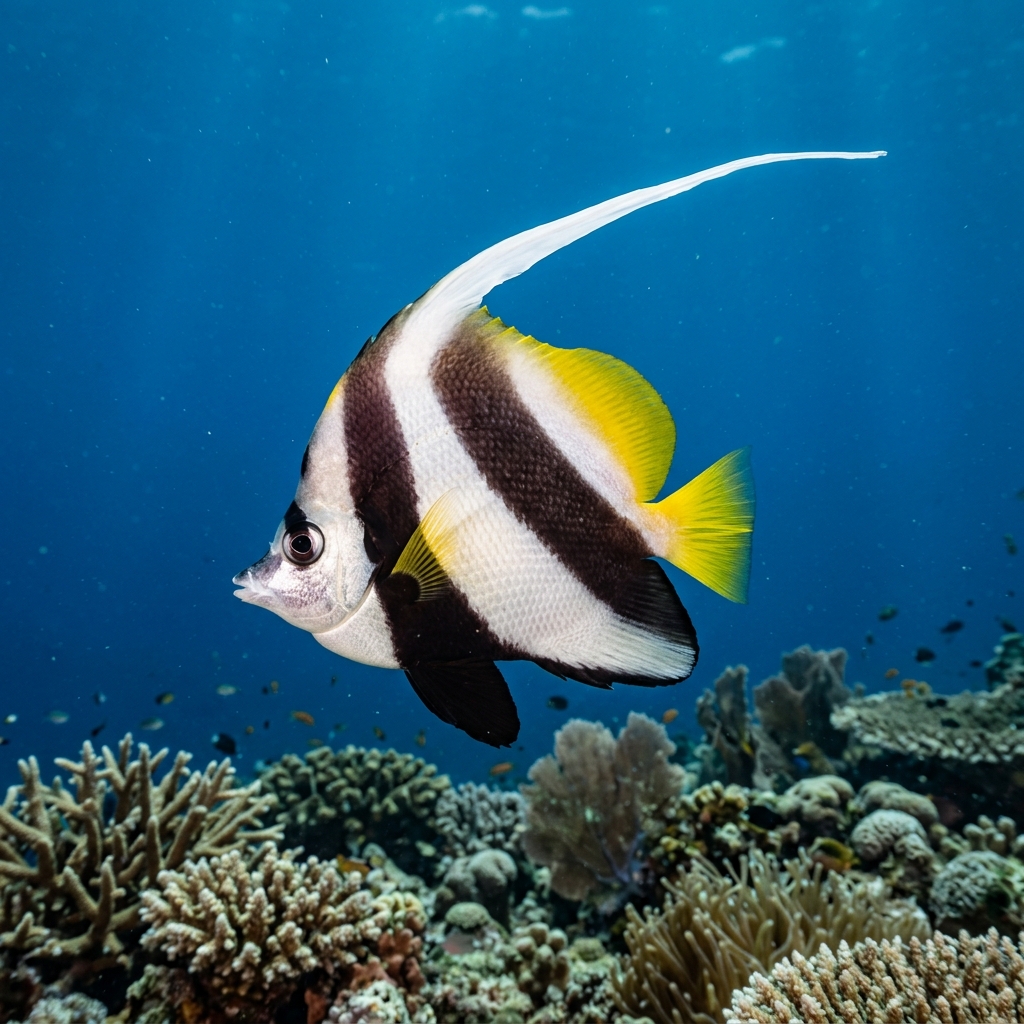
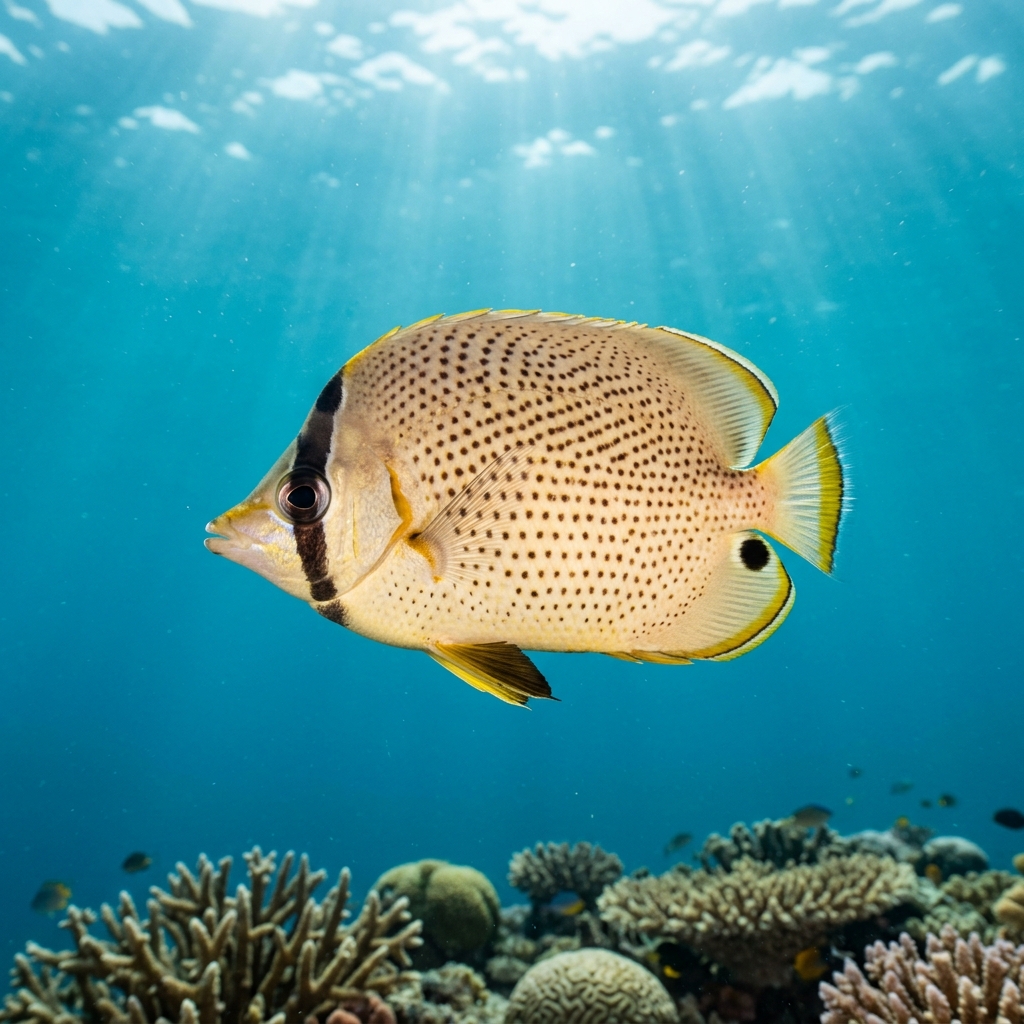
Reef neighbours a diver could mistake it for. Use the identification notes above to tell them apart.
Most commonly logged along Mexico's Pacific Coast and in Baja California, with strong representation in Costa Rica's Papagayo Gulf. The Galapagos Islands and Coiba National Park in Panama are also reliable spots, and a separate Atlantic population turns up regularly around Cape Verde, particularly around São Vicente, Santo Antão, and Sal.
Mapping where Threebanded Butterflyfish is logged…
The best-documented sites are along Mexico's Pacific Coast and Baja California, and in Costa Rica's Papagayo Gulf. The Galapagos Islands, Coiba National Park in Panama, and Cape Verde, especially around São Vicente, Santo Antão, and Sal, are also solid bets.
At Northern Hemisphere sites, sightings concentrate from July through May, so almost any dive trip outside a narrow window in June stands a chance. In the Southern Hemisphere, the November to March period shows the strongest sighting signal. The species tolerates a wide temperature band of about 22 to 30°C, supporting that broad seasonal presence.
Look for three distinct dark vertical bars on a pale body: one through the eye, one across the mid-body, and one near the tail. The absence of a false eyespot on the rear of the body is a useful confirmation, as several similar butterflyfishes carry one. The clean, striped pattern is distinctive among Eastern Pacific reef fish.
Like most butterflyfishes in the family Chaetodontidae, the Threebanded Butterflyfish is a relatively small reef fish. Most individuals you will encounter are compact and disc-shaped, typically in the range of 15 to 19 centimetres, though precise size data for this species in the field is limited.
No. The species is currently assessed as Least Concern on the IUCN Red List, meaning populations are considered stable without major conservation concerns at this time.
Site and sighting data is aggregated from diver logs, iNaturalist and GBIF. For taxonomy and conservation status: