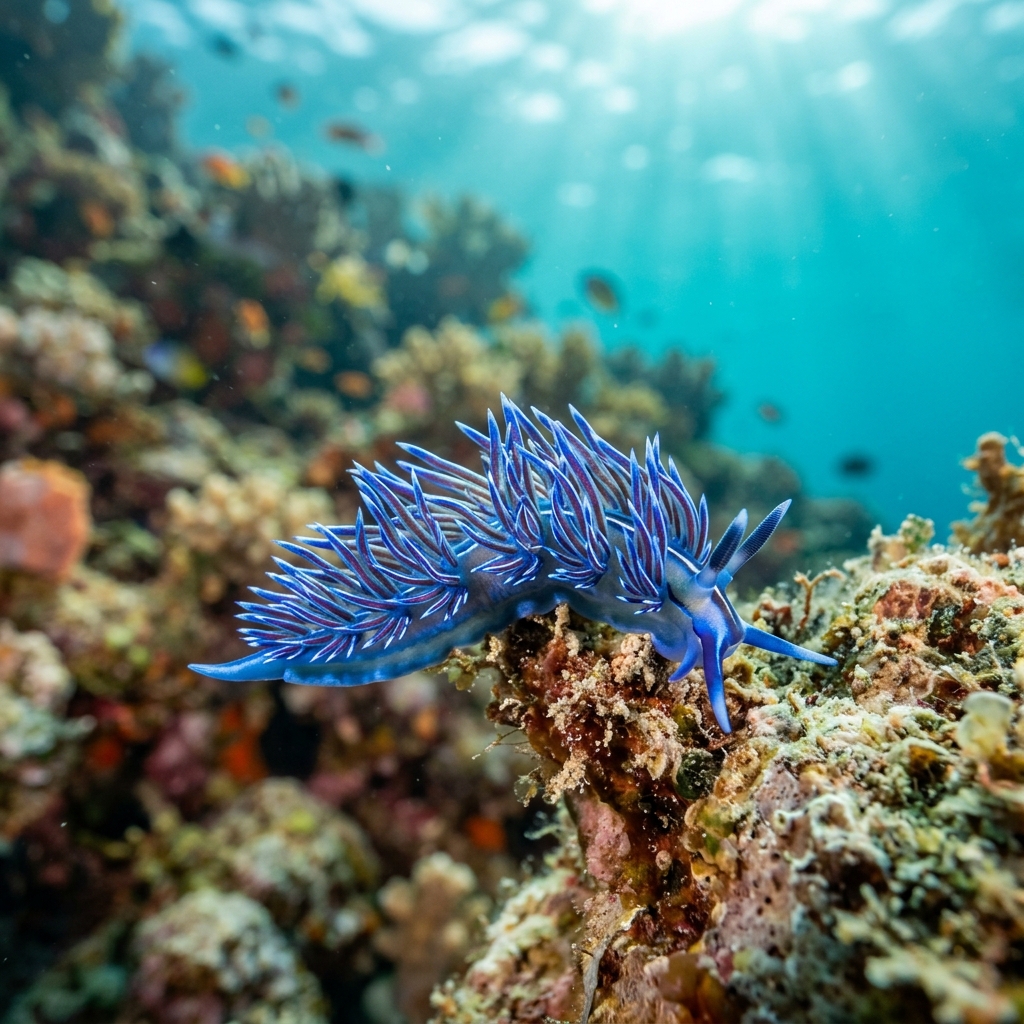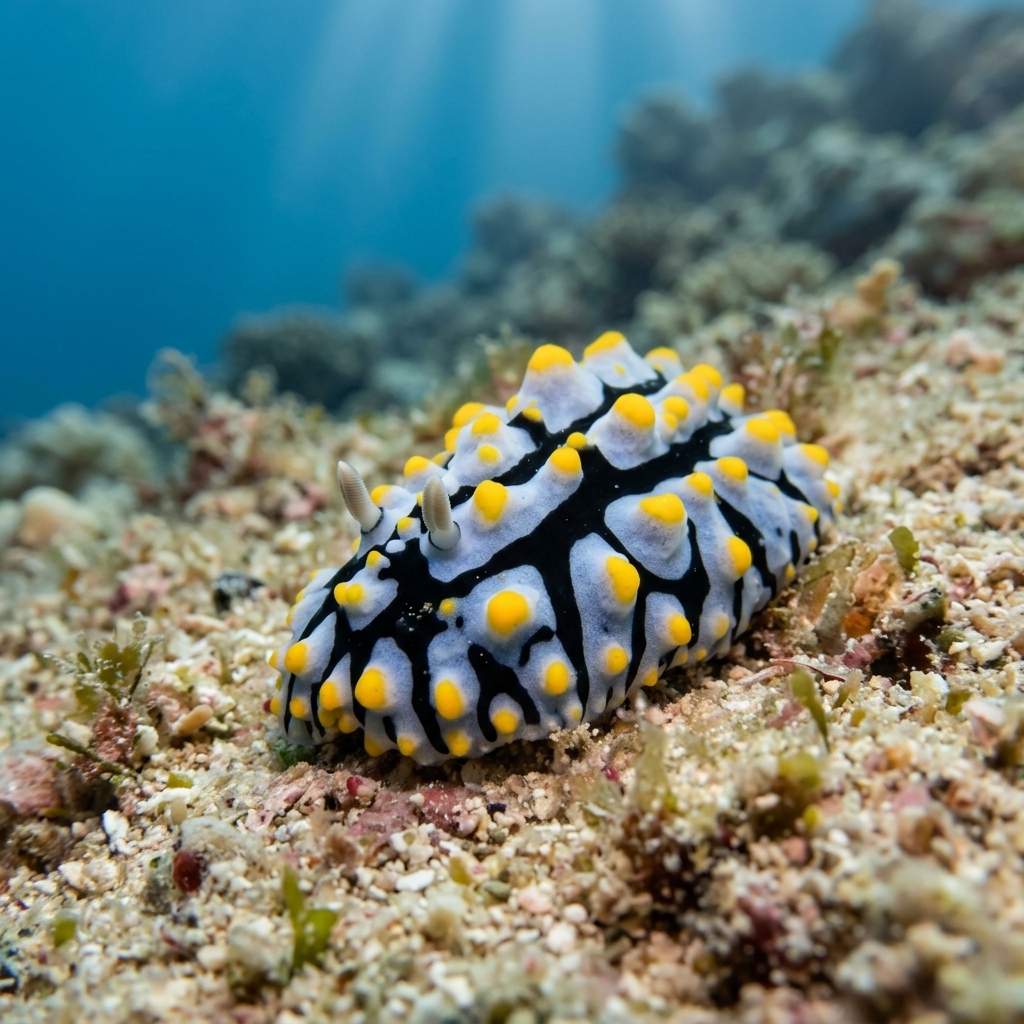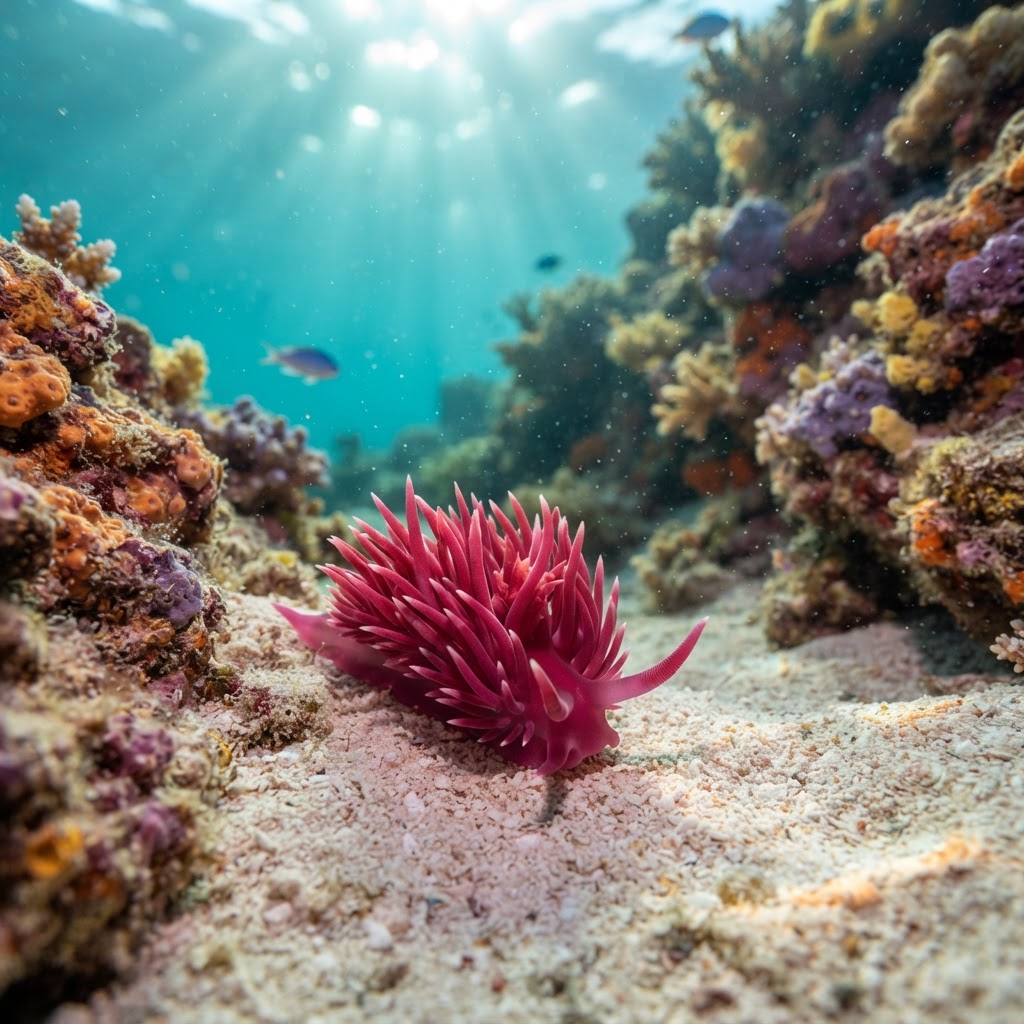
Ceratodoris rosacea
A pink-toned nudibranch logged across California, most reliably in cool 12-19C water on rocky reefs and kelp beds.
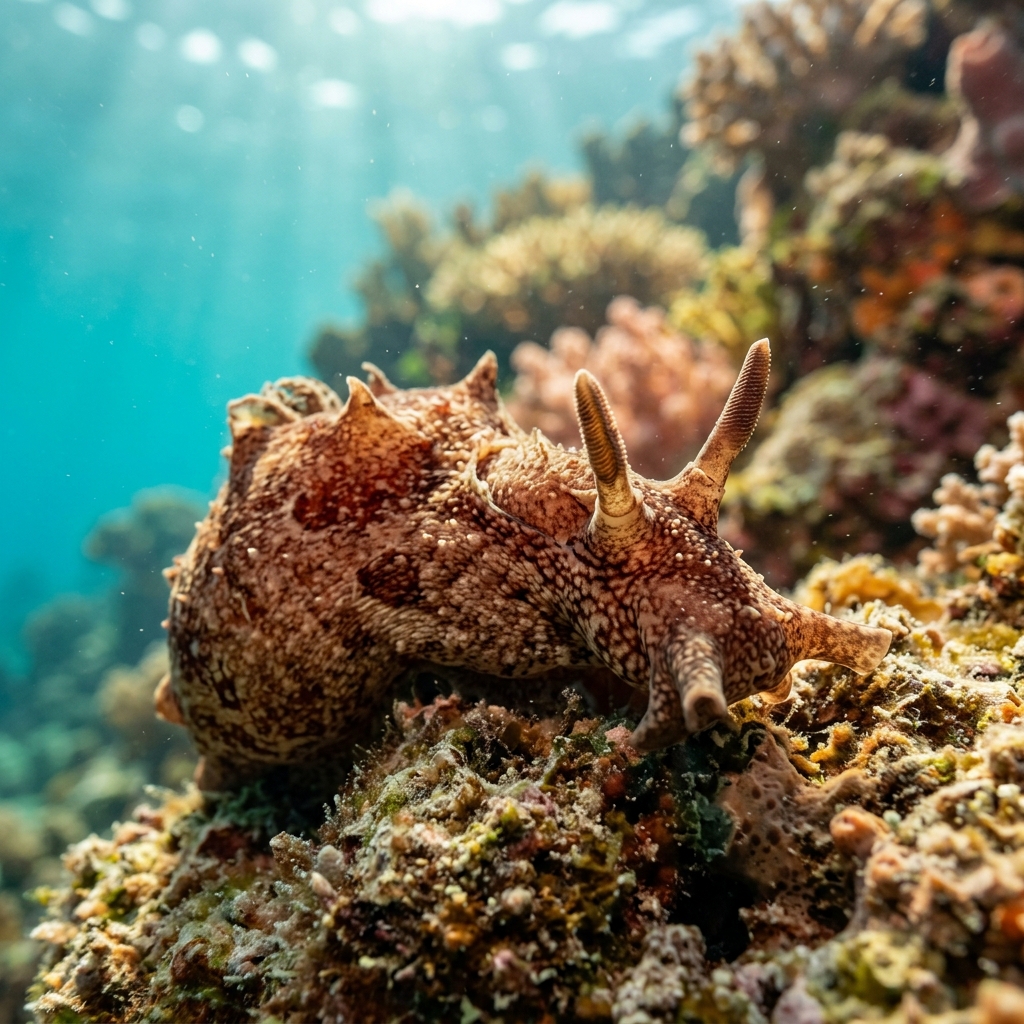
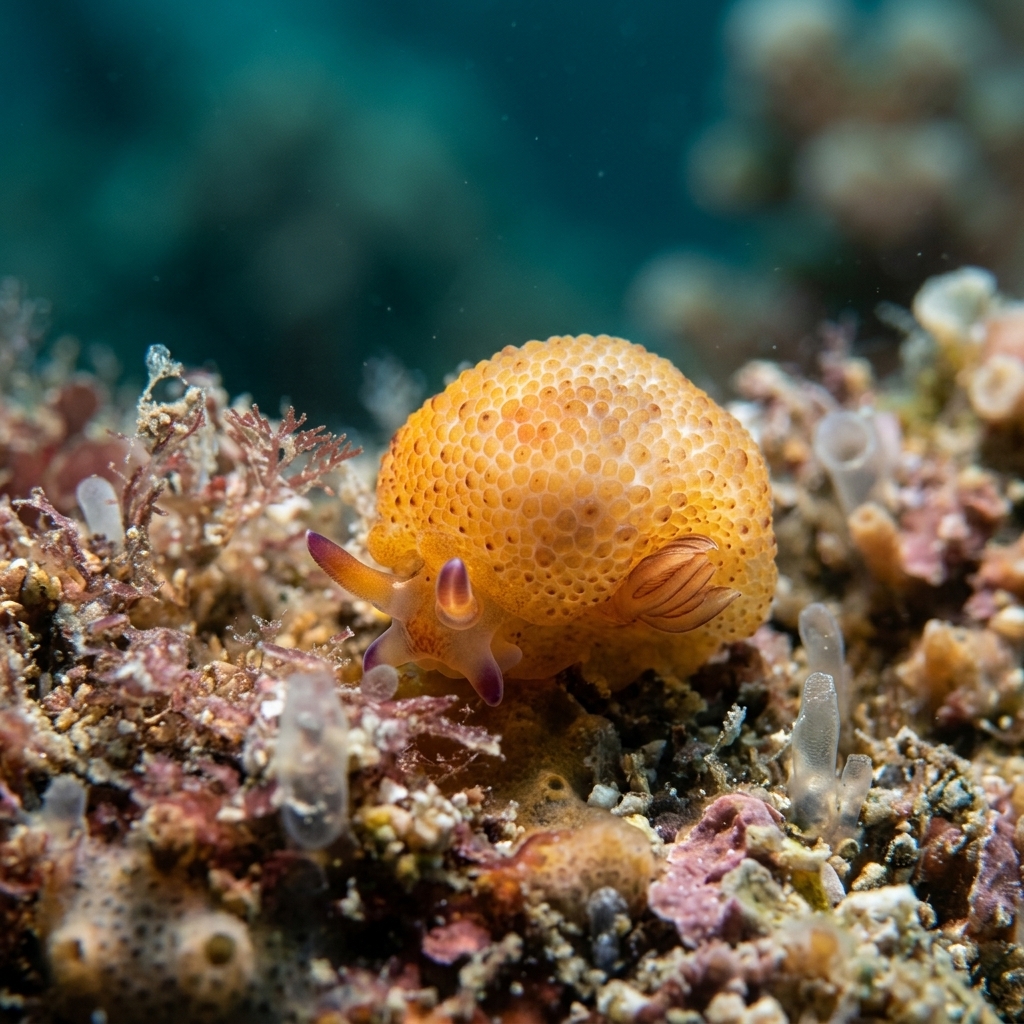
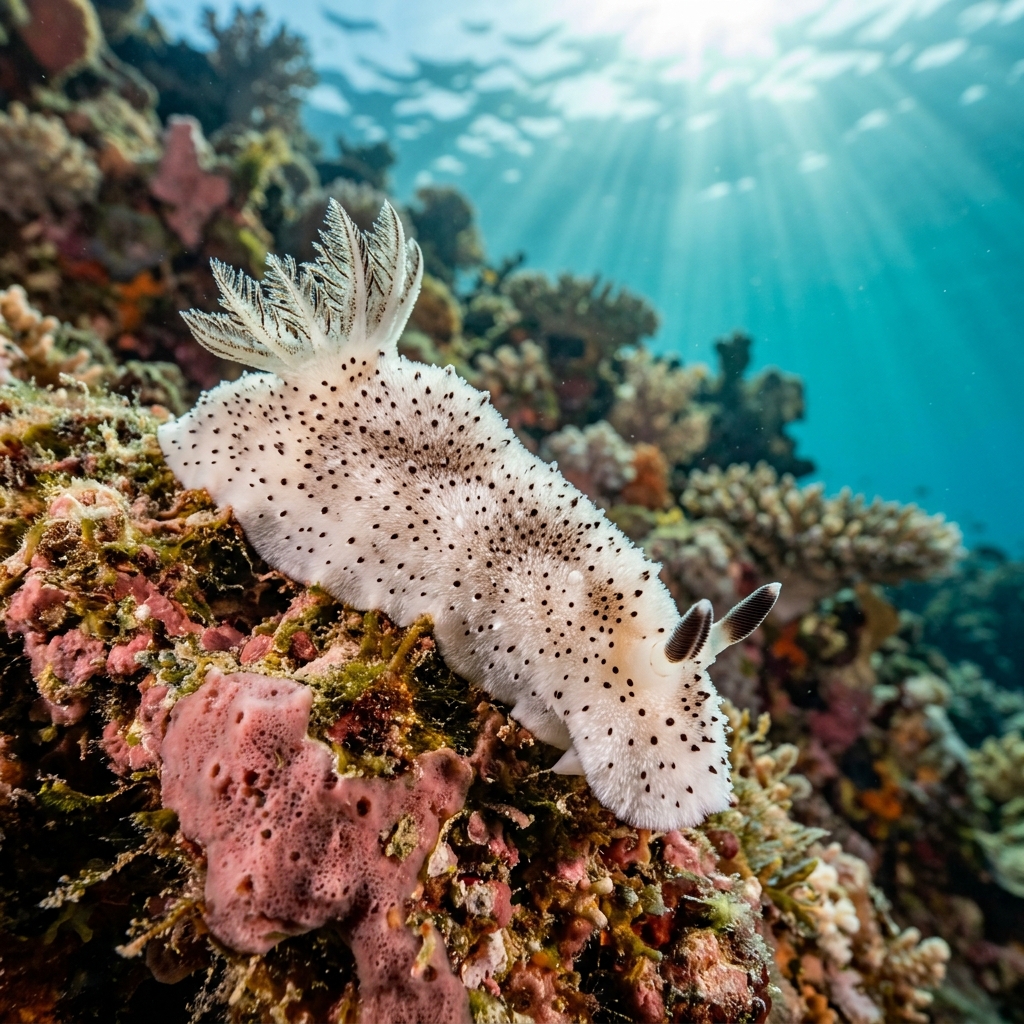
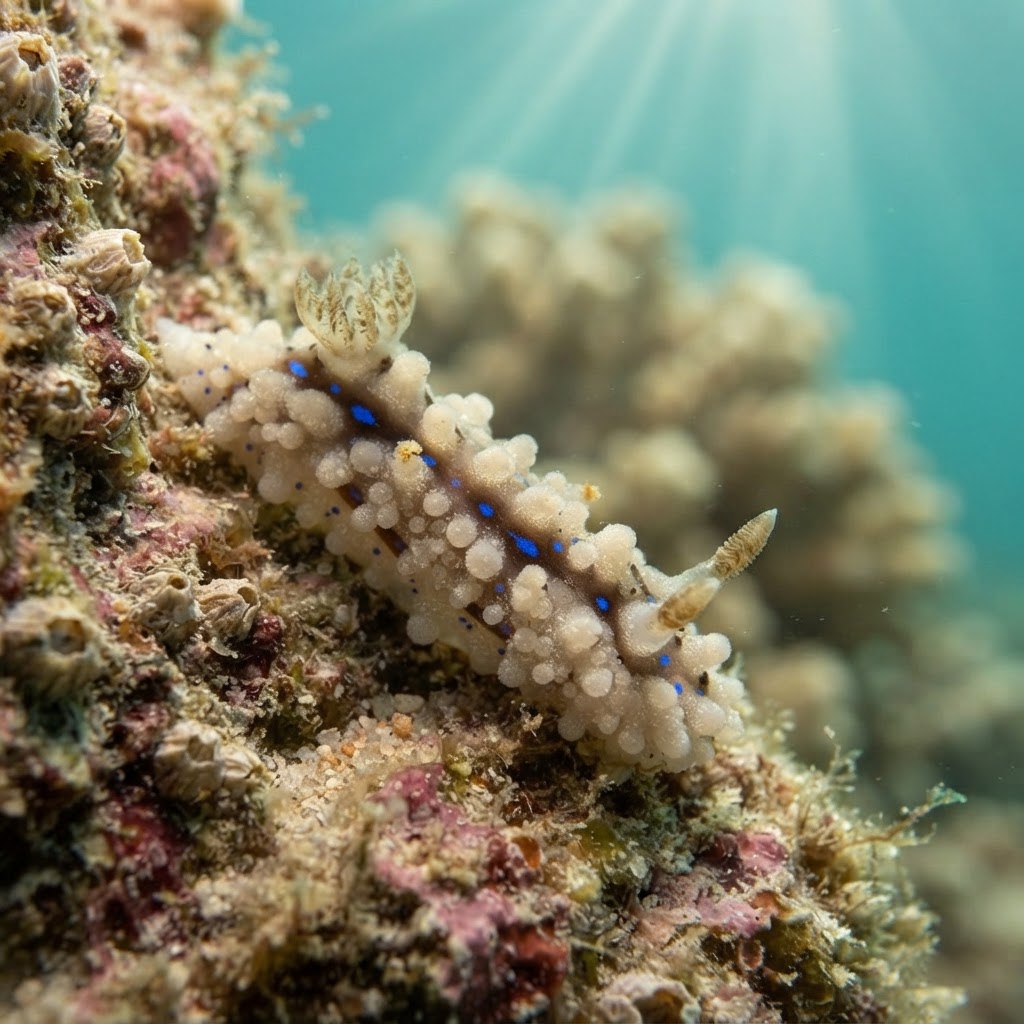
A small, soft-bodied sea slug with a rosy pink to salmon body tone that gives the species its name. Look for a cluster of gill tufts (feathery breathing organs) on the back near the tail and a pair of rhinophores (sensory tentacles) on the head, both often edged in a deeper pink or red. It moves slowly and stays low, so divers typically spot it as a small textured bump on rock or algae rather than anything mobile.
Divers find it grazing slowly across rock faces and reef structure, tucked among algae and sponge growth where it feeds. It shows no reaction to divers beyond continuing to creep along at its own pace, making it an easy subject for close-up photos if you take your time to spot one in the first place. Most logs describe it as an uncommon to occasional find rather than something clustered in one obvious hotspot.
Like other goniodorid nudibranchs, it almost certainly feeds on sponges or bryozoans, absorbing pigments and chemical defences from its prey into its own skin, which is part of why its colouring reads so distinctly pink underwater.
Sightings show no detected seasonal pattern, and the observed water temperature range of 12.3 to 18.6C fits California's cool coastal water for most of the year, so it is best treated as a year-round find. Divers should still expect the cooler, murkier winter and spring conditions typical of the region rather than a specific bloom month.
Almost every logged sighting comes from California, where it turns up on rocky reef and kelp-bed dive sites along the coast, with a much smaller number of records from Baja California in Mexico. This is very much a California speciality on current data, so divers chasing it should plan trips there first.
Mapping where Hopkins' Rose Nudibranch is logged…
California is by far the strongest region for this species, with sites scattered along the coast reporting it at uncommon to common frequency. A handful of sites in Baja California, Mexico, also log it, but California is the reliable place to look.
There is no clear seasonal spike in the data, and its comfortable water-temperature range of roughly 12 to 19C covers much of California's diving calendar, so it is reasonable to look for it year-round.
Check for a small, slow-moving slug with an overall pink or salmon body tone, a tuft of feathery gills on the back, and a pair of rhinophores on the head, both often edged in deeper pink. It stays low on rock and algae rather than swimming.
Exact size figures are not well documented for this species, but like most goniodorid nudibranchs it is a small animal, typically a few centimetres long, best spotted with a close, slow search rather than from a distance.
No. It is not considered dangerous to divers and has no known sting or venom of concern; it simply grazes slowly on the reef and can be observed and photographed up close.
It most likely feeds on sponges or bryozoans, in keeping with other members of the goniodorid nudibranch family, and may take on some of its pink colouring from compounds in that prey.
Site and sighting data is aggregated from diver logs, iNaturalist and GBIF. For taxonomy and conservation status:
Light-spotted Aegires
3,168 sites