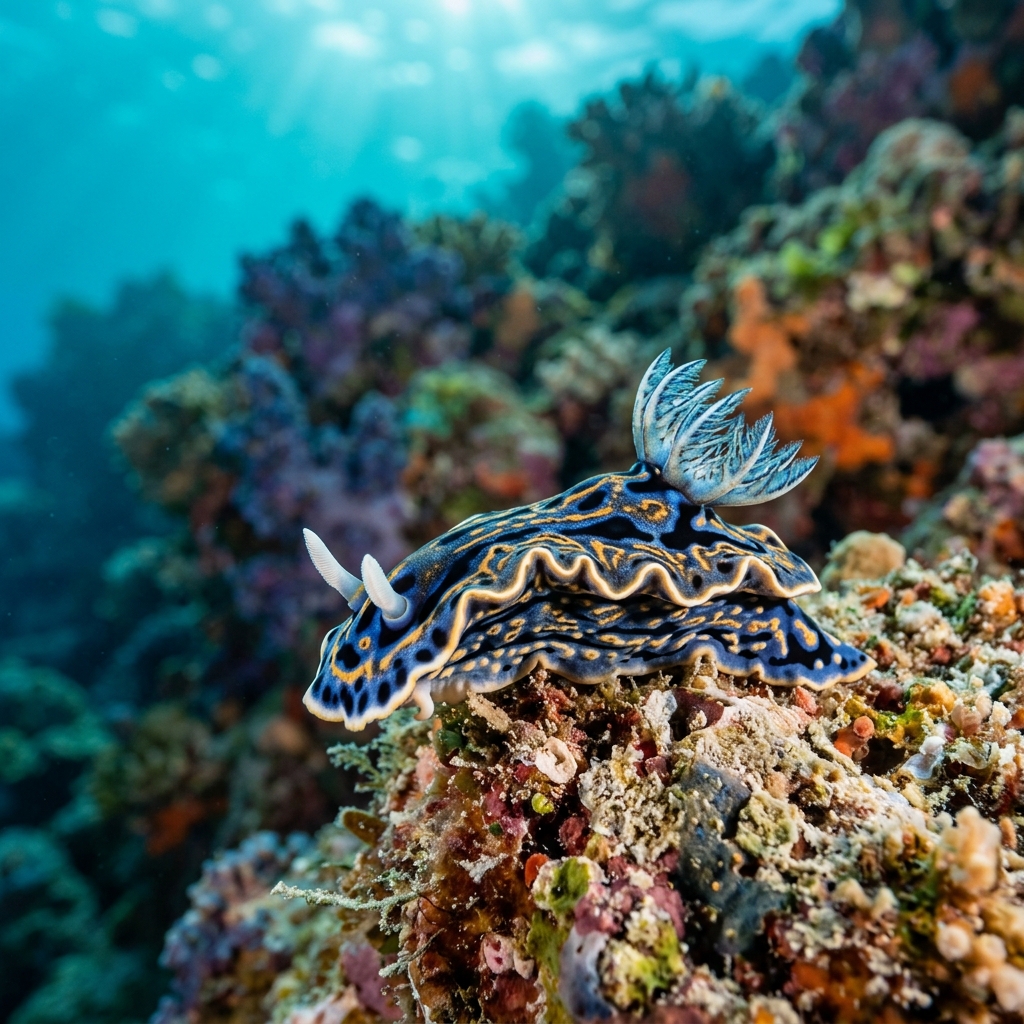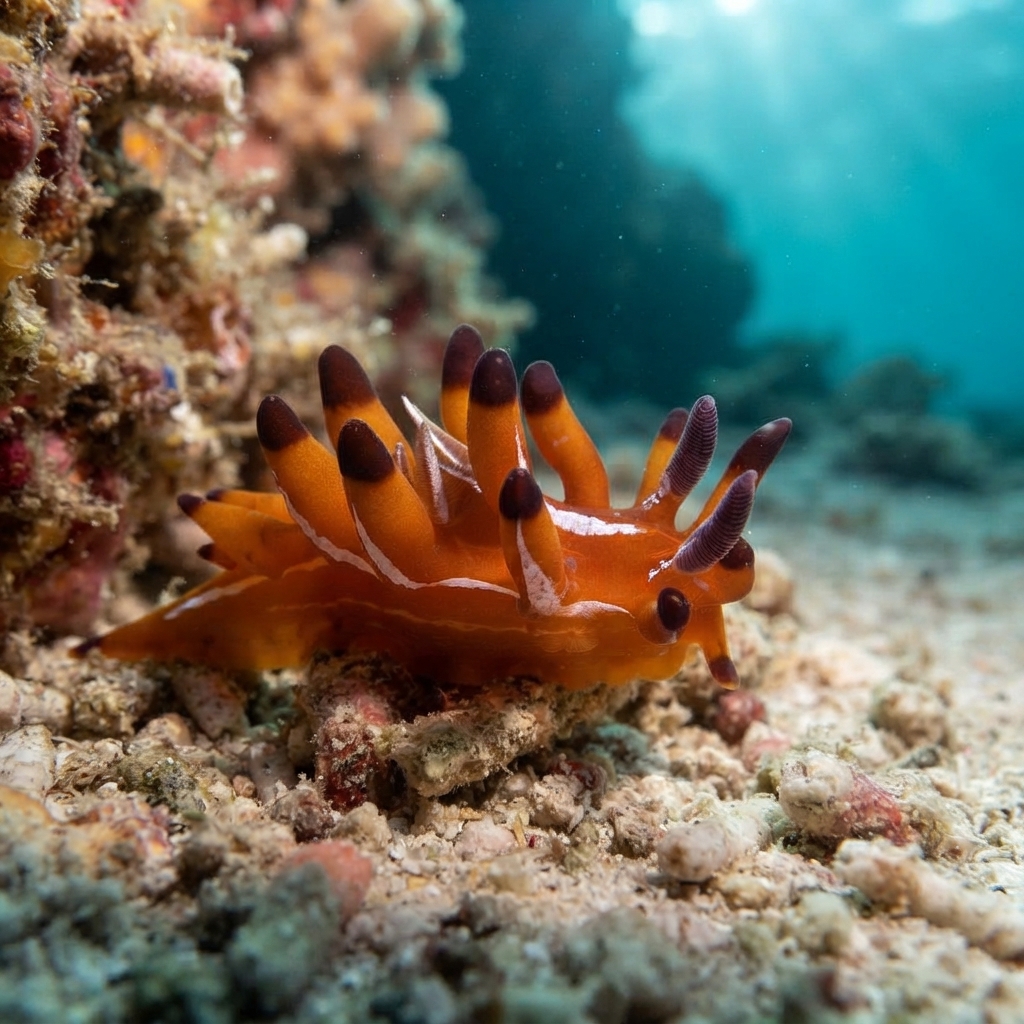
Ceratodoris mellita
A small, uncommon nudibranch logged mainly in New South Wales, Australia, in water between 18.5 and 24.5 C, most of the year.
A small goniodorid nudibranch best picked out by eye at close range against reef rubble or sponge, rather than spotted from a distance. Look for the soft, warty (tuberculate) mantle typical of the goniodorid family and a pair of visible rhinophores (the small sensory stalks on the head) as the animal grazes slowly over the substrate. There is no confirmed size data for this species, so treat any individual you find as worth a careful macro photo for later ID confirmation.
Divers find it moving slowly across reef surfaces and sponge patches, doing the unhurried grazing typical of small dorid nudibranchs rather than anything dramatic. It shows no reaction to divers beyond continuing its crawl, so a slow, close approach with a torch or macro lens is the best way to get a good look. Most logs come from the same handful of NSW sites, suggesting it favours particular sponge or rubble patches over open sand or reef flat.
It sits in the goniodorididae family, most of which feed on specific sponges or bryozoans, so finding one is usually a sign there is a matching food source nearby worth scanning for more.
Sightings show no detectable seasonal pattern, so treat it as a year-round possibility on NSW reefs rather than a species tied to a particular month. It has been recorded in water from 18.5 to 24.5 C, a range NSW sites pass through across most of the year.
Every logged sighting of this nudibranch comes from Australia, with New South Wales the clear stronghold and the only region currently returning records. If you are diving temperate NSW reefs and searching sponge-encrusted rock and rubble at a slow pace, this is where your odds are best.
Mapping where Ceratodoris mellita is logged…
All confirmed sightings come from New South Wales, Australia, which is currently the only known region for this nudibranch. It turns up as an uncommon to rare find at a handful of NSW dive sites, so it is one to search for rather than expect.
There is no clear seasonal pattern in the sightings, so it can turn up year-round on NSW reefs. Recorded water temperatures range from 18.5 to 24.5 C, covering most of the region's diving calendar.
Look for a small goniodorid nudibranch with a warty mantle texture and visible rhinophores, moving slowly over rubble or sponge-covered substrate. There is no confirmed size range published, so photograph any candidate closely for later confirmation rather than relying on size alone.
No verified size data exists for this species yet. Like most goniodorid nudibranchs it is likely a small, easily overlooked animal best found by scanning sponge patches closely rather than looking for size.
No. It is not known to pose any danger to divers, and like other small nudibranchs it has no interest in interacting with anyone beyond continuing to graze.
Its conservation status is currently not evaluated, meaning there isn't enough data for a formal listing. There's no indication divers need to change their behaviour around it beyond standard no-touch reef etiquette.
Site and sighting data is aggregated from diver logs, iNaturalist and GBIF. For taxonomy and conservation status:
Blue Dragon
3,163 sites