Ceratodoris atkinsonorum
A New South Wales nudibranch find, logged year-round in waters of 17 to 24 C. Here's how to spot it on the reef.
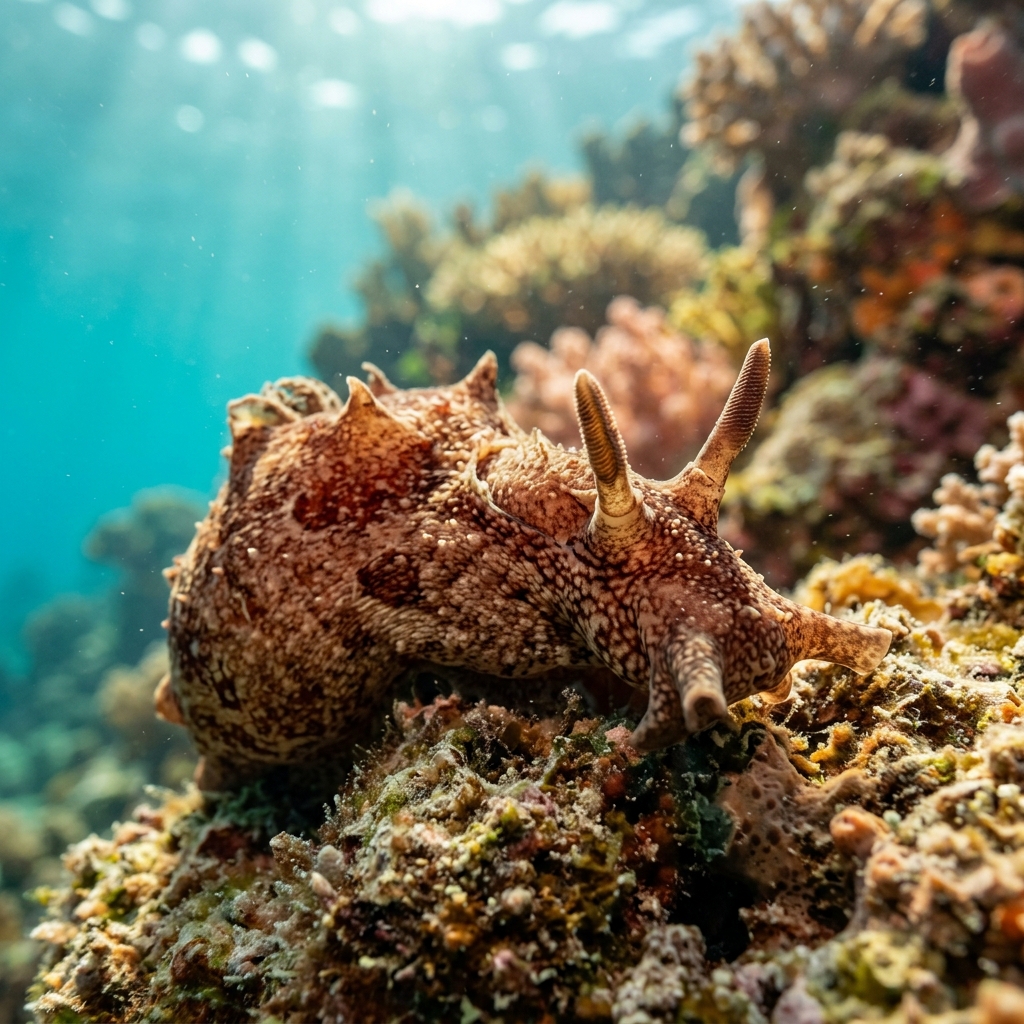
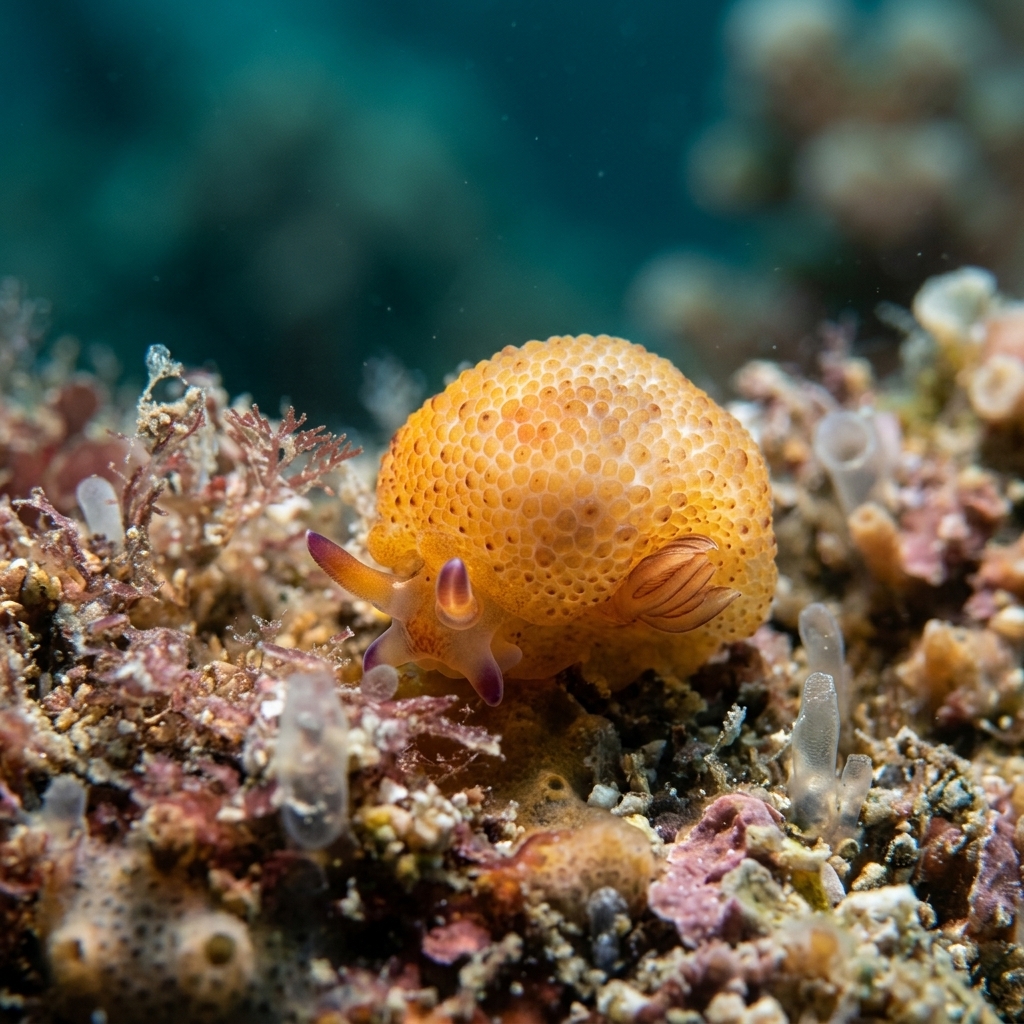
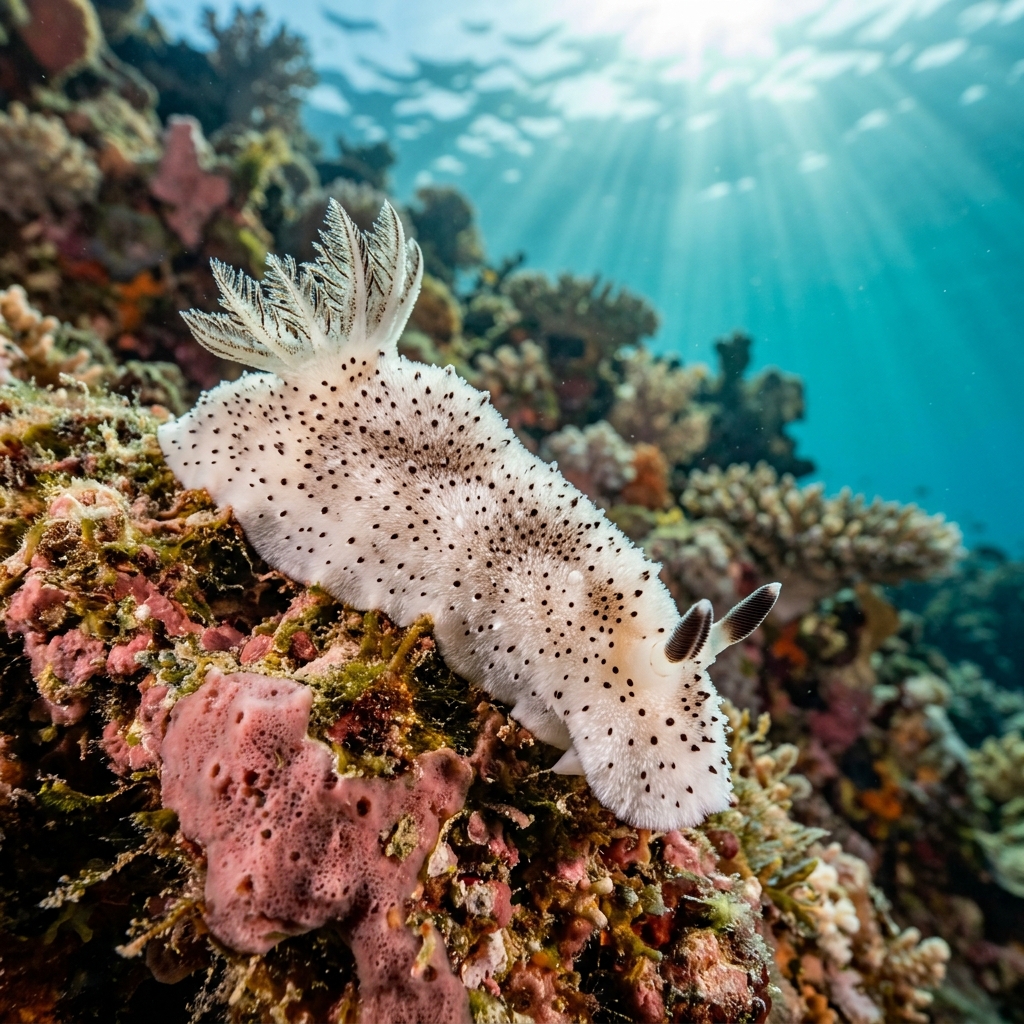
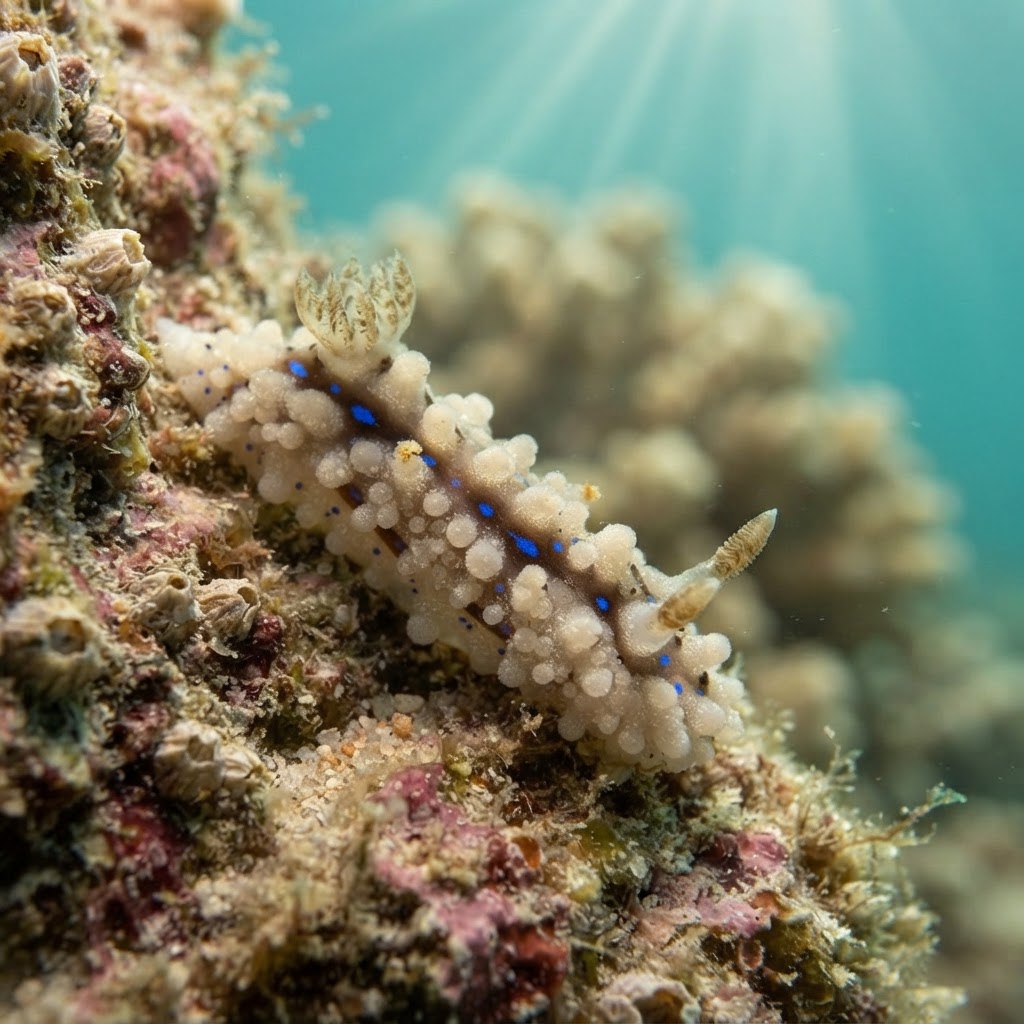
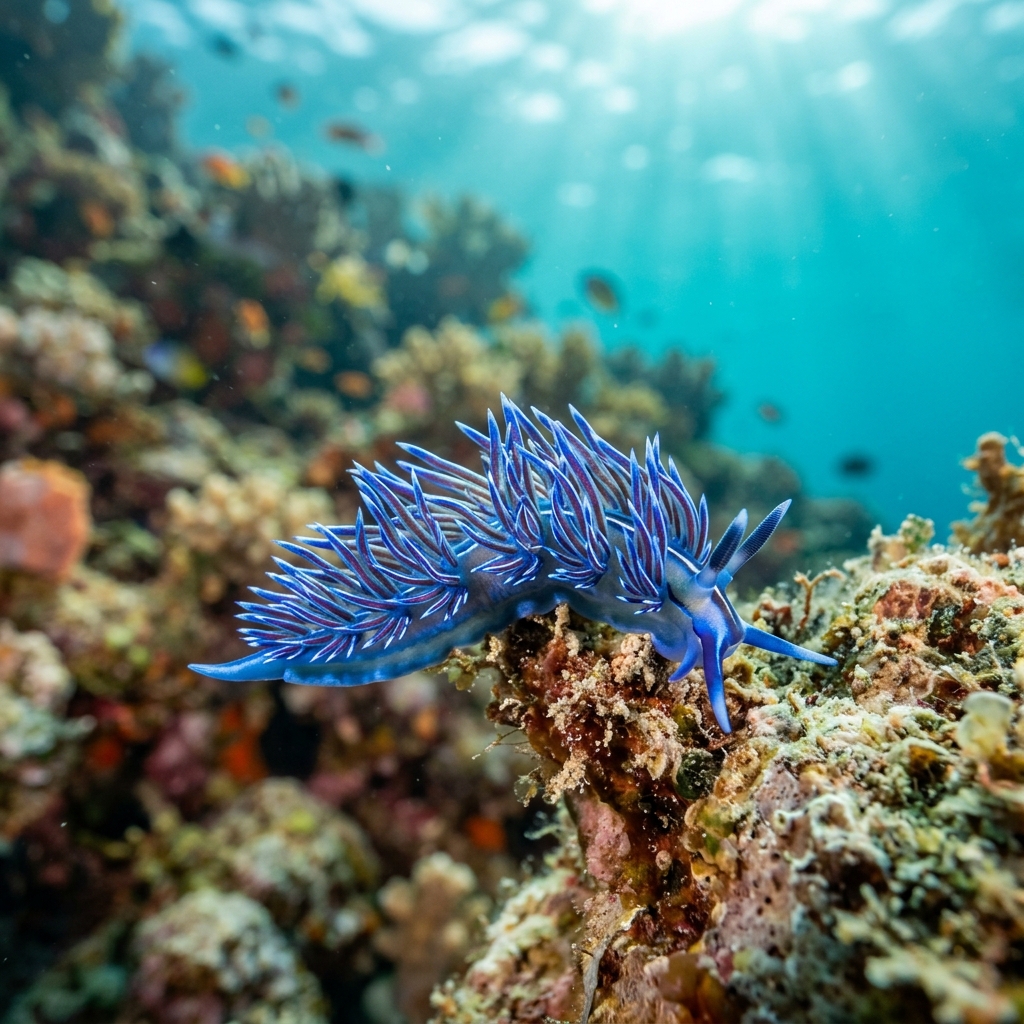
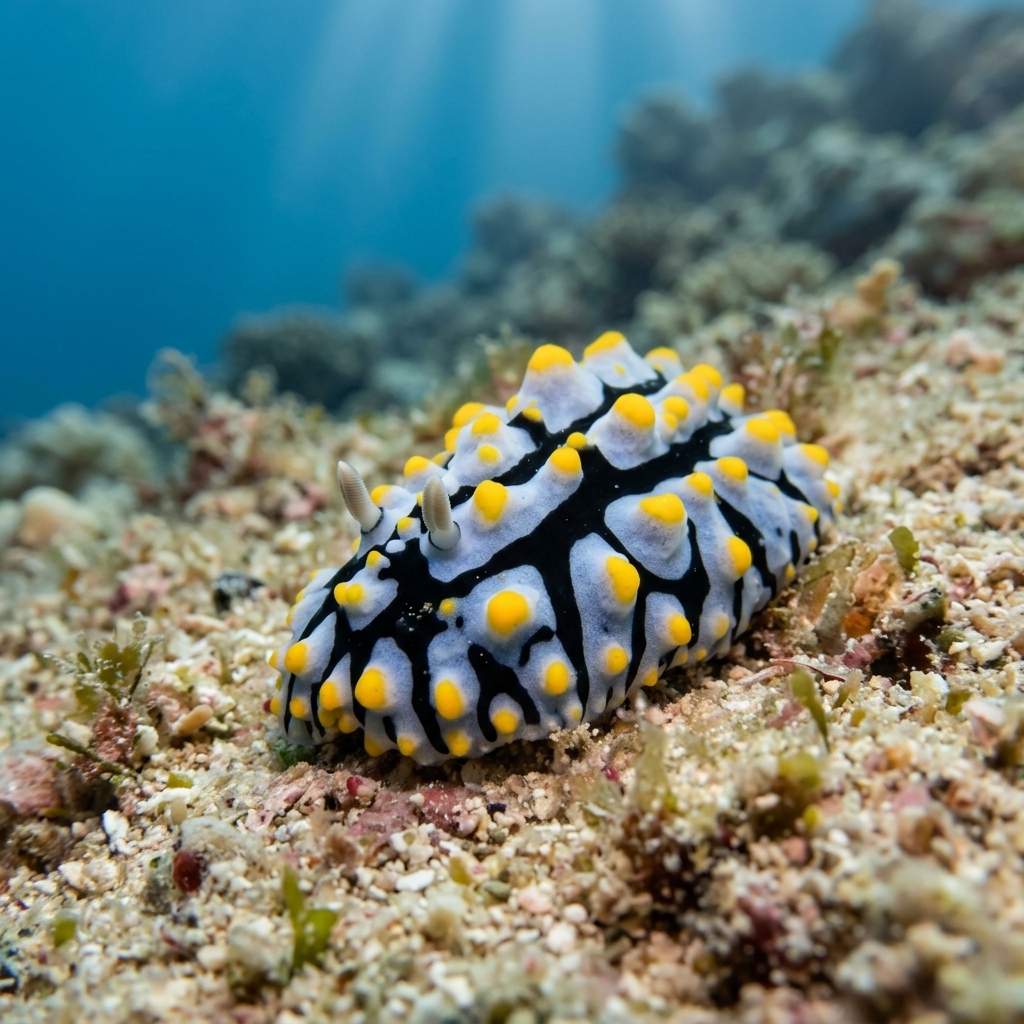
A small, soft-bodied nudibranch with the tubercle-studded mantle typical of the goniodorididae family, giving it a slightly bumpy or textured outline rather than a smooth back. Look for a pair of raised, often curled rhinophores (sensory tentacles) at the front of the body, a key feature this group uses to key in on chemical cues from prey. Size in the water tends toward the small end for nudibranchs, so divers usually spot it while working slowly along rock and rubble rather than mid-water.
Divers typically find it sitting still or moving slowly over rock and rubble surfaces, doing the grazing that goniodorid nudibranchs are known for rather than swimming or fleeing when approached. It shows no reaction to divers beyond simply continuing what it is doing, so a careful eye and a torch for shaded crevices are more useful than any change in approach.
Like other members of the goniodorididae family, it almost certainly feeds on encrusting invertebrates such as bryozoans or small sponges, using specialised mouthparts to target prey that most reef grazers ignore.
Sightings are spread across the year with no clear seasonal spike, so treat it as a year-round find in New South Wales waters. The observed temperature range of 17.1 to 23.9 C spans much of the region's diving calendar, from cooler winter conditions to warmer summer water.
Every logged sighting so far comes from New South Wales, Australia, making it the place to look for this species. Divers have found it across seven different sites in the region, with a mix of uncommon and common ratings depending on the site, so it rewards a slow, methodical search rather than a quick reef scan.
Mapping where Atkinsons' Ceratodoris is logged…
All confirmed sightings so far are from New South Wales, Australia, spread across seven different dive sites in the region.
There's no detected seasonal pattern, so it can turn up any time of year in New South Wales waters, which range from about 17 to 24 C.
Look for a small, tubercle-textured nudibranch with curled rhinophores at the front of the body, typically found sitting on rock or rubble surfaces rather than out in the open water.
No, it poses no danger to divers. Like most nudibranchs, it has no means of threatening a diver and simply continues grazing when approached.
As a member of the goniodorididae family, it most likely grazes on small encrusting invertebrates like bryozoans, a common food source for this nudibranch group.
Site and sighting data is aggregated from diver logs, iNaturalist and GBIF. For taxonomy and conservation status:
Light-spotted Aegires
3,168 sites