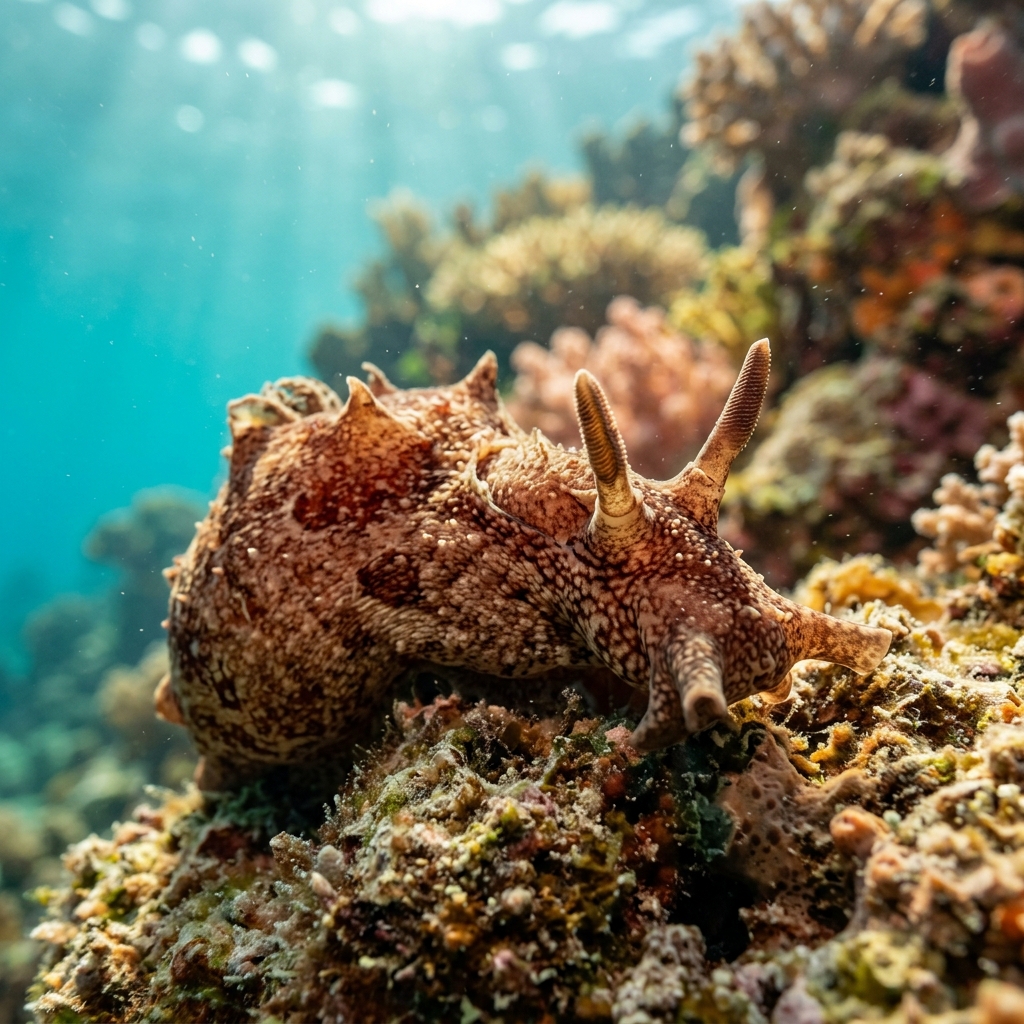
Halgerda carlsoni
A white, ridge-backed nudibranch turning up on Green Island and Longdong reefs in Taiwan's 24 to 30C waters year-round.
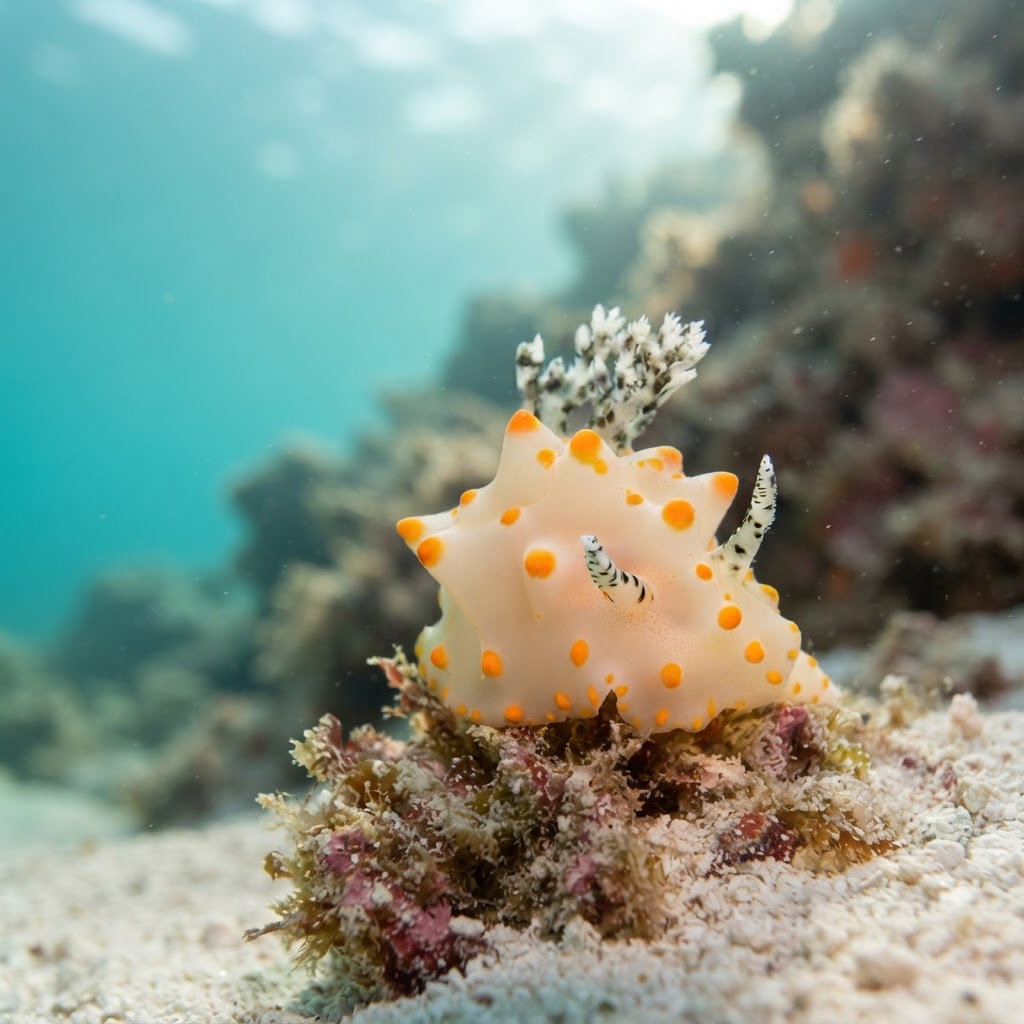
A small nudibranch, around 4 cm, with a white to cream body criss-crossed by raised ridges that give it a rough, tuberculate look rather than smooth skin. The ridge tips and rhinophores (the paired sensory horns on its head) are typically tipped in orange or yellow, and the gill cluster at the rear sits in a similar tone. Look for it moving slowly across hard substrate rather than in open sand, where the ridged pattern stands out against a plain background.
Divers find it grazing slowly over rock and rubble surfaces, usually solitary and easy to miss unless you're doing a close, deliberate scan of the substrate. It shows no reaction to divers beyond its normal unhurried pace, so a steady hand and a macro lens are all you need for a good look.
Like other Halgerda species, it likely feeds on sponges, using the raised ridges on its back as textural camouflage against encrusting sponge growth rather than as a warning display.
No clear seasonal pattern shows up in the sightings, and with water temperatures ranging from a comfortable 23.6 to 29.9C, conditions suit it across the year. Plan around Taiwan's general dive season rather than chasing a specific month for this species.
Every logged sighting so far comes from Taiwan, with Green Island the most productive site by a clear margin, followed by Longdong and Xiaoliuqiu. If you're diving Taiwan's east coast or offshore islands and searching rubble and rocky reef sections, this is one of the nudibranchs worth slowing down for.
Mapping where Carlson's Halgerda is logged…
Sightings are concentrated in Taiwan, particularly around Green Island, with further records from Longdong and Xiaoliuqiu. It's a species worth watching for on any rocky or rubble-strewn reef section in this region.
There's no detected season, so sightings happen year-round. Water temperatures in its known range sit between roughly 24 and 30C, comfortable for it across the diving calendar.
Look for a small white nudibranch, about 4 cm long, with a ridged rather than smooth back and orange or yellow tips on the tubercles and rhinophores. It moves slowly over hard substrate, which makes the raised texture easier to spot.
They reach around 4 cm in length, making them a macro subject best appreciated with a close-focus lens rather than something you'll spot from a distance.
No, they pose no danger to divers. Like most nudibranchs, they rely on chemical defences from their diet rather than any physical threat, so they're entirely safe to observe and photograph.
Site and sighting data is aggregated from diver logs, iNaturalist and GBIF. For taxonomy and conservation status:
Light-spotted Aegires
3,168 sites