Candiella odhneri
An uncommon find along Brittany and the Lisbon Coast, this small nudibranch turns up year-round in cool Atlantic water from 12 to 19 C.
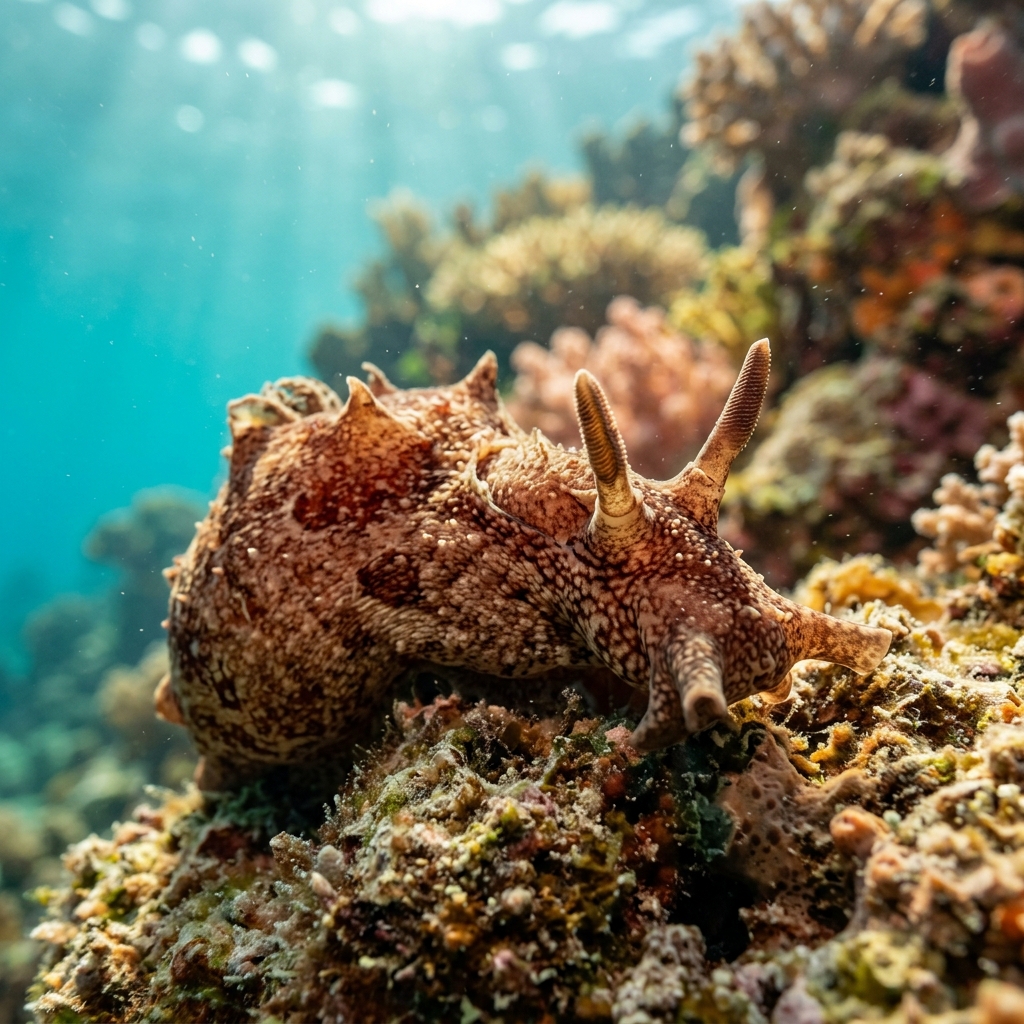
A small, soft-bodied sea slug with a mottled, tuberculate (bumpy-textured) surface that helps it blend into the rocky, algae-covered ground it crawls over. Colouring runs toward muted browns and greys rather than the bright reds or purples divers associate with showier nudibranchs, which is exactly why it gets overlooked. Look closely at rocky substrate and kelp holdfasts rather than open sand, since this is a species you find by scanning slowly, not by spotting flash of colour from a distance.
Divers find it moving slowly over rocky reef and algae-covered ground, grazing rather than swimming, and it shows no reaction to divers beyond simply continuing its business. It is most often picked out during slow, close-focus searches of rock crevices and kelp bases rather than on open swims, which fits its status as an uncommon-to-common find rather than something you stumble on by chance. Look during daylight dives along temperate rocky reef, the typical habitat reported across its range.
Like other tritoniid nudibranchs, it likely feeds on soft corals or hydroids, using that diet to build up the muted, camouflaged look that keeps it hidden on the rocky substrate it favours.
Sightings show no detectable seasonal peak, so treat it as a year-round possibility wherever it is logged. Its observed range of 11.8 to 19.4 C lines up with normal cool temperate diving conditions in these regions across most of the year, rather than a narrow warm-water window.
Most reliably logged along the French Atlantic coast, particularly Brittany and the Bay of Biscay, with a strong secondary population on Portugal's Lisbon Coast. It also turns up with some consistency in Spain (Cantabrian Coast, Andalusia, Catalonia), around England and Ireland in the UK and Ireland, and in South Africa's Western Cape, making it a transatlantic cool-water species rather than a one-region specialty.
Mapping where Whip Fan Nudibranch is logged…
It is most reliably found in Brittany and the Bay of Biscay in France, along Portugal's Lisbon Coast, and across Spain's Cantabrian Coast and Andalusia. Smaller but consistent populations are logged in England, Ireland, and South Africa's Western Cape.
There is no strong seasonal pattern in the sighting data, so it is considered a year-round find in the regions where it occurs. Its comfort range of roughly 12 to 19 C matches typical temperate diving conditions across most months.
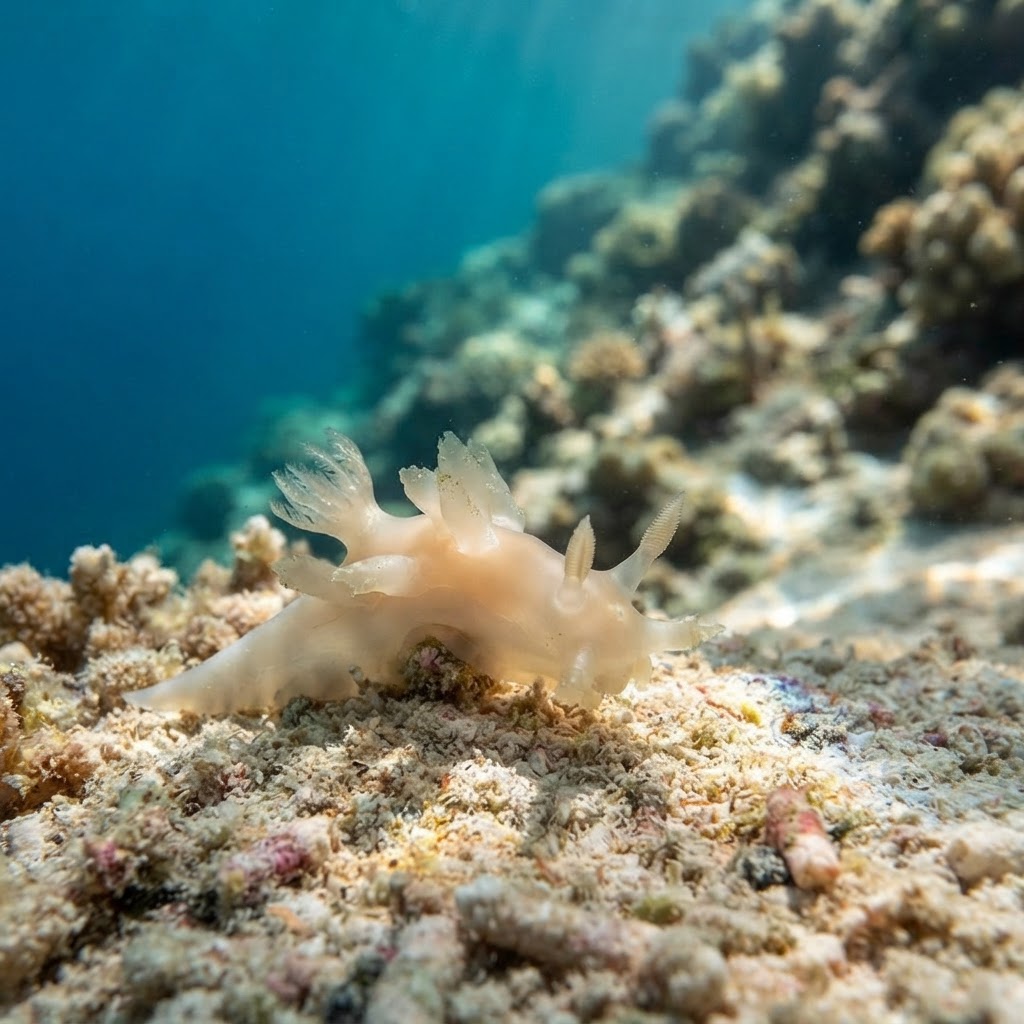
It is a small, bumpy-textured nudibranch in muted brown and grey tones, easy to miss against rocky, algae-covered reef. Rather than bright colour, look for its rough, tuberculate surface and slow grazing movement over rock and kelp bases.
Exact size figures are not well documented for this species, but like most tritoniid nudibranchs it stays small, typically only a few centimetres long, which is part of why it is easy to overlook.
No. It poses no threat to divers and can be observed and photographed up close without any risk.
As a tritoniid nudibranch, it most likely grazes on soft corals or hydroids found on the rocky reef it inhabits, though its exact diet is not thoroughly documented.
Site and sighting data is aggregated from diver logs, iNaturalist and GBIF. For taxonomy and conservation status:
Light-spotted Aegires
3,168 sites