Cadlina pellucida
Small white nudibranch turning up uncommon on cool-water reefs along the Lisbon Coast and Bay of Biscay, year-round.
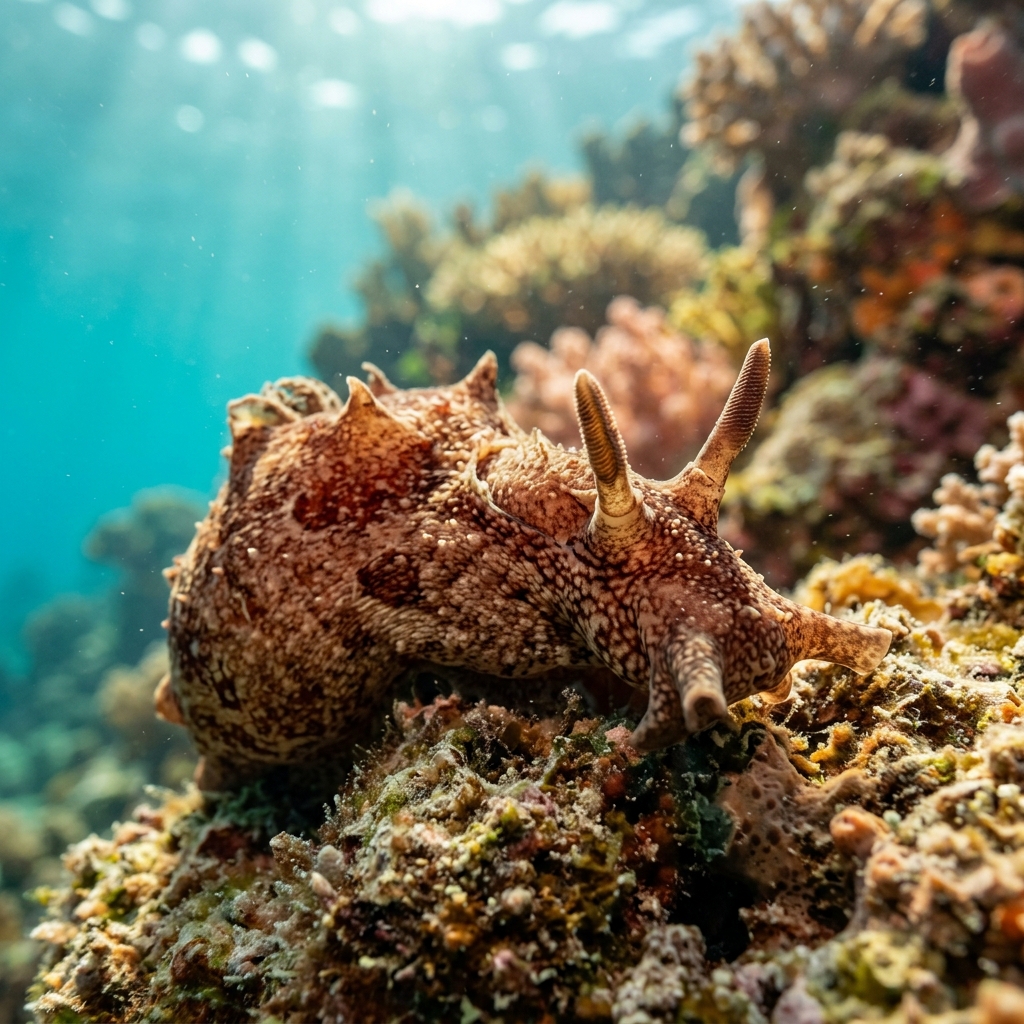
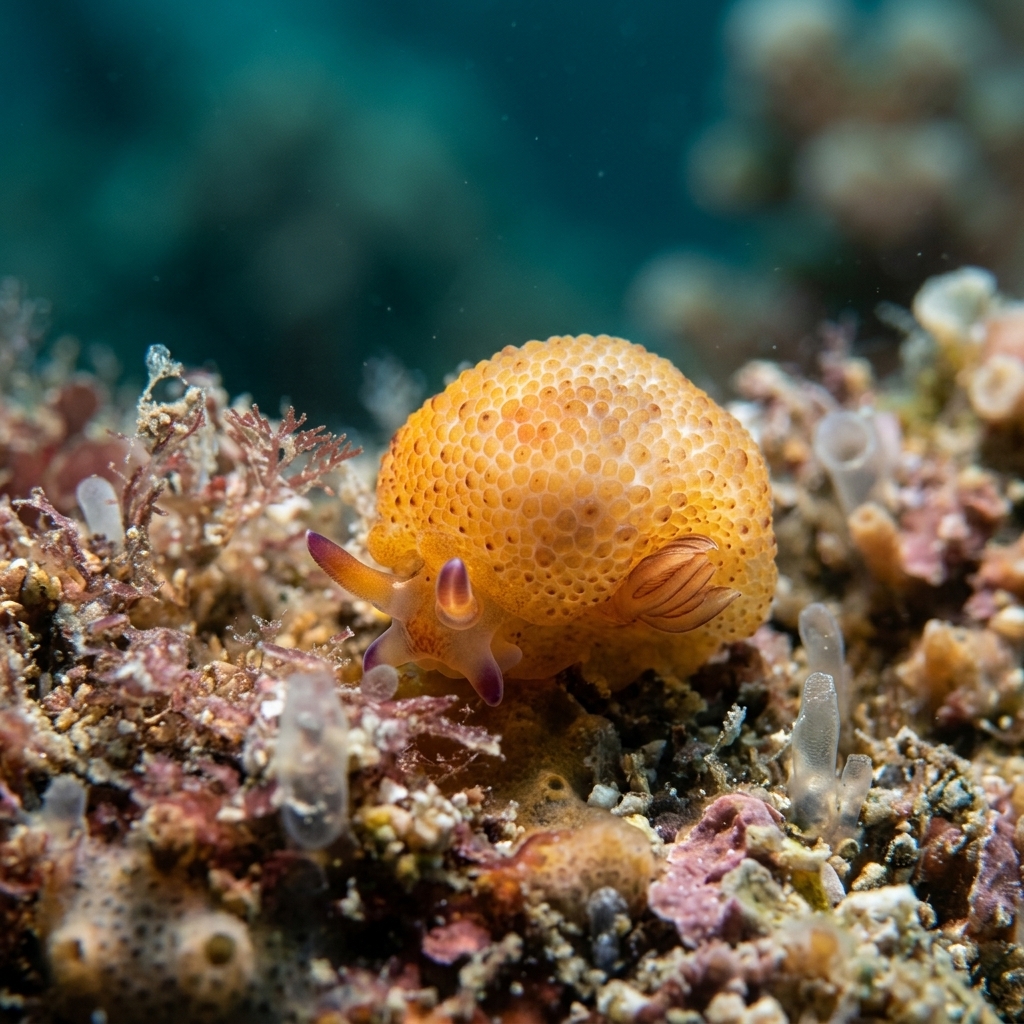
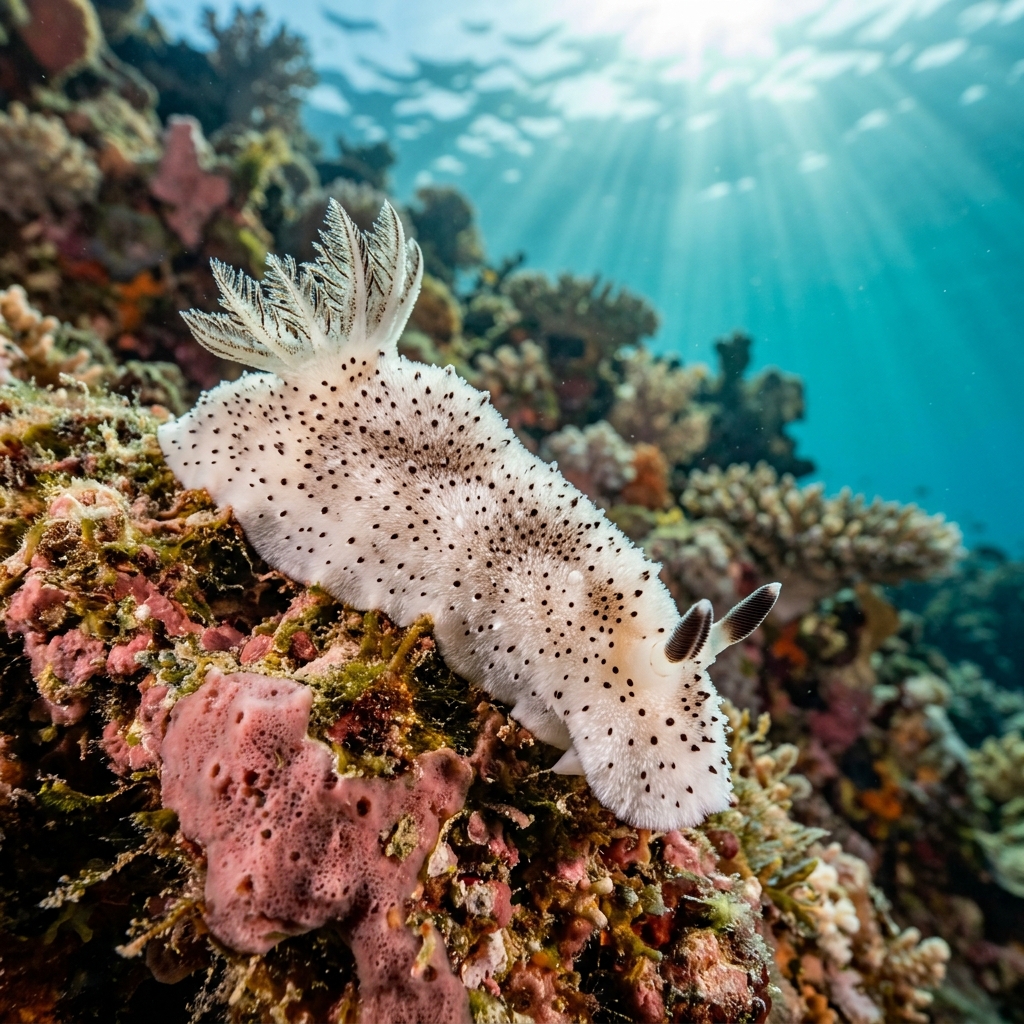
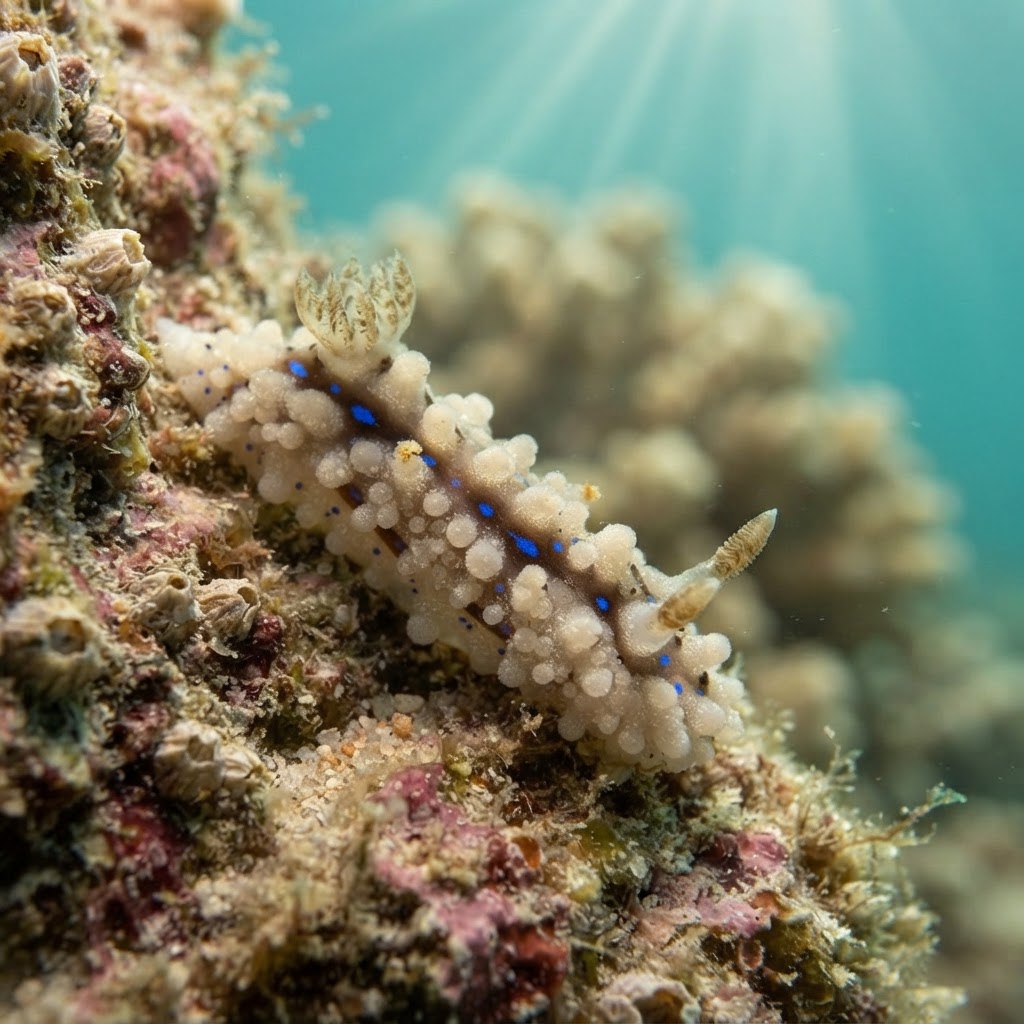
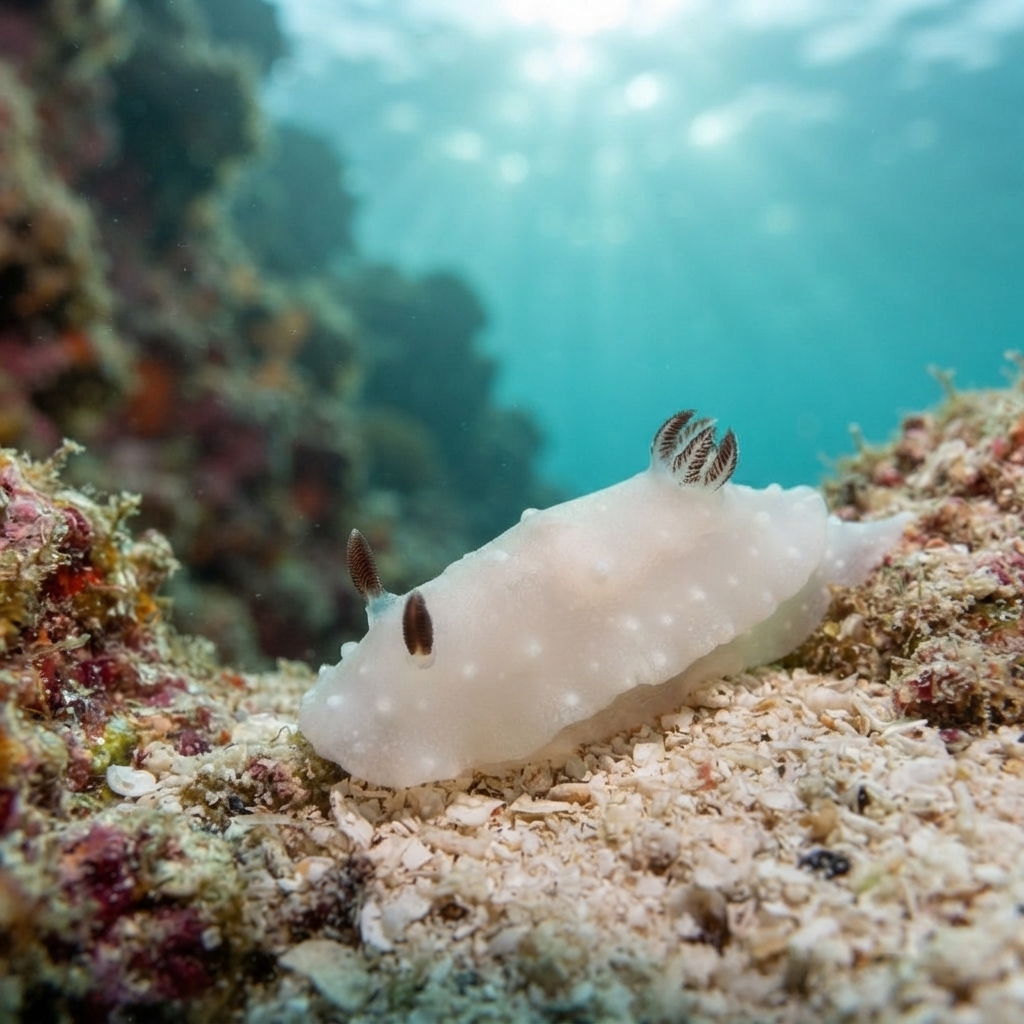
A small, translucent white nudibranch with a soft, jelly-like sheen and scattered pale yellow or cream spots running down the back. The body is oval and flattened, with a low ring of gills (the feathery cluster near the tail) and a pair of short, upright sensory tentacles (rhinophores) at the front. Size in the water reads as modest, easy to swim past unless you are scanning rock and algae close up.
Found slow-crawling over rock, algae and encrusting sponge where it grazes, usually tucked into cooler, temperate reef rather than open sand. It pays divers no attention and will not move off when a torch or camera gets close, so patient macro divers get the best look. Most sightings are on daytime dives, generally as a single animal rather than in groups.
Like other dorid nudibranchs, it likely feeds on sponges and can absorb their chemical defences into its own tissue, which is thought to be why so many nudibranchs advertise bright or contrasting patterns rather than hide.
Recorded year-round with no clear seasonal peak, consistent with its cool-water niche of roughly 12 to 18 C found on the Atlantic coasts where it is logged.
Most reliably logged along the Lisbon Coast in Portugal and the Bay of Biscay in France, with further sightings in Brittany and on the Cantabrian Coast of Spain. It also turns up around England, making it a realistic find on both sides of the Bay of Biscay and into the English Channel.
Mapping where Translucent Cadlina is logged…
It is most often logged along the Lisbon Coast in Portugal and the Bay of Biscay in France, with further records from Brittany, the Cantabrian Coast of Spain and around England.
There is no strong seasonal pattern in the sightings, so it is logged year-round on the cool Atlantic reefs where it lives, typically in water between 12 and 18 C.
Look for a small, translucent white body with pale yellow spots, a flattened oval shape and a short cluster of feathery gills near the tail. It moves slowly over rock and algae and will not react to a diver nearby.
No, it poses no danger to divers. It has no sting or bite worth worrying about and can be observed or photographed up close without any risk.
Exact size data is not documented, but like most Cadlina nudibranchs it stays small, generally a few centimetres or less, so divers need to look closely against rock and algae to spot one.
Site and sighting data is aggregated from diver logs, iNaturalist and GBIF. For taxonomy and conservation status:
Light-spotted Aegires
3,168 sites