Marioniopsis arborescens
A branching, tree-like nudibranch logged uncommonly across Luzon reefs in warm 25 to 31C water, year-round.
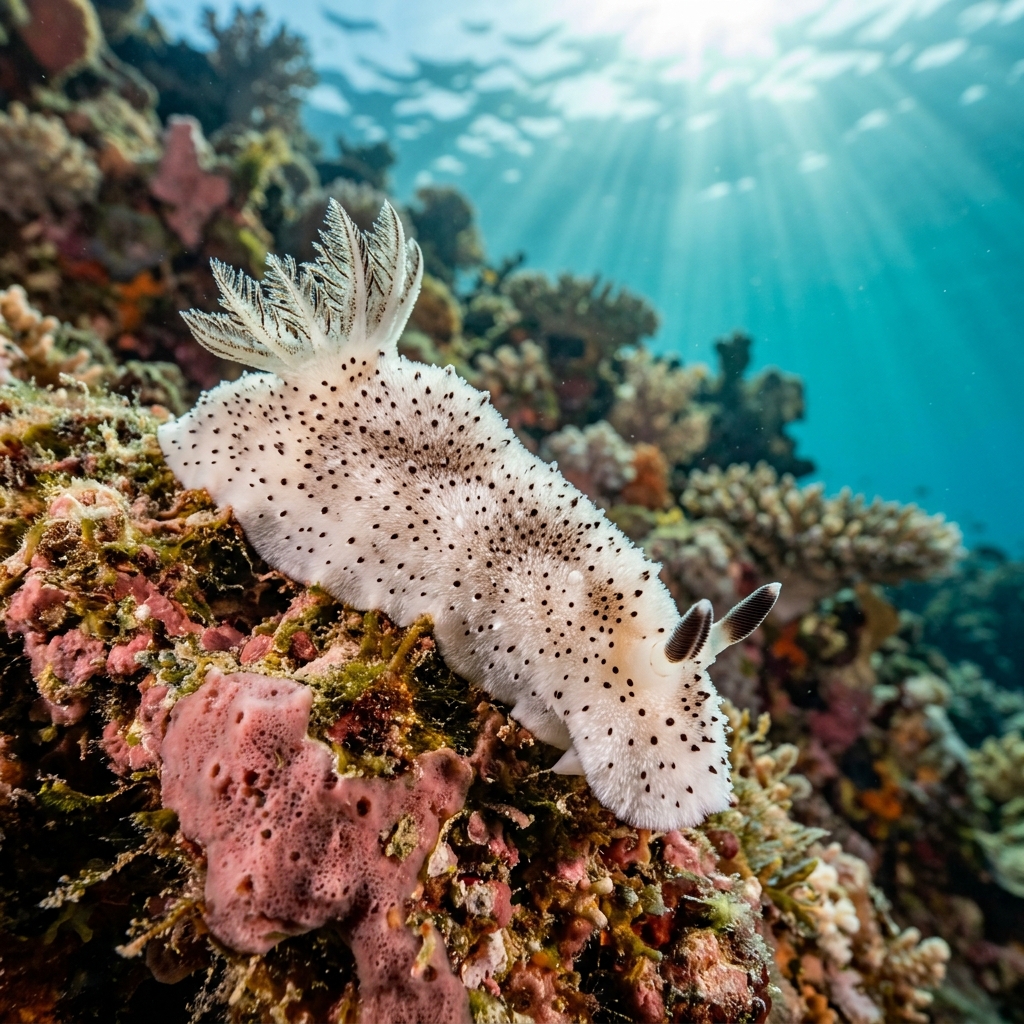
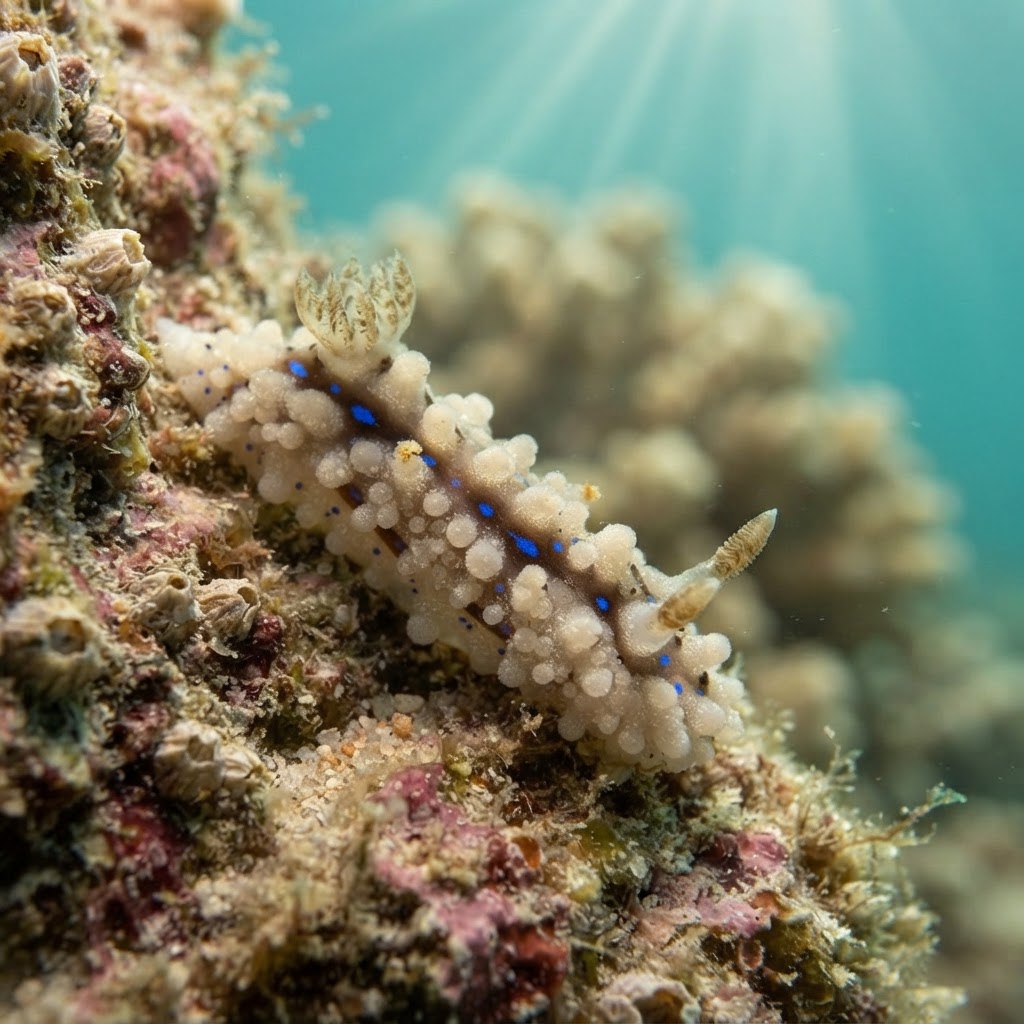
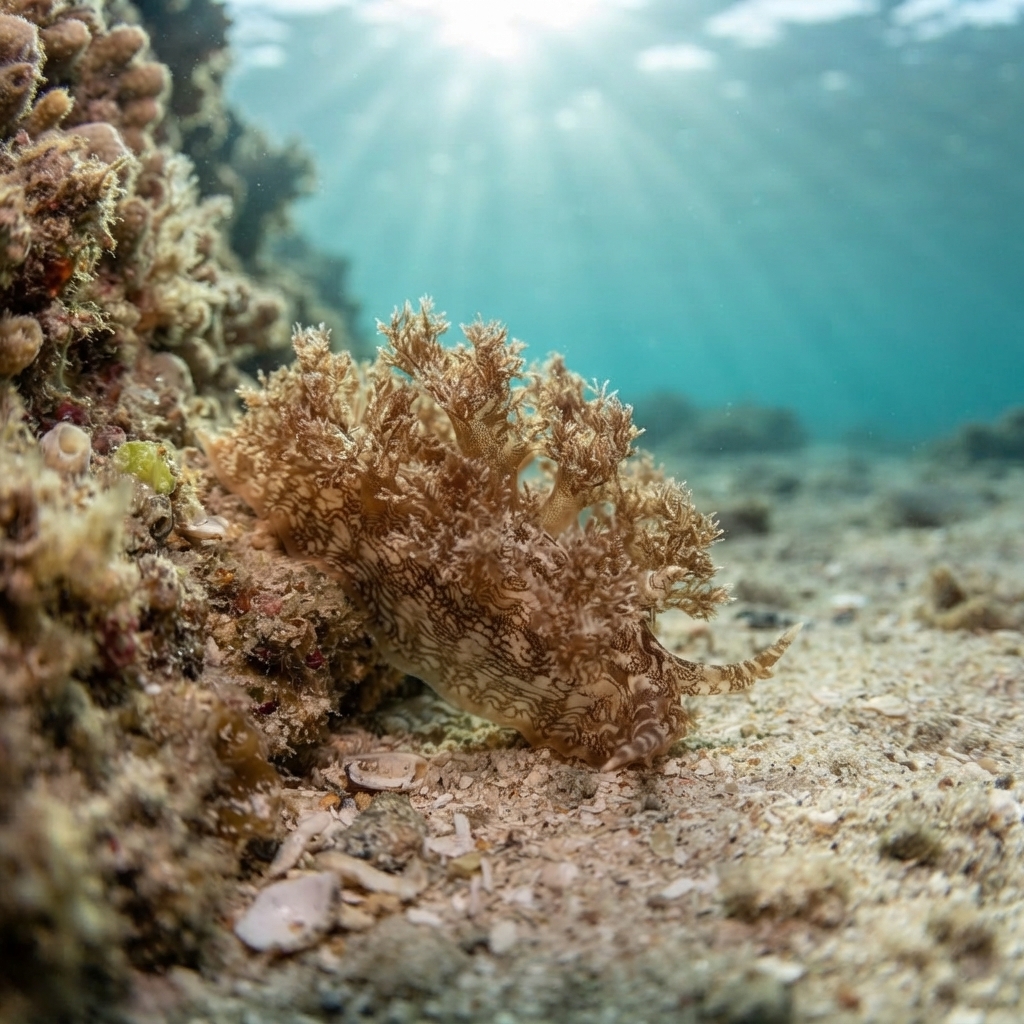
Look for a small nudibranch with a distinctly branching, tree-like cluster of projections (cerata) rising off its back, which gives it a bushy silhouette unlike most flat-backed dorid nudibranchs. Body colour tends toward muted browns or greys that blend into algae and sponge growth, making the branching shape itself the giveaway rather than any bright pattern. Its size and exact colour range are not well documented, so divers should key on that bushy, dendritic profile above anything else.
Divers find it parked on the reef or rubble, moving at the unhurried pace typical of nudibranchs while grazing. It shows no reaction to divers beyond retracting slightly if directly disturbed, and is easiest to spot by scanning slowly for its branching outline rather than a colour flash. Most sightings come from dedicated macro and muck dives where guides are actively searching the substrate.
Its bushy back projections are cerata, the same feeding-and-defence structures many aeolid-type nudibranchs use, and their branching shape likely increases surface area for gas exchange while helping the animal disappear against similarly textured hydroids or bryozoans it may feed on.
No clear seasonal pattern shows up in the sightings, and with observed water temperatures sitting in a warm 25.2 to 31.2C band, conditions stay diveable year-round. Treat it as a possible find on any Luzon dive rather than a seasonal target.
Logged exclusively on reefs in the Philippines so far, with every recorded sighting coming out of Luzon. If you are hunting for this one specifically, Luzon's muck and reef sites are currently the only known bet.
Mapping where Bushy Lacedragon is logged…
Every logged sighting so far comes from the Philippines, specifically Luzon. It is not yet documented from other countries or regions in diver records.
There is no detected season, and it is found in consistently warm water between about 25 and 31C, so it can turn up on Luzon dives at any time of year.
Scan the reef or rubble for a small nudibranch with a branching, tree-like cluster of projections on its back. That bushy, dendritic shape is the main feature to key on, since its colour is muted and easy to overlook.
Exact size data has not been documented for this species, so divers should rely on its distinctive branching shape rather than size for identification.
It is logged as uncommon at every site where it has been recorded, so spotting one takes a dedicated slow search on a macro or muck dive rather than a chance sighting on a reef swim-through.
Site and sighting data is aggregated from diver logs, iNaturalist and GBIF. For taxonomy and conservation status:
Blue Dragon
3,163 sites