Dendrodoris arborescens
A small dark nudibranch turning up uncommonly across Victoria and Western Australia, plus Hong Kong's Sai Kung, year-round.
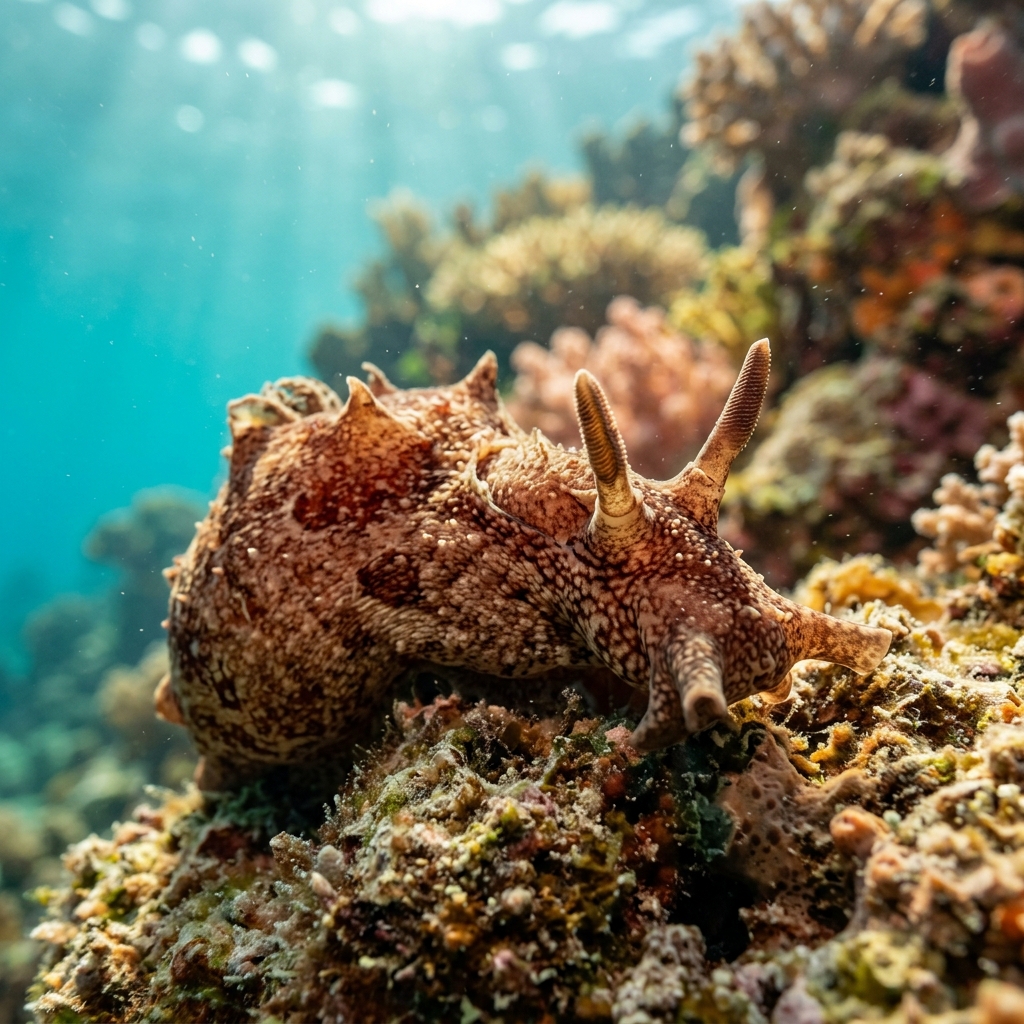
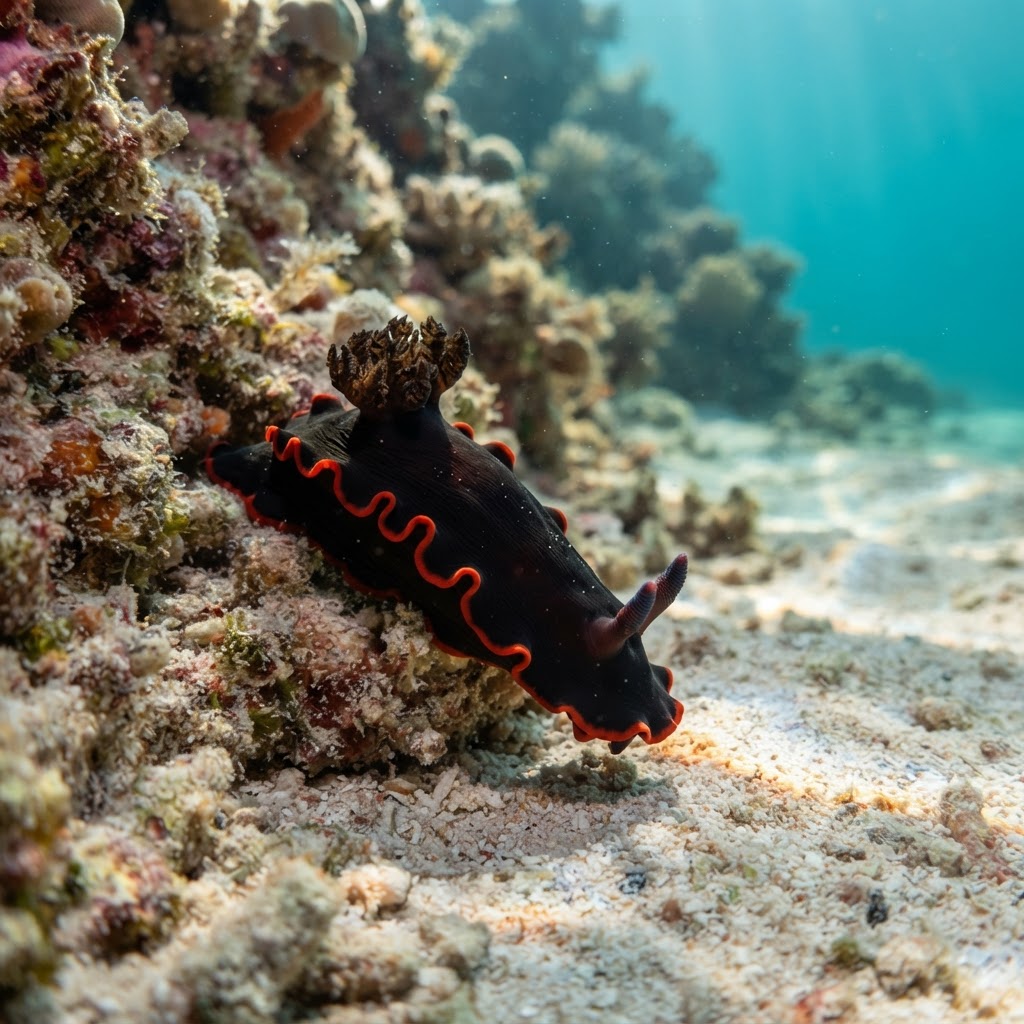
A small, soft-bodied nudibranch with a dark brown to black body and a tuft of feathery gills (the bushy-looking cluster on its back, used to breathe) near the rear. The skin has a slightly velvety, granular texture rather than smooth, and the body is oval and low-profile, hugging the substrate rather than standing tall. There's no bright contrast pattern to key on here, so divers usually spot it by the gill tuft shape and drab colouring against sponge or algae-covered rock.
Divers find this one slow and stationary on rock, rubble or sponge-covered surfaces, usually while grazing rather than moving with any urgency. It shows no reaction to divers beyond the usual nudibranch indifference, making it an easy subject to photograph once you've spotted it against the similarly dark backdrop it favours. Most logs come from daytime dives, though like many dorids it may be more active after dark.
Like other Dendrodoris species, it likely feeds on sponges and can produce a mildly toxic skin secretion as a defence, which is part of why it doesn't bother hiding from predators or divers.
No clear seasonal pattern shows up in the sightings, and with a temperature range spanning 14.9 to 25.3 C it's a species you can reasonably look for year-round rather than during a specific window.
Most reliably logged in Australia, with strong numbers out of Victoria and Western Australia, and a smaller but consistent presence around Sai Kung in Hong Kong. Queensland turns up occasional records too, but the temperate southern Australian coast is where this one is best established as a target.
Mapping where Bushy-gilled Sucking Dorid is logged…
It's most commonly logged in Victoria and Western Australia, Australia, with additional sightings around Sai Kung in Hong Kong and occasionally in Queensland. Australia accounts for the large majority of recorded sites.
There's no strong seasonal signal in the sightings, so it's treated as a year-round species. It's been recorded across a wide temperature range from about 15 to 25 C, which supports sightings in most seasons.
Look for a small, dark brown to black nudibranch with a low, oval body and a distinctive tuft of feathery gills near the rear. It lacks bold colour patterns, so it's often spotted by shape and gill texture rather than colour contrast against the reef.
Exact size data isn't confirmed for this species, but as with most Dendrodoris nudibranchs, expect a small, soft-bodied animal typically a few centimetres long when seen underwater.
No, it poses no danger to divers. It's a slow, stationary sea slug that can be safely observed and photographed up close.
It's logged as uncommon at most sites where it appears, with a smaller number of sites reporting it as rare and a few reporting it as common. It's not a guaranteed sighting, but attentive divers in Victoria or Western Australia have a reasonable chance of finding one.
Site and sighting data is aggregated from diver logs, iNaturalist and GBIF. For taxonomy and conservation status:
Light-spotted Aegires
3,168 sites