Dendronotus frondosus
Cold-water nudibranch turning up in Zeeland, Nova Scotia and Bohuslän dives, 3 to 12°C, branched back visible at a glance.
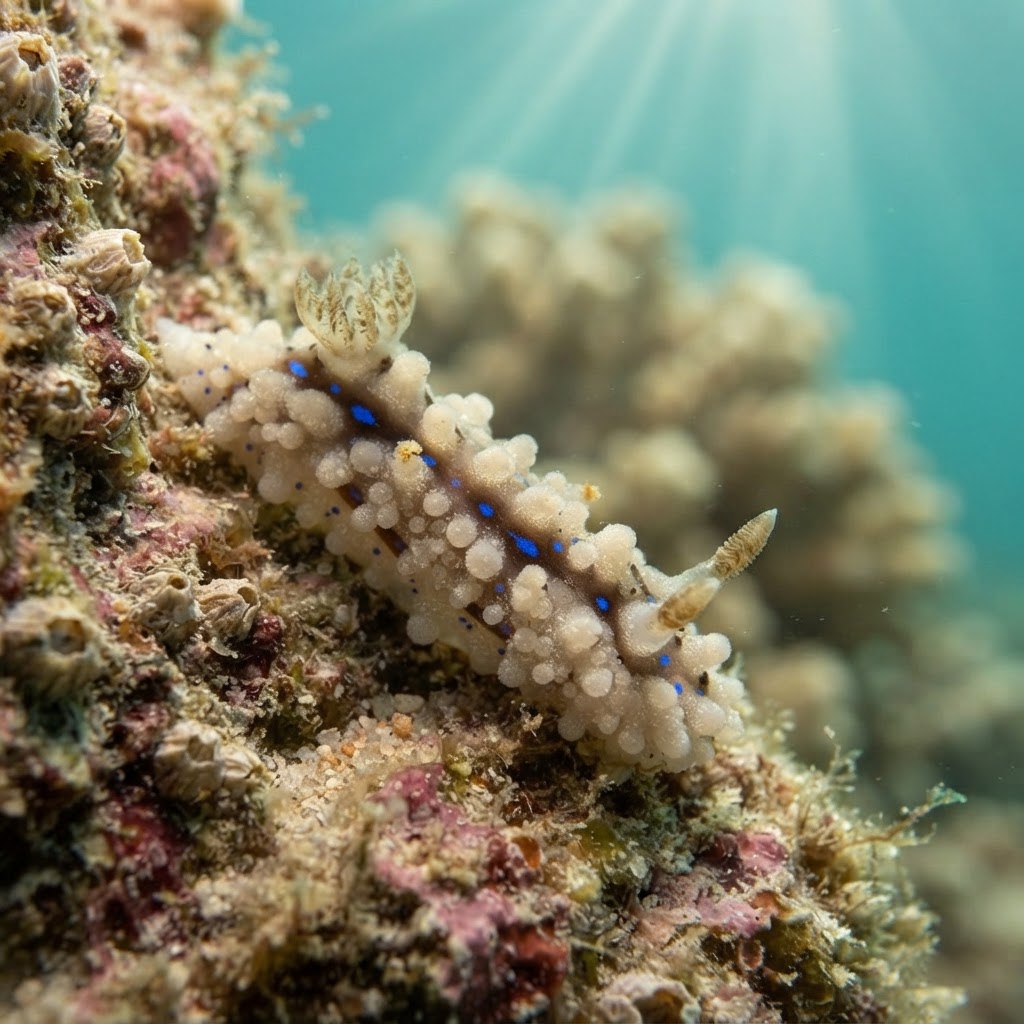
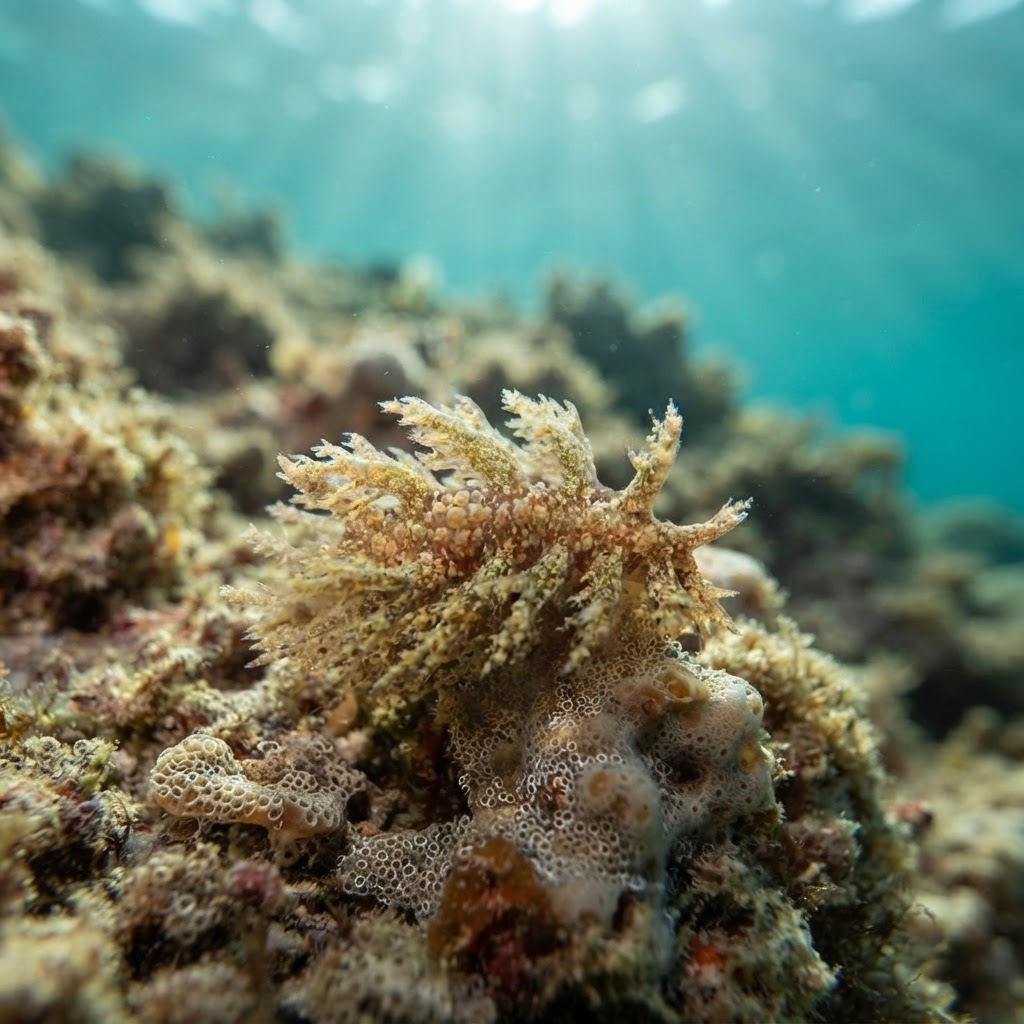
Look for a slender, translucent body no more than 2 cm long, running orange-brown to greyish-white, with rows of branched, tree-like appendages (cerata) sprouting along its back, giving it the shaggy silhouette that names it. Two rhinophores (sensory tentacles) at the head are also branched rather than smooth, which separates it from most other small sea slugs at a glance. It moves slowly across rock, kelp holdfasts and hydroid-covered surfaces, often nearly invisible against similarly textured backgrounds.
Divers usually find it parked on hydroid colonies or kelp stipes, grazing slowly and paying no attention to torches or bubbles. It is most often spotted at low light on night dives or in the shaded, current-swept corners of rocky and wreck sites where hydroids grow thick. Expect a slow crawl rather than any swimming or fast reaction, it simply keeps feeding while you look.
Its branched cerata are not just decoration, they house extensions of the gut and let it feed almost exclusively on hydroids, absorbing stinging cells from its prey without harm to itself.
Sightings show no clear seasonal spike, so treat this as a year-round find wherever water stays cold. It sits in a 3.1 to 12.4°C niche, which lines up with temperate and boreal sites that rarely warm past that range for much of the year.
Most reliably logged in Zeeland in the Netherlands, with strong numbers also out of Nova Scotia in Canada and Østlandet in Norway. Divers also find it in Jutland, Denmark, Bohuslän in Sweden, and along the Northeast United States and Quebec, Canada, plus Nordland further north in Norway.
Mapping where Bushy-backed Nudibranch is logged…
It turns up most often in Zeeland, Netherlands, and is also a steady find in Nova Scotia, Canada, and Østlandet, Norway. Denmark's Jutland coast and Sweden's Bohuslän region are other solid spots.
There is no strong seasonal pattern in the sightings, so it is considered a year-round species. It favours cold water between about 3 and 12°C, which matches temperate sites through most of the year.
Check for a small, translucent orange-brown or greyish body under 2 cm long with rows of branched, tree-like projections along the back and branched rhinophores on the head. It moves slowly over hydroid-covered rock or kelp, easy to miss against the texture around it.
They stay small, typically reaching around 2 cm in length, so a careful eye and a slow scan of hydroid patches is needed to spot one.
Its branched back appendages connect to its digestive system and let it feed on stinging hydroids, taking in their defensive cells while grazing without any apparent harm to itself.
Site and sighting data is aggregated from diver logs, iNaturalist and GBIF. For taxonomy and conservation status:
Light-spotted Aegires
3,168 sites