Ostorhinchus angustatus
A small striped cardinalfish logged uncommonly in Fiji's Lomaiviti and South Africa's KwaZulu-Natal, in 25 to 29C water.
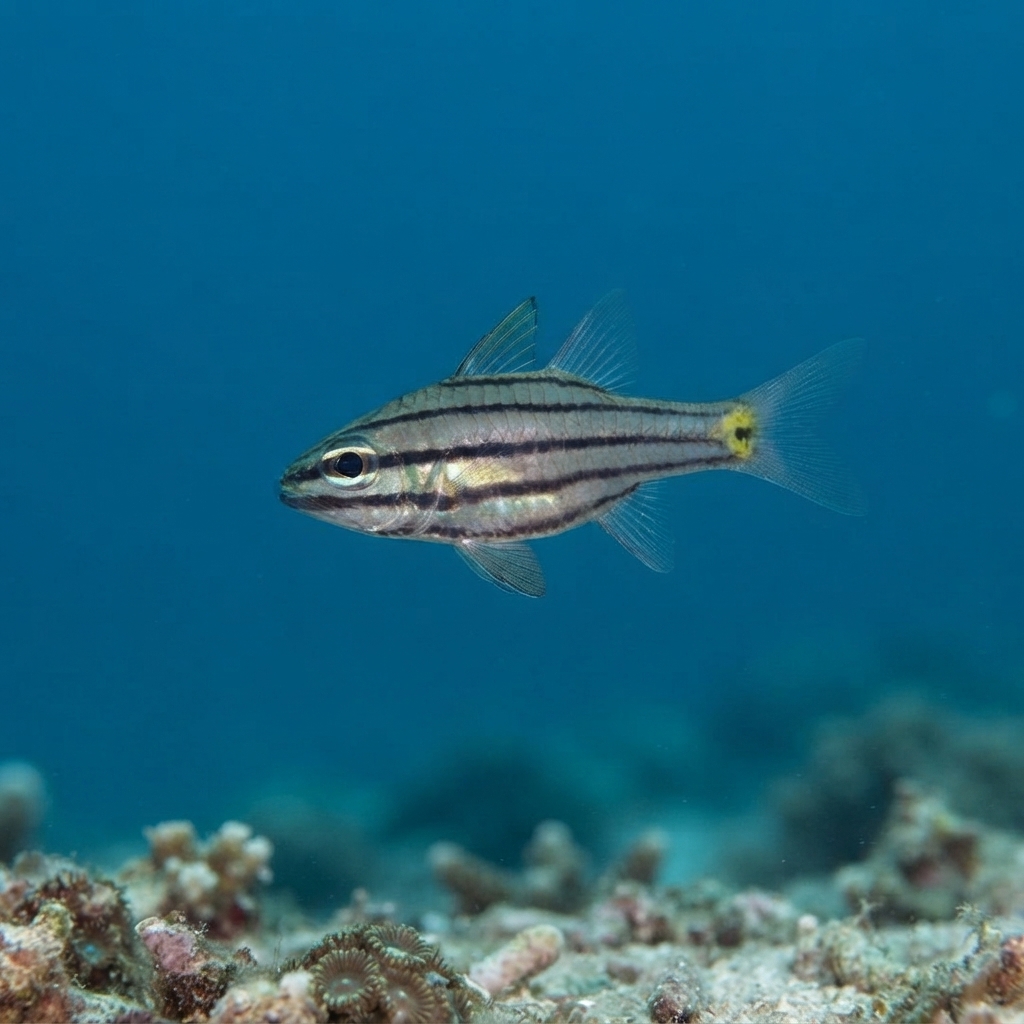
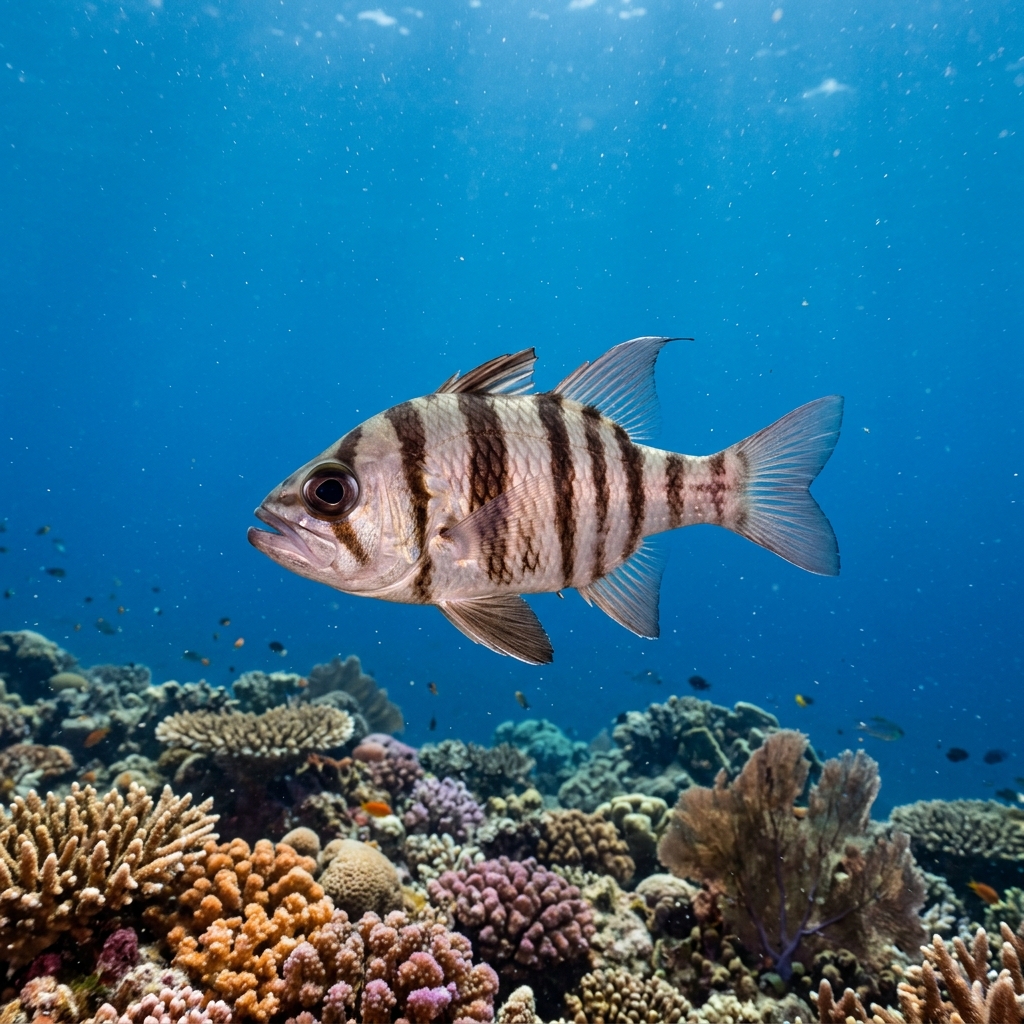
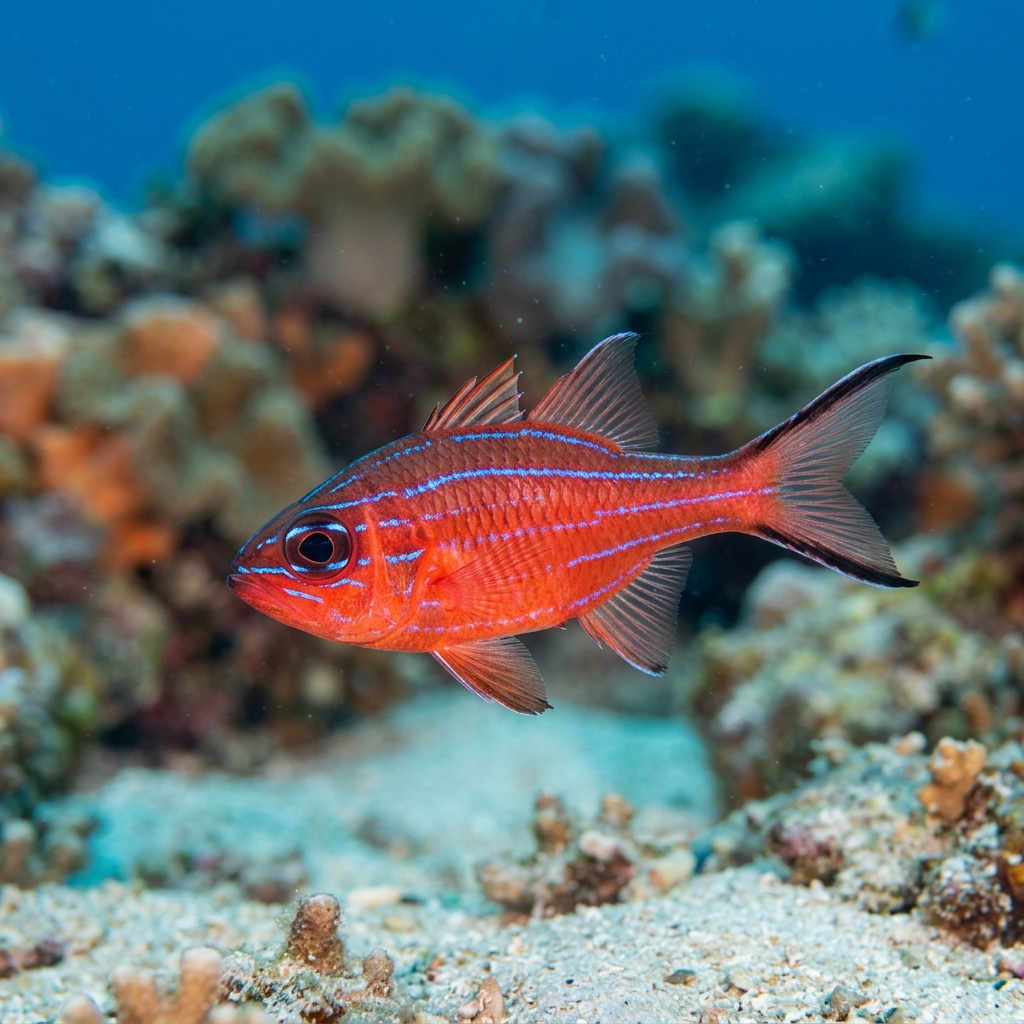
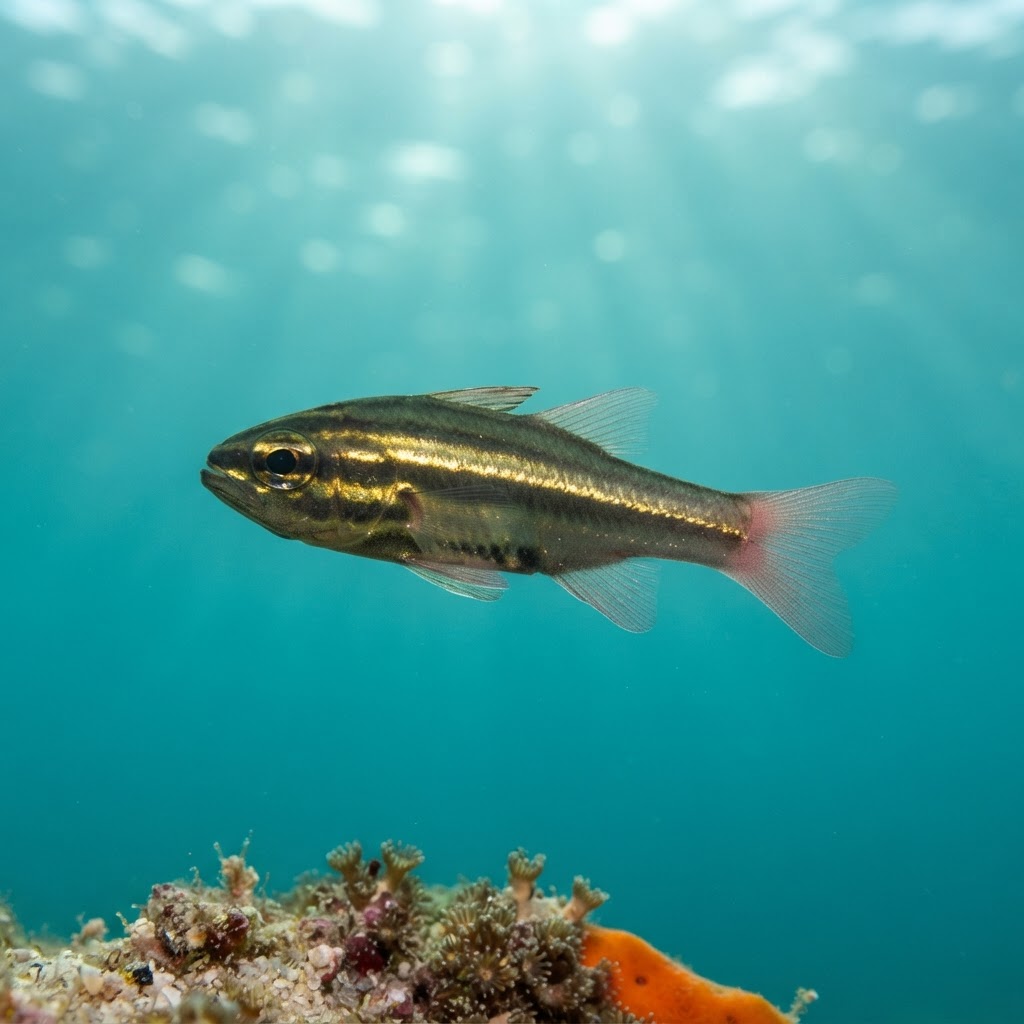
A small fish, around 8 cm, with a slim oval body and a row of dark brown to black horizontal stripes running from the gill down the flank, giving it its name. The head is proportionally large with big dark eyes typical of cardinalfish, and the stripes are the main feature that separates it from plain-bodied reef fish sharing the same crevices. It tends to hover almost motionless rather than actively swim, which makes the stripe pattern easy to study at close range.
Expect to find it tucked close to the reef structure, hovering near ledges, coral heads or rubble rather than out in open water, often in small loose groups with other cardinalfish. Like most cardinalfish it is more active around dusk and at night, so daytime sightings usually mean spotting a still fish sheltering in shade rather than one actively feeding. It shows little reaction to divers beyond retreating slightly deeper into cover if approached too fast.
Like other Ostorhinchus cardinalfish, males are mouthbrooders, carrying the fertilised egg mass in their mouth until the young are ready to disperse.
No clear seasonal pattern shows up in the sighting data, and its comfortable range of roughly 25 to 29 C matches warm reef water year-round in both Fiji and KwaZulu-Natal, so there is no obvious month to target.
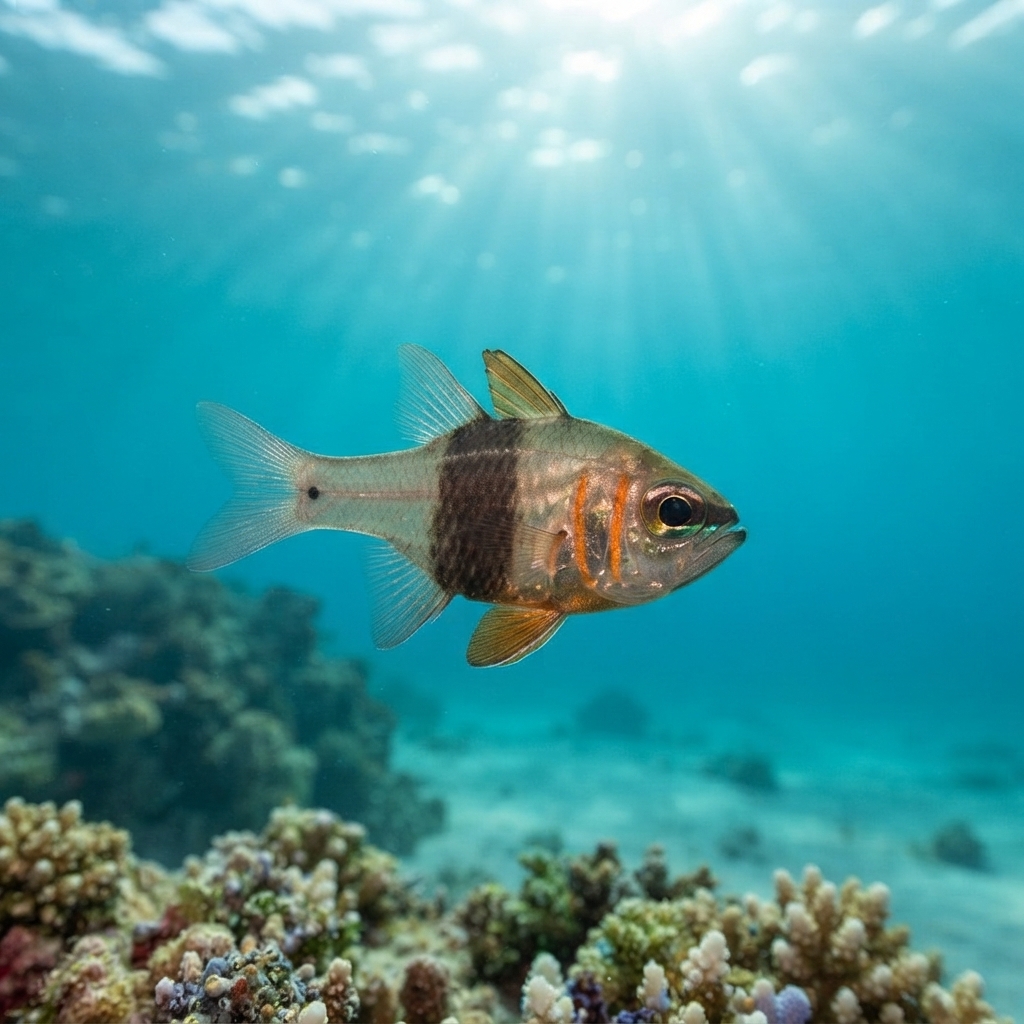
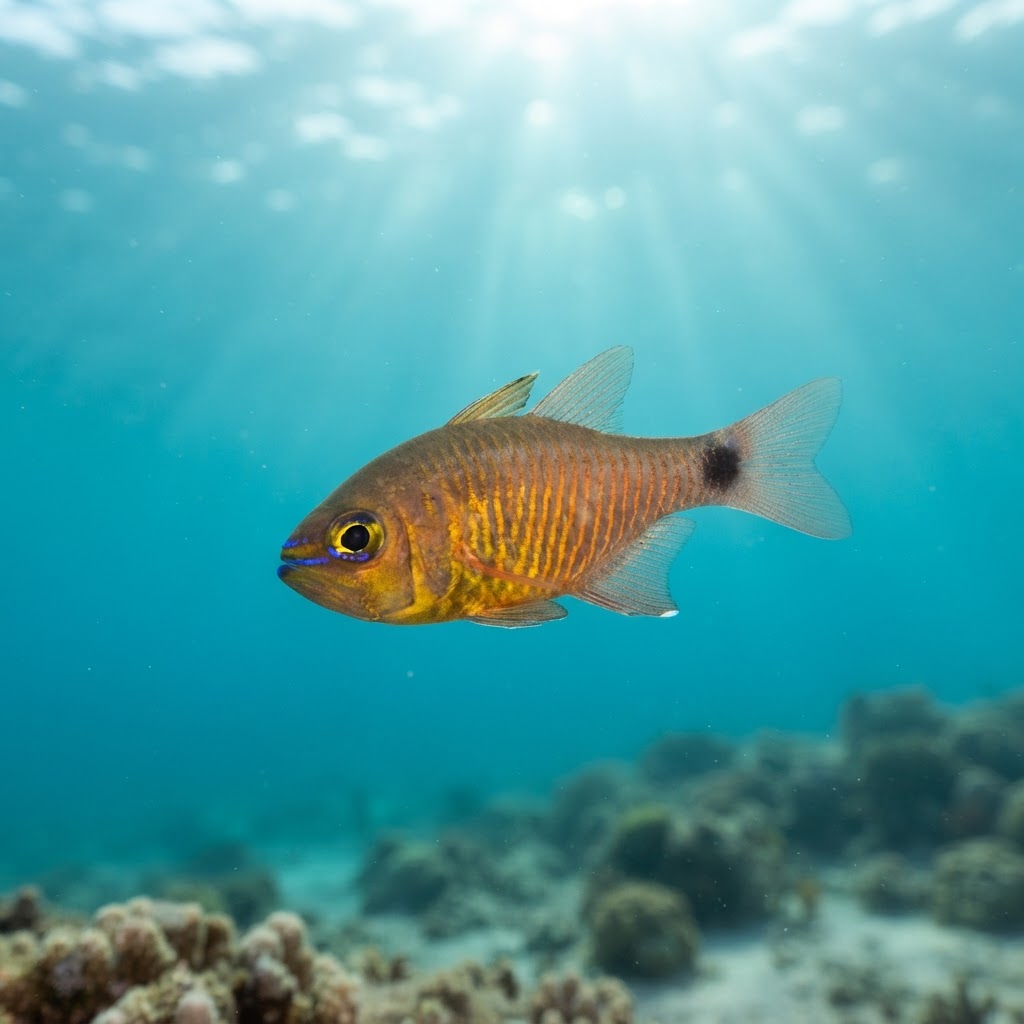
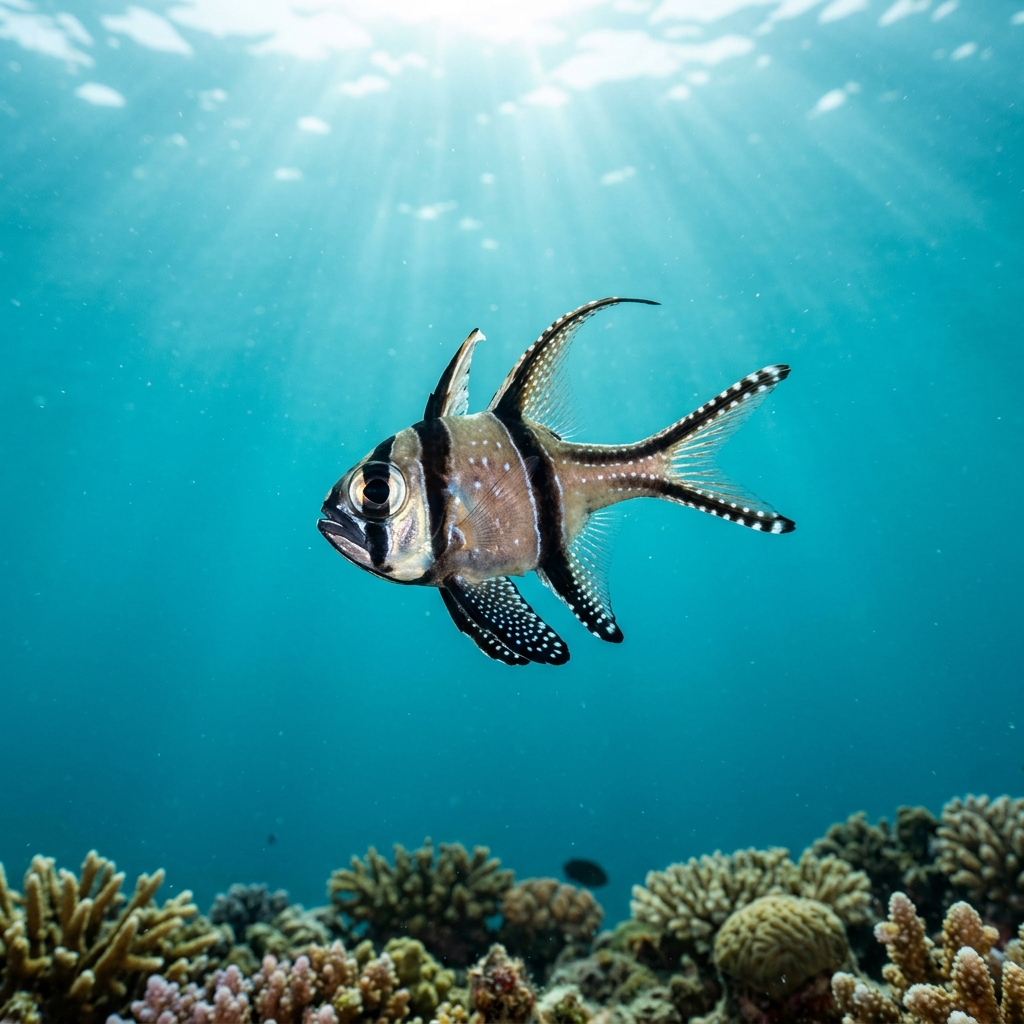
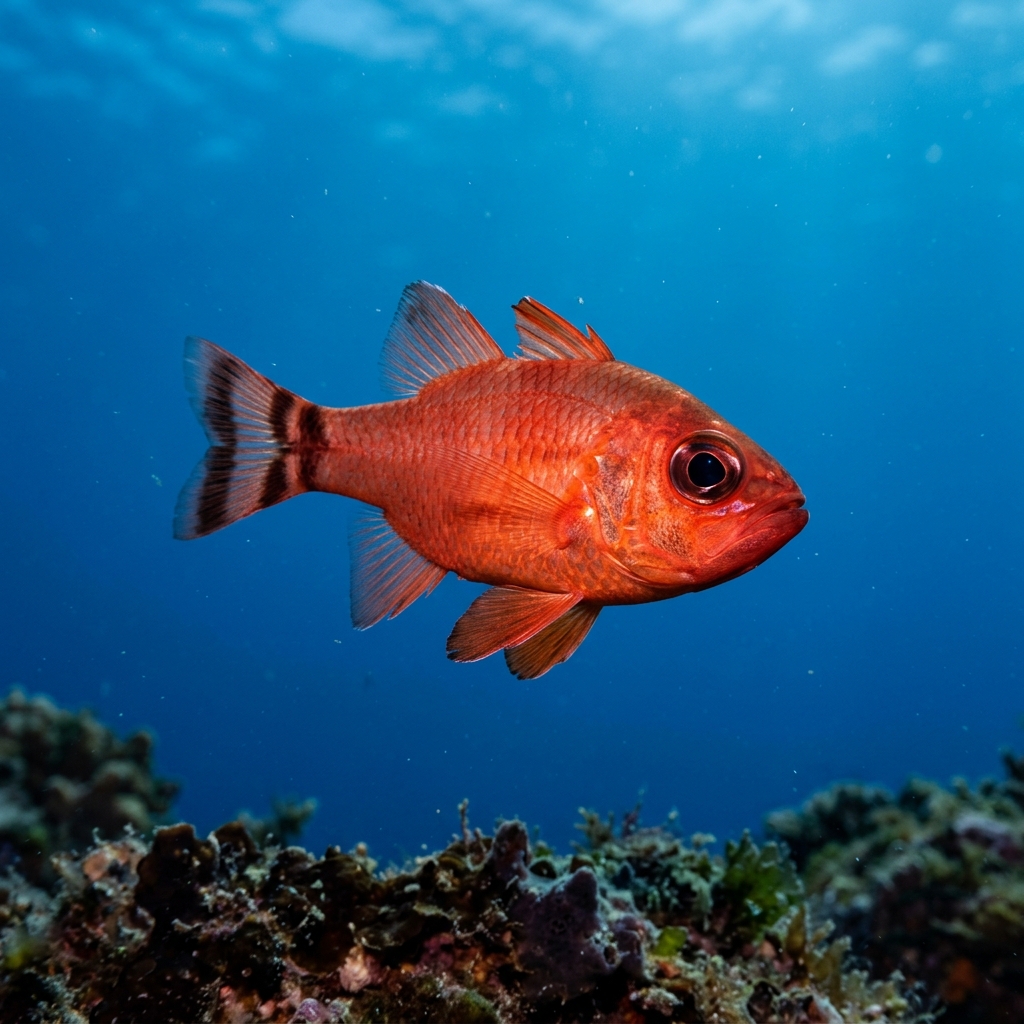
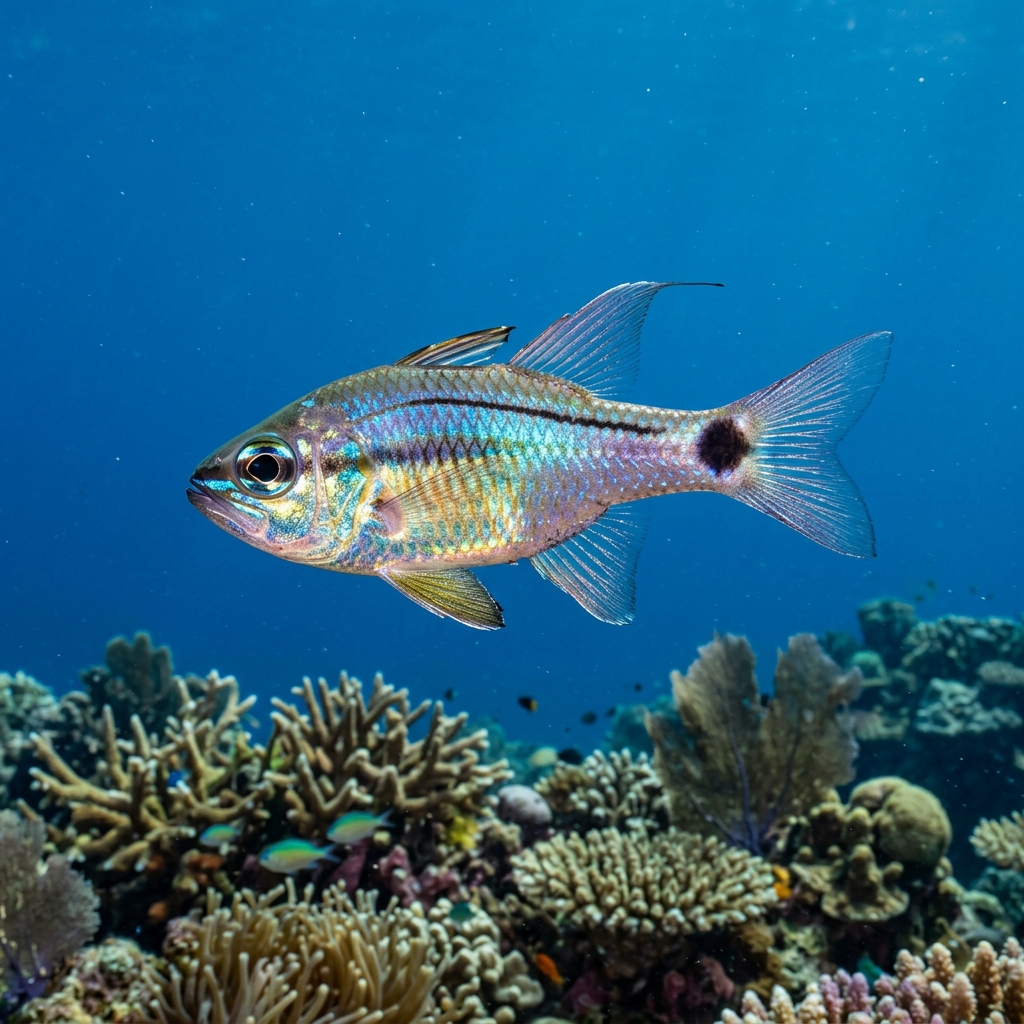
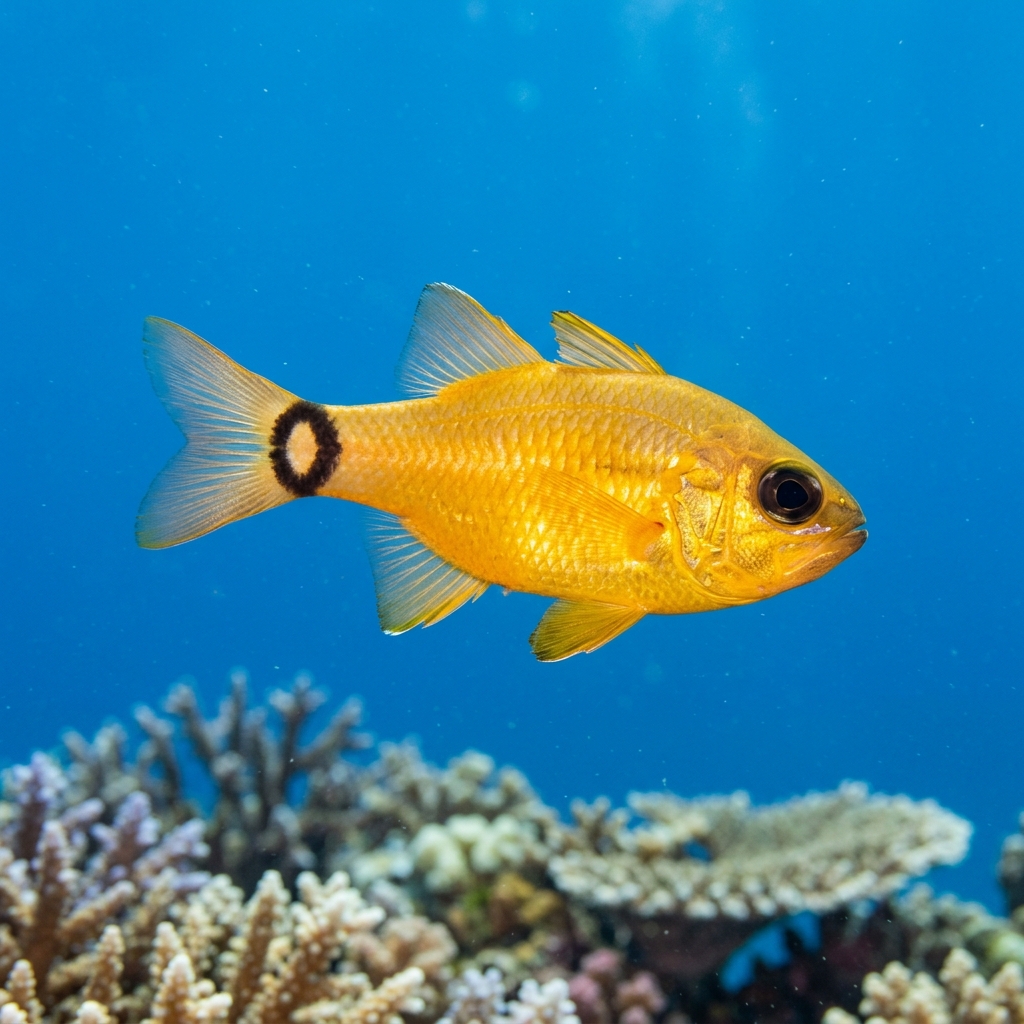
Reef neighbours a diver could mistake it for. Use the identification notes above to tell them apart.
Logged as an uncommon sighting on reefs in Fiji's Lomaiviti region and in KwaZulu-Natal, South Africa, marking a real spread across both the tropical Pacific and the western Indian Ocean. Sightings are sparse enough at both locations that finding one takes a bit of patient reef-crevice searching rather than a guaranteed encounter.
Mapping where Broadstriped Cardinalfish is logged…
Confirmed sightings come from Fiji's Lomaiviti region and KwaZulu-Natal in South Africa, though it is logged as uncommon at both, so it is a bonus find rather than a guaranteed one.
There is no detected seasonal pattern, and its water-temperature niche of roughly 25 to 29 C is met year-round on the reefs where it has been recorded, so any time of year is fair game.
Look for a small, roughly 8 cm fish with a row of dark horizontal stripes along its flank and a large-eyed cardinalfish head shape, usually hovering near reef cover rather than swimming in open water.
They stay small, reaching around 8 cm in length, which is typical for reef-dwelling cardinalfish species.
No, they pose no danger to divers. They are small, non-aggressive reef fish that simply retreat into cover if approached.
As with other cardinalfish, males are mouthbrooders, holding the egg mass in their mouth until the young are ready to leave, a strategy that protects the eggs from predators on the reef.
Site and sighting data is aggregated from diver logs, iNaturalist and GBIF. For taxonomy and conservation status:
Iridescent Cardinalfish
1,781 sites